Tema soluzione
Confine tra linea completa di riempimento e sigillatura del tubo e sola sigillatura del tubo per creme viso
Per tubi di prodotti viscosi come creme viso e lozioni, scegliere tra sistema integrato di riempimento e sigillatura, sola sigillatura e codifica della coda o soluzione per tappi s
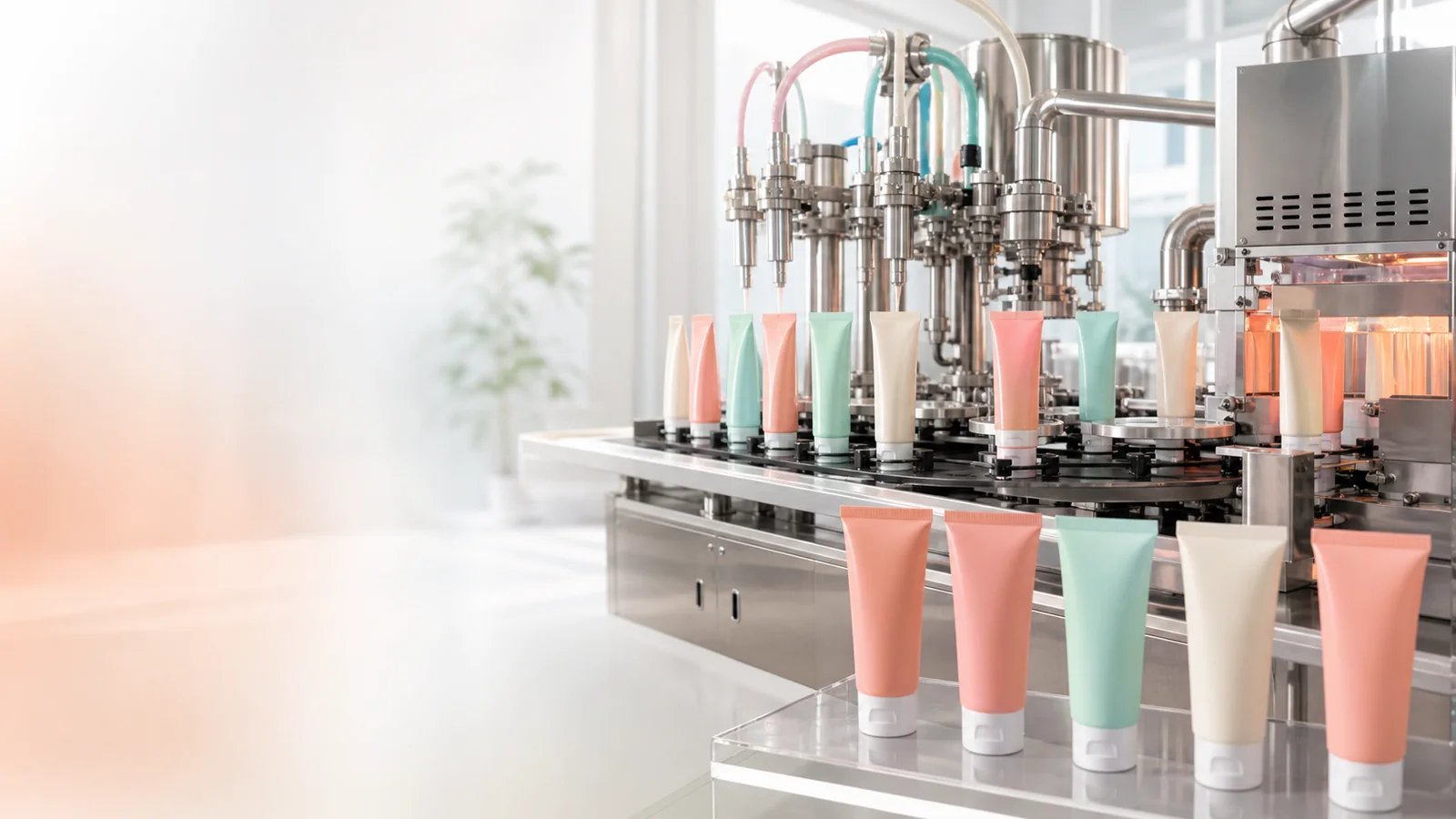
- Per tubi vuoti in ingresso si può valutare il sistema integrato di riempimento e sigillatura; per tubi già riempiti è sufficiente la sigillatura e codifica della coda; per tubi con tappi speciali è necessario confermare separatamente la struttura. È necessario fornire campioni di prodotto, tubo e tappo, materiale e diametro del tubo, stile di sigillatura...
Riepilogo soluzione preparato per te
- For cream tube equipment, first divert by incoming state: empty tubes can use a fully automatic tube filling and sealing machine, while pre-filled tubes use a sealing and coding machine for downstream processing.
- Tube material, diameter, tail seal style, and product state need to be verified with actual samples because filling performance and tail sealing affect each other.
- Special caps such as flip caps, pump heads, or pointed nozzles should be sent with the tube mouth for separate confirmation of fixtures, positioning, and handling range.
Route comparison
- Suitable for projects where empty tubes enter the equipment and continuous product filling, tail sealing, and finished output are desired.
- The fully automatic tube filling and sealing machine integrates positioning, filling, and sealing into one process, reducing transfer between processes.
- Tube material and diameter, product behavior, fill volume, sealing shape, and batch code position all need to be confirmed.
- When incoming tubes are already filled and only tail processing remains, there is no need to configure the filling stage of an integrated machine.
- Use the fully automatic tube filling and sealing machine for empty tubes. Sample trials should cover tube feeding, filling, sealing, and edge trimming.
- Suitable for tube incoming where the product has already been filled externally and only tail sealing, date/batch coding, and edge trimming are required.
- The tube sealing and coding machine focuses on downstream processing, avoiding duplicate investment in the already completed filling step.
- Still need to verify the filled tube weight, clampable area, tail allowance, material, and printing surface.
- When continuous filling from empty tubes is required, switch to an integrated filling and sealing process or add a separate product filling station.
- Use the tube sealing and coding machine to receive pre-filled incoming tubes and verify clamping and sealing with actual filled tubes.
- Adatto per tubi con coperchio a ribalta, pompetta, beccuccio o altre forme speciali, che richiedono conferma separata di posizionamento e attrezzature.
- The sealing solution for tubes with special caps can be evaluated around the actual head structure, avoiding incorrect actions based on standard threaded tube mouths.
- Caps, tube mouths, and tube bodies must be sent as a set. Handling boundaries must be determined after clamping and positioning verification.
- Per tubi standard che richiedono solo la sigillatura della coda, scegliere preferibilmente la macchina integrata corrispondente o la sigillatrice singola.
- First verify the actual special-cap tube, then determine the dedicated fixtures and sealing actions. Standalone product filling can be tested separately according to production division.
Attrezzature / Consumabili correlati
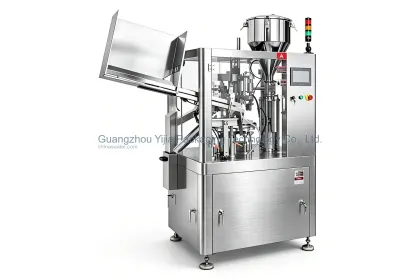 Macchina per sigillatura e codifica tubi con tappo speciale
Soluzione di sigillatura per tubi con tappo speciale è configurata per Posizionamento del tubo, sigillatura della coda, codifica e taglio bordi su Tubi in plastica, tubi compositi alluminio-plastica, tubi cosmetici.
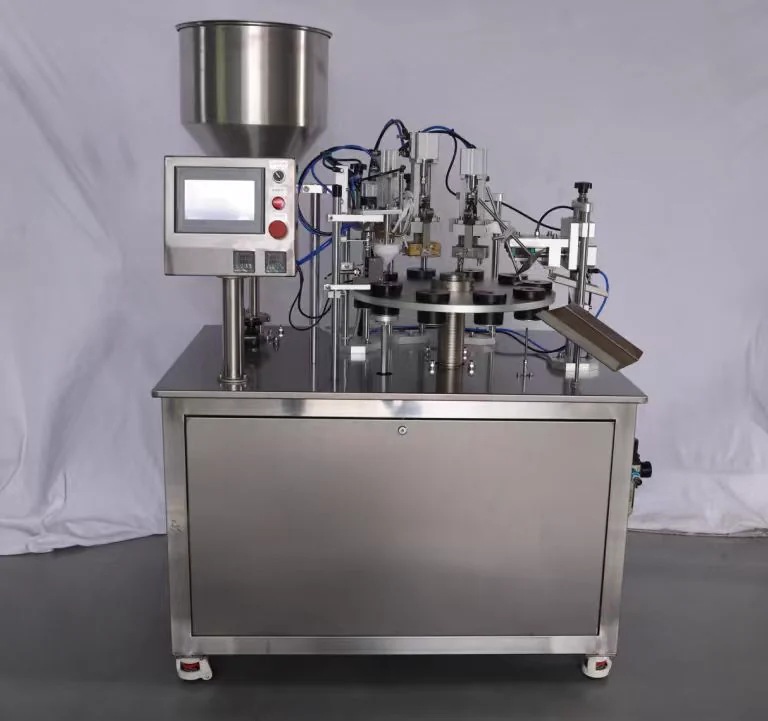 Macchina automatica per riempimento e sigillatura di tubetti flessibili
Alimentazione automatica, posizionamento, riempimento, sigillatura della coda e scarico per tubetti in plastica, compositi o materiali adatti.
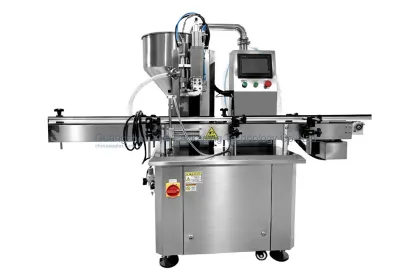 Riempitrice per paste
Riempimento dosato per Bottiglie, fusti, lattine, sacchetti flessibili
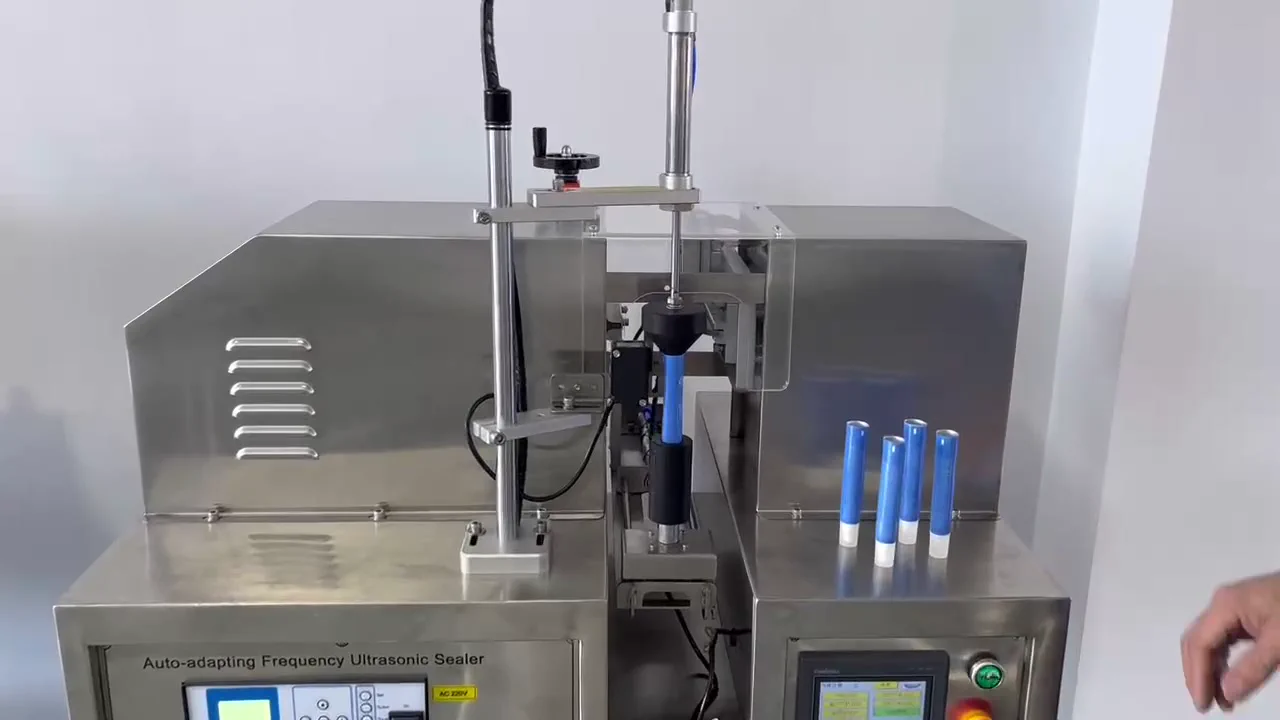 Sigillatrice a ultrasuoni per tubetti
Posizionamento del tubo, sigillatura della coda, codifica e taglio bordi per Tubi in plastica, tubi compositi alluminio-plastica, tubi cosmetici
Processo chiave
First distinguish whether the incoming material is empty tubes or pre-filled tubes, and use actual tubes, product, and caps to confirm tube diameter, material, tail allowance, and tube mouth shape.
When empty tubes are fed and continuous filling and sealing is desired, the fully automatic tube filling and sealing machine handles the core process.
When incoming tubes are already filled with product, the tube sealing and coding machine can complete tail sealing, batch coding, and edge trimming without duplicating the filling station.
Flip caps, pump heads, pointed nozzles, or other special structures should be confirmed with actual tube head samples for clamping, positioning, and handling boundaries.
If the project separates filling and sealing, first use the product filling machine to verify material compatibility, then transfer the filled tubes to the sealing equipment.
After sealing, print the date or batch code in the agreed position, and arrange conveying and finished product collection according to the site layout.
Dettagli campione
This step is used to divide integrated filling and sealing from separate sealing. Tube diameter, material, and tail allowance are also verified here.
Provide actual tubes and caps of each specification, and indicate whether the incoming material is empty tubes, pre-filled tubes, or segmented production.Product samples are used to observe dispensing and closing and the state of the tube after filling, to determine whether the filling nozzle and segmented process are suitable.
Submit creams, lotions, or other actual products, and describe viscosity, stringiness, particles, and planned fill volume.Tail requirements will enter mold and coding position confirmation and must be considered together with tube diameter and available tail length.
Describe the desired sealing pattern, trimming shape, and batch code position. If reference finished products are available, provide them with the sample tubes.This information helps arrange the pace of tube feeding, filling, sealing, and collection, avoiding missed multi-specification changeovers.
List the production schedule for each tube type, target capacity, shifts, and changeover frequency, and note the main specifications.Site information determines how standalone equipment is placed and is also used to verify whether coding and conveying can connect smoothly.
Provide available space, power, compressed air, and existing filling equipment, conveying direction, and downstream collection methods.Errori comuni di scelta
When submitting requirements, clarify the state of the tube before entering the equipment and provide samples in that state to verify feeding and clamping.
Each tube material should be sent with samples to observe the sealing pattern, tube body stress, and appearance after edge trimming.
When filling is included, use the actual product for trial filling and check that the tube body and tail area are clean before sealing.
Special cap types should be measured and trial-fitted with the tube as a set, then confirm the fixtures and the range of motion the equipment can handle.
Before arranging the downstream section, determine the printing content, position, and tube orientation, and use actual tubes for readability checks.
Mostra i dettagli tecnici
Prima rispondere allo stato del tubo prima dell'ingresso nella macchina
La prima distinzione nella scelta del tubo per crema viso riguarda lo stato del materiale in ingresso. I tubi vuoti richiedono riempimento e sigillatura della coda, mentre i tubi già riempiti necessitano solo della lavorazione della coda. I processi delle macchine corrispondenti sono diversi, quindi è necessario specificarlo chiaramente quando si invia la richiesta.
Materiale del tubo, prodotto e sigillatura della coda devono essere verificati insieme
Il tubo in plastica o in materiale composito alluminio-plastica, la viscosità effettiva della crema, il diametro del tubo e il margine della coda influenzano il risultato. La prova campione deve coprire lo stato pulito dopo il riempimento, la sigillatura, il taglio dei bordi e la posizione del lotto.
Per tubi vuoti, processo integrato di riempimento e sigillatura della coda
La macchina automatica per riempimento e sigillatura della coda dei tubi è adatta alla produzione continua a partire da tubi vuoti. Durante la messa in servizio, bisogna verificare sia che la crema entri correttamente nel tubo, sia il posizionamento del corpo del tubo e la sigillatura della coda, non solo l'azione singola.
Per tubi già riempiti, concentrarsi su sigillatura della coda e codifica
La macchina per sigillatura della coda e codifica dei tubi riceve tubi già riempiti e completa sigillatura della coda, codice lotto e taglio dei bordi. Utilizzare tubi campione riempiti per testare il bloccaggio, evitando discrepanze tra la prova con tubi vuoti e lo stato effettivo del materiale in ingresso.
Tappi speciali gestiti separatamente in base al campione reale della testa
I tipi di tappo speciali possono modificare il profilo dell'apertura, i punti di forza e le aree di bloccaggio. Solo fornendo tappo e tubo insieme è possibile valutare la soluzione di sigillatura per tubi con tappi speciali e le relative attrezzature.
Produzione segmentata con riempimento indipendente per prodotti viscosi
Se la fabbrica deve separare riempimento e sigillatura della coda, la macchina di riempimento per prodotti viscosi può prima confermare l'adattabilità di erogazione con un campione di crema, quindi trasferire i tubi riempiti alla postazione di sigillatura della coda e pianificare lo stoccaggio intermedio.
Lo stile di sigillatura della coda va verificato voce per voce in base alle specifiche
Per diversi diametri, materiali e forme della coda, verificare separatamente sigillatura e taglio dei bordi. Per progetti multi-formato, specificare la frequenza di cambio formato per organizzare stampi e dispositivi di posizionamento dei tubi.
Codifica e trasporto dopo il processo principale
Dopo che il processo di riempimento e sigillatura della coda è stabile, utilizzare la macchina per codifica a getto d'inchiostro per la data e il lotto per provare la stampa su tubi reali, e collegare secondo la direzione in loco l'alimentazione automatica, il trasporto, la sigillatura in linea o la raccolta del prodotto finito.
Domande frequenti
Do empty tubes and pre-filled tubes use the same solution?
No. Empty tubes can be evaluated for a fully automatic tube filling and sealing machine. When incoming tubes already contain product, the tube sealing and coding machine only handles tail sealing, batch coding, and edge trimming.
We don't have complete samples yet. Can we determine the equipment direction first?
You can first send multi-angle photos of the tubes, tube diameter, material, incoming state, and a description of the product. We will first divide the process steps, then list the tube and material samples that must be sent.
Why does the product need to be tested with the tube?
When filling is included, the viscosity, stringiness, and particles of the product affect dispensing and tube mouth cleanliness. Only with the actual product can we observe whether filling interferes with tail sealing.
Can plastic tubes and aluminum-plastic composite tubes share settings?
They cannot be assumed to be the same in advance. The sealing performance of the tube material and the tail structure need to be tested separately. Mold contact, sealing patterns, and edge trimming must also be verified according to specifications.
Why do special cap types require separate samples?
Special caps change the tube mouth shape and clamping position. The standard tube positioning method may not apply. The cap and tube must be confirmed as a set.
When should coding and conveying be connected?
First stabilize the main filling or sealing process, then decide whether to connect conveying based on batch code position, tube orientation, site space, and production pace.