Temat rozwiązania
Zamykanie puszek na karmę dla zwierząt i kotów: wybór materiału puszki, typu pokrywki i stanowiska etykietowania
Dla mokrej karmy dla zwierząt, karmy dla kotów i podobnych produktów w puszkach, porównanie tras: zwijanie metalowych puszek, zgrzewanie folii aluminiowej i zakręcanie puszek papie
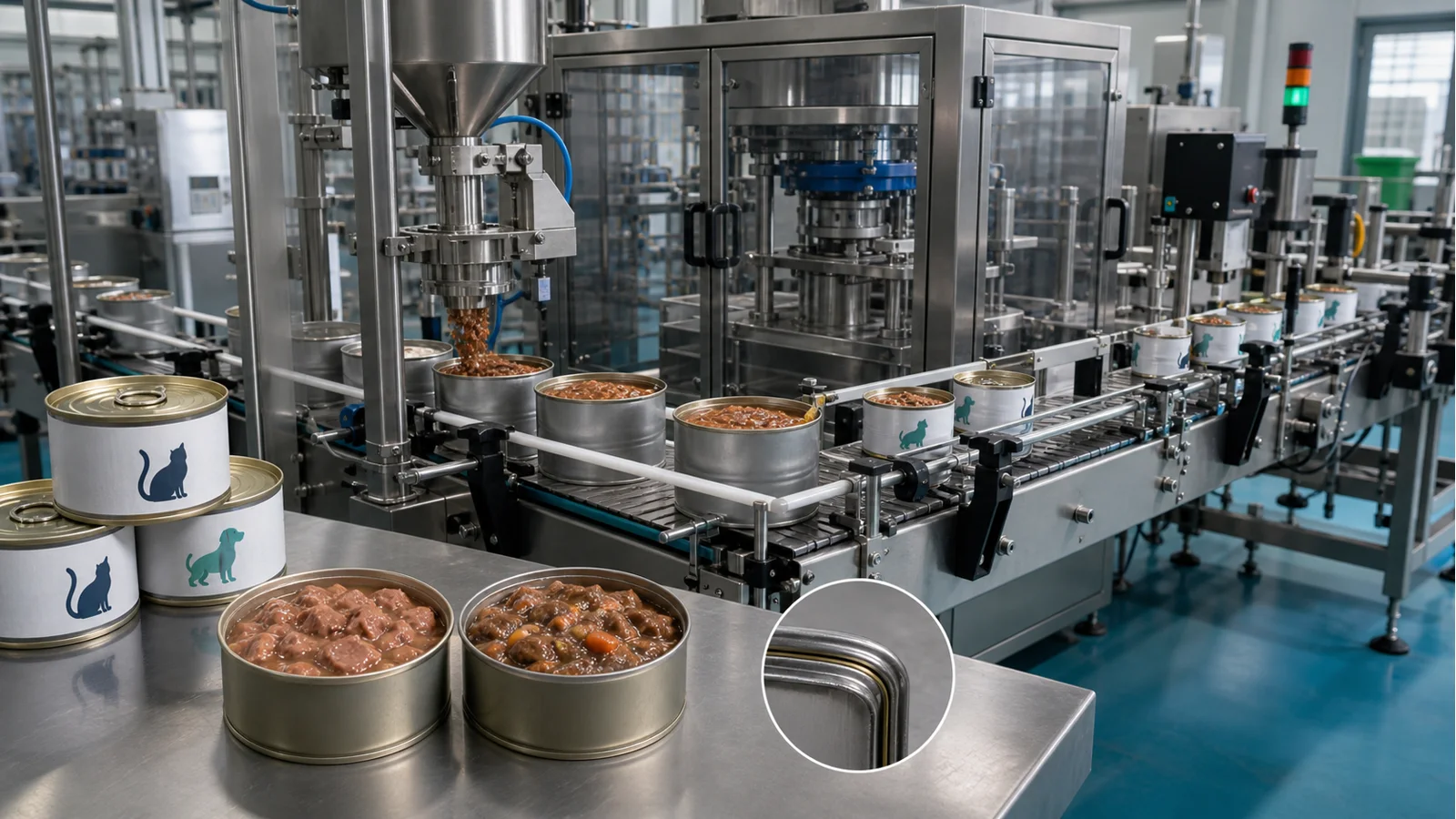
- Metalowe puszki są zwijane, puszki papierowe lub plastikowe mogą być zgrzewane folią aluminiową, a następnie zakręcane, szklane lub plastikowe z gwintem są zakręcane z możliwością indukcyjnego zgrzewania. Najpierw określ materiał puszki i typ pokrywki, a następnie skonfiguruj etykietowanie, kodowanie i kontrolę masy.
Przygotowane podsumowanie rozwiązania
- For pet food cans, select the machine according to can material and lid type. Metal cans use double seaming, paper-plastic cans with direct membrane use heat sealing and lid pressing, and threaded cans use screw capping.
- Induction inner sealing is only used for glass or plastic cans with a matching aluminum foil liner in the lid and stable capping. It cannot replace double seaming or direct membrane heat sealing.
- Labeling, inkjet coding, and checkweighing are added after the main seal is verified. Checkweighing only works according to weight rules and does not indicate can lid closing quality.
Route comparison
- Pet food uses metal can bodies and matching metal lids that can be conveyed stably, and is accepted according to the seaming structure.
- The on-line automatic can seamer completes positioning and double seaming around the metal can body and lid, and the closing principle matches the can type.
- Can body roundness, lid dimensions, seaming tooling, and rim cleanliness must be verified as a set. Optional lid placement inspection is confirmed separately.
- When packaging uses paper-plastic cans with direct membrane or threaded glass jars, choose the corresponding heat sealing or screw capping route.
- Use an on-line automatic can seamer and configure seaming components according to production-scale metal cans, lids, and seaming requirements.
- Packaging where the membrane is placed directly on the rim of paper or plastic cans, and an outer lid is assembled after sealing.
- Direct aluminum foil heat sealing and outer lid assembly can be completed in sequence, suitable for paper cans and verifiable plastic can combinations.
- Membrane heat-seal layer, can mouth support, filling residue, and outer lid pressing all need verification. Not applicable to metal seaming.
- When the lid is a metal double-seamed lid, or the packaging uses a threaded lid with liner, switch to the corresponding process.
- Use a paper can/plastic pail foil sealing and lid pressing machine, and test with can mouth, membrane, and outer lid together.
- Pet food uses glass jars or threaded plastic cans, where the lid components can be assembled stably and liners configured as needed.
- Glass or threaded plastic cans can be screwed or pressed according to the lid type, and induction inner sealing can be added when liner conditions are met.
- Thread, lid type, bottle body clamping, liner, and opening requirements all need actual sample testing. Induction is not a fixed station.
- When metal cans require double seaming, or paper-plastic cans use direct membrane on the rim, do not use the threaded can closing route.
- Choose an automatic screw capper or automatic screw capper/lid presser according to the lid sample. When the lid has a suitable liner, evaluate a bench-top air-cooled induction aluminum foil sealing machine.
Powiązane urządzenia / materiały eksploatacyjne
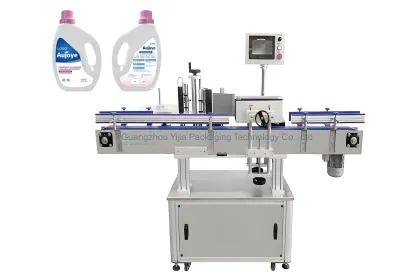 Etykieciarka do butelek okrągłych i kwadratowych
Etykieciarka do butelek okrągłych i kwadratowych jest konfigurowane do Etykietowanie butelek okrągłych dla Butelki okrągłe, kwadratowe, tuby, produkty w torbach.
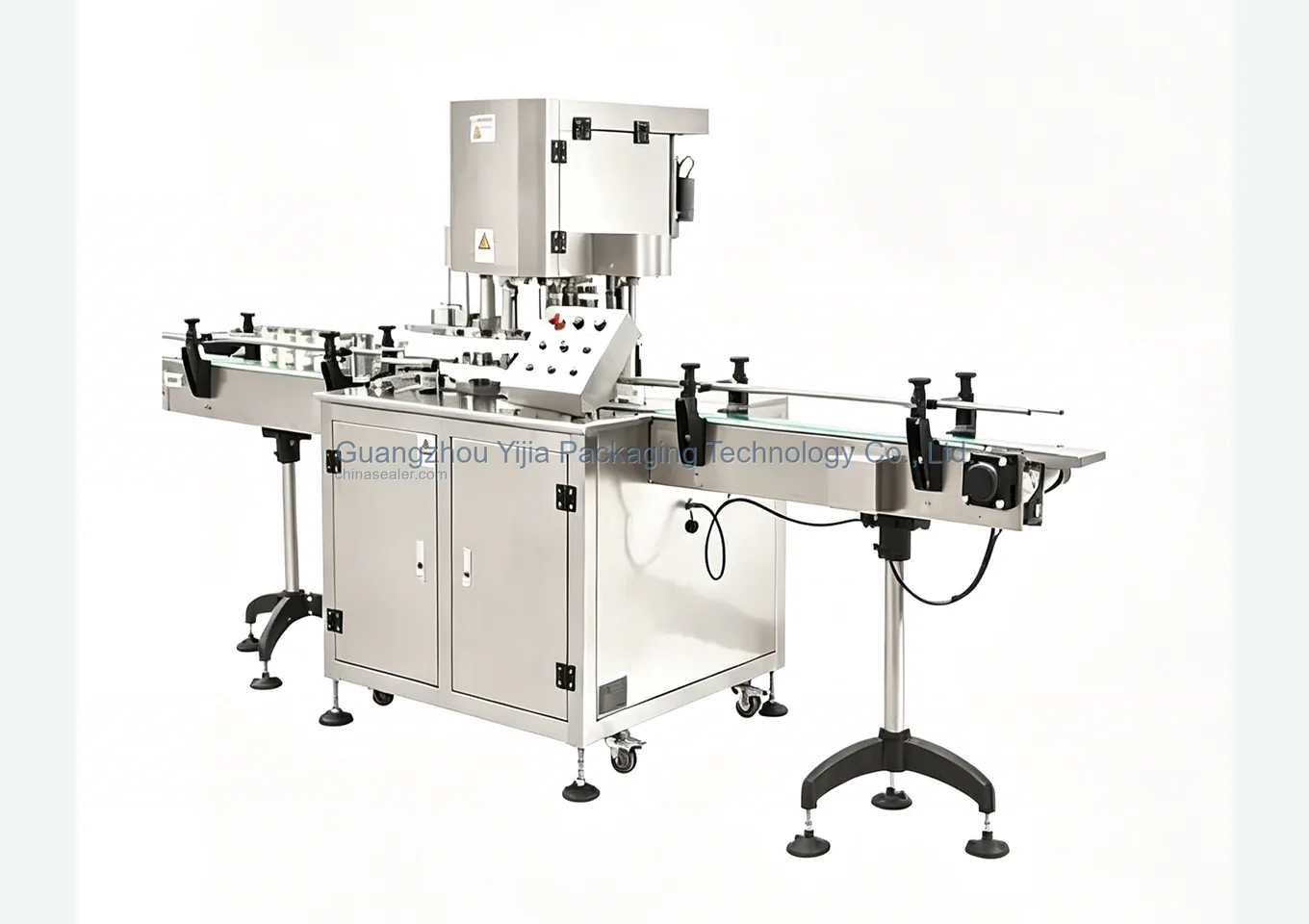 Automatyczna zamykarka do puszek inline
Paper-plastic can film sealing and lid pressing; Direct membrane, outer lid, rim support, and post-filling residue must be sampled as a set. This station is not equivalent to m...
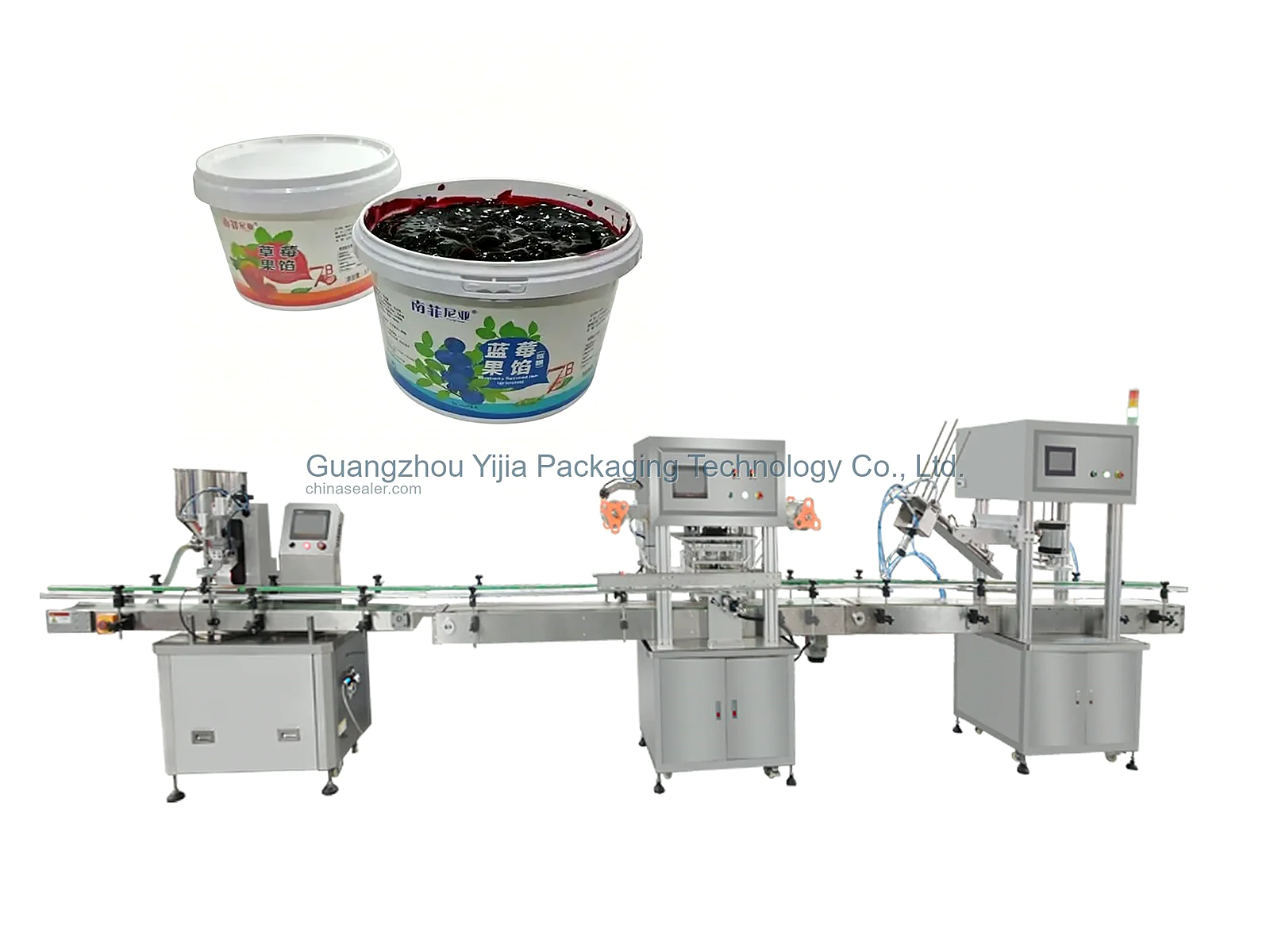 Maszyna do zgrzewania folią aluminiową i zakręcania puszek/wiader plastikowych
Paper-plastic can film sealing and lid pressing; Direct membrane, outer lid, rim support, and post-filling residue must be sampled as a s...
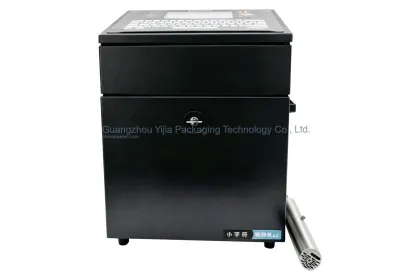 Kodarka daty i partii
Metal can double seaming; Lid placement, seaming inspection, and rejection are modules configured per project. Seaming samples still need to be checked according to the agreed method; On-line au...
Proces główny
First separate metal double seaming, direct membrane press capping on can mouth, and threaded cap screwing according to can body material and lid structure, then consider downstream marking.
When metal can body is paired with metal lid, the on-line automatic can seamer completes positioning and double seaming according to the actual lid and seaming profile.
When paper or plastic cans have aluminum foil membrane directly on the rim and require an outer lid, use the foil sealing and lid pressing machine to complete heat sealing inner seal and lid pressing.
For glass or threaded plastic cans, first use an automatic screw capper or screw capper/lid presser according to the lid type. When the lid has a suitable aluminum foil liner, evaluate bench-top air-cooled induction inner sealing.
After the main closing process is stable, the round/square bottle labeling machine and date/batch code inkjet printer are set according to the can body surface, and the on-line checkweigher verifies according to the agreed weight rules.
For different can materials, keep closing samples, label layouts, and weight anomaly handling records separately. When changing cans, return to the corresponding equipment and reconfirm.
Dane próbek
Can body material, shape, rim, height, and rigidity are used to determine double seaming, heat sealing support, screw capping clamping, and labeling.
Submit actual samples and key dimensions of each specification of metal cans, paper cans, plastic cans, or glass jarsMetal can lids, outer lids, inner plugs, separate membranes, and lid liners correspond to different closing actions.
Provide complete lid components, membranes, liners, and planned assembly sequenceWet food seepage, dust, granules, fill height, and rim residue change the pre-sealing state and conveying stability.
Submit actual pet food and filled can samples, and explain cleaning and rim inspection methodsLabel layout, batch code position, and can body seam must coordinate with clamping, seaming, or lid inspection areas.
Provide label rolls, date/batch code content, application position, and can body display directionWeight rules, production schedule, can change frequency, and defective product process are used to configure checkweighing and downstream handover.
Explain finished product weight range, review rules, site layout, changeover plan, and defective product handlingTypowe błędy doboru
The food name does not indicate the can material and lid type. The same pet food can use double seaming, membrane press capping, or threaded caps.
Metal can double seaming requires matching can lids and seaming tooling. Can body roundness and rim condition are also part of sample verification.
The separate membrane of paper-plastic cans is processed by heat sealing equipment, while the metal can lid seam is formed by a can seamer.
Only when the lid has a suitable liner should induction testing be performed. Ordinary threaded caps only need assembly according to the lid type.
The on-line checkweigher can only identify defined weight anomalies. The closing status still requires inspection of can lids and finished product samples.
Zobacz szczegóły techniczne
Materiał puszki i typ pokrywki przed nazwą produktu
The closing equipment for pet food cans is determined by the can body material and lid structure. First distinguish metal double seaming, paper-plastic cans with direct membrane, and threaded cans, then configure downstream equipment.
Potwierdzenie procesu na podstawie napełnionych próbek puszek
Zestaw próbek powinien zawierać napełnioną puszkę, kompletne pokrywki, membrany lub uszczelki. Pozostałości na krawędzi, sztywność puszki i środek ciężkości gotowego produktu również powinny być odwzorowane na próbkach.
Metalowe puszki – specjalne zwijanie
Metalowe puszki z pasującymi pokrywkami są zamykane na linii automatyczną zamykarką z podwójnym zwijaniem. Elementy zwijające, sposób podawania pokrywek i metoda kontroli gotowego produktu są określane na podstawie kombinacji puszki i pokrywki, z zachowaniem próbek prawidłowego i nieprawidłowego zwijania.
Puszki papierowo-plastikowe – najpierw zgrzewanie folii, potem zakładanie pokrywki
W przypadku puszek papierowych lub plastikowych, po nałożeniu folii, maszyna do zgrzewania folii aluminiowej i zakręcania pokrywek wykonuje zgrzewanie cieplne i montaż zewnętrznej pokrywki. Warunki przezbrajania dla folii i pokrywki są rejestrowane osobno; po zmianie puszki należy ponownie sprawdzić podparcie krawędzi i pozycję pokrywki.
Słoiki z gwintem – decyzja o indukcji na podstawie uszczelki
Szklane słoiki i plastikowe butelki z gwintem są zamykane przez zakręcanie lub wciskanie, zgodnie z próbką pokrywki. Gdy pokrywka ma pasującą uszczelkę, a stan zamknięcia jest stabilny, można dodać indukcyjne zgrzewanie folii aluminiowej z chłodzeniem powietrzem, zachowując próbki otwartych pokrywek.
Stanowisko znakowania podąża za pozycją puszki
Etykietowanie i kodowanie atramentowe wykonuje się po głównej weryfikacji zamknięcia; powierzchnia etykiety i numer partii omijają otwór puszki i obszar chwytu. Dla różnych materiałów puszek przeprowadza się osobne testy przejścia gotowego produktu.
Kontrola masy dotyczy tylko zasad masy
Kontroler masy online weryfikuje gotowy produkt zgodnie z ustalonymi zasadami masy. Nie ocenia on zwijania metalowych krawędzi, połączenia membrany ani wyniku zakręcania pokrywki.
Przechowywanie próbek dla różnych typów puszek
Dla każdego typu puszki przechowuje się próbki prawidłowego zamknięcia, etykiety z numerem partii i nieprawidłowej masy. Po zmianie puszki lub pokrywki należy wrócić do odpowiedniego stanowiska i ponownie wyregulować.
Etapowa weryfikacja pakowania puszek z karmą dla zwierząt
Odbiór linii odbywa się etapami: wejście puszki, podawanie pokrywki, główne zamknięcie, znakowanie, kontrola masy i usuwanie nieprawidłowości – każdy etap jest rejestrowany osobno; nie zastępuje się jednego procesu innym.
Częste pytania
What sealing method is used for metal pet food cans?
Metal can bodies and matching metal lids are sealed on-line by an automatic can seamer using a double seam. The lid and seaming profile need to be set up with production-scale samples.
How to seal and press lids on paper or plastic cans?
When the can opening is directly covered with an aluminum foil membrane and an outer lid is required, a paper can/plastic pail foil sealing and lid pressing machine can be used, with the membrane and outer lid verified as a set.
How to configure glass jars and threaded plastic cans?
First complete screw capping or press capping according to the lid type. Only when the lid has a suitable aluminum foil liner and the lid is applied stably, add induction inner sealing.
Can a seamer replace a screw capper?
No. Double seaming processes the rolled edge of metal can lids, while screw capping handles threaded caps. The lids, tooling, and acceptance methods are different.
At what stage should can body marking be confirmed?
After the main sealing is tested with samples, set up labeling and inkjet coding. The label area and batch number position should avoid clamping and sealing inspection zones.
Can checkweighing determine whether the can lid is sealed properly?
The on-line checkweigher screens finished products according to the agreed weight rules. Double seaming, membrane inner sealing, and screw capping status are still checked by their respective process methods.