Lösungsthema
Upgrade from manual single machines to an automated line with feeding, cap sorting and conveying inspection
Explain the configuration order of the cap sorting and placement system, the automatic feeding, conveying and sealing line, and the food-grade conveying line, then connect labeling
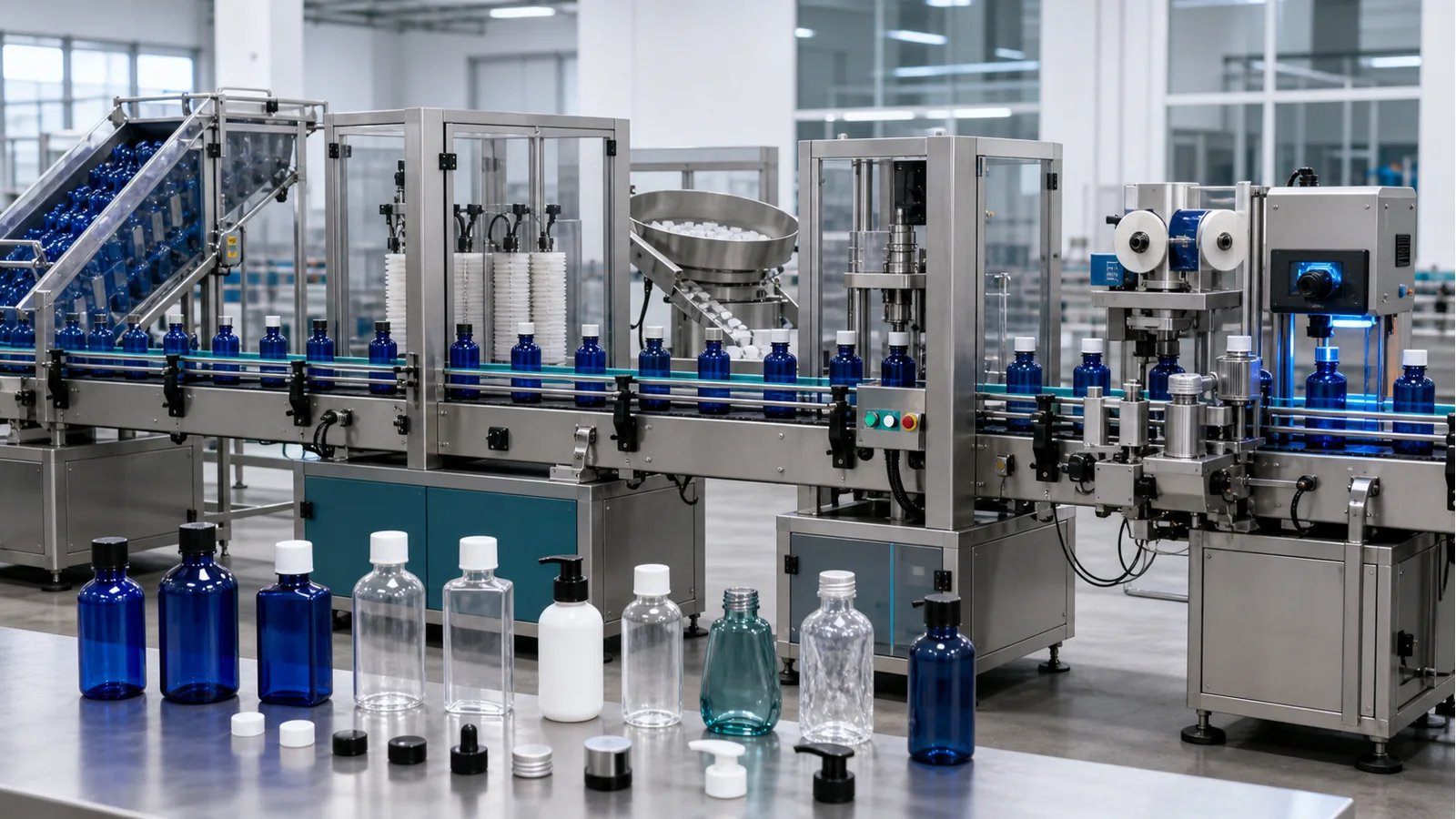
- Automation upgrades should prioritize product orientation and workstation connection before adding cap sorting, conveying and inspection. Bottles, cups, pails, trays or outer cartons cannot share unverified feeding mechanisms.
Für Sie erstellte Lösungszusammenfassung
- Bei der Aufrüstung von Einzelmaschinen zu einer Linie sollten zuerst manuelle Engpässe dokumentiert werden, bevor entschieden wird, ob Deckelzuführung, Zuführförderung oder Entnahmepuffer hinzugefügt werden.
- Die Deckelzuführung hängt von Vorder-/Rückseitenmerkmalen, Schwerpunkt und Klemmverhalten ab; die Förderstruktur wird durch Behälterausrichtung, Reinigung und Hauptmaschinenschnittstellen bestimmt.
- Etikettierung und Codierung sollten erst nach stabiler Produktausrichtung platziert werden; Kontrollwiegen, Metallerkennung und Sichtprüfung werden nach Risiko und Abnahmeprojekten ausgewählt.
Route comparison
- Suitable for stages where packaging materials and main processes still need sampling and manual operation can flexibly handle multiple packaging variations.
- Sample changes and observation are convenient, and problems with the main machine, containers or packaging materials can be found quickly.
- Fluctuations in manual feeding and collection can mask the true rhythm of the main machine and make it difficult to continuously record bottlenecks.
- When packaging specifications are stable and the same manual action repeatedly causes waiting, it is not advisable to stay at this stage for long.
- First fix core process samples and acceptance methods, while reserving space for subsequent conveying height, signals and operation.
- Suitable for projects where cap placement or placement is the most labor-intensive and there are already stable cap types, container orientation and closing processes.
- Only modify the clear bottleneck, retaining flexibility in other manual steps for phased verification.
- Cap orientation, center of gravity, stacking and jamming can all change the sorting and guiding structure.
- When official cap samples are not yet finalized, or pump hoses are prone to tangling, continuous feeding tests should be done first.
- The cap sorting and placement system is configured according to official caps, abnormal cap samples and downstream equipment interfaces.
- Suitable for sites where the main process and packaging specifications are stable and feeding, buffering, main machine and output need to be connected continuously.
- It can unify product orientation and front-to-back handover, and integrate stop linkage into the entire line control.
- On-site turns, cleaning, conveying heights and product accumulation all change the line and buffer arrangement.
- When entry/exit, logistics direction or main machine stop logic is unclear, do not fix the conveying direction first.
- The automatic feeding, conveying and sealing line is configured according to containers and processes. The food-grade conveying line is additionally confirmed with samples, hygiene boundaries and on-site cleaning conditions.
- Suitable for finished products with stable orientation and clear requirements for labels, batch numbers, weight, metal or visual judgment.
- After clarifying the order of marking, inspection, rejection and rechecking, repeated handling and manual review can be reduced.
- If judgment thresholds, trigger positions and reject flow are unclear, equipment signals cannot correspond to on-site handling.
- When adding similar inspection functions just to complete equipment names, you should first return to the risk and acceptance checklist to make trade-offs.
- The labeling machine for round and square bottles is confirmed with samples, the collaborative date and batch inkjet coder is test-printed, and inspection equipment is selected according to finished product risk.
Zugehörige Geräte / Verbrauchsmaterialien
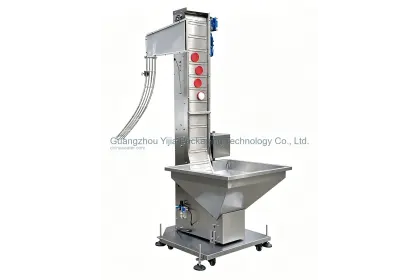 Kappenzuführ- und Aufsetzsystem
Kappenzuführ- und Aufsetzsystem wird für Verschluss-Sortieren, Fördern und Aufsetzen bei Schraubkappen, Pressdeckel, Inneneinsätze, Sonderformen ausgelegt.
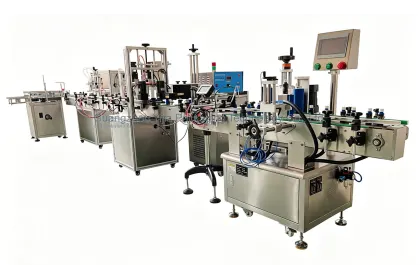 Automatische Zuführungs-, Förder- und Siegelverbundlinie
Förderung und Schnittstellenverbindung; Behälterausrichtung, Stopplogik der Hauptmaschine, Reinigungsmethode und Vor-Ort-Kurven bestimmen gemeinsam die Liniens...
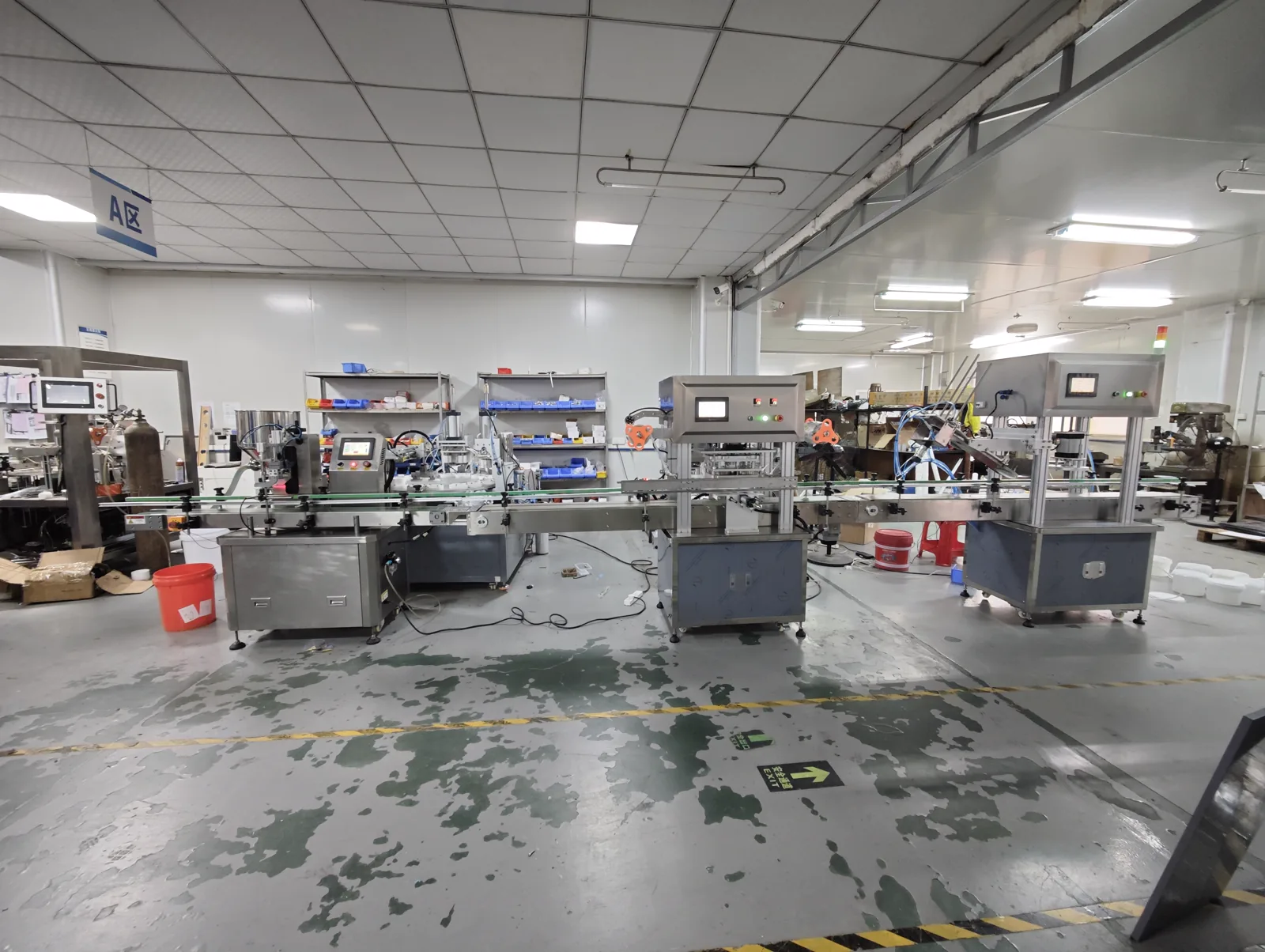 Abfüllung, Press-/Schraubverschließen und Versiegelung – Komplettlinie
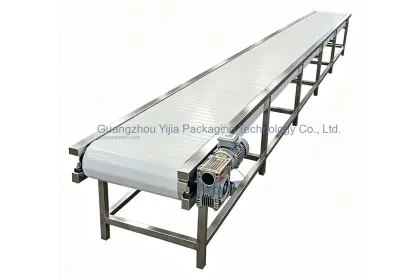 Lebensmittelgerechte Förderlinie
Förderung und Schnittstellenverbindung; Behälterausrichtung, Stopplogik der Hauptmaschine, Reinigungsmethode und Vor-Ort-Kurven bestimmen gemeinsam die Linienstruktur; Automatische Zu...
Kernprozess
Musterdaten
Warte- und Eingriffsstellen kontinuierlich aufzeichnen, um zu entscheiden, welcher Vorgang zuerst geändert wird.
Listen Sie die einzelnen Vorgänge für Flaschenaufstellen, Deckelzuführung, Deckelaufsetzen, Entnahme, Etikettieren und Transport auf.Ausrichtung, Schwerpunkt, Reibung und Stapelverhalten beeinflussen Zuführ-, Führungs- und Umrüststrukturen.
Offizielle Muster von Flaschen, Bechern, Beuteln, Schachteln, Deckeln, Pumpköpfen und fehlerhaften Deckeln einreichen.Vor- und nachgelagerte Abschnitte müssen bei Materialmangel, Stau und Stopp koordiniert werden, nicht nur im Normalbetrieb.
Bestehende Geräteabmessungen, Einlauf-/Auslaufhöhe, Geschwindigkeitsänderungen und Stoppsignale bereitstellen.Layoutdaten dienen zur Beurteilung von Gerade, Kurven, Puffern und der Projektkonfiguration sowie Aufstellungsart der lebensmittelechten Förderlinie.
Rohstoffeingang, Fertigproduktausgang, Bediengänge, Reinigungsbereich und verfügbare Abmessungen markieren.Schreiben Sie die Ausschleusungs- und Nachprüfaktionen für jede Prüfung klar auf, um redundante Module zu vermeiden.
Etikettenlayout, Chargeninhalt, Gewichts-, Metall- und Sichtprüfungen angeben.Häufige Auswahlfehler
Wenn Behälter, Verpackungsmaterial und Kernprozess noch in Änderung sind, müssen die externen Schnittstellen leicht nachgearbeitet werden.
Bei unregelmäßigen Deckeln, Pumpköpfen und dünnen Deckeln müssen Schwerpunkt, Vorder-/Rückseite, Stapelverhalten und kontinuierliche Zufuhr beobachtet werden.
Einlauf-/Auslaufhöhe, Führungen, Puffer, Kurven und Stoppkopplung verändern das tatsächliche Layout.
Kontrollwiegen, Metallerkennung und Sichtprüfung haben jeweils eigene Bewertungsgrenzen; sie sollten nach Produktrisiko und Abnahmeprojekten aufgeteilt werden.
Neben den Prüfsignalen müssen auch Ausschleusung, Isolierung, manuelle Nachprüfung und erneute Freigabe als Vor-Ort-Aktionen festgelegt werden.
Technische Details anzeigen
The starting point for the upgrade is recording manual actions
First observe the waiting, refilling, cap placement, collection and handling before and after the main machine. Whichever action continuously interrupts production, collect samples and interface data around that position first.
The orientation of the cap is more critical than its name
Screw caps, press caps, special-shaped caps and pump heads differ significantly in center of gravity, orientation and stacking. The cap sorting and placement system should be determined through continuous feeding tests with official cap samples.
The manual single-machine stage is suitable for validating packaging materials and core processes while leaving room for quick sample changes. At this time, record equipment height, signals and operating rhythm to leave reliable interfaces for later upgrades.
If the most obvious problem is cap sorting or placement, configure partial automation first. Cap samples, abnormal orientations and downstream closing actions should be tested together to avoid smooth operation only when empty.
Once packaging specifications and the main process are stable, connect feeding, conveying, buffering and output into a continuous flow. The line layout is determined by on-site logistics, cleaning areas and stop linkage.
Food-grade conveying requires attention to cleaning boundaries
Food-grade conveying lines not only connect equipment but also need to consider contact areas, liquid accumulation risks, disassembly and cleaning methods, and container bottom surfaces. The final configuration must be confirmed with on-site conditions.
Labeling and coding should be done after product orientation is stable
The labeling machine for round and square bottles must be configured according to container and label samples. The collaborative date and batch inkjet coder must be tested on the actual printing surface. Their positions must also avoid accumulation and emergency stop areas.
Inspection functions are divided by risk
Online checkweighers, food metal detectors, and collaborative online checkweighing and vision inspection systems have different judgment roles. First specify product risks, acceptance items and reject flow, then decide on the combination.
Use on-site sketches to gradually converge the line
Even if not all dimensions are measured, you can first mark equipment order, logistics direction and operating positions. Later, adding heights, passages and interfaces will allow phased confirmation of the modification scope.
Häufige Fragen
Wann ist bei einer Einzelmaschine eine automatische Zuführung erforderlich?
Erfassen Sie für jede Schicht die Warte-, Nachfüll- und Entnahmevorgänge. Wenn ein Vorgang die Hauptmaschine wiederholt unterbricht, bewerten Sie eine Automatisierung an dieser Stelle.
Wie beurteilt man bei der Bewertung eines Deckelzuführ- und Aufsetzsystems unregelmäßige Deckel oder Pumpköpfe?
Verwenden Sie offizielle Deckel, um Schwerpunkt, Vorder-/Rückseitenmerkmale, Stapelverhalten und Klemmen zu beobachten, und bestätigen Sie dann die Zuführ- und Deckelaufsetzstruktur.
Was sollte man im Voraus tun, um später Einzelmaschinen zu einer Linie zu verbinden?
Behalten Sie Einlauf-/Auslaufhöhe, Signalpunkte, Förderposition und Stopplogik bei und dokumentieren Sie den tatsächlichen Verarbeitungstakt der Hauptmaschine.
Welche Bedingungen sind bei einer lebensmittelechten Förderlinie hauptsächlich zu prüfen?
Kontaktbereiche, Reinigungsmethode, Behälterboden, Flüssigkeitsansammlungsrisiko und Hygienegrenzen zu vor- und nachgelagerten Stationen müssen angegeben werden.
Müssen Kontrollwiegen, Metallerkennung und Sichtprüfung alle konfiguriert werden?
Wählen Sie je nach Produktrisiko und Kundenabnahmeprojekten; vermeiden Sie zuerst Funktionsüberschneidungen und legen Sie dann fest, wie Ausschuss ausgeschleust und überprüft wird.
Kann die Upgrade-Reihenfolge besprochen werden, wenn die Vor-Ort-Zeichnungen unvollständig sind?
Sie können zunächst Prozessskizzen, Gerätefotos und Aufzeichnungen manueller Tätigkeiten bereitstellen, um Engpässe zu beurteilen; die Aufstellmaße werden später ergänzt.