Check applicable objects first
Cavity packaging formed online from bottom film; cavity depth, layout, product profile, and loading space confirmed per actual sample
Bottom film thermoforming and vacuum sealing
The line heats and forms bottom rollstock, loads product, applies top web, then evacuates, optionally gas flushes, seals and cuts. It differs from a preformed-tray sealer and from a chamber machine using finished bags. Validate forming depth, product profile and projections, top and bottom web and sealant layers, roll dimensions, pack layout and cutting, loading, vacuum or gas target, hygiene, drainage and changeovers as one sample set. Automatic loading, coding, inspection and downstream handling are project-specific.
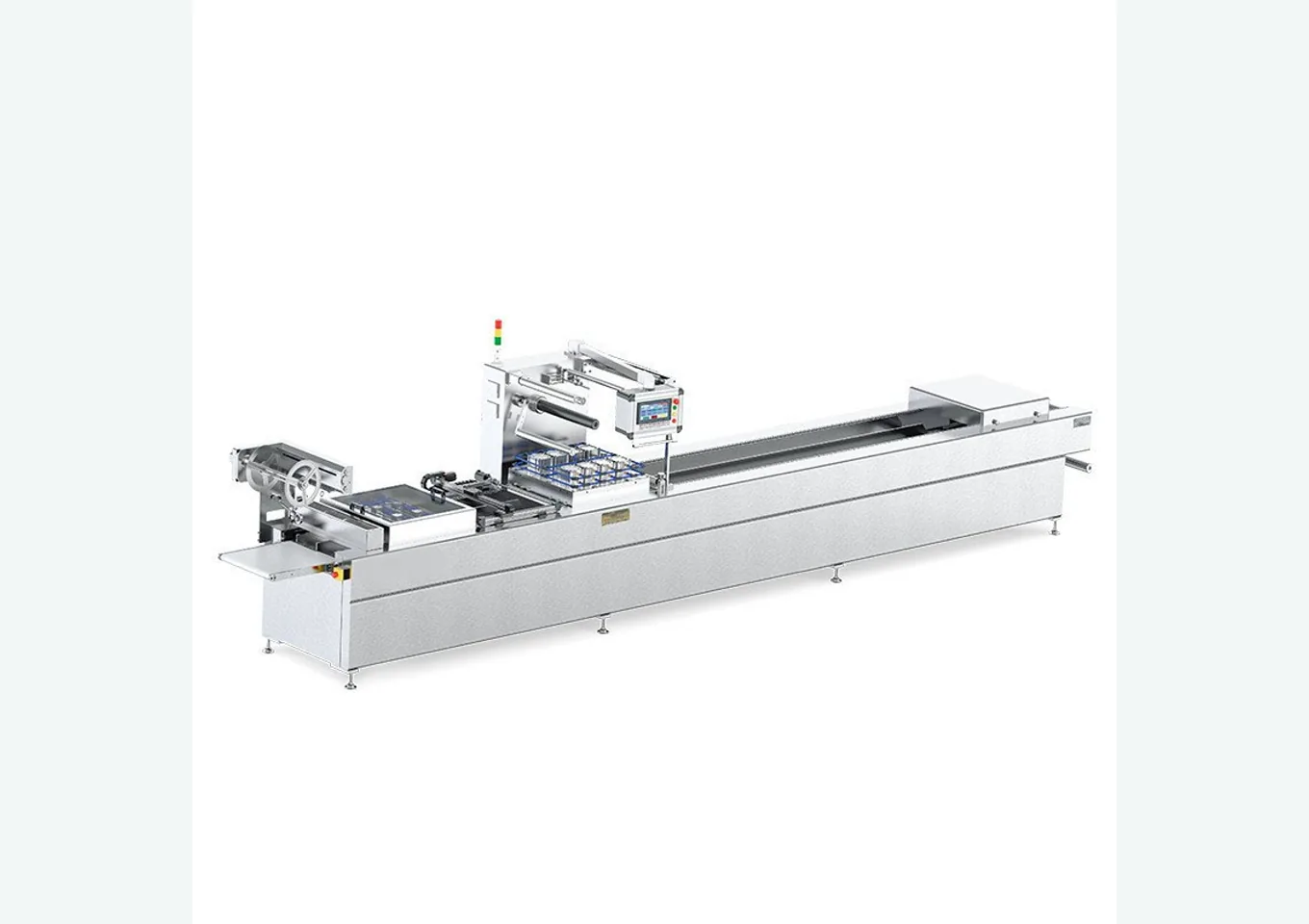
See actual conditions first
Please provide product, top and bottom films, finished package layout, forming depth, vacuum or gas target, cleaning standard, target speed, and site layout.
Cavity packaging formed online from bottom film; cavity depth, layout, product profile, and loading space confirmed per actual sample
Thermoforming bottom film and top sealing film must be matched; formability, barrier, heat seal layer, thickness, and print registration confirmed per material samples; bottom film unwinding, heating forming, product loading, top film feeding, vacuumizing, optional gas flushing, heat sealing, cutting, and discharge
Optional automatic loading, gas flushing, printed film registration, coding, inspection, rejection, cartoning, and data interface.
Please provide product, top and bottom films, finished package layout, forming depth, vacuum or gas target, cleaning standard, target speed, and site layout.
See actual conditions first
The more complete the samples, packaging materials, and site information, the easier to determine equipment route, changeover scope, and line interface.
See actual conditions first
Please provide product, top and bottom films, finished package layout, forming depth, vacuum or gas target, cleaning standard, target speed, and site layout.
Confirmed based on layout arrangement, forming cooling, loading time, vacuum sealing, cutting, and upstream/downstream connection; fixed values not published without project validation
Continuous thermoforming, vacuum sealing and cutting; automatic loading, gas flushing, inspection, coding, and downstream cartoning are optional per project
Cavity packaging formed online from bottom film; cavity depth, layout, product profile, and loading space confirmed per actual sample
Food, medical, or industrial products; dimensions, height, sharp corners, liquid leakage, pressure resistance, and hygiene cleaning requirements must be specified
Thermoforming bottom film and top sealing film must be matched; formability, barrier, heat seal layer, thickness, and print registration confirmed per material samples
Bottom film unwinding, heating forming, product loading, top film feeding, vacuumizing, optional gas flushing, heat sealing, cutting, and discharge
Replace forming, heat sealing, and cutting molds per product and layout; adjust film path, loading area, and program
Equipment dimensions, power, air supply, maintenance space, and upstream/downstream interfaces confirmed based on film heating forming, cooling, vacuum or gas, heat sealing cutting, cleaning, and optional feeding/insp...
Common configuration routes
The more complete the samples, packaging materials, and site information, the easier to determine equipment route, changeover scope, and line interface.
Check product profile, loading, cavity depth, spacing, and cutting method.
Verify heating, stretching, cooling, wall thickness, and product placement space.
Check top film, vacuum or gas, heat sealing, leakage, and finished appearance.
Accept according to agreed materials, product, loading, speed, cleaning, and changeover.
Common configuration routes
A thermoformer creates the bottom cavity in the machine; a tray sealer uses preformed trays; a chamber machine evacuates products already loaded into finished bags.
Bottom film thermoforming and vacuum sealing
A thermoformer creates the bottom cavity in the machine; a tray sealer uses preformed trays; a chamber machine evacuates products already loaded into finished bags.
See actual conditions first
Please provide product, top and bottom films, finished package layout, forming depth, vacuum or gas target, cleaning standard, target speed, and site layout.
Need to check bottom film formability, top film heat seal layer, thickness, barrier, and dimensions, and sample according to target layout; cannot judge by material name alone.
No. Manual loading or optional automatic loading can be selected based on product shape, hygiene, speed, and labor conditions.
Send samples and requirements
Send product samples and profile dimensions, projections or sharp points, web materials, thicknesses, widths and cores, pack layout, vacuum or gas target, loading method, hygiene and drainage, packs per minute and changeovers.