Cups / Bowls / Boxes / Trays Sealing Equipment
Vacuum Skin Packaging Machine
The vacuum skin packaging machine is designed for tray or base board products. The skin film is heated and then, under vacuum, conforms to the product contour and seals to the base material. Product height and sharp corners, base board breathability, film stretch, and heat seal layer affect the final appearance. Automatic feeding/unloading, trimming, and downstream conveying are optional per project.
Technical parameters
- Capacity and Cycle Time
- Confirmed based on loading method, film heating forming, vacuum, sealing cooling, and trimming output; no fixed values published without project verification
- Automation Scope
- Skin forming and sealing; automatic feeding/unloading, trimming, inspection, coding, and downstream conveying optional per project
- Applicable Containers or Packaging
- Trays, base boards, or support materials suitable for skin packaging; dimensions, breathability structure, surface, and heat seal area confirmed per actual sample
- Applicable Products
- Fresh meat, seafood, cooked food, parts, or other products requiring contour display; specify height, sharp corners, liquid leakage, and heat resistance
- Packaging Materials and Consumables
- Skin film and tray or base board materials must match; stretch, forming, barrier, and heat seal layers verified per sample
- Basic Process
- Product feeding, skin film heating, vacuum forming, sealing to base material, cooling, optional trimming and output
- Tooling and Changeover
- Replace or adjust support, tooling, film path, and trimming structure according to tray or base board dimensions, product height, and film width
- Power, Air Supply, and Layout
- Confirm equipment dimensions, power, air supply, maintenance space, and upstream/downstream interfaces based on vacuum system, film heating, forming sealing, cooling, trimming,...
Vacuum Skin Machine Tray Loading and Chamber Entry Video
Local no-audio video only shows loading, chamber closing, and control panel operation status; clip does not show skin packaging effect after chamber opening; no commitment to fixed vacuum level, cycle time, or film range based on this.
Selection guide
- Product contour, sharp corners, and height verified through actual skin packaging samples
- Skin film and tray or base board forming and heat seal compatibility jointly confirmed
- Automatic feeding/unloading, trimming, inspection, and downstream conveying are optional modules
- Vacuum, heating, cycle time, and capacity are not fixed values without project verification
Applications
- Packaging for fresh meat, seafood, cooked food, or parts requiring contour display
- Projects where tray or base board and skin film need joint seal verification
- Projects with products having sharp corners, liquid leakage, or height variations requiring film forming evaluation
- Production lines planning to add optional trimming, coding, inspection, or downstream conveying
Frequently Asked Questions
- Are all trays suitable for skin packaging? Not necessarily. The material, breathability, flatness, and heat seal layer of the tray or base board affect forming and sealing, and need to be tested together with the skin...
- Will sharp products puncture the skin film? There is a risk. Sample testing is required based on sharp corners, product height, film stretch, and forming conditions; adjust product placement or packaging structure if...
Send samples and capacity requirements for a clearer solution
- Product sample, dimensions, height, sharp corners, liquid leakage, and heat resistance
- Tray or base board sample, material, breathability, and heat seal area information
- Skin film sample, width, stretch, barrier, and heat seal layer information
- Target appearance, seal standards, target cycle time, and site layout
Related products
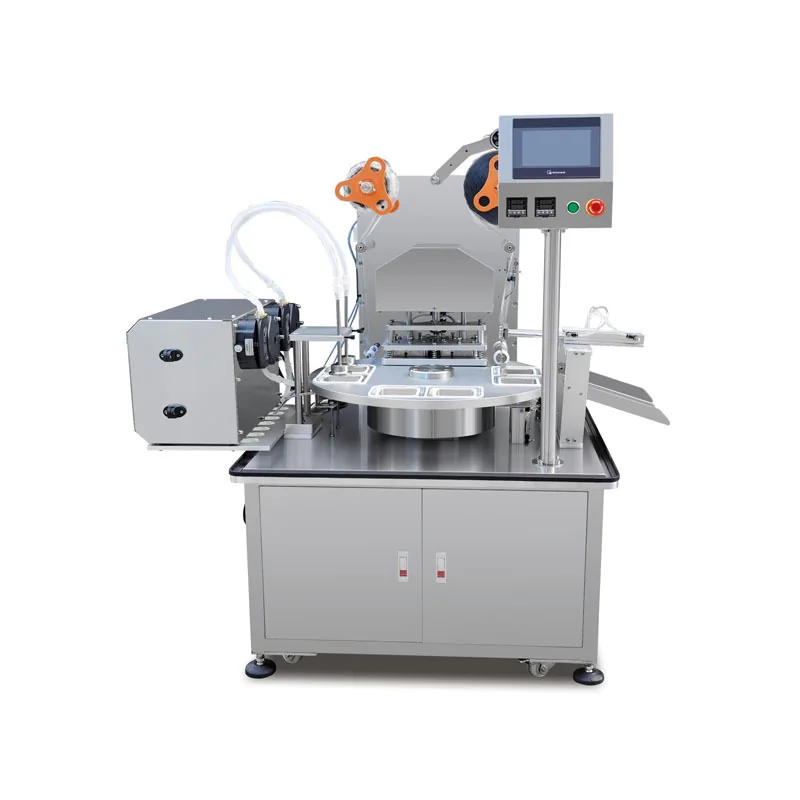
Rotary Tray Vacuum Sealing Machine
The rotary tray vacuum sealing machine distributes tray loading, positioning, vacuum or optional gas treatment, film...
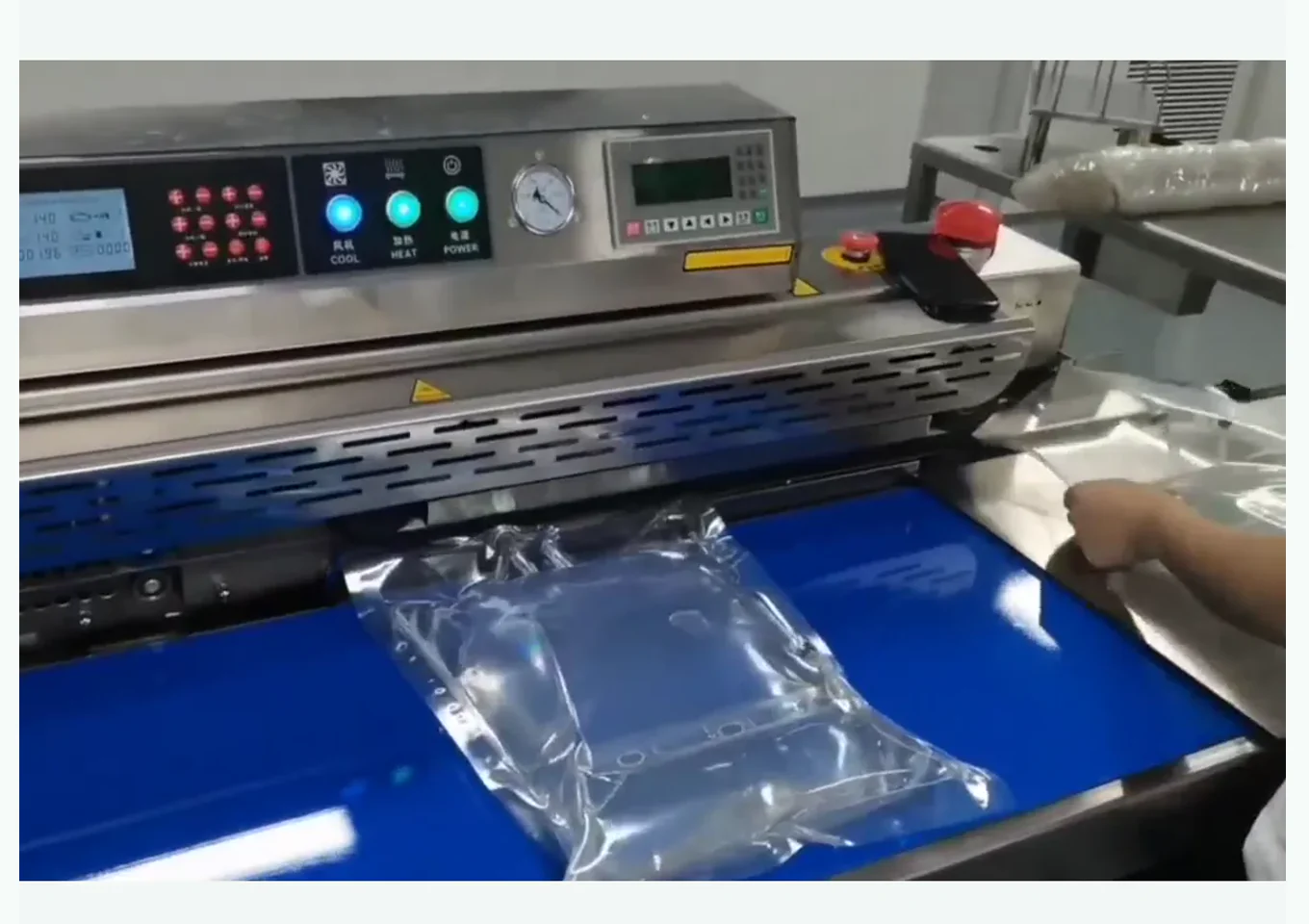
Continuous Inline Bag Vacuum Sealing Machine
The continuous inline bag vacuum sealing machine is suitable for products that have already been bagged, processing t...
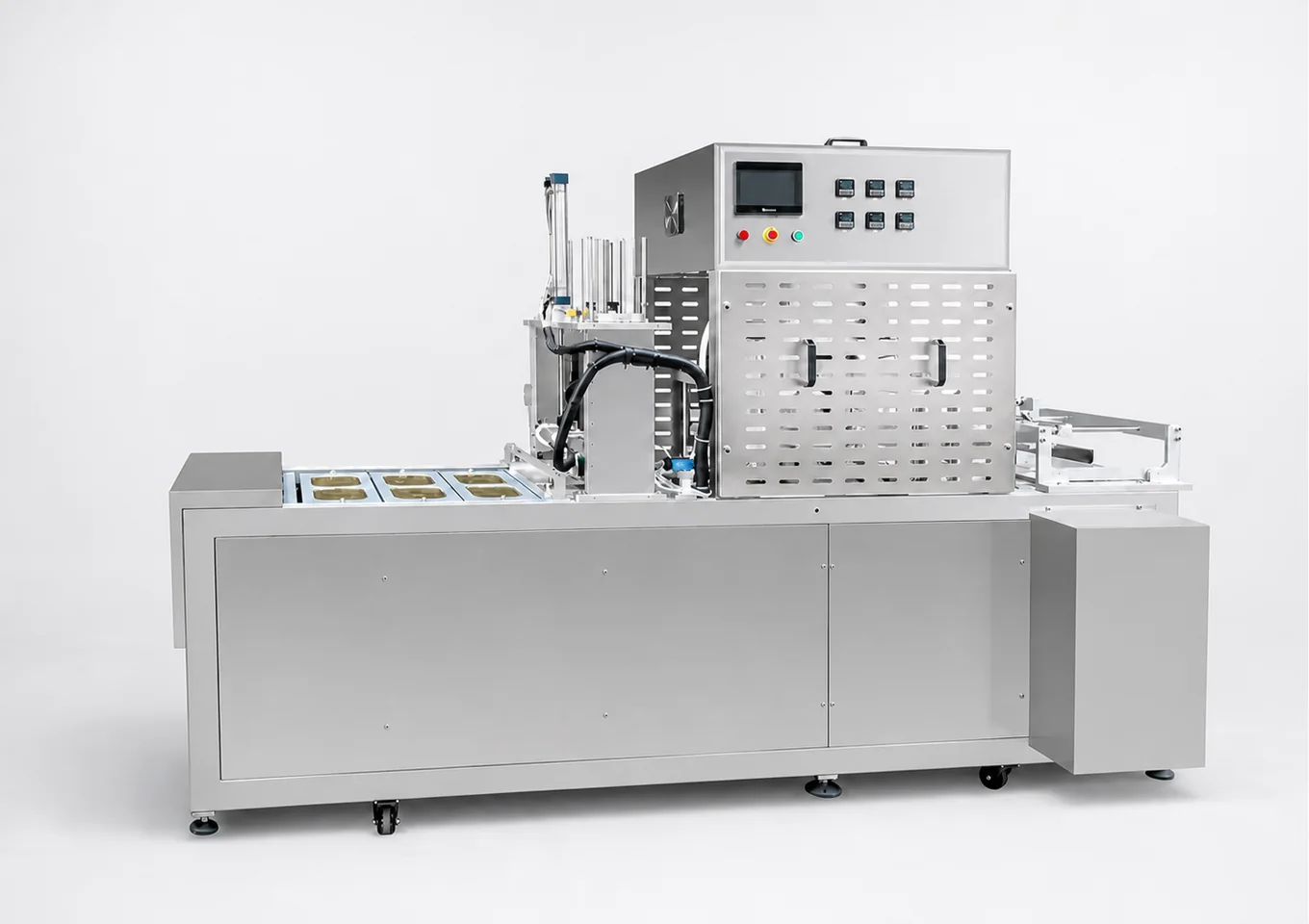
Chain Conveyor Cup/Tray Continuous Sealing Line (Optional Filling)
Suitable for continuous positioning conveying and heat sealing of preformed cups, boxes, and trays. The gallery inclu...
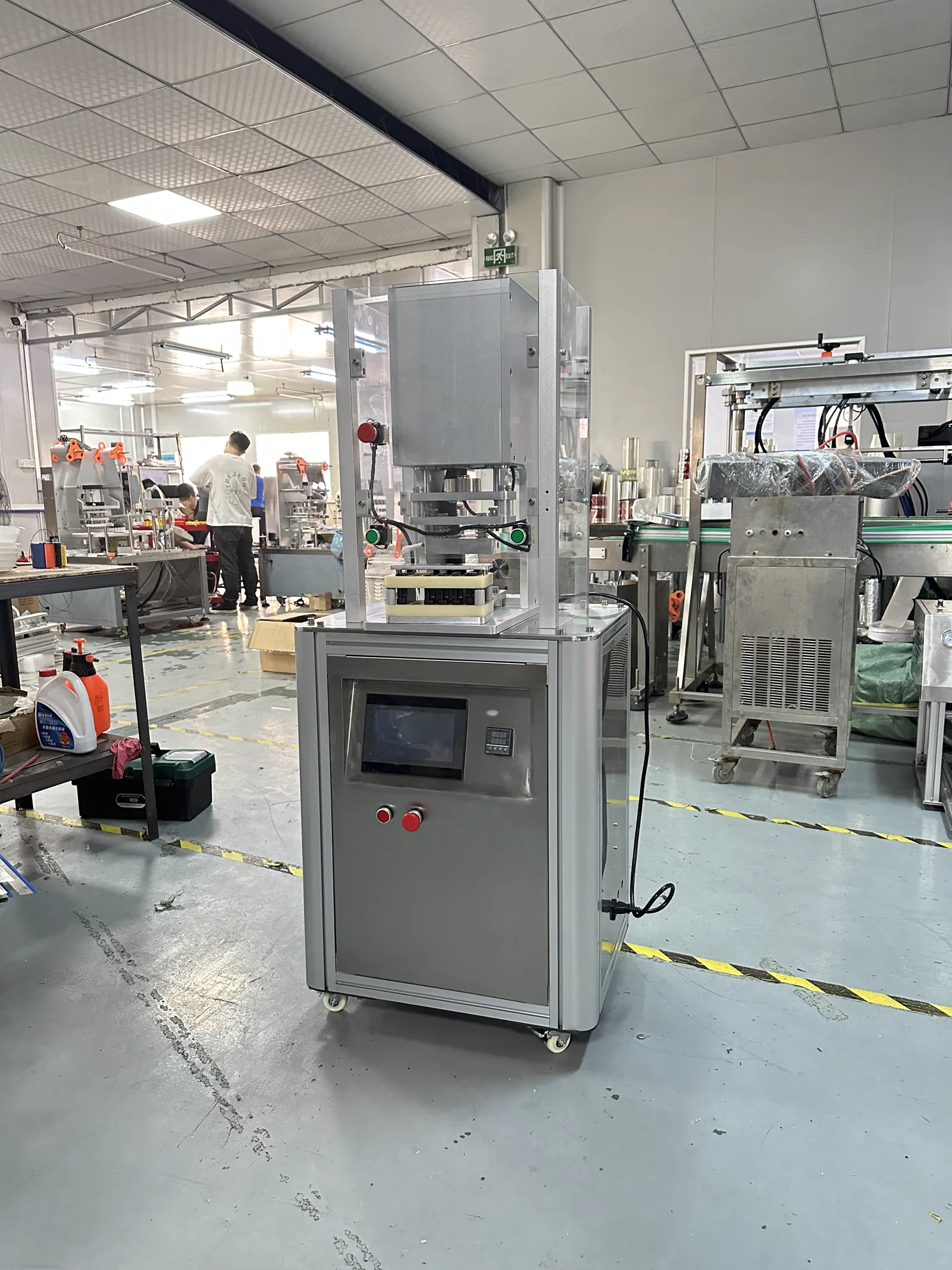
Servo High-Speed Multi-Cavity Sealing Machine
This series uses multi-cavity tooling and servo conveying to coordinate feeding, positioning, film placement or feedi...
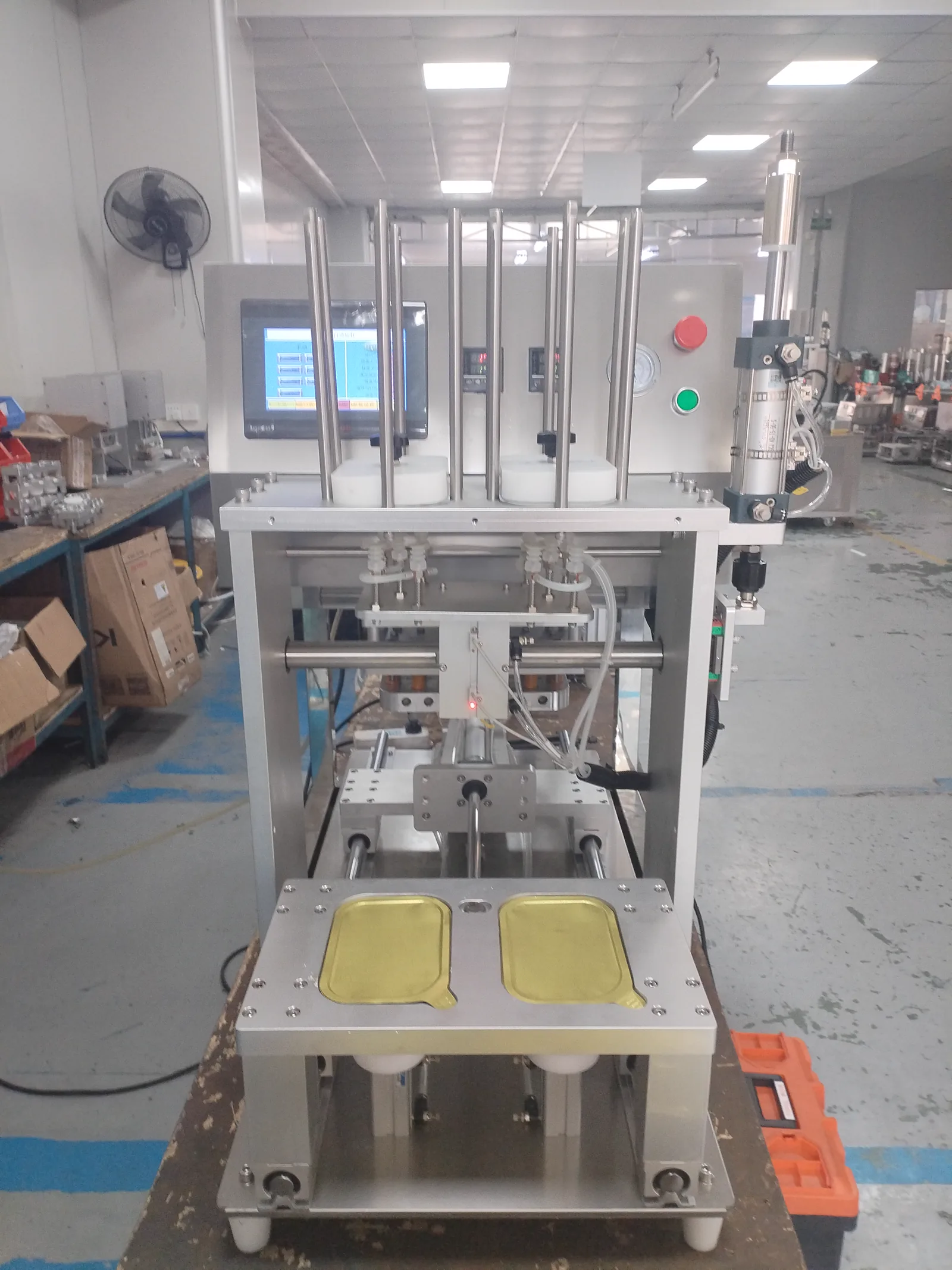
Automatic pre-cut film pick-and-place tray sealing machine
The automatic pre-cut film pick-and-place tray sealing machine organizes the process around tray positioning, film sh...
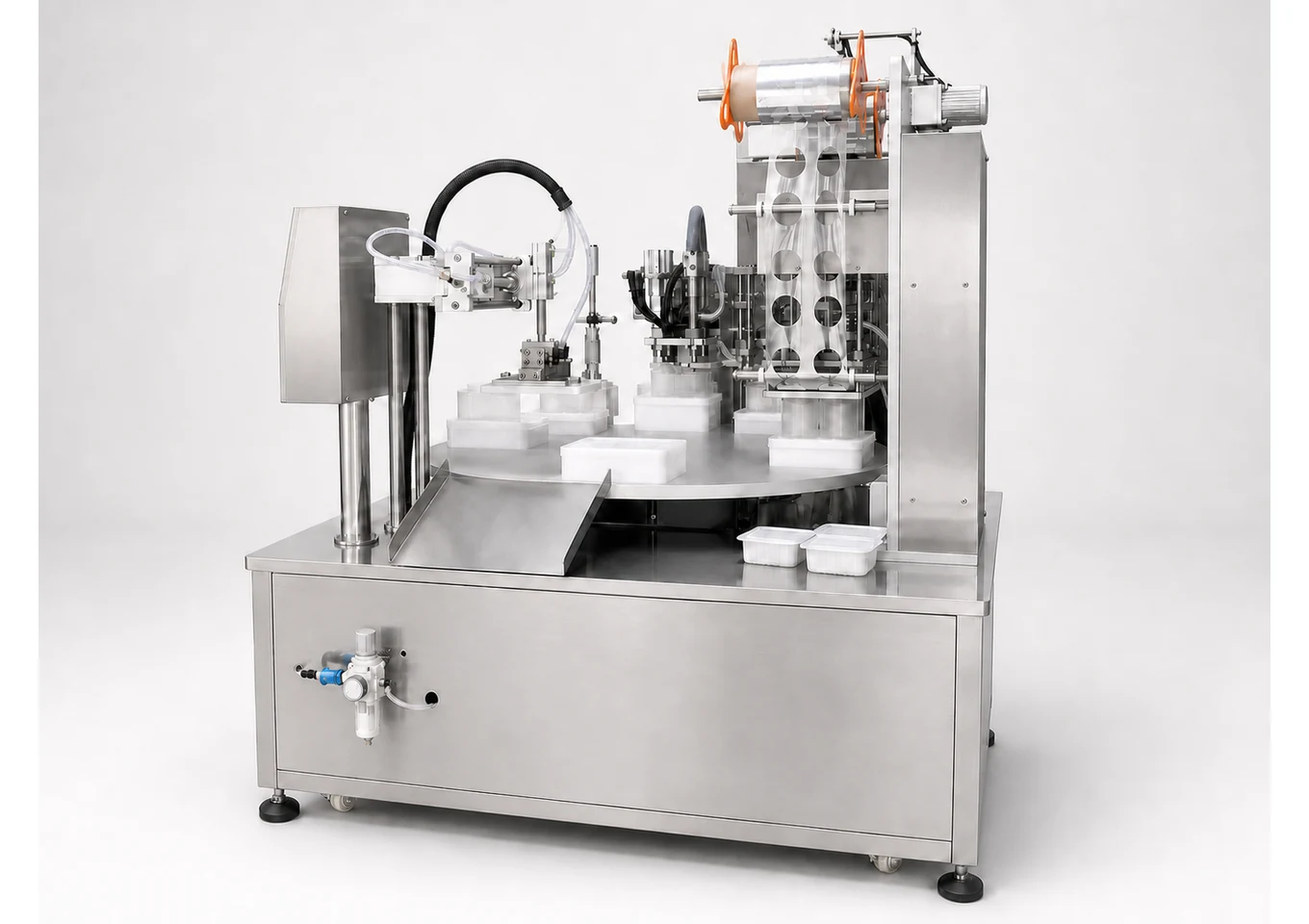
Rotary Cup Tray Filling and Sealing Machine
Suitable for intermittent filling and sealing projects for cups, bowls, small boxes, and trays. Station count, cup de...