Solution topic
Milk Tea Cup Filling and Sealing Line: Cup-Film Fit, Batch Code Position, and Conveying Stability
Starting from the milk tea cup type, sealing film, filling method, and date position, compare benchtop semi-automatic, small-cup automatic filling and sealing, and chain-plate cont
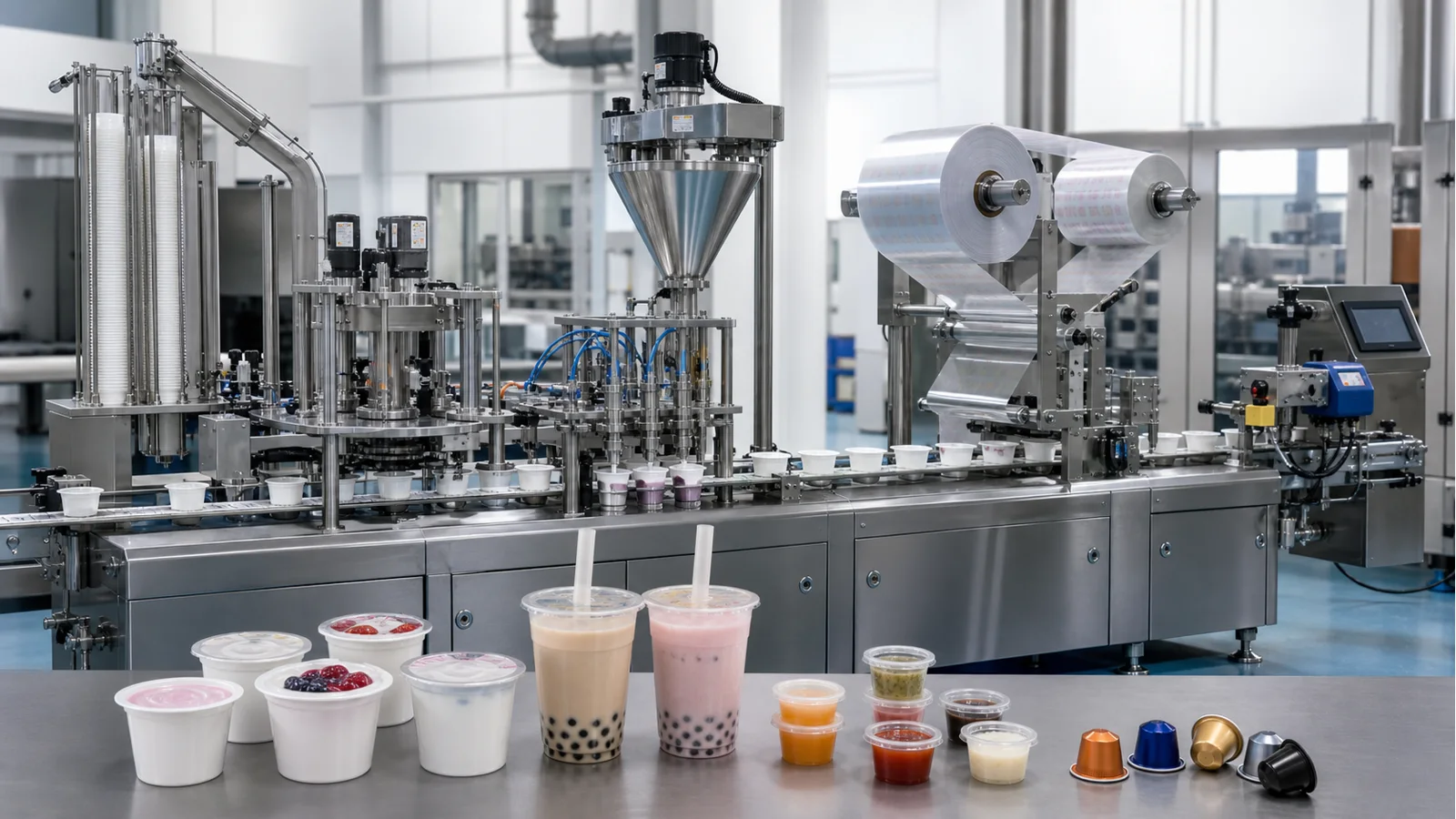
- The cup type, rim, and film material first determine the sealing mold; the drink state and filling method determine whether integration is needed. Small-batch orders can retain manual cup feeding; after specifications and orders stabilize, connect continuous conveying and inline coding.
Solution summary prepared for you
- For milk tea cup sealing, first verify the cup rim and film: for multi-specification small batches, a small-diameter cup sealing machine can be used; after the cup type and beverage are stabilized, evaluate a small cup filling and sealin...
- For continuous production, a chain plate cup/tray sealing line or food-grade conveying line can be used to connect downstream, and the date batch number coding position must be determined between the film surface and cup body first.
- The takt of milk tea cup equipment should be continuously tested with real cup film, beverage state, and manual or automatic cup placement; fixed cup counts unrelated to this project cannot be applied.
Route comparison
- Suitable for stores, trial production, multi-specification small batches, or milk tea cup projects still confirming cup film combinations.
- Manual cup placement and removal keep mold change and operation straightforward for small-batch, multi-specification projects, suitable for first verifying cup film sealing.
- Output is affected by manual cup placement, film positioning, and cup removal coordination; actual takt must be trial-run continuously by shift.
- When cup types and orders are stabilized and automatic cup dropping and filling are desired, a standalone sealing machine leaves more manual processes.
- Use small-diameter cup sealing machine SGP-03 with small cup sealing film. Date batch numbers can be handled by an inkjet coder at a separate station.
- Suitable for production where cup type, film, and milk tea supply are stabilized and continuous cup dropping, filling, and sealing are desired.
- Cup dropping, filling, and heat sealing are completed in the same equipment process, with cup posture and station sequence more concentrated.
- Particles, foaming, wall adhesion, dripping, and cup rim residue can affect filling and sealing; changing cup types also requires corresponding molds and guides.
- When order batches are very small, cup types change frequently, or beverage supply is not yet stable, manual testing should be retained first.
- After cup type and beverage supply are verified, configure a small cup filling and sealing machine. After sealing, connect a date batch number inkjet coder according to the finished cup posture.
- Suitable for projects with stable cup types and orders that require continuous conveying and sealing with online date batch number printing after sealing.
- A chain plate main line and food-grade conveying line can keep cups orderly through sealing and marking stations, facilitating collection and downstream interfaces.
- The center of gravity, spacing, guides, line height, and coding trigger of filled cups must be verified with actual cups; nominal speed alone cannot be matched.
- When upstream filling or main sealing is still unstable, or there is insufficient cleaning and maintenance space on site, a complete line should not be fixed first.
- Evaluate a chain plate cup/tray continuous sealing line based on cup type and process, using a food-grade conveying line to connect the date batch number inkjet coder.
Associated Equipment / Consumables
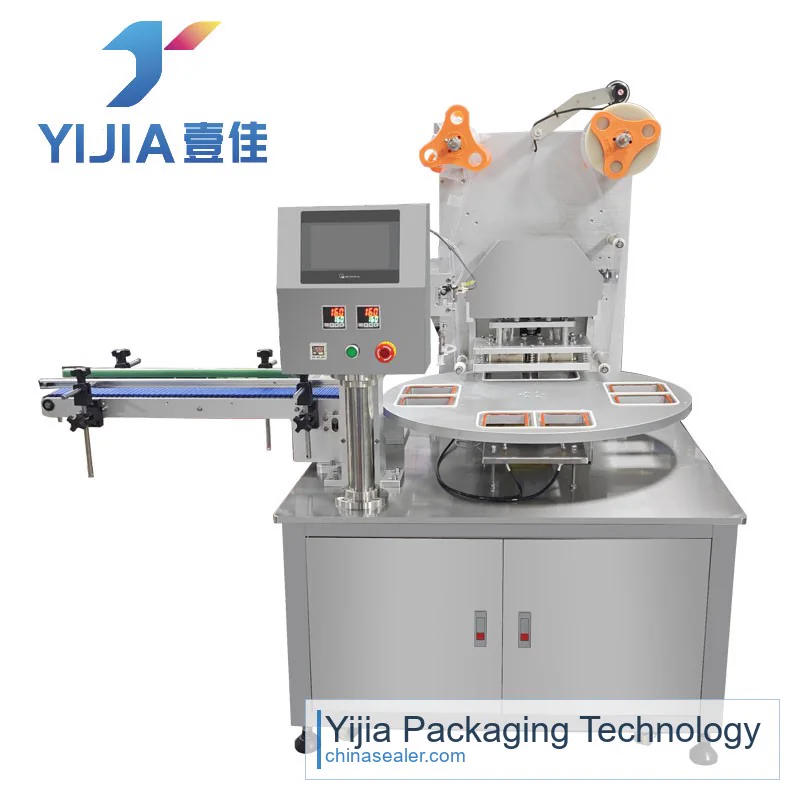 Automatic Small-Cup Filling and Sealing Machine
The machine denests cups, doses product, registers and heat-seals film, trims and discharges. Confirm cup stacking and rim, viscosity, particles, foaming or stringing, rollstock or pre-cut lids, peel and leak criteria...
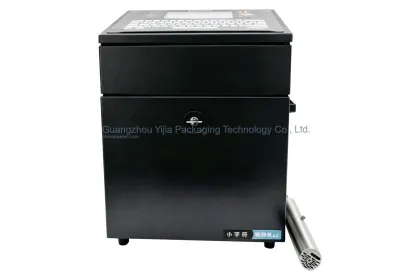 Date & Batch Inkjet Printer
Continuous conveying and date marking; First determine whether the batch number is on the film surface or cup body, then set cup spacing, guides, triggering, and printhead position; Chain...
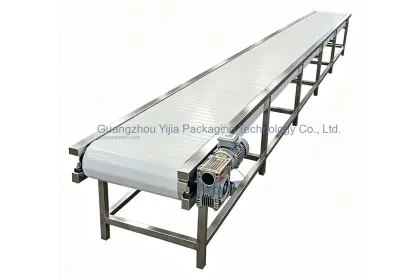 Food Packaging Conveyor and Buffer Line
Continuous conveying and date marking; First determine whether the batch number is on the film surface or cup body, then set cup spacing, guides, triggering, and printhead posi...
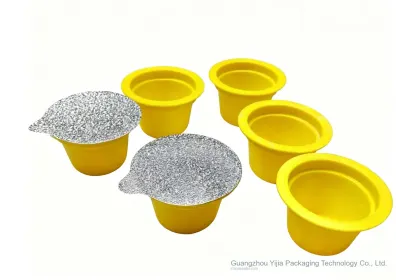 Cup Sealing Film and Easy-Peel Lidding Consumables
Cup type and cup film adaptation; Cups with the same diameter may have different rim materials or cup wall rigidity; each mass-production combination must be trial s...
Core process
Use cup samples, film samples, and finished samples with actual beverage to verify rim material, mold support, and sealing area.
For stores, small batches, or multi-specification projects, manual cup placement can be retained, using a small-diameter cup sealing machine for the main sealing.
After cup type, supply, and beverage state are stabilized, a small cup filling and sealing machine can centrally complete cup dropping, quantitative filling, and heat sealing.
After the finished cup posture is stabilized, connect the date batch number inkjet coder via a food-grade conveying line. For continuous cup tray projects, a chain plate main line can be evaluated.
Photos are used for initial cup type identification; molds and sealing results still require rim dimensions, cup film structure, and samples with contents.
Separate manual sealing, automatic filling and sealing, and continuous downstream sections according to current orders, clarifying which stations are implemented initially and which only reserve interfaces.
Sample details
Cup rim size and material determine the mold contact surface, and cup wall rigidity also affects pressing and conveying.
Mass-production cup samples, rim diameter, cup height, bottom dimensions, rim material, and cup wall conditionFilm material information is used to confirm the heat seal layer, film supply direction, easy-tear structure, and coding surface.
Small cup sealing film samples, material structure, thickness, roll direction, and easy-tear requirementsThe actual beverage affects the filling nozzle, dripping, foaming, and cup rim cleanliness; water cannot replace all tests.
Milk tea samples, viscosity, particle or foam conditions, and target filling volumeBatch size and shift determine whether manual cup placement, automatic cup dropping, or a continuous main line is suitable for current production.
Shift time, peak takt, quantity per batch, cup type changeover, and labor configurationCoding and conveying must be designed around the finished cup posture, and on-site dimensions also determine maintenance and cleaning space.
Date content and position, cup entry/exit direction, on-site layout, power and air supply, and cleaning methodCommon selection mistakes
Simply reporting 'milk tea cup' does not reflect the rim diameter, rim material, cup wall rigidity, or the heat seal layer of the cup film, making it impossible to determine molds and sealing conditions.
Aluminum foil, easy-tear, or other composite films may have different heat seal layers; even if they look similar, the same temperature and dwell time cannot be directly used.
Small-diameter cup sealing machines retain manual cup placement, while small-cup filling and sealing machines also involve cup dropping and supply; they are not simply different speed levels.
The materials of the film surface and cup body, movement posture, and viewing direction differ, so the date position will change the printhead installation and triggering.
Empty cups are easy to convey; the liquid level, center of gravity, and cup deformation after filling are the real conditions for guide and cup spacing design.
Frequent cup type changes bring mold, guide, film width, and parameter switching; a fully automatic line does not automatically eliminate these changeover actions.
View detailed technical notes
The Line Starts with Cup-Film Fit
Whether a milk tea cup line can run continuously depends first on whether the cup and film can be sealed stably, and second on filling, cup conveying, and date coding. Confirming the cup type, beverage, and marking position together is necessary to arrange the correct stations.
Order Stability Determines the Level of Automation
For multiple specifications and small batches, manual cup feeding can be retained. Use a small-diameter cup sealing machine to produce finished samples first. After the cup type, film material, and feeding are stable, consider a small-cup filling and sealing machine or a chain-plate continuous line.
Retain Manual Cup Feeding for Stores and Trial Production
The small-diameter cup sealing machine SGP-03 suits small-batch projects with manual cup placement. During trial runs, use real cup film and cups filled with milk tea to check rim residue, compression deformation, easy-tear condition, and cup removal action.
Automatic Filling Must First Pass Real-Product Testing
The small-cup filling and sealing machine integrates cup denesting, filling, and heat sealing. During trial runs, observe whether cups separate stably, whether the drink drips onto the rim, and whether the cup body deforms after sealing. When milk tea contains particles, tends to foam, or clings to the cup wall, verify feeding and anti-drip separately; do not use water results to replace the production formula.
Connect Conveying and Coding to the Continuous Main Line
Once orders and cup types are stable, evaluate a chain-plate continuous sealing line for cup/tray containers. After sealing, a food-grade conveying line maintains cup spacing and connects to the date/batch inkjet coder. Layout is based on cups filled with the drink.
Finished Cup-Film Samples Are the Basis for Changeover
Cup samples and film samples must be sealed together as a set. Record film surface, peel, cup body deformation, and seal inspection. After changing cup suppliers, film structure, or drink formula, recheck the affected stations.
Determine the Date Position Before Line Integration
Whether the batch code is printed on the sealing film or the cup body changes the printhead direction, trigger position, and ink adhesion conditions. Determine the visible area during the packaging design stage and retest on the condensed surface.
Verify Conveying Stability with Finished Cups
The conveying line must match the cup bottom, cup body rigidity, center of gravity after filling, and front/rear end heights. Commissioning should cover startup, stop, cup spacing changes, and abnormal cup handling, not just empty running.
Expand in Phases with Clear Boundaries
If the first phase only does sealing, reserve space and interfaces for downstream sections. When expanding to automatic filling, continuous conveying, or coding, recheck the configuration against the cup type, orders, and site conditions at that time.
Common questions
How to determine the configuration of a milk tea cup sealing line?
The configuration must be calculated based on the cup type, film material, whether filling is involved, and the conveying and coding range. An accurate configuration can only be provided after receiving cup and film samples and production schedule.
Can the equipment be determined directly from the known number of cups per day?
Looking only at the daily total is not enough; you also need to consider concentrated production periods, cup types per batch, labor arrangement, and beverage supply to compare small-batch single machines with automatic lines.
Can a solution be made without cup samples?
Photos and dimensions can initially determine the cup type route. Molds, sealing conditions, and cup conveying still need to be confirmed with real cup and film samples.
Can existing cups and films continue to be used?
Customer-owned cups and films can be used, but they should be submitted as a complete set for testing, checking heat seal compatibility, easy-tear feel, and tolerances across different batches.
How to troubleshoot partial seal leakage on milk tea cups?
First check for cup rim contamination or warping, the heat seal layer of the cup film, mold fit, and the sealing process, then perform seal inspection on finished samples. Do not just increase the temperature.
Can small-batch equipment be integrated into a line later?
Interfaces for conveying and coding can be reserved. When actually expanding the line, new cup types, beverage supply, on-site space, and upstream/downstream takt times must be re-verified.