Solution topic
Yogurt Cup End-of-Line: Add Coding, Checkweighing, Shrink Bundling or Cases after Seal Stability
Prove cup-lidding seal integrity and contaminated-rim performance first, then configure coding, checkweighing, L-seal or sleeve shrink packaging, case packing and sealing by the sh
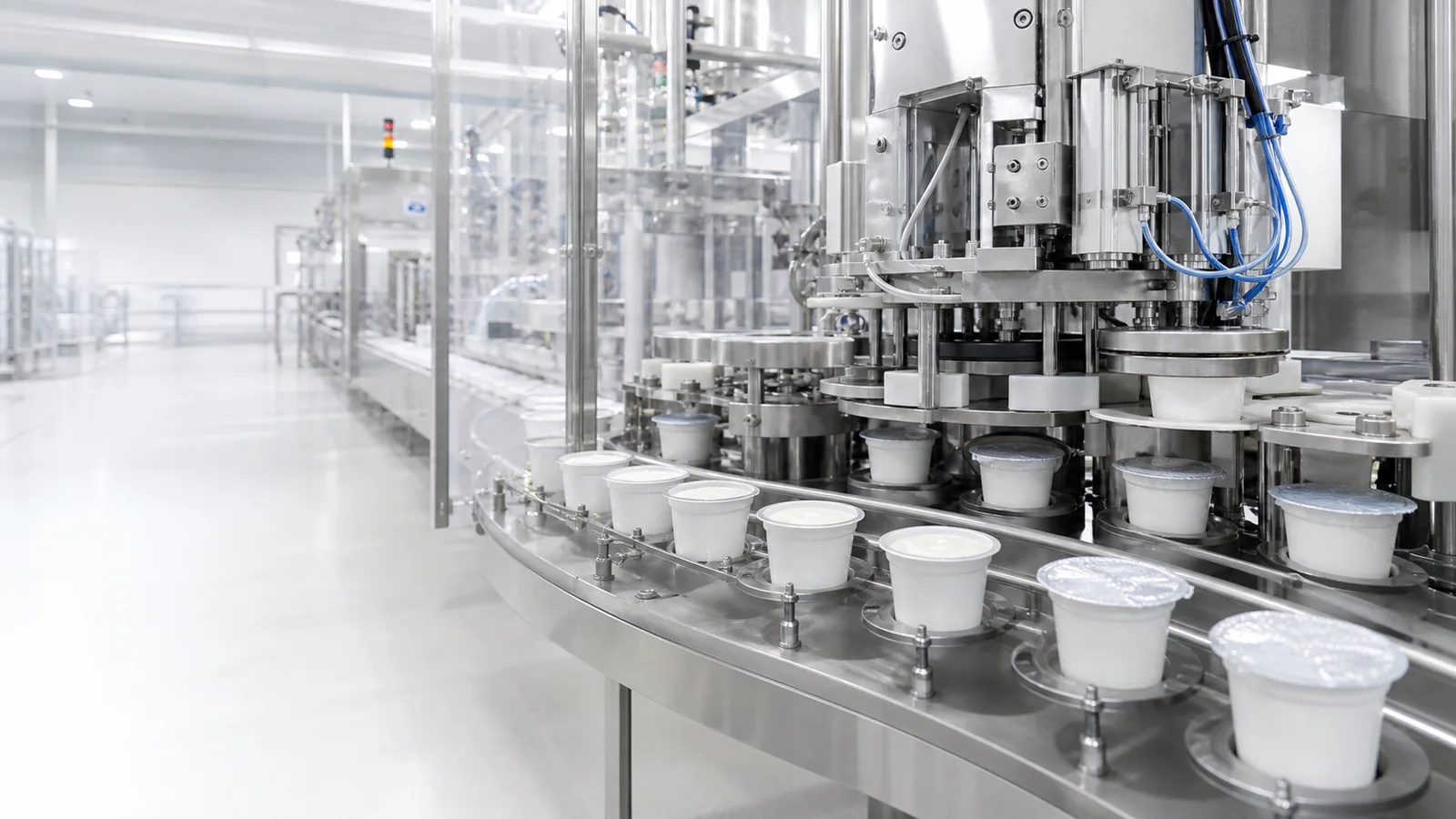
- Prove each cup seal with the cup, lidding and product, then choose coding, weighing, shrink packs or cases from cup strength, collation, retail pack and case format.
Solution summary prepared for you
- The downstream yogurt cup line starts with a qualified main seal: first use a small-diameter cup sealing machine to validate the cup film in small batches, then adopt a small cup filling and sealing machine after cup type and supply are...
- After sealing, the food-grade conveying line maintains finished cup orientation; date coding and checkweighing/vision are configured according to clear layout, weight, and visible defect rules.
- Outer packaging can choose case sealing and labeling for packed products, or L-type cut-seal shrink packaging for cup groups. The two do not include the same cup packing action.
Route comparison
- Suitable for yogurt projects with multiple flavors, multiple cup types in trial production, or still validating cup film heat sealing.
- The tabletop sealing machine with manual cup feeding is convenient for multi-cup-type trial production and cup film validation, and can first establish the main seal completion sample.
- Does not undertake automatic yogurt filling; actual cycle time is affected by manual cup placement, film placement, and cup removal.
- When cup type, formula, and orders are stable and continuous cup dropping, filling, and film sealing are required, evaluate an automatic main machine.
- Use small-diameter cup sealing machine SGP-03 with small cup sealing film and easy peel film consumables, and configure molds according to cup type.
- Suitable for projects with stable cup type and yogurt supply requiring continuous filling/sealing, online batch coding, and rule-based screening.
- The small cup filling and sealing machine centralizes upstream processes, and the food-grade conveying line brings sealed cups to coding and inspection at stable intervals.
- Cup type, yogurt supply, film sealing, center of gravity, date surface, and weight/vision rules all need validation; inspection cannot prove seal integrity.
- When the main seal completion sample is not repeatable, weight boundaries cannot distinguish abnormalities, or finished cup conveying still tips over, it is not appropriate to fix the complete downstream.
- Use a small cup filling and sealing machine with a food-grade conveying line, followed by a date batch code inkjet printer and online checkweighing and vision inspection system.
- Suitable for downstream yogurt cup lines where post-sealing inspection is stable and manual case packing/sealing or cup group shrink wrapping has been clearly adopted.
- Case sealing and labeling is suitable for packed shipment; L-type cut-seal shrink packaging can form another outer packaging for defined cup groups.
- The case sealing route does not include automatic cup packing; the shrink route also needs to verify cup group arrangement, support, film material, and heat effects.
- When how loose cups are grouped or packed into cartons is not yet determined, and outer carton and shrink samples are not validated, the outer packaging design should be completed first.
- The carton route configures a case sealing and outer carton labeling line. For combined sales, an L-type cut-seal shrink packaging line can be evaluated.
Associated Equipment / Consumables
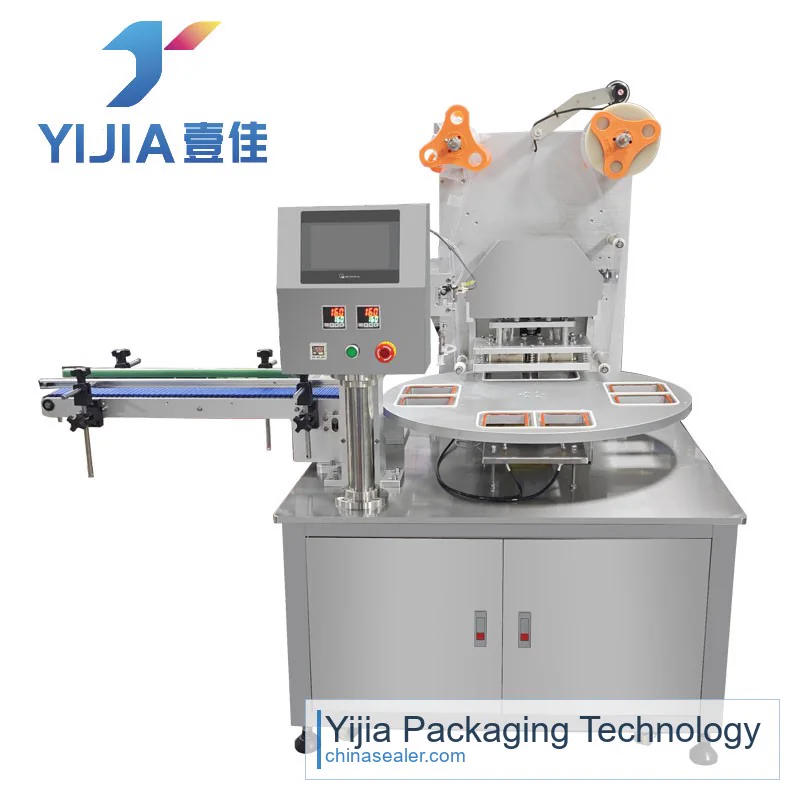 Automatic Small-Cup Filling and Sealing Machine
The machine denests cups, doses product, registers and heat-seals film, trims and discharges. Confirm cup stacking and rim, viscosity, particles, foaming or stringing, rollstock or pre-cut lids, peel and leak criteria...
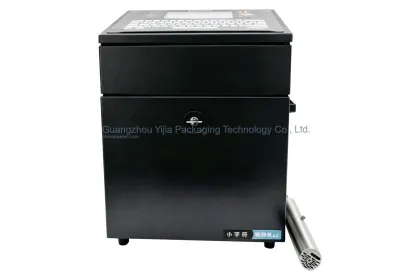 Date & Batch Inkjet Printer
Stable conveying and conditional inspection; Checkweighing and vision cannot replace seal integrity or product quality inspection; qualified ranges and visible defects must be established...
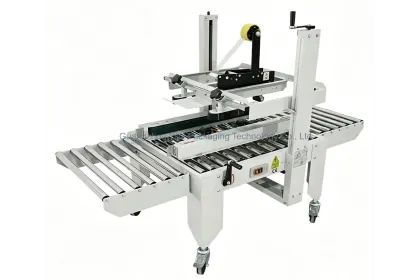 Carton Sealing and Outer Case Labeling Line
Stable conveying and conditional inspection; Checkweighing and vision cannot replace seal integrity or product quality inspection; qualified ranges and visible defects must...
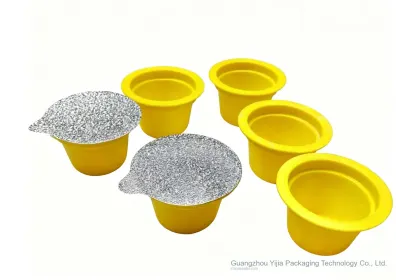 Cup Sealing Film and Easy-Peel Lidding Consumables
Cup film adaptation and semi-automatic trial production; This step only validates cup film heat sealing. Yogurt fill volume, fruit particle passage, and rim dripping...
Core process
Use actual cups and film on the small-diameter cup sealing machine to establish the main seal completion sample, and keep changeover records for multi-specification manual trial production.
After cup type, yogurt supply, and sealing conditions are stable, the small cup filling and sealing machine completes cup dropping, filling, and main sealing, then outputs cups smoothly.
The date batch code inkjet printer prints at the designated position on the cup lid or cup body; surface adhesion and readability after condensation need real cup testing.
The food-grade conveying line maintains cup spacing based on the finished cup's center of gravity. The online checkweighing/vision system only screens according to clear weight, print, or appearance rules.
If cups are already packed into outer cartons by manual or other equipment, the case sealing and outer carton labeling line can be connected. For combined sales, shrink packaging can be evaluated based on cup group arrangement.
Downstream documentation should start from sealed finished cups, and also provide coding surface, weight samples, outer carton or cup group completion samples.
Sample details
Stable downstream operation depends on the actual finished cup's bottom, center of gravity, film surface, and rim condition.
Yogurt cup and sealing film, filled weight, cup rim dimensions, and main seal completion sampleFruit particles and viscosity affect upstream filling, and dripping transfers to sealing and conveying.
Yogurt sample, fruit particle condition, target fill volume, rim residue, and cleaning requirementsCoding on the film surface or cup body differs in triggering, ink adhesion, and reading direction.
Date batch code content, print position, packaging layout, and readability requirements after condensationCheckweighing and vision only have executable screening rules when sample boundaries are clear.
Qualified weight distribution, planned abnormal detection, vision good/bad samples, rejection, and recording requirementsCarton and shrink-wrapped cup groups are two sets of outer packaging; provide finished arrangement and on-site material receiving method separately.
Box specifications, packing method, outer carton labels, or cup group arrangement, shrink film, and layout drawingCommon selection mistakes
If the downstream design only uses empty cups to adjust conveying, it will miss the effects of yogurt weight, liquid level, film sealing, and condensation on cup body orientation and coding.
Different cup films change the heat sealing and coding surface. When the main seal is unstable, downstream checkweighing or vision cannot compensate for leaking seals.
Condensation on the cup body may reduce inkjet adhesion or obscure characters. A single print on a dry empty cup does not represent production conditions.
The outer carton sealing and labeling line handles already packed cartons; it does not automatically arrange and pack loose cups into cartons.
Shrink-wrapped cup groups require arrangement and support, while the carton route requires box specifications, tape, and outer carton labels. The two cannot be switched by only changing one consumable.
View detailed technical notes
Start planning from a qualified finished cup
The downstream yogurt cup line is not simply placing coding, checkweighing, and case sealing in sequence. It first requires a sealed, stable, printable finished cup as input.
Front-End Maturity Determines the Starting Point of the Back-End
For small batch trials, use a small-diameter cup sealing machine to validate the cup film. After the cup type and yogurt supply are stable, the small cup filling and sealing machine takes over continuous cup dropping, filling, and film sealing.
Independent Acceptance of the Front-End Main Sealing
The cup film, easy-tear and sealing samples must be confirmed first. For recipes with fruit pieces, the filling nozzle and dripping must be verified with real product. The back-end cannot compensate for front-end contamination or missed seals through checkweighing or visual inspection.
Conveying Uses Real Weight and Center of Gravity
The food-grade conveying line should be adjusted for guides, spacing and height according to cups filled with yogurt. Commissioning should cover start-up, stop and abnormal cups, and observe whether the cup film is scratched when passing through guides, avoiding only empty or empty-cup passes.
Date Position Combined with Condensation Surfaces
The date and batch inkjet coder prints characters on the cup lid or body. The position must avoid wrinkled film and grip areas, and adhesion and readability must be verified on surfaces that may condense. When passing continuously, the trigger spacing and character orientation must also be checked.
Checkweighing and Visual Inspection Only Cover Clear Defects
The inline checkweighing and visual inspection systems check weight, printing or visible appearance based on samples. Checkweighing cannot replace seal testing, and cameras cannot judge invisible product quality.
Case Sealing and Labeling Do Not Handle Cup Loading
The case sealing and outer box labeling line receives cartons already filled with yogurt cups and only performs box sealing and outer box labeling. Automatically placing loose cups into boxes is not within the scope of this equipment.
Shrink Wrapping Is Another Form of Outer Packaging
When multi-cup combination sales are needed, an L-type cut-and-seal shrink wrapping line can be evaluated. Cup arrangement, support, film material and the state of the cup film after heating all need to be confirmed with real samples.
Clarify Handover States Before Linking Lines
When expanding the back-end, check the front-end cup discharge direction, date layout, inspection rules, outer packaging and reject handling together to avoid conflicts between equipment interfaces.
Phased Construction Does Not Presuppose Future Parameters
In the first phase, only cup film confirmation can be done while reserving space for the back-end. When actually integrating conveying, coding, inspection or outer packaging, re-verify with the cup type, recipe, case specification and order at that time.
Common questions
How to determine the equipment scope for the complete downstream yogurt cup line?
First confirm the upstream cup film, yogurt supply, and target shift, then check against the coding, inspection, and outer packaging scope. Do not determine the equipment based on cup count alone.
How to judge whether a tabletop sealing machine is sufficient?
It depends on concentrated production periods, manual cup feeding and removal, changeovers, and yogurt supply. A tabletop machine is suitable for validation, but the nominal cup count alone should not be the deciding factor.
Can a configuration be made without cup samples?
Photos and dimensions can provide an initial selection of the cup film route, but molds, filling and film sealing, and conveying stability still require actual cups, film, and yogurt samples.
Who prepares the sealing film for yogurt cups?
Production film can be prepared by the customer, but the material structure and actual samples should be provided and tested together with the cup rim for heat sealing, easy peel, and coding surface.
Can the same filling machine be used for yogurt with fruit particles?
The actual fruit particle size and distribution must be used to test feeding, filling nozzles, and dripping. Without real material trials, it cannot be assumed that any fruit particles will pass through.
Can the case sealing line be added later after cup sealing?
It can be reserved, but the case sealing and labeling line only accepts outer cartons that already contain filled cups. If automatic case packing is needed, corresponding equipment should be added separately.