Solution topic
Yogurt Cup Filling and Sealing Solution
For yogurt cup filling and sealing projects, provide equipment selection recommendations including small cup filling and sealing machines, rotary sealing machines, and tray MAP sea
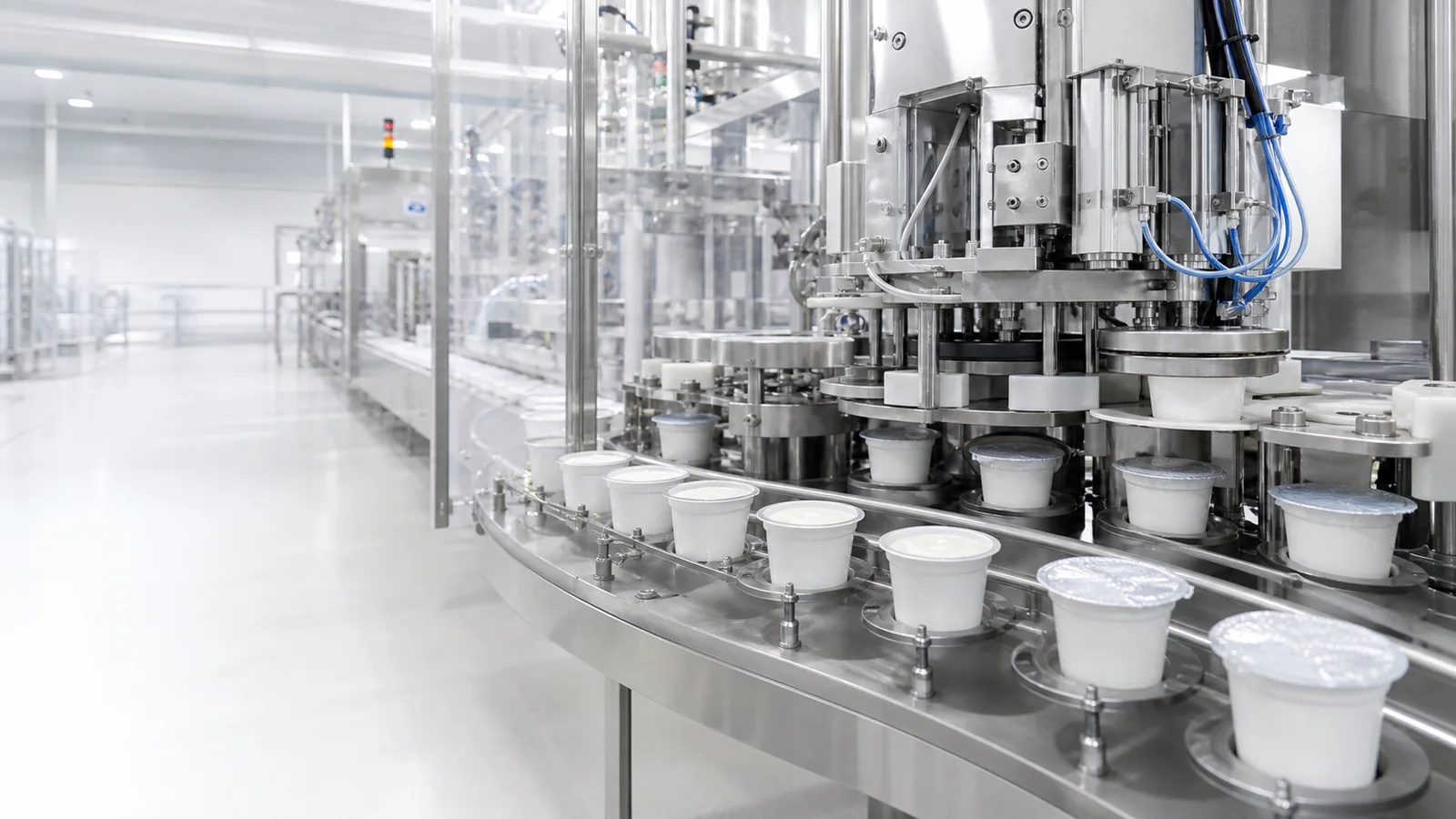
- Recommend suitable filling and sealing equipment and consumables based on your yogurt type, cup size, production capacity, and line integration needs.
- Yogurt Cup Filling and Sealing Machine
Your Yogurt Cup Filling and Sealing Project Starts with Confirming the Container
The filling and sealing solution for yogurt cups primarily depends on the cup type you use. Common yogurt cups include PP cups, PET cups, aluminum foil cups, and paper cups, with diameters ranging from 50mm to 120mm and heights from 30mm to 150mm. You need to provide cup samples or precise dimensional drawings, including diameter, height, and sealing flange width. If the cup is irregularly shaped or has special protrusions, confirm that the sealing area is flat. Additionally, yogurt viscosity directly affects the filling method: plain yogurt has good fluidity and can be filled with piston or magnetic pump; yogurt with fruit pieces requires anti-clogging filling nozzles and may need a heated hopper to prevent fruit settling.
Why Recommend a Small Cup Filling and Sealing Machine as Core Equipment?
For most yogurt cup projects, a small cup filling and sealing machine is the most direct choice. It integrates automatic cup dispensing, quantitative filling, heat sealing, and output, suitable for medium-speed production of 600-1200 cups/hr. For low-speed prototyping or small batch production (300-600 cups/hr), a tabletop multi-compartment tray sealer or tabletop roll-film tray sealer is more economical; they are simple in structure and quick to change over, but require manual cup placement. If your capacity requirement is higher (1000-3000 cups/hr), a rotary multi-station sealing machine achieves continuous sealing with higher efficiency through multi-station turntable.
Equipment Combinations Suitable for This Packaging Route
For yogurt cups, first confirm whether filling, film sealing, date coding, and cold-chain handling are required. Our small cup filling and sealing machines, small-diameter cup sealers, rotary multi-station sealers, and chamber MAP sealers can be selected according to cup shape, capacity, and freshness target. Sealing empty cups and filling plus sealing cups are two different quotation routes.
MAP Preservation: Applicable Scenarios for Tray MAP Sealing Machine
If your yogurt product requires extended shelf life, such as cold-chain fresh yogurt, consider a tray MAP sealing machine. It can vacuum and flush with nitrogen or carbon dioxide before sealing to inhibit microbial growth. However, note that MAP sealing requires specialized high-barrier MAP film, and the cup or tray must have sufficient rigidity to avoid deformation during vacuum. If your product is regular yogurt and does not require ultra-long shelf life, a standard heat sealing machine is sufficient and avoids additional MAP costs.
Consumables Selection: Key Parameters of Sealing Film and Easy-Peel Film
Sealing film is critical for sealing quality and consumer experience. You need to select matching film material based on cup rim material and sealing temperature: PP film or composite film for PP cups, PET film for PET cups, aluminum foil film for aluminum foil cups. Easy-peel film is suitable for easy opening, but peel strength needs testing—too tight may tear the cup rim, too loose may cause leakage during transport. We recommend providing cup samples and film samples for sealing tests to confirm optimal temperature, pressure, and film combination. Additionally, if printing patterns or text on the film, confirm print registration accuracy in advance.
Post-Sealing Support: Coding, Labeling, Inspection, and Conveying
Sealed yogurt cups usually require printing production date and batch number. A date coding machine can be installed inline to code immediately after sealing. If labeling is needed (e.g., brand label or nutrition label), a round/square bottle labeling machine can adapt to cup shapes, but confirm whether the cup body is cylindrical or tapered. For quality control, an inline checkweigher can reject products with incorrect fill volume, and a food metal detector detects metal contaminants. These devices are connected via food-grade conveyor lines to form a complete packaging line. Note: if your capacity is below 600 cups/hr, manual coding and checkweighing may be more economical; inline integration is not mandatory.
Avoid Mismatches: These Machines Are Not Suitable for Yogurt Cup Projects
Yogurt cup filling and sealing projects should not use bottle filling lines, capping machines, induction aluminum foil sealers, or tube filling and sealing machines. Bottle filling lines are for liquid beverages and cannot handle yogurt viscosity and fruit pieces; capping machines are for screw caps, while yogurt cups typically use sealing film; induction aluminum foil sealers are for bottle cap liners, not cup film sealing. Additionally, if your product is cup yogurt, do not choose pre-made pouch filling and sealing machines or spout pouch equipment, which are for bagged products. Always base your selection on your container type (cup/bowl/box) as the primary criterion.
Differences in Equipment Selection for Low-Speed Prototyping vs. Continuous Production
If you are only trial-producing or selling small batches (a few hundred cups per day), a tabletop multi-compartment tray sealer or tabletop roll-film tray sealer is cost-effective. They are low-cost, small footprint, and quick to change over, but require manual cup placement and removal, with lower efficiency. When you enter continuous production (thousands of cups per day), upgrade to a small cup filling and sealing machine or rotary multi-station sealing machine, which can automate cup dispensing, filling, and sealing, reducing labor and improving consistency. If future capacity grows further, you can add automatic cup feeding, automatic output, and inline conveying to the rotary machine.
Multi-Specification Changeover: How to Quickly Switch Between Different Cup Types?
If your product line includes multiple cup types (e.g., 100ml and 200ml), changeover efficiency directly affects production flexibility. Tabletop sealers typically change over by replacing molds, which is low-cost but time-consuming (about 15-30 minutes). Rotary sealing machines and small cup filling and sealing machines support quick mold change, with some models completing changeover within 5 minutes. We recommend confirming the mold replacement method during selection and preparing multiple sets of molds. Additionally, sealing film must correspond to different cup rim sizes; prepare rolls of different widths in advance. If changeovers are frequent, consider equipping quick-change parts, including sealing rings and fixtures.
Route comparison
- Suitable when the yogurt cup filling and sealing machine is still confirming box type, film material, preservation effect, or for small-batch trial production at a single store.
- Lower investment, easy mold change and testing, can first use real trays, film, and contents to confirm sealing strength, appearance, and leakage.
- Manual tray placement and removal, limited cycle stability; long-term mass production affected by manual coordination.
- If there are stable orders, continuous production for long hours daily, or need to connect upstream/downstream conveyors, it is not recommended to stay only with a standalone prototyping solution.
- Can first use benchtop or semi-automatic tray/cup sealing equipment to confirm samples, then upgrade to multi-station or inline solution based on box type, cavity count, and speed.
- Suitable when the yogurt cup filling and sealing machine specifications are basically confirmed, requiring more stable cycle than standalone machine, but manual loading and unloading is still acceptable.
- Balances speed, changeover, and cost; suitable for orders with relatively stable specifications like lunch boxes, trays, cups, and bowls.
- Need to confirm mold cavity count, tray outer dimensions, film width, and manual cycle; changeover cost increases with large specification differences.
- If container size changes frequently, film and box type not yet confirmed, it is not recommended to lock multi-station molds directly.
- Select multi-station tray sealing, cup sealing, or filling-sealing combination equipment based on box type; main equipment should be sorted by mold cavity count and target speed.
- Suitable when the yogurt cup filling and sealing machine needs extended shelf life, improved appearance stability, or has entered stable mass production.
- Can integrate feeding, vacuum/gas flushing, sealing, coding, inspection, and conveying; better capacity and consistency.
- Must confirm food properties, preservation goals, gas ratio, packaging materials, and site space in advance; solution communication cycle is longer.
- If product is still in trial sales, packaging specifications not finalized, or budget only enough for sample verification, it is not recommended to start with a full MAP line.
- Select tray MAP, continuous sealing, conveying, and inspection combination based on product preservation goals; equipment recommendation should be sorted by feeding, sealing, inspection, and downstream collection.
Core process
If automatic cup feeding is needed, configure a cup orienter; for low speed, manual cup placement is sufficient.
Select based on capacity: low speed use tabletop, medium speed use small cup filling and sealing machine, high speed use rotary machine.
Select film material based on shelf life and opening requirements; sample testing needed to confirm sealing parameters.
Code immediately after sealing; labeling requires confirming cup body shape.
Select based on quality requirements; manual sampling inspection is acceptable for low speed.
If case packing or shrink wrapping is needed, can be connected to downstream equipment.
Associated Equipment / Consumables
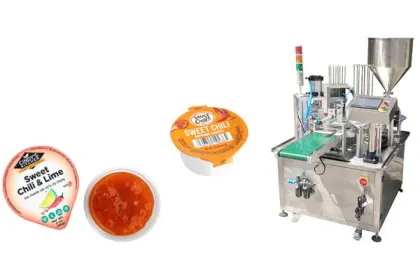 Small Cup Filling and Sealing Machine
Feeding and Cup Orientation; If automatic cup feeding is needed, configure a cup orienter; for low speed, manual cup placement is sufficient; Automatic Cup Orienter; Food-Grade C...
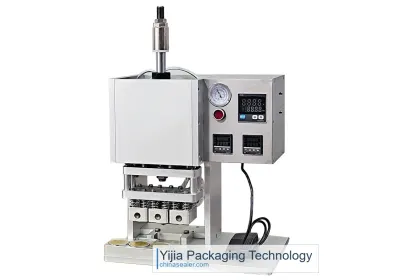 Small-Diameter Cup Sealer SGP-03
Feeding and Cup Orientation; If automatic cup feeding is needed, configure a cup orienter; for low speed, manual cup placement is sufficient; Automatic Cup Orienter; Food-Grade Convey...
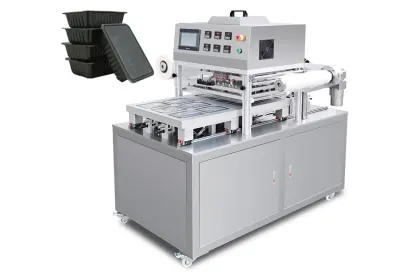 Tray MAP Sealer
Filling; Select based on capacity: low speed use tabletop, medium speed use small cup filling and sealing machine, high speed use rotary machine; Small Cup Filling and Sealing Machine; Rotary Multi-St...
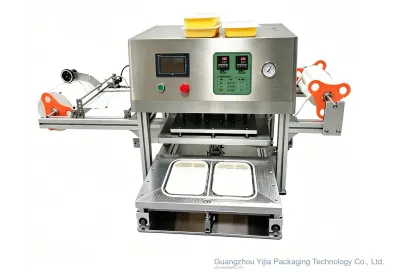 Desktop Multi-Compartment Lunch Box Sealer
Filling; Select based on capacity: low speed use tabletop, medium speed use small cup filling and sealing machine, high speed use rotary machine; Small Cup Filling and Seali...
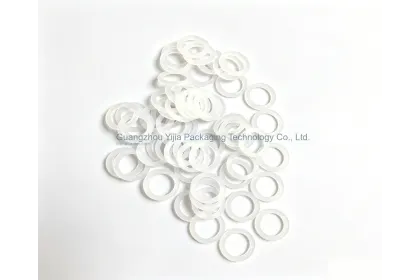 Food-Grade Seals, Cleaning Consumables, and Changeover Parts
Sealing; Select film material based on shelf life and opening requirements; sample testing needed to confirm sealing parameters; Sealing Film; Easy-Peel Film
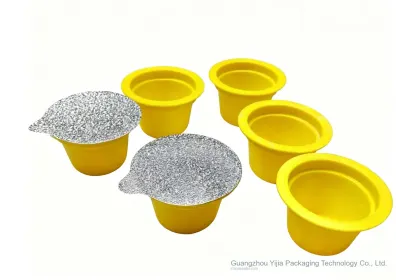 Small Cup Sealing Film and Easy-Tear Film Consumables
Sealing; Select film material based on shelf life and opening requirements; sample testing needed to confirm sealing parameters; Sealing Film; Easy-Peel Film
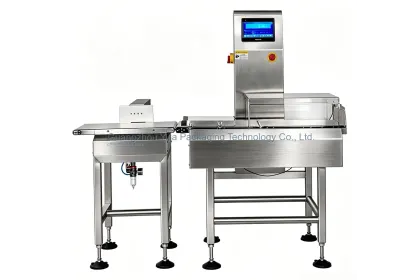 Inline Checkweigher
Coding/Labeling; Code immediately after sealing; labeling requires confirming cup body shape; Date Coding Machine; Round/Square Bottle Labeling Machine
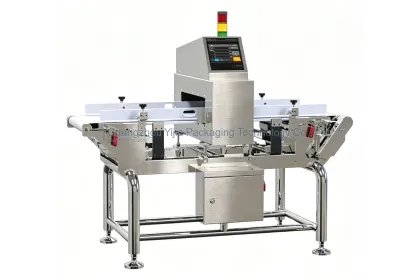 Food Metal Detector
Coding/Labeling; Code immediately after sealing; labeling requires confirming cup body shape; Date Coding Machine; Round/Square Bottle Labeling Machine
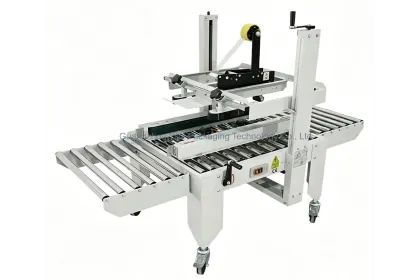 Carton Sealing and Outer Case Labeling Line
Downstream Packaging; If case packing or shrink wrapping is needed, can be connected to downstream equipment; Case Sealing and External Labeling Line; Shrink Wrapping Machine
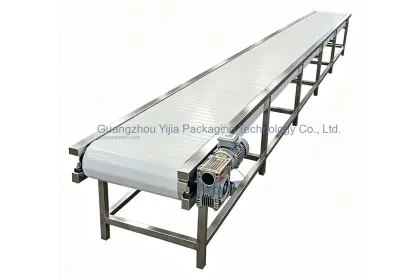 Food-grade conveyor line
Downstream Packaging; If case packing or shrink wrapping is needed, can be connected to downstream equipment; Case Sealing and External Labeling Line; Shrink Wrapping Machine
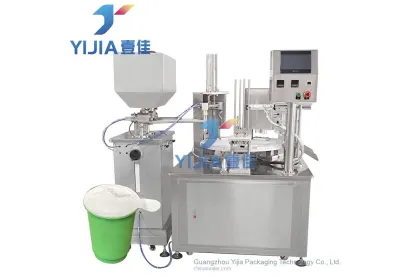 Coffee Capsule Filling and Sealing Machine
Feeding and Cup Orientation; If automatic cup feeding is needed, configure a cup orienter; for low speed, manual cup placement is sufficient; Automatic Cup Orienter; Food-Gr...
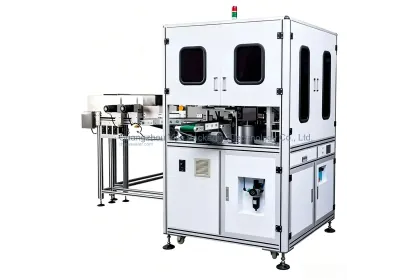 Online Checkweigher and Vision Inspection System
Coding/Labeling; Code immediately after sealing; labeling requires confirming cup body shape; Date Coding Machine; Round/Square Bottle Labeling Machine
Sample details
Please provide the type of yogurt to be filled (plain, fruit, stirred, etc.) and the cup material, diameter, height, and shape.
Yogurt sample or description, cup sample or dimensional drawingYogurt viscosity, whether it contains fruit pieces or particles, and whether warm filling is required.
Material condition description, filling temperature requirementsWhat is your hourly output requirement? Low-speed prototyping (300-600 cups/hr), medium-speed production (600-1200 cups/hr), or high-speed line integration (above 1200 cups/hr)?
Target hourly capacity, daily working hoursIs MAP (Modified Atmosphere Packaging) needed? Is online coding, labeling, checkweighing, or metal detection required? Is line connection to downstream packaging needed?
Sealing method (heat seal/MAP), list of post-sealing processesSend sample photos, key dimensions, film or caps, target output and line-integration needs so we can confirm the machine, tooling and quotation range.
Sample photos, dimensions, film or caps, target output, line integrationCommon selection mistakes
Yogurt cup projects should not use bottle liquid filling machines because yogurt has high viscosity and may contain fruit pieces; bottle filling lines cannot accurately meter and are prone to clogging.
Purchasing sealing film directly without sample testing may lead to poor sealing, leakage, or difficult peeling. Cup and film samples must be provided for sealing tests.
If the product is regular yogurt and does not require ultra-long shelf life, MAP sealing machine adds cost and complexity; standard heat sealing is sufficient.
For multi-specification production, long changeover time severely impacts capacity. Choose equipment that supports quick mold change and prepare corresponding molds.
For low-speed prototyping, inline coding, checkweighing, and case packing are not mandatory; manual operation is more flexible and cost-effective. Add inline equipment gradually based on capacity.
Common questions
Yes, but it requires anti-clogging filling nozzles, and a heated hopper is recommended to prevent fruit settling. The filling nozzle diameter should be larger than the fruit piece diameter to avoid clogging.
Select matching film material based on cup rim material: PP film or composite film for PP cups, PET film for PET cups. Easy-peel film is suitable for easy opening, but peel strength needs testing. We recommend providing cup samples and film samples for sealing tests.
MAP sealing machine is suitable for yogurts requiring extended shelf life, such as cold-chain fresh yogurt. For regular yogurt, standard heat sealing is sufficient; MAP increases film and gas costs.
No. For low-speed prototyping, manual cup placement and removal are sufficient; a conveyor line adds cost and occupies space. Consider inline integration when capacity reaches above 1000 cups/hr.
Choose equipment that supports quick mold change, such as rotary sealing machines or small cup filling and sealing machines, and prepare multiple sets of molds. Changeover time can be reduced to 5-10 minutes.
Not necessarily. For low capacity, a handheld or desktop coding machine can be used. Inline coding is suitable for continuous production, improving efficiency and reducing labor.