Tema de la solución
Envasado de tubos de crema facial: límite entre línea completa de llenado y sellado de cola y sellado de cola independiente
Para tubos de cremas y lociones, seleccione llenado y sellado integrado, sellado de cola y codificación independiente, o esquema de tapa especial según el estado del material entra
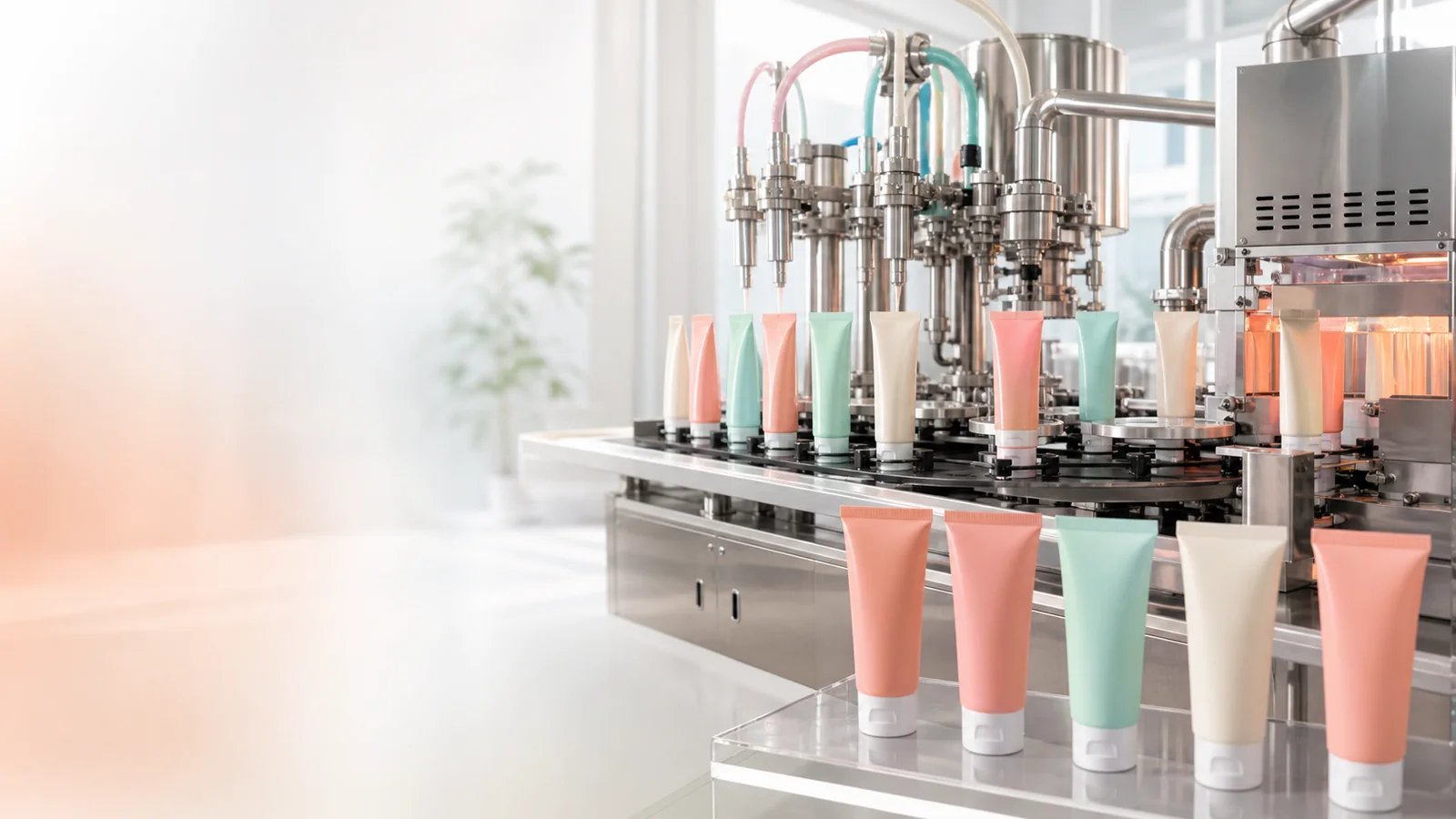
- Para tubos vacíos, se puede evaluar el llenado y sellado integrado; para tubos ya llenados, solo se necesita sellado de cola y codificación; para tubos con tapas especiales, se debe confirmar la estructura por separado. Se requieren muestras de crema, tubos y tapas, material y diámetro del tubo, estilo de sello de cola, posición del lote y capacidad.
Resumen de solución preparado para usted
- Cream tube equipment should first be divided by incoming state: empty tubes can use a fully automatic tube filling and sealing machine, while pre-filled tubes use a sealing and coding machine for downstream processing.
- Tube material, diameter, tail seal style, and product state need to be verified with actual samples because filling performance and tail sealing affect each other.
- Special caps such as flip-top caps, pump heads, or pointed nozzles should be sent together with the tube mouth for separate confirmation of fixtures, positioning, and handling range.
Route comparison
- Suitable for production projects where empty tubes enter the equipment and continuous product filling, tail sealing, and finished output are desired.
- The fully automatic tube filling and sealing machine integrates positioning, filling, and tail sealing into one process, reducing inter-process transfer.
- Tube material and diameter, product behavior, fill volume, tail seal shape, and batch code position need to be confirmed simultaneously.
- When incoming tubes are already filled and only tail processing remains, there is no need to configure the filling step of an integrated machine.
- Use a fully automatic tube filling and sealing machine for empty tubes. Sample trial operation should cover tube feeding, filling, tail sealing, and edge trimming.
- Suitable for tube incoming material that has already been filled by an external process and only requires tail sealing, date/batch coding, and edge trimming.
- The tube sealing and coding machine focuses on downstream processing and avoids duplicate investment in the already completed filling step.
- Still need to verify the filled tube body weight, clampable area, tail allowance, tube material, and printing surface.
- When continuous filling from empty tubes is required, switch to an integrated filling and tail sealing process or set up a separate product filling station.
- Use a tube sealing and coding machine to receive pre-filled incoming material and verify clamping and tail sealing with actual filled tubes.
- Adecuado para tubos con tapa abatible, bomba, punta u otras formas especiales que requieren confirmación de posicionamiento y accesorios.
- The sealing solution for tubes with special caps can be evaluated around the actual head structure, avoiding incorrect actions based on standard threaded tube mouths.
- Caps, tube mouths, and tube bodies must be sent as a set. Handling boundaries need to be determined after clamping and positioning verification.
- Para tubos estándar que solo requieren sellado de cola, se debe priorizar la máquina integrada o la selladora de cola independiente correspondiente.
- First verify the actual special-cap tube, then determine the dedicated fixture and sealing action. Standalone product filling can be tested separately according to production division.
Equipo / consumibles relacionados
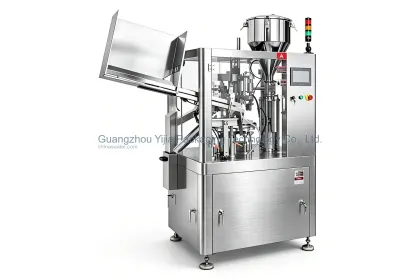 Máquina de sellado y codificación de tubos con tapa especial
Solución de sellado de tubos con tapa especial se configura para Posicionamiento, sellado, codificación y recorte del tubo en Tubos de plástico, tubos laminados de aluminio-plástico.
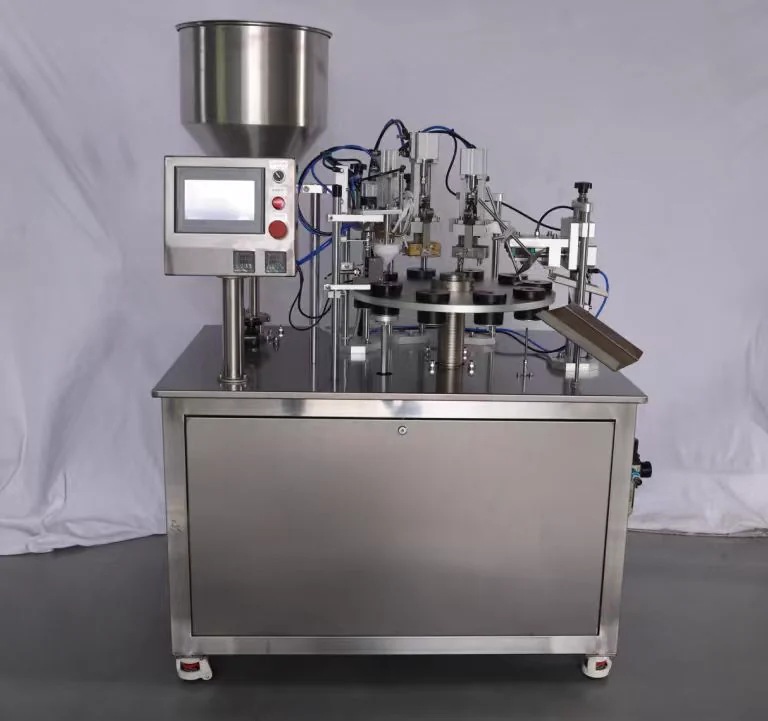 Máquina llenadora y selladora de tubos totalmente automática
Alimentación automática de tubos, posicionamiento, llenado, sellado de cola y descarga para tubos de plástico, tubos compuestos o tubos adaptables.
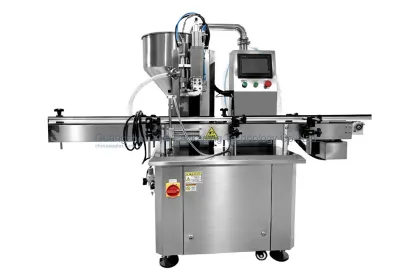 Llenadora de pasta
Llenado dosificado de material para Botellas, cubos, latas, bolsas flexibles
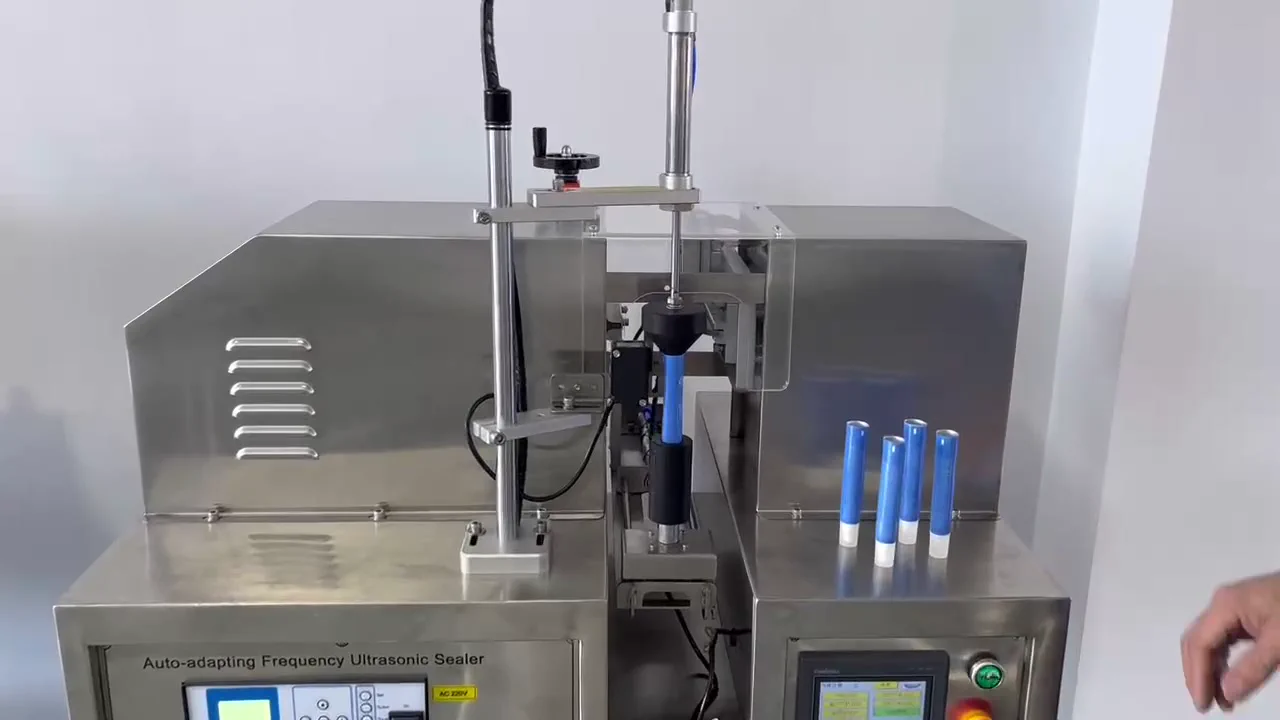 Selladora ultrasónica de tubos
Posicionamiento, sellado, codificación y recorte de tubos para Tubos de plástico, tubos laminados de aluminio-plástico
Proceso clave
First distinguish whether the incoming material is empty tubes or pre-filled tubes, and use actual tubes, product, and caps to confirm tube diameter, material, tail allowance, and tube mouth shape.
When empty tubes are fed and continuous filling and tail sealing is desired, the fully automatic tube filling and sealing machine handles the core process.
When incoming tubes are already filled with product, the tube sealing and coding machine can complete tail sealing, batch coding, and edge trimming without duplicating the filling station.
Flip-top caps, pump heads, pointed nozzles, or other special structures should be confirmed with actual tube head samples for clamping, positioning, and handling boundaries.
If the project separates filling and tail sealing, you can first use a product filling machine to verify material compatibility, then send the filled tubes to the tail sealing equipment.
After tail sealing, print the date or batch code in the agreed position, and arrange conveying and finished product collection according to the site layout.
Datos de muestra
This step is used to divide integrated filling and tail sealing from separate tail sealing. Tube diameter, material, and tail allowance are also verified here.
Provide actual tubes and caps of each specification, and indicate whether the incoming material is empty tubes, pre-filled tubes, or segmented production.Product samples are used to observe discharge closing and the state of the tube after filling, to determine whether the filling nozzle and segmented process are suitable.
Submit creams, lotions, or other actual products, and describe viscosity, stringiness, particles, and planned fill volume.Tail requirements will enter mold and coding position confirmation and must be considered together with tube diameter and available tail length.
Describe the expected sealing pattern, trimming shape, and batch code position. If there is a reference finished product, it can be provided with the sample tubes.This information helps arrange the takt for tube feeding, filling, tail sealing, and collection, avoiding missed multi-specification changeovers.
List the production schedule for each tube type, target capacity, shifts, and changeover frequency, and note the main specifications.Site information determines how the standalone equipment is placed and is also used to verify whether coding and conveying can connect smoothly.
Provide available space, power, compressed air, and existing filling equipment, conveying direction, and downstream collection method.Errores comunes de selección
When submitting requirements, the state of the tube before entering the equipment should be specified, and samples in that state should be provided to verify feeding and clamping.
Each tube material should be sampled and sent together, observing the sealing pattern, tube body stress, and appearance after edge trimming separately.
When the filling process is included, use the actual product for trial filling and check that the tube body and tail area are clean before tail sealing.
Special cap types should be measured and trial-fitted together with the tube, then confirm the fixture and the range of motion the equipment can handle.
Before arranging the downstream section, determine the printing content, position, and tube orientation, and use actual tubes for readability checks.
Ver detalles técnicos
Primero responda cuál es el estado del tubo antes de entrar al equipo
La primera distinción en la selección de tubos de crema facial es el estado del material entrante. Los tubos vacíos requieren llenado y sellado de cola; los tubos ya llenados solo necesitan procesamiento de la cola. Los flujos de equipo correspondientes son diferentes, así que indique claramente el estado al enviar su solicitud.
El material del tubo, la crema y el sello de cola deben verificarse como un conjunto
El material del tubo (plástico o laminado de aluminio-plástico), la viscosidad real de la crema, el diámetro del tubo y el margen de la cola afectan el resultado. Las pruebas de muestra deben cubrir el estado limpio después del llenado, el sello, el recorte de bordes y la posición del lote.
Para tubos vacíos, use el proceso integrado de llenado y sellado de cola
La máquina automática de llenado y sellado de cola de tubos es adecuada para producción continua desde tubos vacíos. Durante la puesta en marcha, verifique tanto el flujo suave de la crema hacia el tubo como el posicionamiento del cuerpo y el sellado de la cola; no acepte solo acciones individuales.
Para tubos ya llenados, enfoque en sellado de cola y codificación
La máquina de sellado de cola y codificación de tubos recibe tubos ya llenados y realiza el sellado de cola, el código de lote y el recorte de bordes. Use tubos de muestra llenos para probar la sujeción, evitando que la prueba con tubos vacíos no coincida con el estado real del material entrante.
Las tapas especiales se manejan por separado según la muestra real de la cabeza
Los tipos de tapas especiales pueden cambiar el contorno de la boca del tubo, los puntos de fuerza y las áreas de sujeción. Solo al proporcionar la tapa y el tubo como un conjunto se puede evaluar el esquema de sellado para tubos con tapas especiales y los accesorios correspondientes.
La producción segmentada puede configurar un llenado de crema independiente
Si la fábrica necesita separar el llenado y el sellado de cola, la máquina llenadora de crema puede confirmar primero la adaptación de descarga con una muestra de crema, luego transferir los tubos llenados a la estación de sellado de cola y planificar el almacenamiento intermedio.
El estilo del sello de cola se verifica elemento por elemento según la especificación
Para diferentes diámetros, materiales y formas de cola, verifique el sello y el recorte de bordes por separado. Para proyectos de múltiples especificaciones, indique la frecuencia de cambio de formato para organizar moldes y piezas de posicionamiento del tubo.
La codificación y el transporte se colocan después del proceso principal
Una vez estable el proceso de llenado y sellado de cola, use la impresora de código de fecha y lote para probar la impresión en tubos reales y conecte la línea de alimentación automática, transporte, sellado y recolección de producto terminado según la dirección en sitio.
Preguntas frecuentes
Do empty tubes and pre-filled tubes use the same solution?
No. Empty tubes can be evaluated on a fully automatic tube filling and sealing machine. When incoming tubes already contain product, the tube sealing and coding machine only handles tail sealing, batch coding, and edge trimming.
We don't have complete samples yet. Can we determine the equipment direction first?
You can first send multi-angle photos of the tubes, tube diameter, material, incoming state, and a description of the product. We will first divide the process steps, then list the tube and material samples that must be sent.
Why does the product need to be tested together with the tubes?
When filling is included, the viscosity, stringiness, and particles of the product affect discharge and tube mouth cleanliness. Only with actual product can we observe whether filling interferes with tail sealing.
Can plastic tubes and aluminum-plastic composite tubes share settings?
They cannot be assumed to be the same in advance. The sealing performance of the tube material and the tail structure need to be sampled separately. Mold contact, sealing patterns, and edge trimming must also be checked against specifications.
Why do special cap types need separate samples?
Special caps change the tube mouth shape and clamping position. The standard tube positioning method may not apply. The cap and tube must be confirmed as a set.
When should we consider connecting coding and conveying?
First stabilize the main filling or tail sealing process, then decide whether to connect conveying based on batch code position, tube orientation, site space, and production takt time.