Machine scope
For positioning the BIB inner bag spout, optional vacuum or gas flushing, metered filling, and valve closure.
Filling / Dosing Equipment
For positioning the BIB inner bag spout, optional vacuum or gas flushing, metered filling, and valve closure.
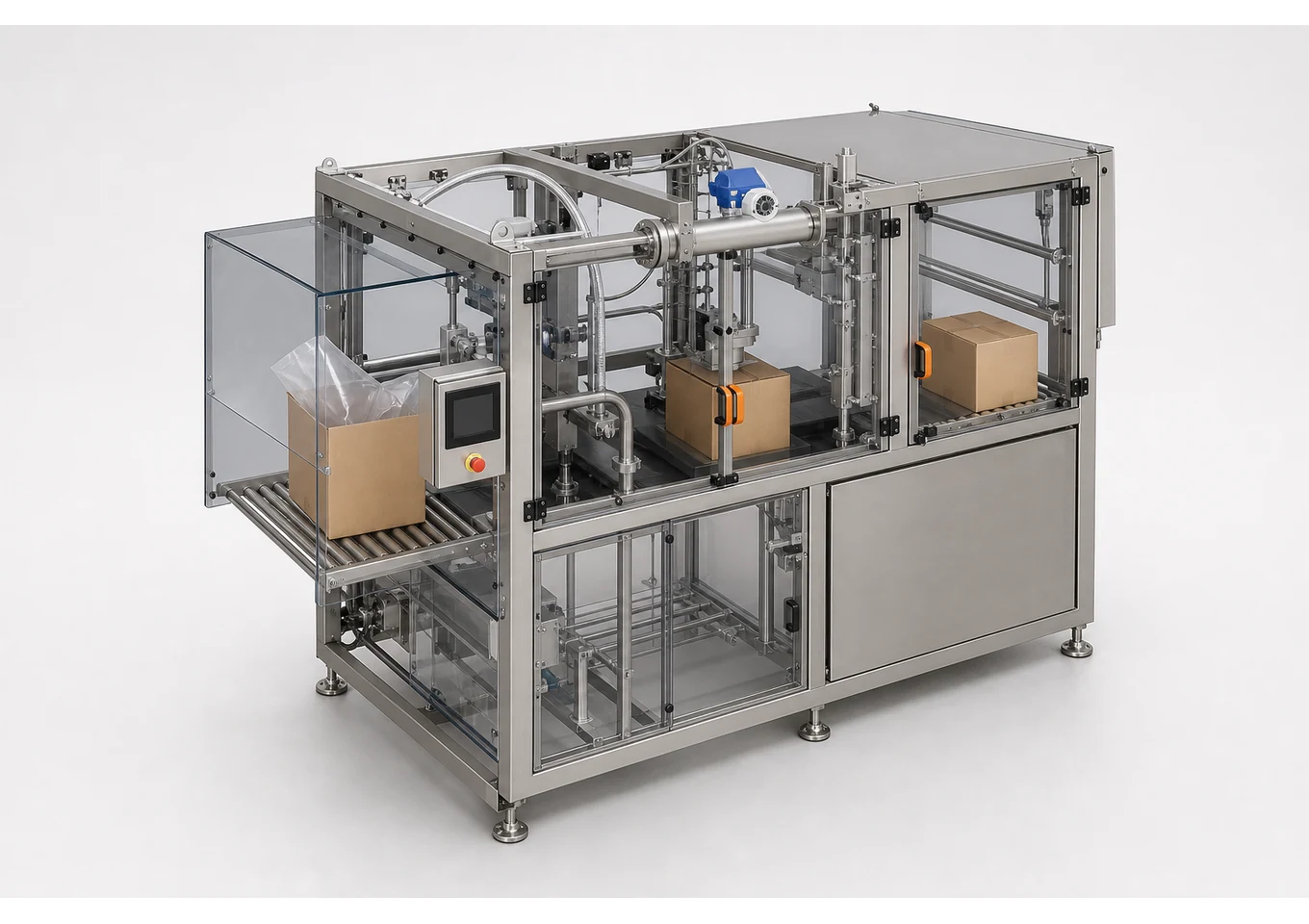
This reference helps explain possible stations and process relationships. Final layout, configuration and capability follow the agreed samples and technical list.


Selection guide
Start by checking container, product, size and output.
For positioning the BIB inner bag spout, optional vacuum or gas flushing, metered filling, and valve closure.
For bag-in-box filling and sealing of juices, concentrates, sauces, alcoholic beverages, and other liquids. The bag spout structure, filling method, cleaning method, and box integration must be confirmed based on the product process. If aseptic or higher hygiene levels are required, they must be separately confirmed as options; vacuum and cartoning are not default configurations.
Selection guide
Photos, key dimensions, and packaging material details are enough to start; if details are incomplete, we will review the direction first.
Selection guide
Semi-automatic or automatic solution; bag feeding, filling, sealing, and cartoning scope confirmed per project
BIB inner bag with specified spout or valve and matching carton
Juices, alcoholic beverages, concentrates, sauces, edible liquids, or daily chemical liquids, confirmed by hygiene and rheological properties
Bag-in-box inner bag, spout, valve cap, and outer carton; all interface dimensions require actual samples
Inner bag spout positioning, optional vacuum or gas flushing, metered filling, valve closure, and optional cartoning
Confirmed based on samples, cycle time, process time, upstream/downstream speed, and final configuration.
Changes in spout specifications, filling interface, metering method, and cleaning program require change parts and re-validation.
Vacuum, gas flushing, aseptic isolation, CIP cleaning, weight check, and automatic cartoning are project options.
Confirmed based on export region, drive structure, site layout, and final configuration.
Can connect to product supply, CIP system, bag/carton supply, leak detection, weighing, and case packing conveyor.
Please provide actual samples of the BIB inner bag and spout, product characteristics, fill volume, hygiene level, cleaning requirements, and outer box process.
Photos, drawings, or samples help confirm diameter, height, stacking, and sealing contact surface.
Material, thickness, easy-tear or leak-proof requirements affect sealing temperature, pressure, and tooling.
Hourly capacity, manual or automatic feeding, conveying, and downstream packaging determine final configuration.
Configuration Selection
Confirm the fitment with real inner bags and valves first. Select supply and metering by product, fill quantity and cleaning needs. Discuss vacuum, gas flushing or aseptic requirements separately.
This machine fills prepared inner bags through their fitments and closes the valve. Film-to-bag conversion, spout welding and outer-case forming are separate processes configured for the project.
For vacuum, gas-flushing or aseptic targets, separately confirm product treatment, filling environment, bag/valve interfaces and cleaning conditions before defining the configuration and acceptance methods.
Filling / Dosing Equipment
Selection guide
Please provide actual samples of the BIB inner bag and spout, product characteristics, fill volume, hygiene level, cleaning requirements, and outer box process.
No. Vacuum, gas flushing, aseptic isolation, CIP cleaning, weight check, and automatic cartoning are project options. All must be separately confirmed based on project scope.
Cannot be guaranteed without actual samples and line conditions. Speed, compatibility range, tooling quantity, and acceptance criteria are based on sample testing and final technical proposal.
Provide sample details
Send packaging-sample photos, the required process and approximate output for an initial machine review. Drawings and complete parameters can follow after the first discussion.