Selection priorities
Choose horizontal or vertical cartoning route based on product orientation and carton structure.
End-of-Line Cartoning & Palletizing Equipment
Choose horizontal or vertical cartoning route based on product orientation and carton structure.
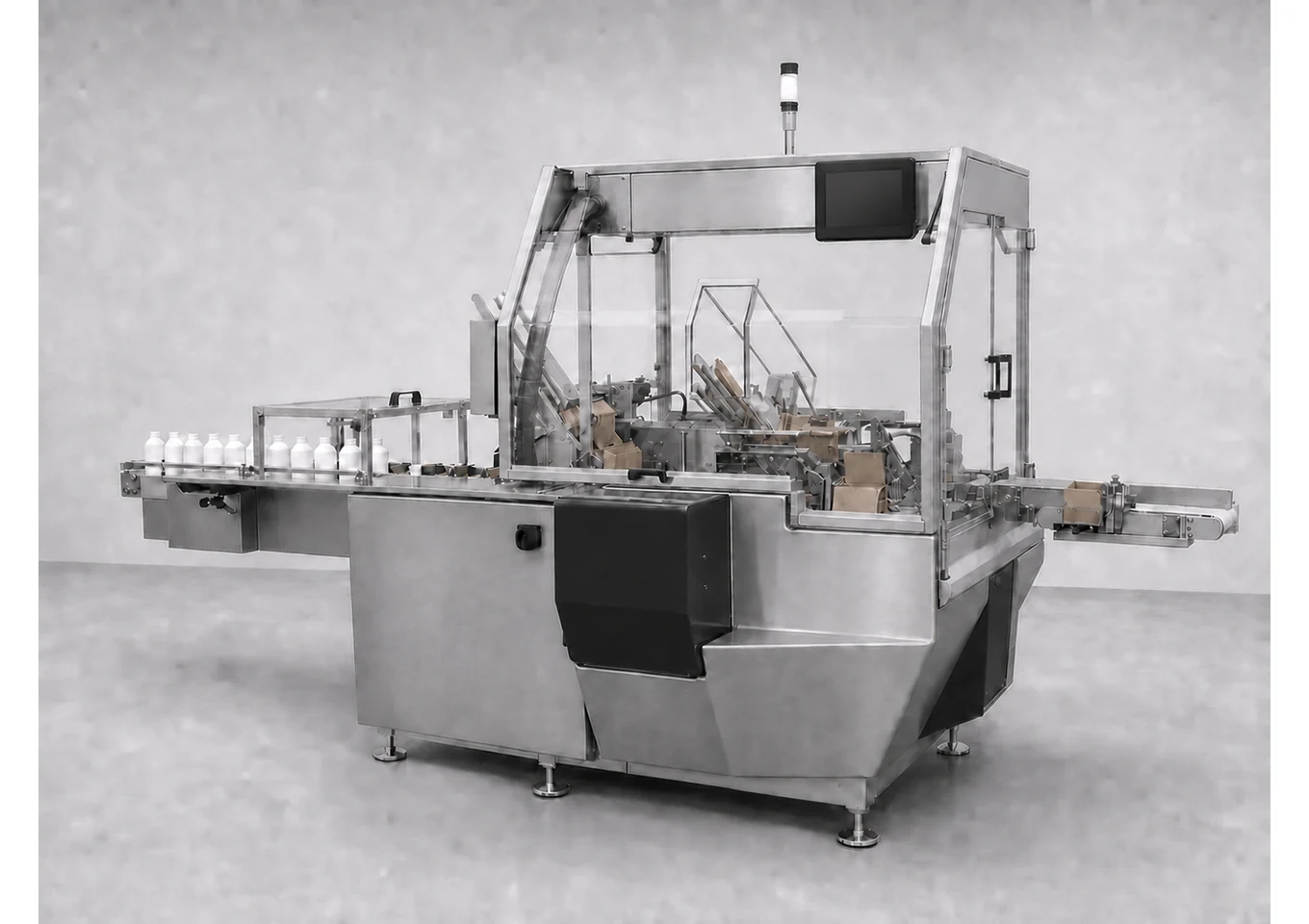
This reference helps explain possible stations and process relationships. Final layout, configuration and capability follow the agreed samples and technical list.
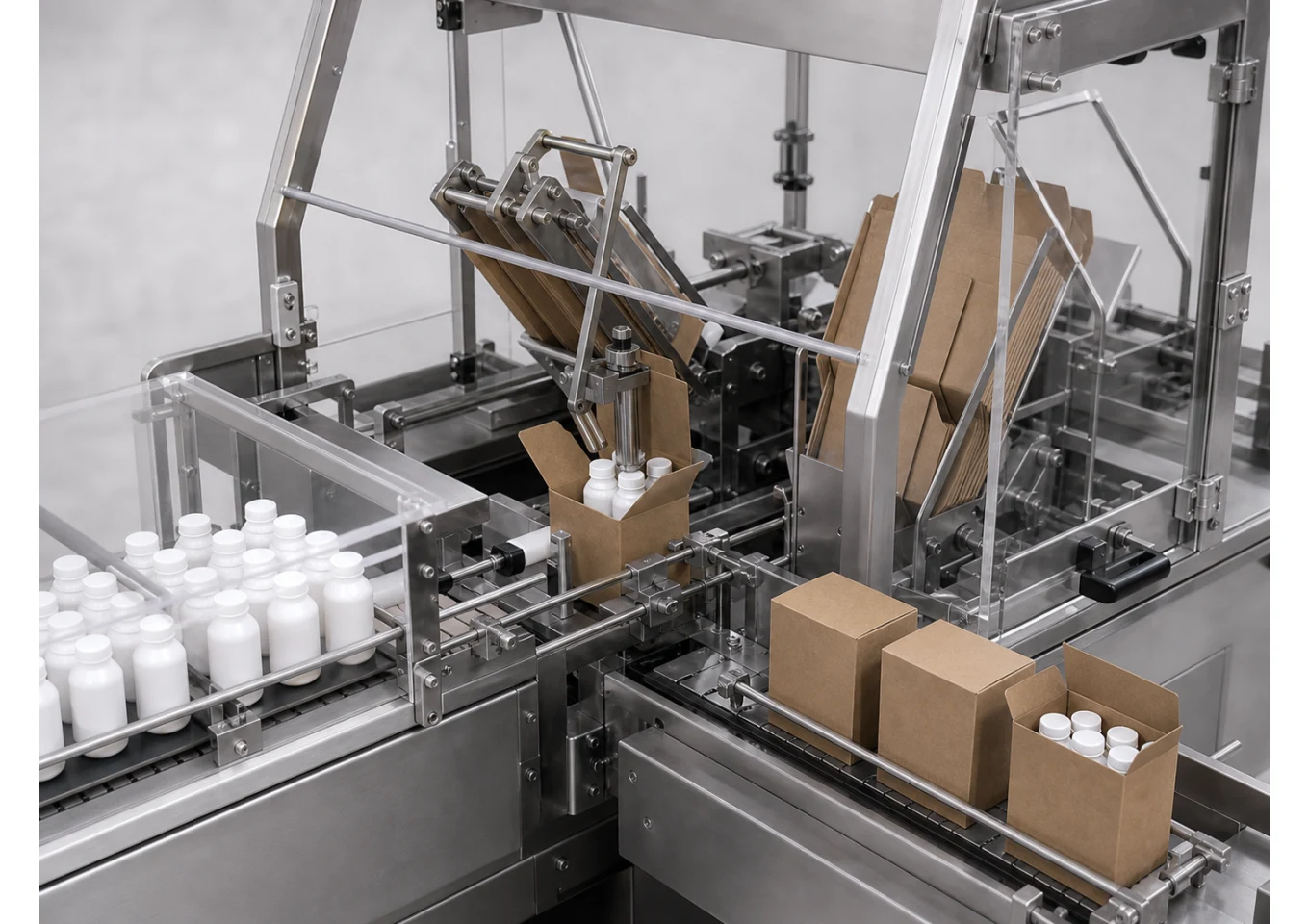
Selection guide
Start by checking container, product, size and output.
Choose horizontal or vertical cartoning route based on product orientation and carton structure.
After products enter folding cartons, arrange case packing, sealing, and outer case labels according to shipping case specifications; confirm equipment and interfaces for both packaging levels separately.
Selection guide
Photos, key dimensions, and packaging material details are enough to start; if details are incomplete, we will review the direction first.
Selection guide
Automatic cartoning; feeding method, leaflet insertion, coding and glue sealing configured per project
Bottles, pouches, tubes, small boxes, trays or other products that can be stably loaded into cartons
Sealed single items and optional leaflet or accessories
Folding carton, tuck-end carton or verified glued carton structure
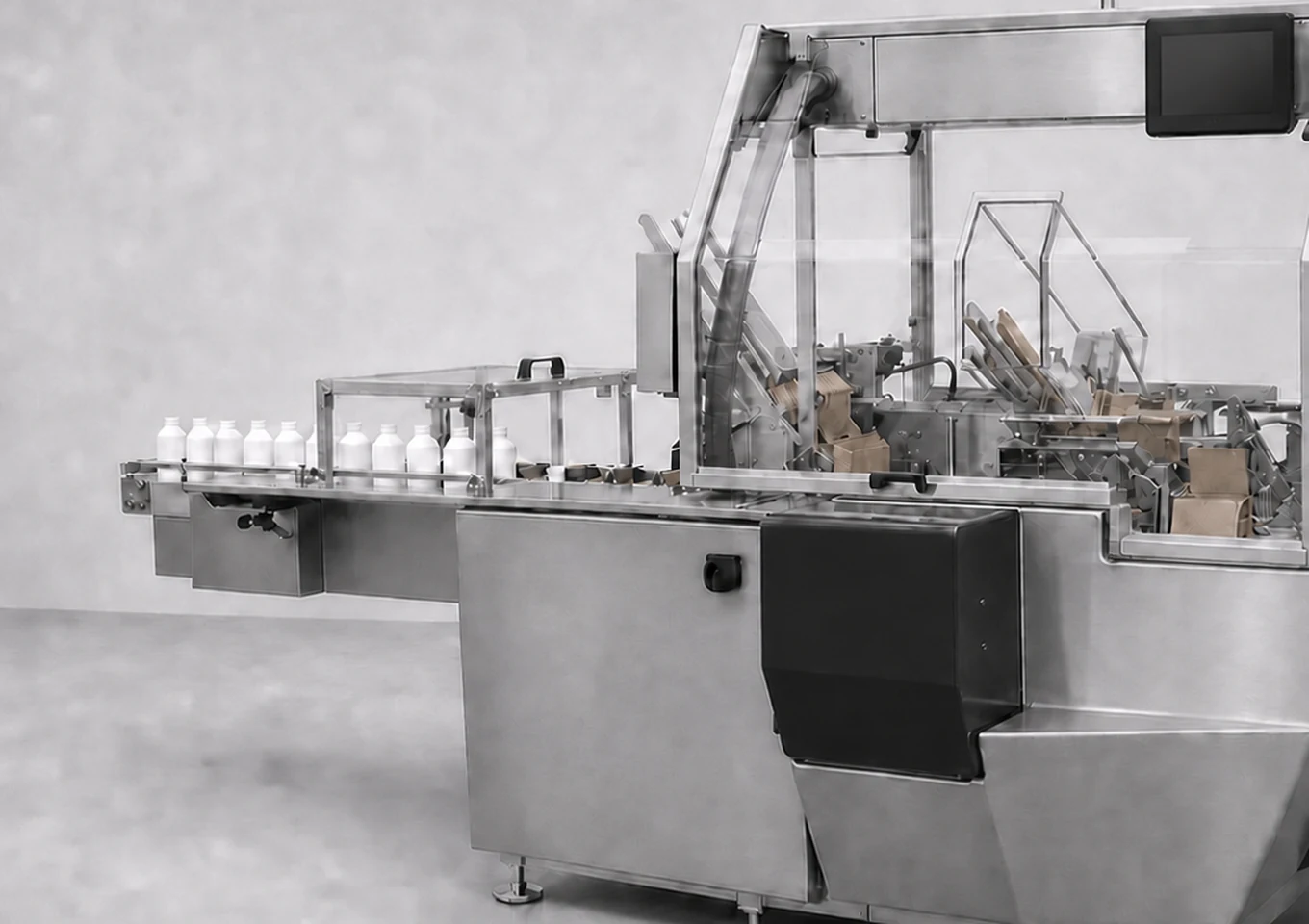
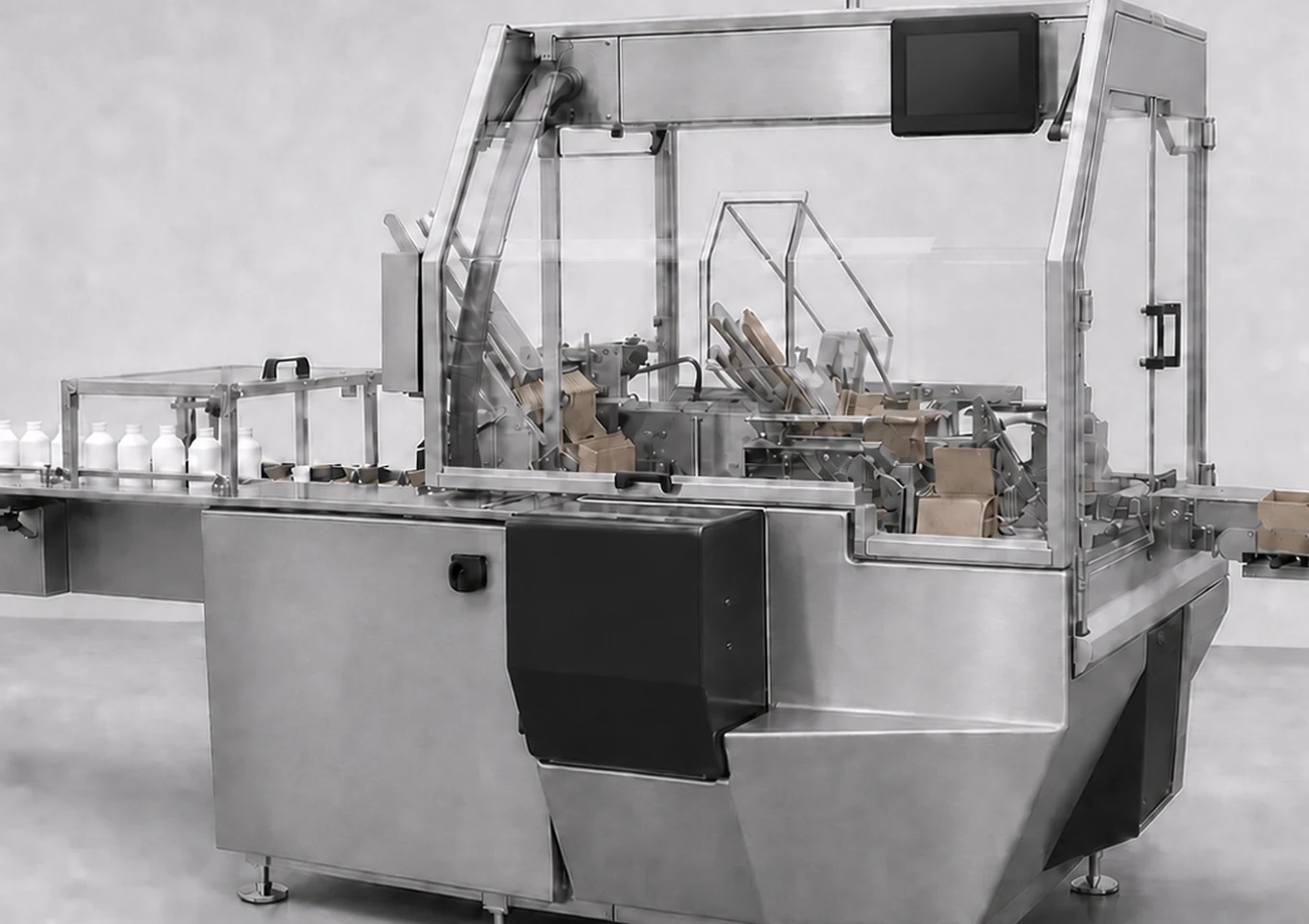
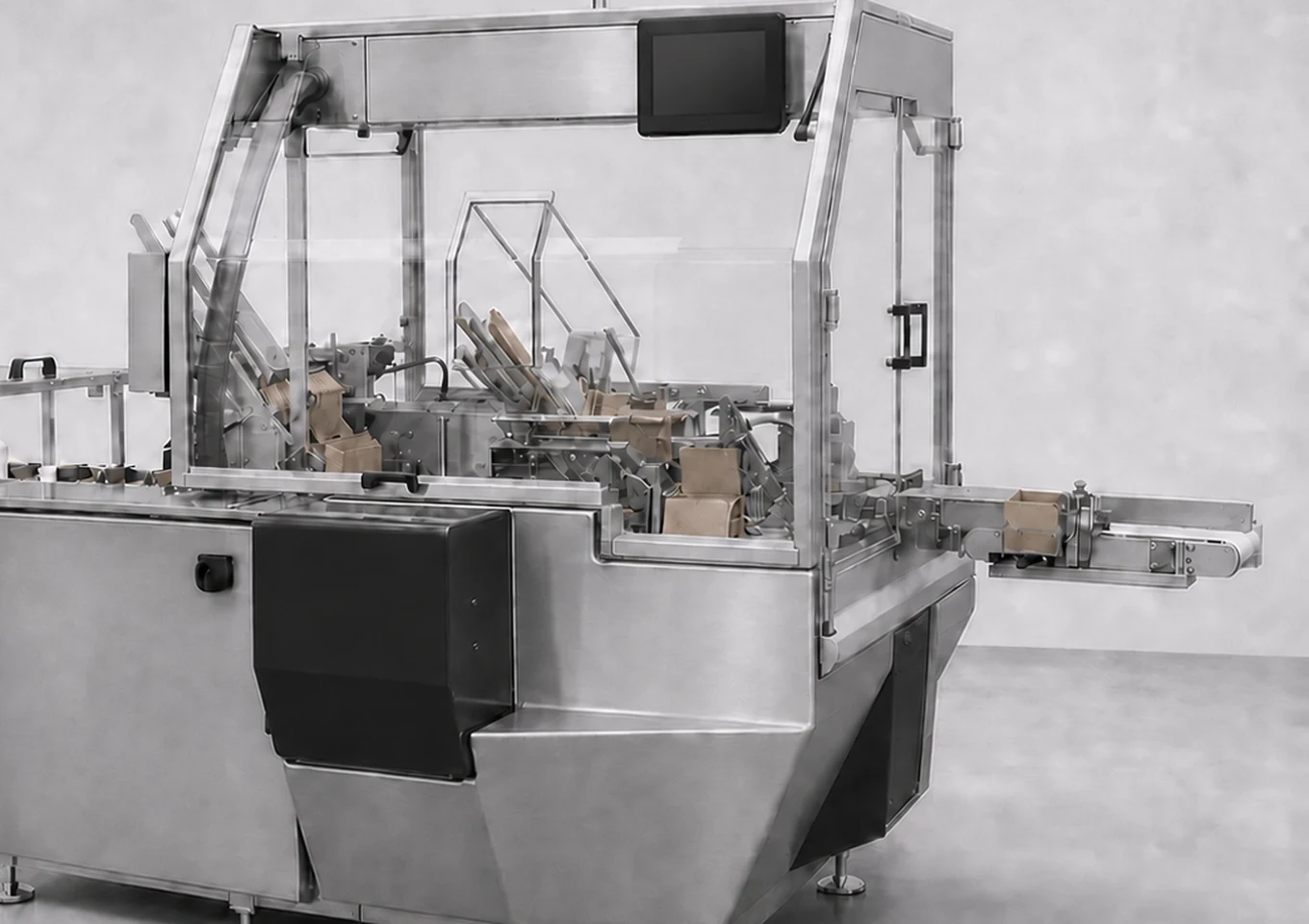
Carton feeding and opening, product collation, horizontal or vertical loading, optional leaflet insertion, closing and discharge
Confirmed based on samples, motion cycle, process time, upstream/downstream speed and final configuration.
When product dimensions, orientation or carton structure change, the magazine, pusher, guide and closing mechanism need to be changed or adjusted.
Leaflet folding, accessory insertion, coding, missing product detection, glue sealing and checkweighing are optional modules.
Confirmed based on export region, drive structure, site layout and final configuration.
Can connect to sealing, labeling, pre-cartoning collation, case packing and palletizing equipment.
Please provide product, carton flat and filled carton, loading orientation, accessories, target speed and closing standard.
Photos, drawings, or samples help confirm diameter, height, stacking, and sealing contact surface.
Material, thickness, easy-tear or leak-proof requirements affect sealing temperature, pressure, and tooling.
Hourly capacity, manual or automatic feeding, conveying, and downstream packaging determine final configuration.
Configuration Selection
Treat the product, carton and accessories as one sample set. Compare horizontal or vertical feeding, insertion and closing, distinguishing retail cartons from shipping cases first.
Select the route by product orientation, carton opening direction, leaflet and accessory feeding. Test opening, insertion and closing with a complete sample set. Packing into shipping cases is separately configured by case specification.
Confirm cartoning, case erecting, case packing, case sealing, outer-case marking and palletizing separately by packaging level and process. Integrate discharge direction, conveyor heights, buffering and stop interlocks into the line.
End-of-Line Cartoning & Palletizing Equipment
Selection guide
Please provide product, carton flat and filled carton, loading orientation, accessories, target speed and closing standard.
No. Leaflet folding, accessory insertion, coding, missing product detection, glue sealing and checkweighing are optional modules. All need to be confirmed separately per project scope.
Cannot commit without actual samples and line conditions. Speed, compatibility range, tooling quantity and acceptance criteria are based on sample testing and final technical proposal.
Provide sample details
Send packaging-sample photos, the required process and approximate output for an initial machine review. Drawings and complete parameters can follow after the first discussion.