Solution topic
Small-Cup Sauce Line: Anti-Drip Filling, Lidding, Coding and Cartoning
Configure feeding, filling and anti-drip nozzles by sauce viscosity and particles, match cup rim to rollstock or pre-cut lids, then add coding, cartoning and case sealing from real
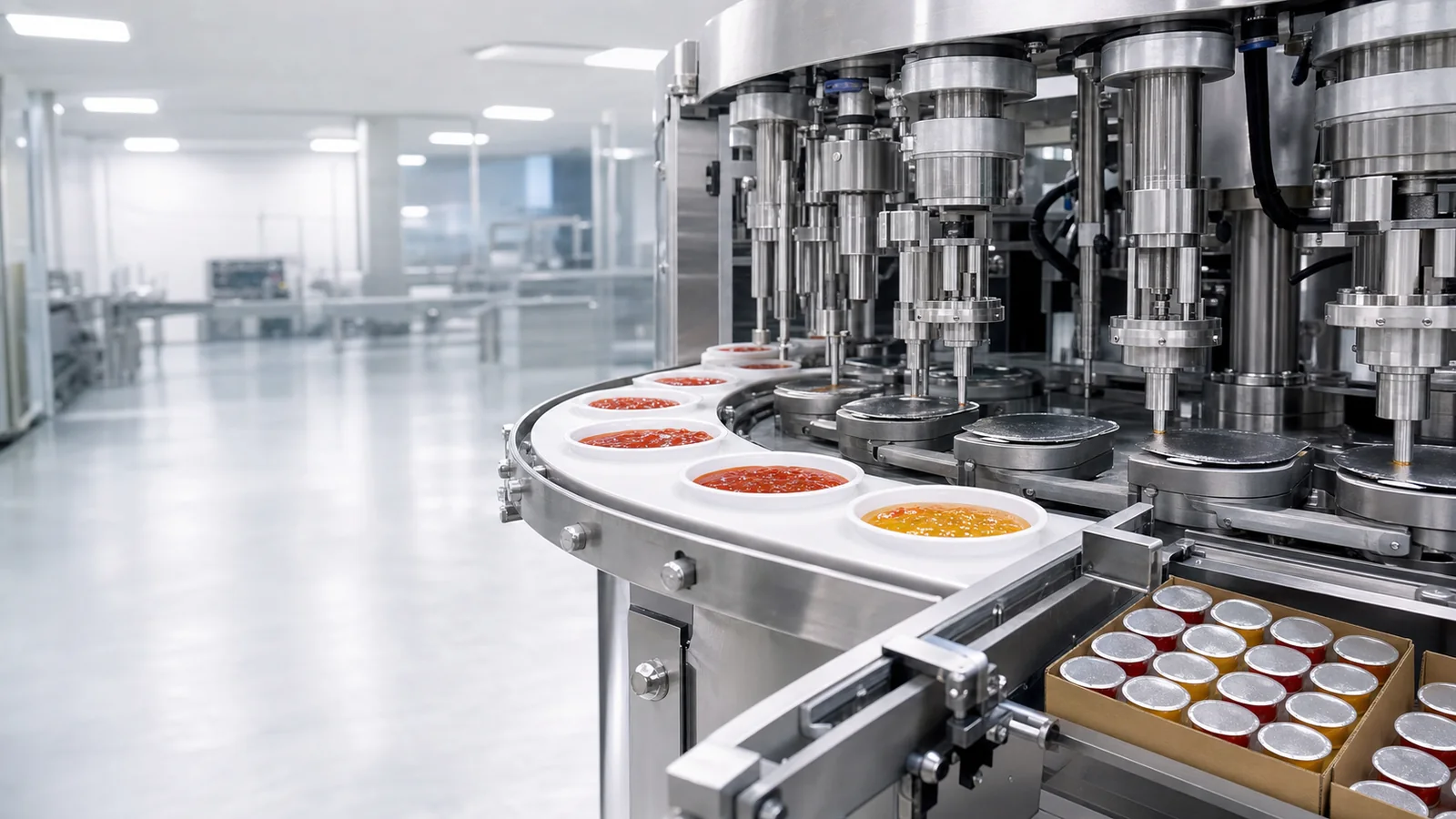
- Sauce viscosity and particles choose feeding and nozzles; cup rim and lidding choose rollstock or pre-cut lids, then cup collation and carton structure choose coding and cartoning.
Solution summary prepared for you
- For small-cup sauce, first verify filling cutoff, rim cleanliness, and heat sealing with actual cups, film, and sauce, then choose a step-by-step or continuous route based on batch and changeover conditions.
- The SGP-03, sauce piston filler, and anti-drip nozzle suit step-by-step trials; the small-cup filling-sealing machine or rotary main machine is configured for stable cup formats and processes.
- Date/batch coding, product cartoning, and shipping case packaging are verified separately; both the automatic cartoning machine and the case line require sample, packaging material, and interface confirmation before configuration.
Route comparison
- Suitable for prototyping, multi-specification trials, or small-cup projects that first need to solve sauce filling cutoff and cup-film matching.
- Filling, anti-drip, and heat sealing are tested separately, which helps handle sauce cutoff and rim contamination and suits small-batch changeover of multiple cup formats.
- Each process requires manual connection; the SGP-03 only handles semi-automatic heat sealing, and the filler and sealer are not a fixed integrated line.
- When continuous automatic cup denesting, filling, film placement, and cup discharge are required, do not replace a verified continuous main machine with step-by-step individual machines.
- A sauce piston filler with anti-drip anti-stringing filling nozzles configured by material, and sealing with the SGP-03 and molds customized per cup sample.
- Suitable for small-cup packaging with stable cup formats and film, requiring continuous sauce metering and heat sealing.
- Cup denesting, filling, film placement, sealing, and cup discharge are connected in unified actions, reducing manual transfer of filled cups between stations.
- Cup rim rigidity, film, sauce state, station requirements, and changeover frequency all need verification; optional modules on rotary equipment are not included in the main machine by default.
- When product specifications change frequently, the cup film is not finalized, or filling cutoff still contaminates the rim, complete step-by-step trials first.
- With stable cup formats, evaluate a small-cup filling-sealing machine; for intermittent rotary processes, evaluate a rotary cup-box filling-sealing machine; equipment stations are determined by samples and process.
- Suitable for projects where sealed small cups need to enter folding cartons and further case packing, sealing, or outer case labeling per shipping requirements.
- Design product entry into folding cartons and cartoned products into shipping cases separately, handling retail display and shipping identification independently.
- Provide finished small cups, folding cartons, insertion posture, accessories, case dimensions, and label content; confirm the interfaces of both equipment levels separately.
- When the cup arrangement or folding carton structure is not defined, do not fix the automatic cartoning form. When only product cartoning is needed, do not preset a shipping case line.
- After sample verification of cup arrangement and carton type, evaluate a horizontal or vertical automatic cartoning machine; the shipping case then uses a supporting case sealing and outer case labeling line.
Associated Equipment / Consumables
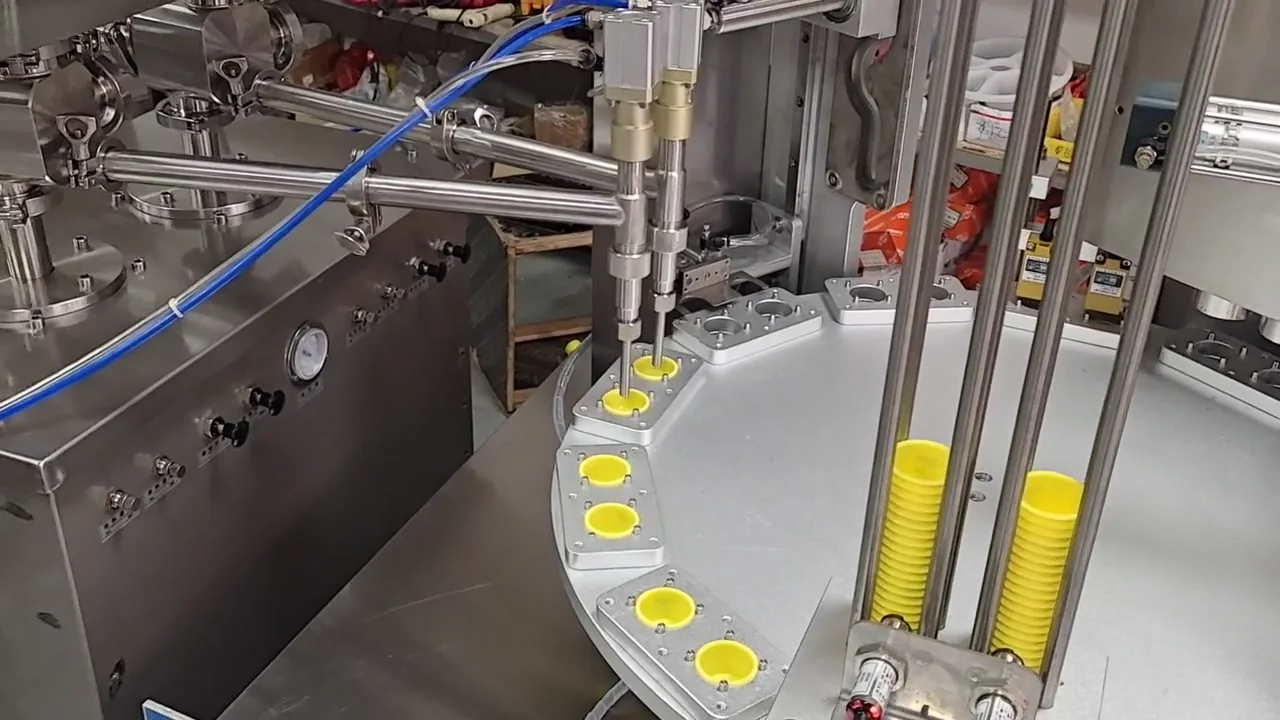 Rotary Small-Cup Filling and Sealing Machine
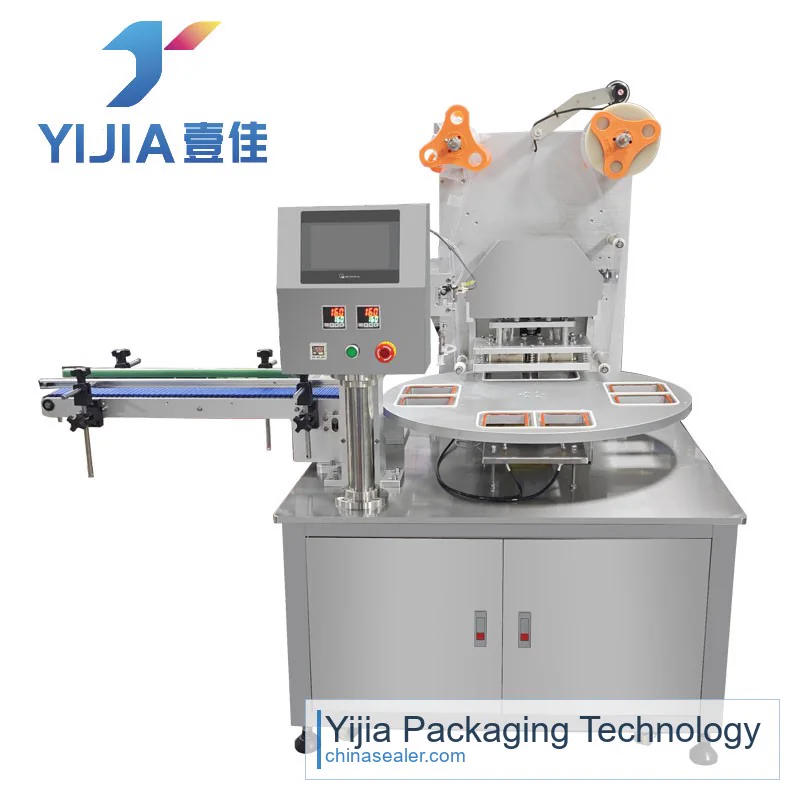 Automatic Small-Cup Filling and Sealing Machine
Establish cup-film-sauce trial samples; Photos and dimensions can be used to screen equipment direction; filling nozzles, anti-drip actions, and sealing molds still nee...
 Piston Sauce Filling Machine
Establish cup-film-sauce trial samples; Photos and dimensions can be used to screen equipment direction; filling nozzles, anti-drip actions, and sealing molds still need verification with...
Core process
Combine small cups, sealing film, and actual sauce samples into the same trial batch; observe filling cutoff, rim cleanliness, and the heat-seal contact surface.
Small-batch or multi-specification trials can separately validate sauce filling and cup-film heat sealing; first solve stringiness, dripping, and rim contamination, then combine the operation flow.
Only after the cup format and order operation mode are stable, evaluate organizing cup denesting, sauce metering, film placement, heat sealing, and cup discharge into a continuous main machine.
After sealing is stable, arrange the date/batch code according to the readable area on the cup film or carton, and check adhesion and triggering with the actual carrier.
Before automatic cartoning, the arrangement, entry direction, and folding carton structure of the sealed small cups must be defined; providing only the carton outer dimensions is not enough.
After products enter folding cartons, arrange case packing, sealing, and outer case labels according to shipping case specifications; confirm equipment and interfaces for both packaging levels separately.
Sample details
The rim, height, and nesting state are used to determine cup denesting, filling positioning, and sealing molds, and also affect how the sealed product enters the cartoning station.
Submit empty and finished cups of each specification, and mark the rim, height, bottom, and nesting dimensionsActual sauce samples are used to verify supply, metering, anti-drip, and rim residue; viscosity names alone cannot replace actual filling.
Provide the planned production sauce, and specify particles, fiber, stringiness, and temperature management requirementsThe sealing film and cup samples determine the heat-seal contact layer, film feeding direction, and opening state as a set, and form an inspectable seal sample.
Submit roll film or pre-cut film, and specify the material, printing direction, and planned date/batch code areaProduction arrangements are used to distinguish step-by-step individual machines, continuous main machines, and downstream cartoning methods, and to verify the actions required for multi-specification changeover.
Specify shift output, number of cup formats, changeover frequency, manual process steps, and finished product collection methodAutomatic cartoning and case packaging each require product, folding carton, and shipping case information; avoid mixing the two process levels into one equipment interface.
Attach the carton flat blank and actual carton, cup arrangement, accessories, case dimensions, quantity per case, and site entry/exit directionCommon selection mistakes
First check supply, metering, and cutoff with actual sauce samples, then configure the sauce piston filler and anti-drip components accordingly.
Filling tests should observe rim residue and perform trial sealing of the film on a clean contact surface; adjust the filling nozzle or upstream actions if necessary.
Select the cup denesting, filling, film placement, sealing, and cup discharge modules of rotary equipment according to the actual process; unverified actions are not written into fixed stations.
First determine the arrangement, insertion posture, and carton structure of the sealed small cups, then compare horizontal or vertical automatic cartoning routes.
Draw separate flows for small cups entering folding cartons and cartoned products entering shipping cases, and prepare different samples for the two levels of equipment.
View detailed technical notes
Separate Cup Filling and Two-Stage Cartoning Processes
A small-cup sauce project must simultaneously specify the cup-film combination, sauce state, and final packaging levels. Filling and film sealing close the product; folding cartons and shipping cases are two subsequent processes.
Sauce Cut-Off Is a Prerequisite for Heat Sealing
Viscosity, particulates, and stringiness change the feed and filling-nozzle action, while residue on the cup rim affects the heat-sealing contact surface. Filling cut-off and film sealing results should be observed continuously in the same sample run.
A Step-by-Step Route Helps Resolve Issues Item by Item
For multiple specifications or the sampling stage, use a sauce piston filler, anti-drip nozzles, and SGP-03 step-by-step trials. Configure each according to the material and cup sample separately; do not describe them as a pre-assembled standard line. After process transfer, recheck the cup rim condition and film sealing positioning.
Configure the Continuous Main Machine According to Actual Stations
Once the cup style, film material, and sauce are stable, evaluate a small-cup filling and sealing machine or a rotary cup-box filling and sealing machine. Rotary equipment requires sample and process confirmation; optional stations are not automatically included in the supply scope. During continuous trial runs, observe the sauce condition after each station and the cleanliness of the cup rim.
Cartoning Is Not the Same as Transport Case Sealing
An automatic cartoning machine handles sealed small cups into folding cartons, while a case sealing and outer-case labeling line handles the transport packaging of the finished cartons. Prepare samples, packaging materials, and interfaces separately for both types of equipment. Carton feeding, product collation, and transport case infeed should also be jointly debugged according to their respective actual samples.
Samples Extend from Cups, Film, and Sauce to Cartons
Small cups, sealing film, and sauce should be submitted as a complete set; carton flat patterns, actual cartons, and cup arrangement should be provided subsequently. This allows filling-sealing and cartoning trials to use the same finished-product benchmark.
Choose the Filling-Sealing Route Based on Process Maturity
Step-by-step trials solve stringing, dripping, and cup-film fit; the continuous main machine solves the motion linkage from cup drop to cup discharge. The selection basis is the actual process and changeover needs, not the speed of a single piece of equipment.
Arrange the Date/Batch Station According to the Carrier
The date/batch inkjet coder is matched after sealing according to the cup film or carton material. The printed content, consumables, trigger point, and installation position are determined by sample artwork and dynamic trial printing.
The Downstream Supply Boundary Is Determined by the Two-Stage Packaging Materials
A horizontal or vertical automatic cartoning machine must be verified with sealed small cups, folding cartons, and accessories. The transport case line is a supporting downstream section, configured separately according to the quantity per case, case specifications, and label content.
Common questions
Should small-cup sauce use step-by-step individual machines or a continuous main machine?
For multi-cup formats and small-batch trials, start by validating with a sauce piston filler and the SGP-03 in separate steps. Once the cup format is fixed and continuous cup denesting, filling, and film sealing are required, then evaluate a small-cup or rotary filling-sealing main machine.
How does the sauce state change filling configurations?
Viscosity, particles, and stringiness change the supply, valve port, and filling cutoff; check metering, clogging tendency, and cup rim residue with the actual sauce.
Do small cups and sealing film need to be tested as a set?
Yes. The cup rim material and the heat-seal contact layer of the film must match; after filling with sauce, observe the effect of rim contamination on the seal band.
What samples should be prepared before evaluating automatic cartoning?
First submit sealed small cups, a carton flat blank, and an actual carton, and specify the cup arrangement, insertion direction, quantity per carton, accessories, and lid-closing standard.
Can the date and batch code be printed on the cup film or carton?
Determine based on the readable area, material, and subsequent friction points of the cup film or carton, then complete adhesion and trigger tests with the supporting coding equipment.
Are automatic cartoning and shipping case sealing the same process?
Product cartoning handles small cups entering folding cartons; the outer case line handles case packing, sealing, and shipping labels for cartoned products. The inputs and actions differ.