Cup format and lidding
Use real cups to check the rim, dimensions, rigidity and support, then trial production lidding for seal-layer and tooling fit. Each cup change needs its own tooling assessment.
Cups / Bowls / Boxes / Trays Sealing Equipment
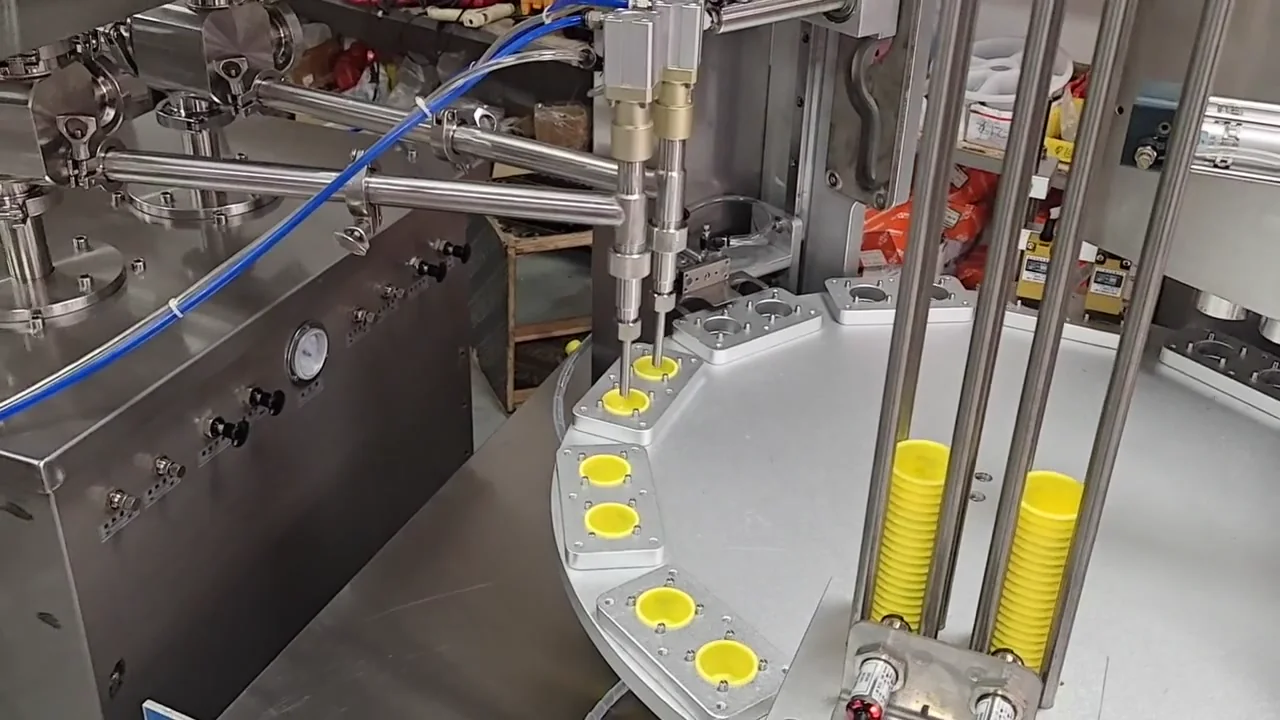
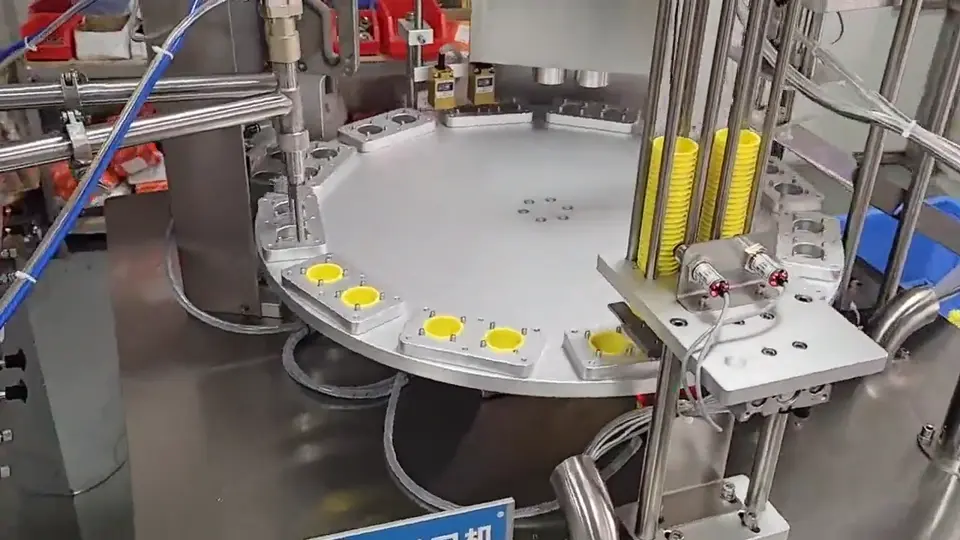
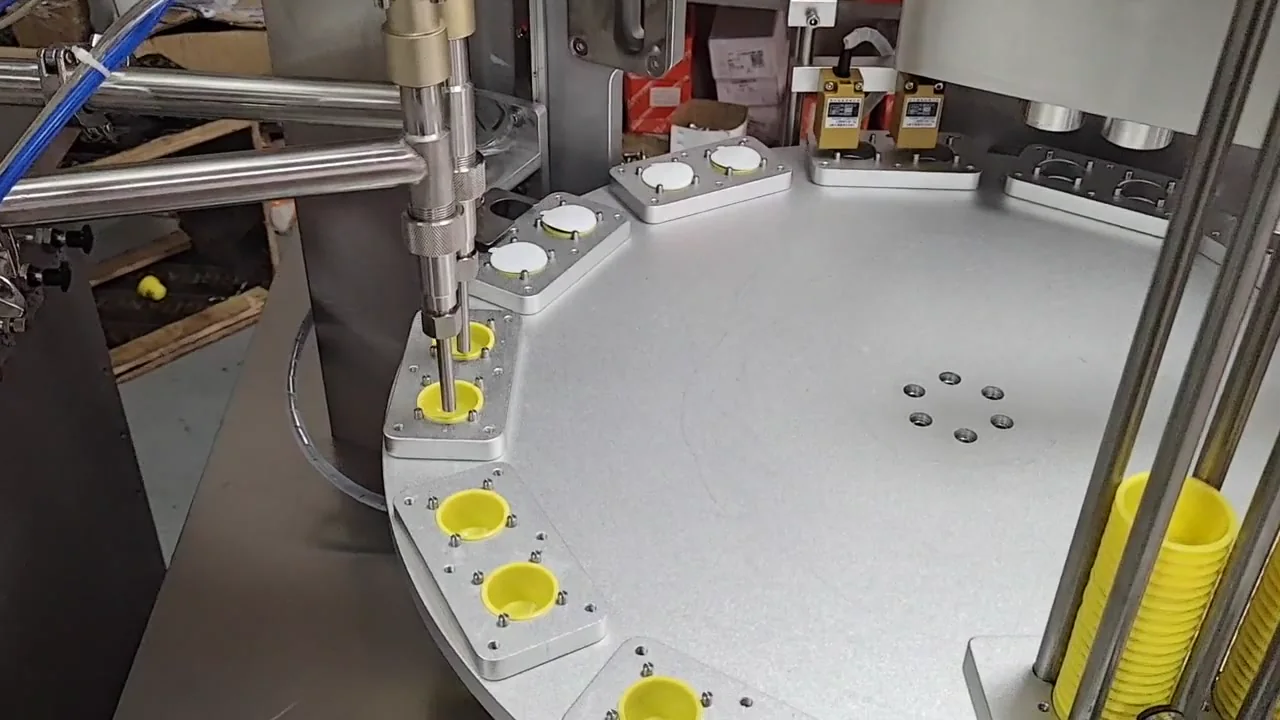
Position, fill and heat-seal lidding film on small cups using rotary stations. The real machine footage shows a two-up configuration. Cup design, product, lidding material and target output are confirmed with samples.
Watch product video
First-party footage of a two-up cup machine, showing rotary positioning, filling and lidding stations. This is one configuration, not a standard scope for every model or proof of output or acceptance.
Actual equipment and its operating steps. Confirm the final configuration with the containers, product, sample trials and agreed equipment scope.
Selection guide
Confirm output through continuous trials with the actual container, film, product and complete cycle. Filling, loading, inspection and downstream integration are configured per project.
Use real cups to check the rim, dimensions, rigidity and support, then trial production lidding for seal-layer and tooling fit. Each cup change needs its own tooling assessment.
Select metering and filling from product flow, particles, foam and fill quantity. Trial the real product to check cut-off dripping and cup-rim cleanliness.
Confirm output over the complete cup-feed, fill, lid-placement, heat-seal and discharge cycle, then check upstream supply and finished-pack collection.
Selection guide
Start with container photos, the intended lidding material and approximate output. You can enquire before drawings or full material specifications are ready; we will review the process and identify the samples needed.
Selection guide
Intermittent rotary table automatic operation; cup denesting, filling, lid placement, inspection, and discharge are optional per project
Small cups; confirm diameter, height, rim and locating tooling with samples.
Liquids, pastes, sauces, granules, or other metered materials, confirmed by filling characteristics
The cup rim material must match the lid film’s heat-seal layer. Send cup and film samples so we can review the feed method and machine configuration; precut lids and rollstock should be checked separately.
Container feeding, rotary table positioning, optional filling, lid or film placement, heat sealing, and discharge
Confirmed based on samples, motion cycle, process time, upstream/downstream speed, and final configuration.
Typically requires changing rotary table tooling, sealing dies, and related guides, and re-validating filling and sealing parameters.
Options to assess may include automatic cup loading, filling, particulate dosing, lid placement, date marking, inspection or collection. They are not implied by the video or standard supply; confirm them against samples, process sequence and the final scope.
Confirmed based on export region, drive structure, site layout, and final configuration.
Can be connected to upstream cup feeding and product supply systems, and downstream inspection, labeling, cartoning, or conveying equipment.
Provide empty small cups, film samples, contents, process steps and seal requirements.
Photos, drawings, or samples help confirm diameter, height, stacking, and sealing contact surface.
Material, thickness, easy-tear or leak-proof requirements affect sealing temperature, pressure, and tooling.
Hourly capacity, manual or automatic feeding, conveying, and downstream packaging determine final configuration.
Configuration Selection
This is a small-cup filling and sealing configuration. Trays, bottles, aluminium trays, vacuum and MAP require separately matched machines and processes.
This page covers a small-cup configuration. Positioning, filling and lidding heat sealing are linked through rotary stations; cup and film feeding are confirmed for the project.
These container forms require different support, rims and tooling. Use each actual sample to select the corresponding machine.
For a vacuum or MAP target, select an appropriate machine route and separately confirm the chamber, gas system, barrier film and finished-pack inspection methods.
Cups / Bowls / Boxes / Trays Sealing Equipment
Selection guide
Provide empty small cups, film samples, contents, process steps and seal requirements.
No. Automatic cup denesting, liquid or paste filling, granule dosing, lid placement, date coding, inspection, and product collection are all optional modules. Each must be confirmed separately per project scope.
Cannot guarantee without actual samples and line conditions. Speed, compatibility range, tooling quantity, and acceptance criteria are based on sample testing and final technical proposal.
Send photos for machine selection
Start with container photos, the intended lidding material and approximate output. You can enquire before drawings or full material specifications are ready; we will review the process and identify the samples needed.