Solution topic
For milk tea cups with particles, the filling method and film feeding must be decided together
For milk tea, fruit tea and dessert cups, choose rotary or small cup filling and sealing equipment based on whether they contain particles, cup material rim, roll film or pre-cut f
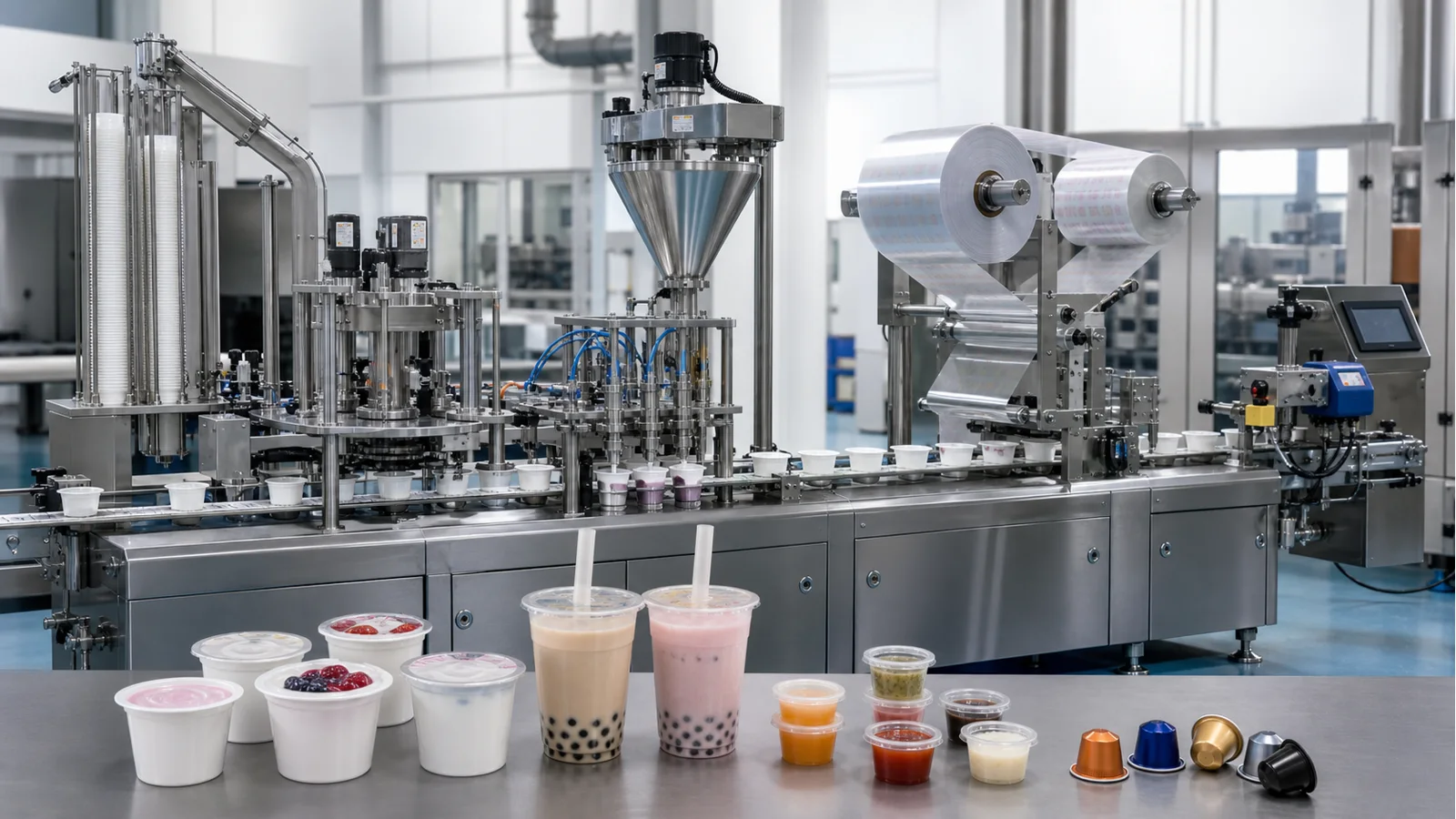
- Pure liquid, pearl or coconut jelly drinks have different requirements for the filling mechanism, and PP, PET or paper cups correspond to different configurations with roll film or pre-cut lid film. Please provide drink, cup film samples, particle size, fill volume, capacity and cleaning requirements.
Solution summary prepared for you
- For milk tea cup filling and sealing, first distinguish pure liquid from particle beverages such as pearls and coconut jelly, then use actual cup-film to determine the filling and sealing stations.
- The rotary cup box filling and sealing machine is suitable for organizing cup dropping, filling, and sealing in multiple stations, but particle state and film material feeding still need trial samples.
- When using pre-cut lid film, verify automatic film separation, orientation, and cup rim placement; the pre-cut lid film automatic sheet feeding machine can be evaluated.
Route comparison
- Suitable for projects where the cup type, material, and film route are already clear and need multi-station organization of cup dropping, filling, and sealing.
- The rotary cup box filling and sealing machine can arrange each action by station and conduct sample verification around particle state and film feeding method.
- The filling channel must be confirmed for each beverage; changes in cup type and film material also bring adjustments to molds, cup dropping, and film supply.
- When beverage particles, cup type, or sealing film form are not yet decided, single-item trials should be completed first; it is not advisable to fix the multi-station configuration directly.
- Use the rotary cup box filling and sealing machine as the multi-station main machine, and configure the filling action and film material feeding according to the actual beverage.
- Suitable for cup packaging projects where cup material, filling volume, beverage process, and sealing film method are defined, and continuous cup dropping, filling, and heat sealing are needed.
- The small cup filling and sealing machine can establish a complete cup packaging process around a fixed cup-film combination, making it easy to record changeover and cleaning requirements.
- Beverages with particles cannot use pure liquid settings; cup-film heat sealing and cup body support must also be tested for each specification.
- When the product is still frequently changing cup type, particles, or film material, the trial scope should be narrowed before determining the main machine stations.
- Use a small cup filling and sealing machine to verify cup dropping, filling, and film sealing, and provide small cup sealing film and easy-tear film consumables.
- Suitable for cup packaging processes that use sheet lid film, or where there is a separate quantitative powder or granule addition step in production.
- Verifying sheet film separation and independent ingredient addition separately clearly distinguishes the equipment responsibilities of packaging material feeding and material addition.
- Pre-cut film requires verification of stack separation and orientation. The powder branch must specify material, addition order, and cleaning boundaries.
- When using roll film and there is no separate powder or granule step, there is no need to add the corresponding sheet feeder or powder and granule filling module.
- For sheet film, use a pre-cut lid film automatic sheet feeding machine. If there is indeed independent powder or granular ingredient addition, then evaluate a powder and granule filling machine.
Associated Equipment / Consumables
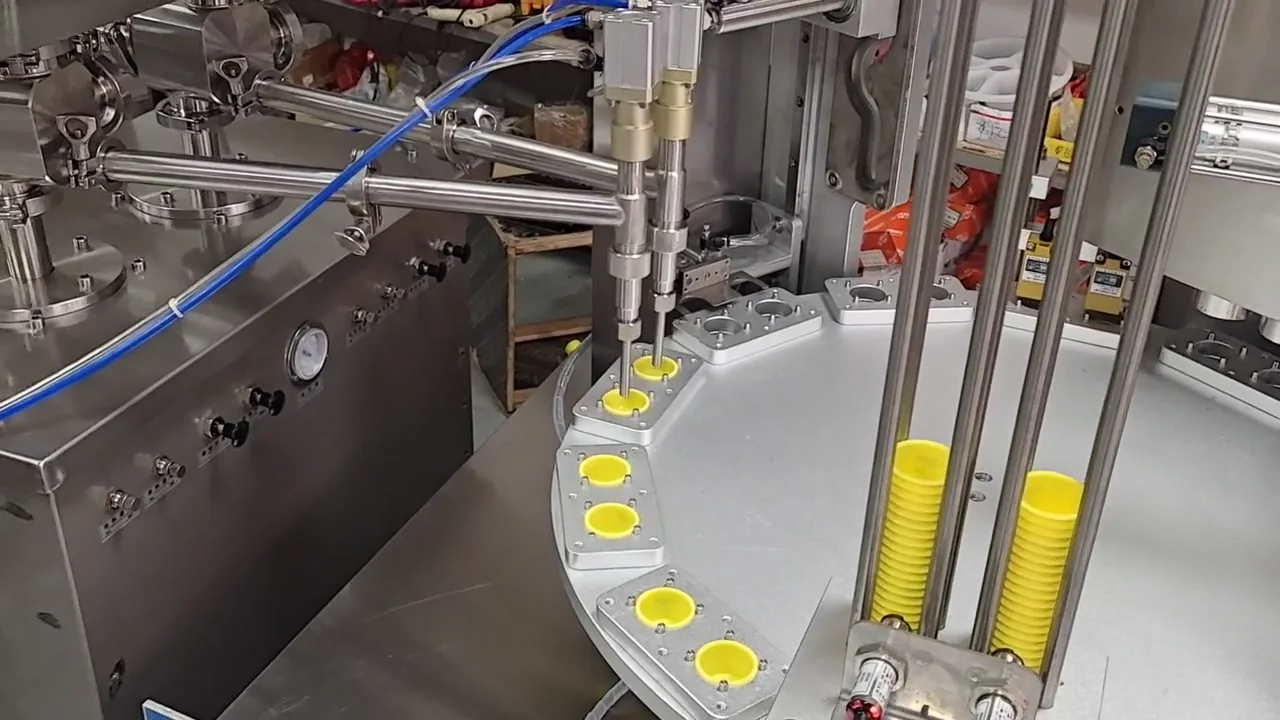 Rotary Small-Cup Filling and Sealing Machine
This rotary machine positions, fills, seals and discharges small cups; the footage shows a two-up small-cup configuration. Confirm cup diameter, height, contents and lidding with samples. Tray, bottle, vacuum or MAP p...
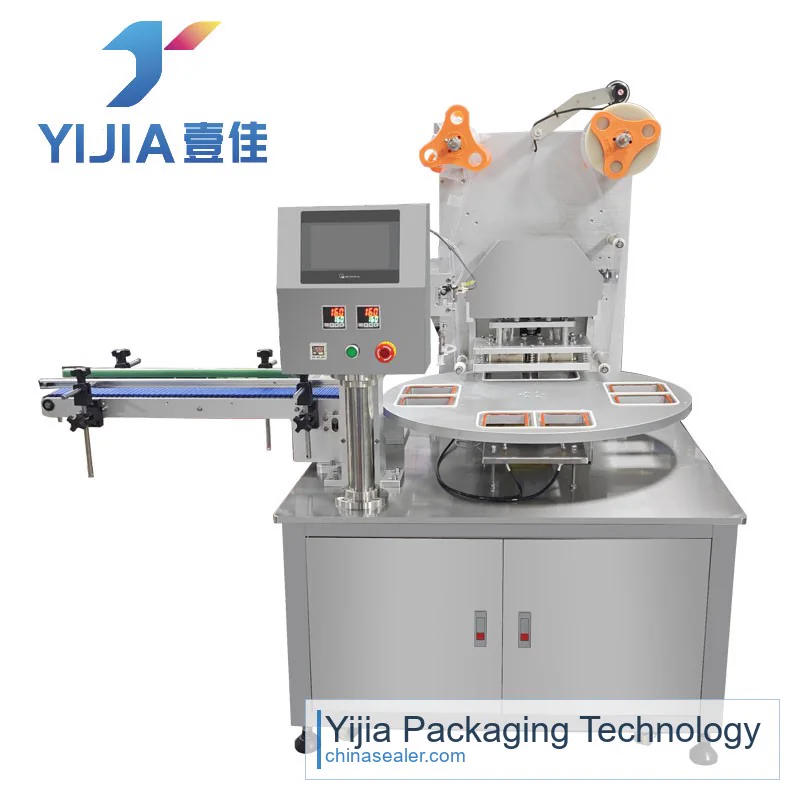 Automatic Small-Cup Filling and Sealing Machine
Send beverage, cup type, and film material as a matched sample; When the same cup type is filled with different particle beverages, the filling action may also change....
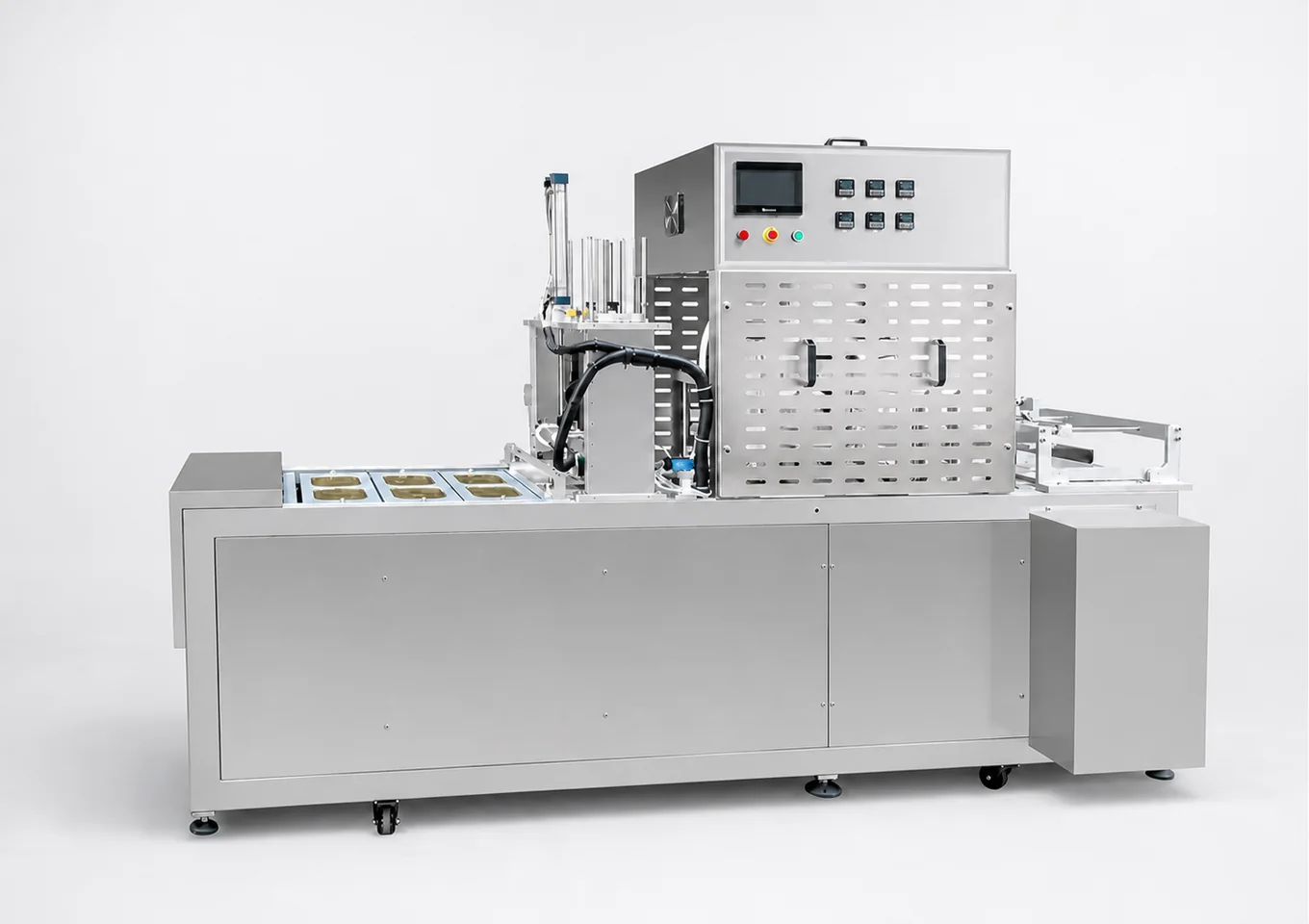 Chain Conveyor Cup and Tray Filling Sealing Line
Send beverage, cup type, and film material as a matched sample; When the same cup type is filled with different particle beverages, the filling action may also change....
Core process
Prepare representative beverages of pure liquid and with particles, all cup types, and corresponding lid films, and specify filling volume, particles, and cleaning requirements.
The rotary cup box filling and sealing machine can organize multi-station actions such as cup dropping, filling, and film sealing; it needs to be confirmed with particle state and film material feeding.
Once the cup type, beverage, and sealing film process are defined, a small cup filling and sealing machine can be used to verify cup dropping, quantitative filling, and heat sealing.
When using sheet lid film, the pre-cut lid film automatic sheet feeding machine must be trial-tested with the actual film stack, cup rim, and placement direction.
If the process requires independent quantitative addition of powder or granular ingredients, the connection between the powder and granule filling machine and the cup main machine can be evaluated separately.
Small cup sealing film and easy-tear film should be trial-sealed item by item according to cup material; for multi-specification projects, also check molds, cup dropping parts, and cleaning changeover steps.
Sample details
Material information is used to select the filling channel and observe particle passage, discharge closure, and cup rim cleanliness.
Provide samples of milk tea, fruit tea, or dessert beverages, noting particle type, size, hardness, ratio, and planned filling state.Cup samples affect cup dropping, mold support, and the cup body state after heat sealing; multiple specifications cannot be compared only by diameter.
Submit all physical cups such as PP cups, PET cups, or paper cups, specifying cup mouth dimensions, cup body height, and cup dropping direction.The film supply method changes the equipment stations. For sheet film projects, also bring the film stack to test separation and automatic placement.
Provide formal film material for each cup type, noting roll film or sheet film, heat-seal surface, easy-tear direction, and matching relationship.Production combinations are used to compare the rotary table and small cup main machine, and to plan the changeover sequence for molds, material paths, and film materials.
List the filling volume, target capacity, production batch, main specifications, and switching frequency for each beverage and cup type.This information helps divide the main filling and independent powder branch, and avoids sharing the same action for materials of different properties.
Indicate whether powder or granules are added independently, the order in which each material enters the cup, and the cleaning requirements when changing flavors.Common selection mistakes
Please provide representative beverage and particle data together, and verify the filling action under actual filling conditions.
Each cup-film combination should be trial-sealed with retained samples, observing cup body support, film surface, and easy-tear direction.
Use a formal film stack to test the automatic sheet feeding machine, and check whether the film is placed in the correct position before heat sealing.
First clarify the addition sequence, then decide whether to handle it at the main filling station or add an independent powder and granule branch.
List the material and packaging material switching according to the production sequence, and include cleaning steps in the equipment and shift schedule.
View detailed technical notes
First test particle drinks and pure liquids separately
Milk tea cup equipment cannot be selected only by cup mouth. Particles such as pearls and coconut jelly change the filling channel, while PP, PET or paper cups correspond to different feeding for roll film and pre-cut film.
Material and film feeding must be determined at the same time
If the filling mechanism cannot handle the actual particles, even the most suitable film sealing station cannot form a smooth process. The drink, cup type, fill volume and film material should first be made into a formal sample.
Verify the rotary main machine station by station
The rotary cup filling and sealing machine can arrange cup dropping, filling and heat sealing stations. During commissioning, bring real drinks and cup film; do not replace product testing with continuous empty cup operation.
Small cup main machine for defined cup packaging processes
The small cup filling and sealing machine is suitable for processes where cup material, product and lid film are already determined. Every time the flavor or cup type changes, re-check filling, tooling, film sealing and cleaning steps.
For pre-cut lid film, focus on automatic sheet feeding
For pre-cut film projects, use a formal film stack to test the automatic pre-cut lid film sheet feeding machine. In addition to dimensions, observe film sheet separation, heat sealing surface direction, cup rim placement and continuous action after film change.
Independent powder and granule addition is an additional process
Only evaluate the powder and granule filling machine when separate quantitative addition of powder or granule ingredients is needed. Pearls or coconut jelly already mixed in milk tea are still verified by the main filling process.
Cup material and sealing film should be tested together
Small cup sealing film and easy-tear film must correspond to the actual cup material and rim. After roll film, sheet film or cup type changes, re-check film surface fit and cup body pressure state.
Provide particle size, fill volume and capacity together
When submitting requirements, list the particles, cup type, fill volume and production schedule for each drink so that filling action, number of stations and changeover scope can be evaluated together.
Cleaning is a necessary boundary for multi-flavor production
When switching from pure liquid to particle drinks, or changing powder and granule ingredients, explain the product line cleaning and changeover sequence; do not just adjust the recipe name.
Common questions
If the milk tea contains pearls or coconut jelly, can it be configured as a pure liquid?
You cannot directly apply the same setup. Please provide particle size, hardness, ratio, and a complete beverage sample, then verify the filling channel and discharge action.
How do you distinguish between a rotary table and a small cup filling and sealing machine?
Both need to be considered from the cup type, material, film, and station process. The rotary type emphasizes multi-station organization, while the small cup main machine is configured according to the already defined cup packaging process.
Is it enough to provide only the dimensions for pre-cut lid film?
Dimensions can be discussed first, but automatic sheet separation is also affected by film stacking, surface, and orientation. Formal confirmation requires testing with both the film stack and cup samples.
Is a powder and granule filling machine used for adding pearls?
The process should be distinguished first. Only when independent quantitative addition of powder or granular ingredients is required should this branch be evaluated. Particles mixed in the beverage should be verified according to the main filling process.
Why must the cup and sealing film be sent together?
The cup material, rim, and the heat-seal layer of the film jointly determine the contact conditions; a single item cannot reflect the state of the film surface and cup body after sealing.
What additional changeover information is needed for multi-flavor production?
Please list the cup type, film material, beverage formula category, particle variation, production sequence, and cleaning requirements, then verify the mold and material path switching.