Carriers and molds made according to samples
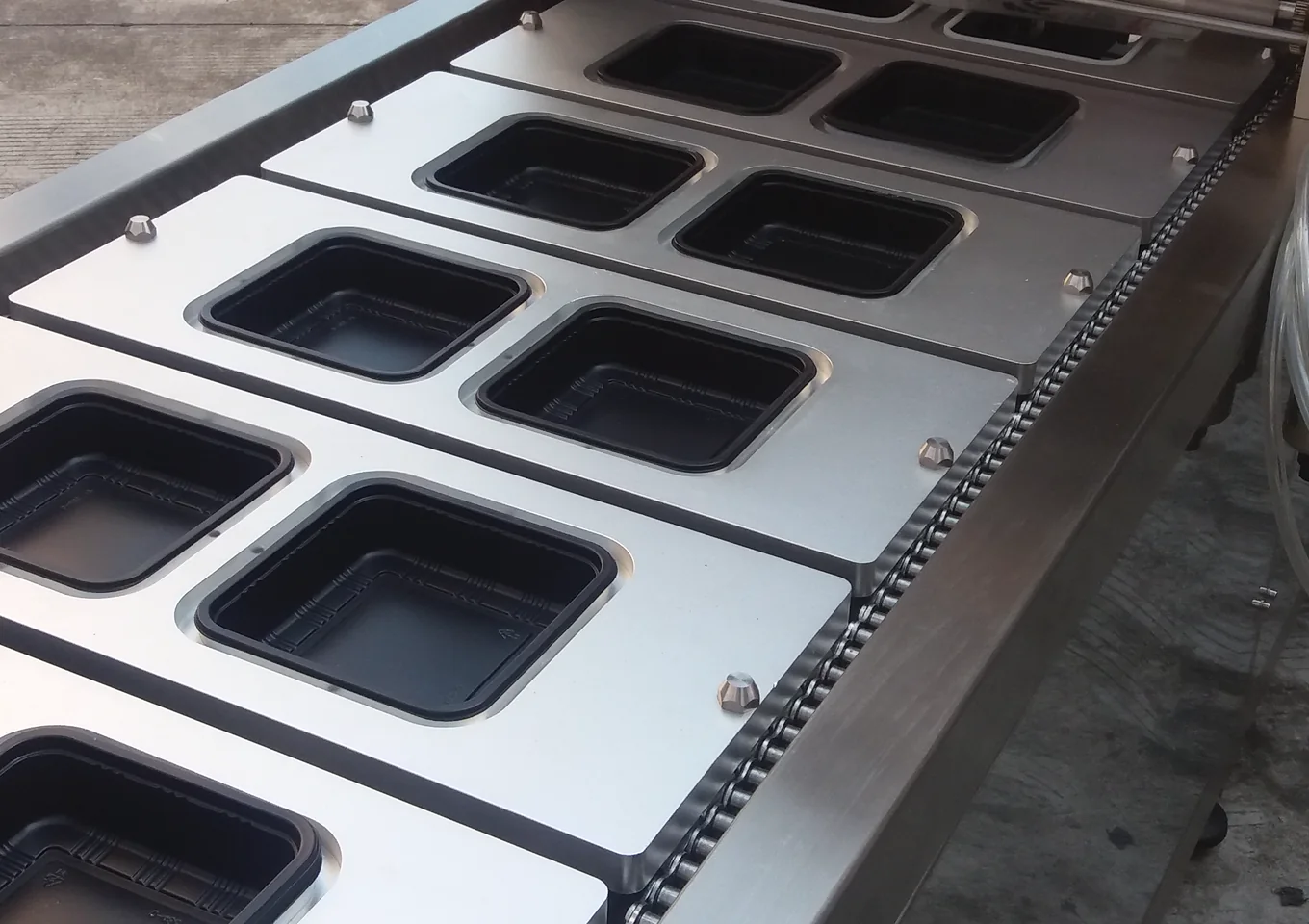
Actual cup/box or tray samples, rim dimensions, depth, arrangement, and allowable deformation range are required.
Cups / Bowls / Boxes / Trays Sealing Equipment
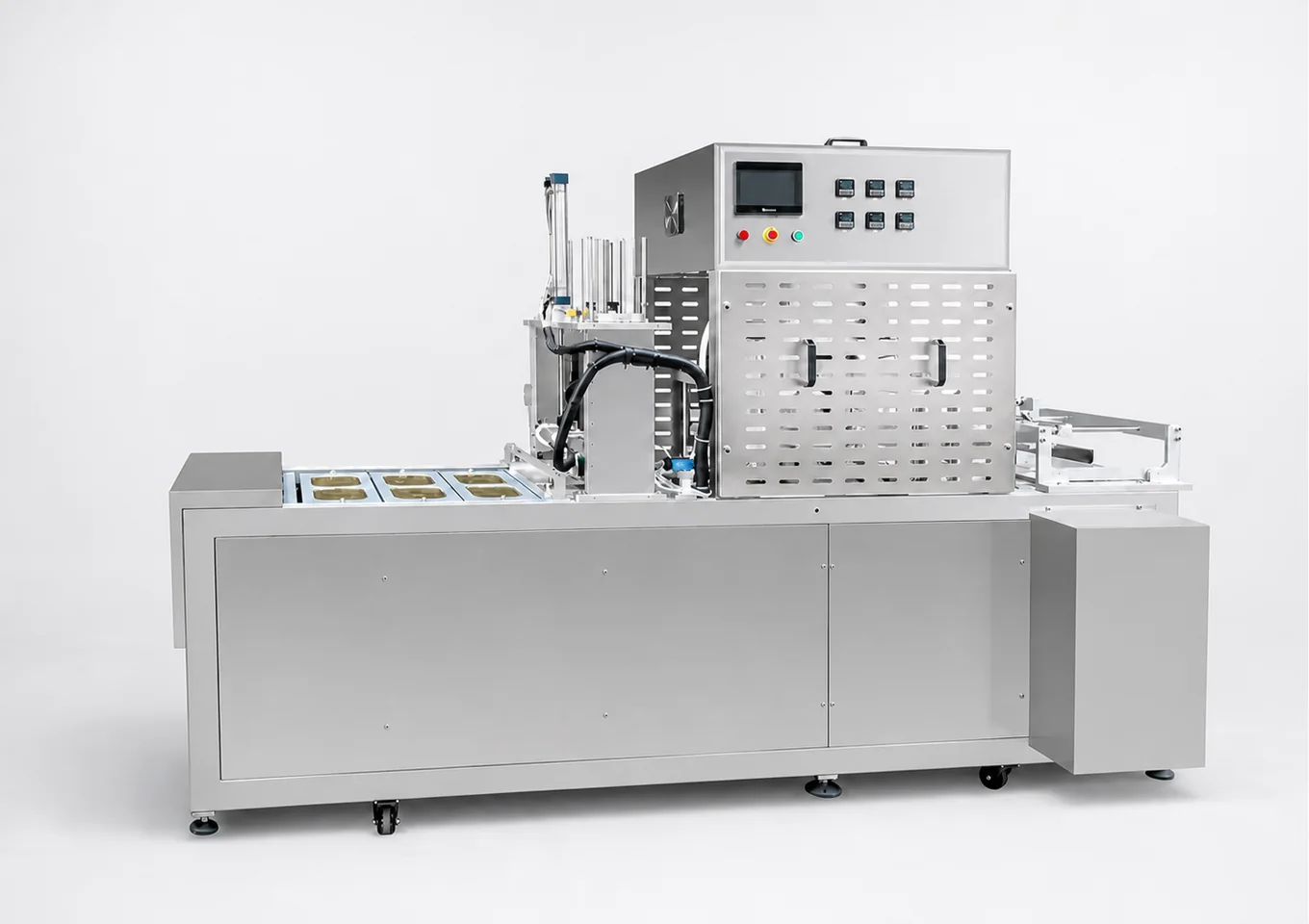
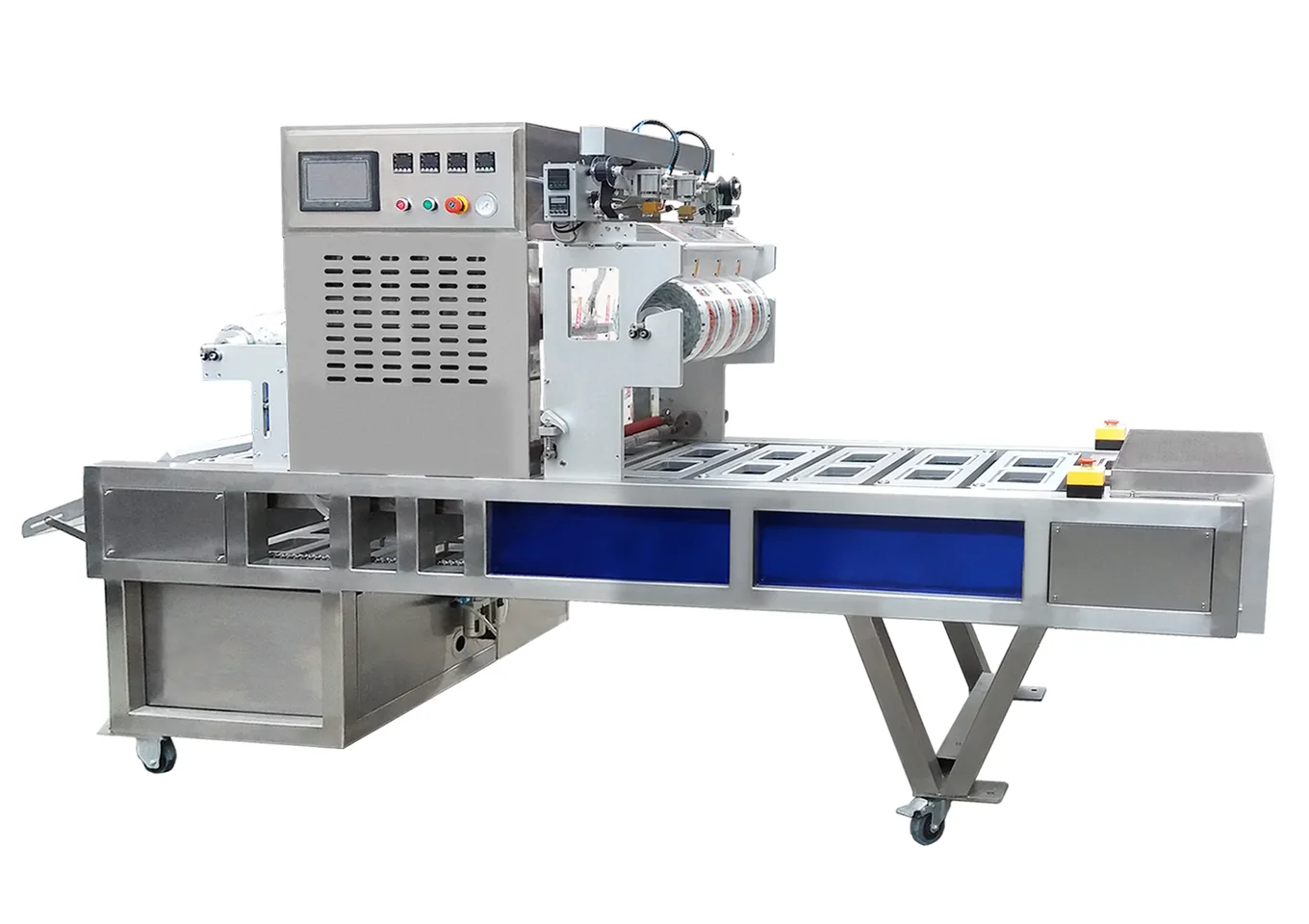
For continuous positioning, optional dosing and filling, lidding, sealing and downstream connection of preformed cups, boxes and trays. Validate rim geometry and strength, product flow and particles, filling drip, seal contamination, heat-seal layer, cleaning, station time and plant interfaces with real samples. The video demonstrates structure and motion, not a fixed output claim.
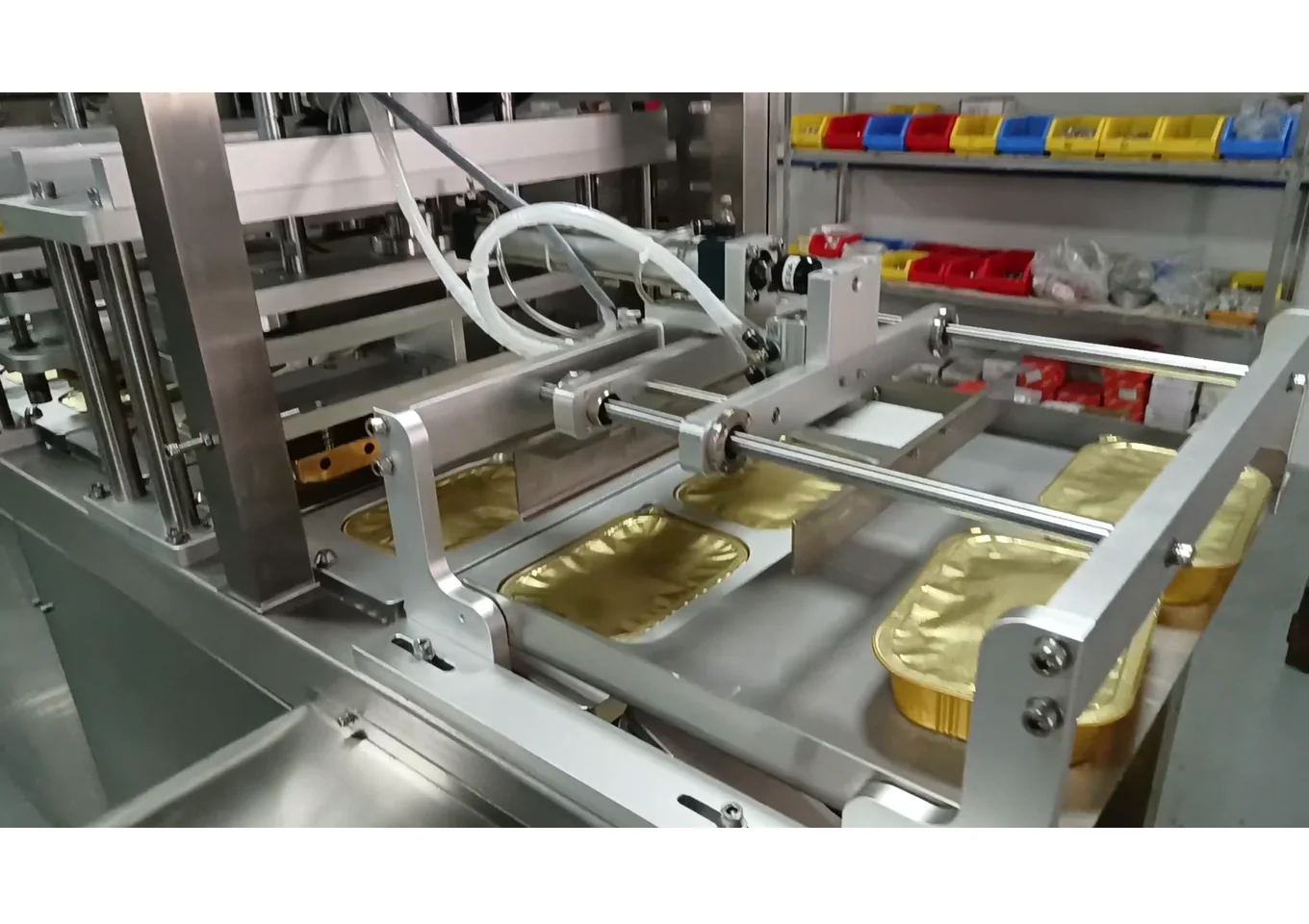
Watch real sealing video
Live footage of manual placement of aluminum foil trays, chain plate positioning conveying, automatic film picking, film pressing and sealing, and product discharge; the video demonstrates the sealing process; filling is not part of the default configuration.
Actual equipment and operating steps are shown here. Final suitability depends on the agreed samples and equipment scope.
First check samples, then determine structure
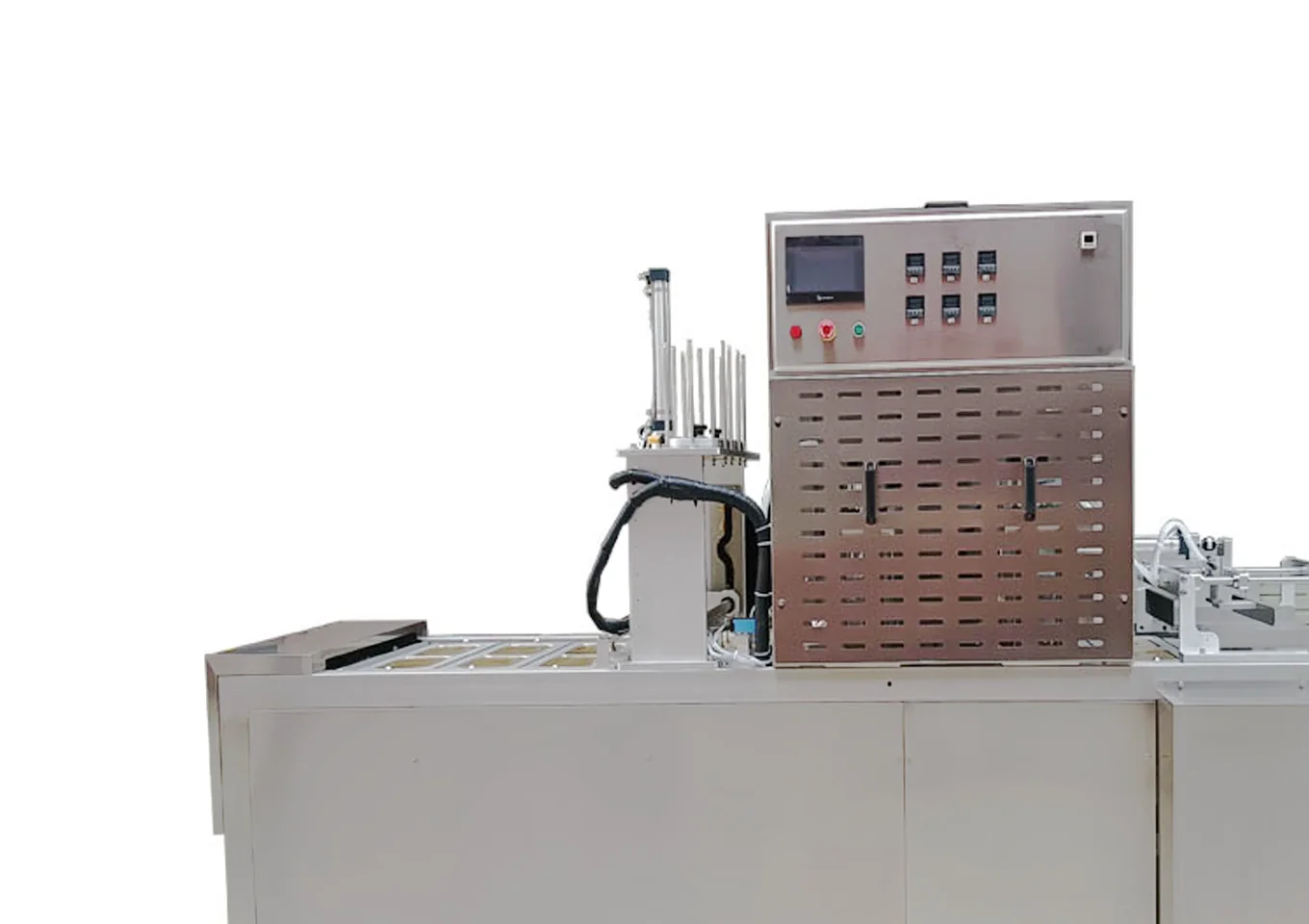
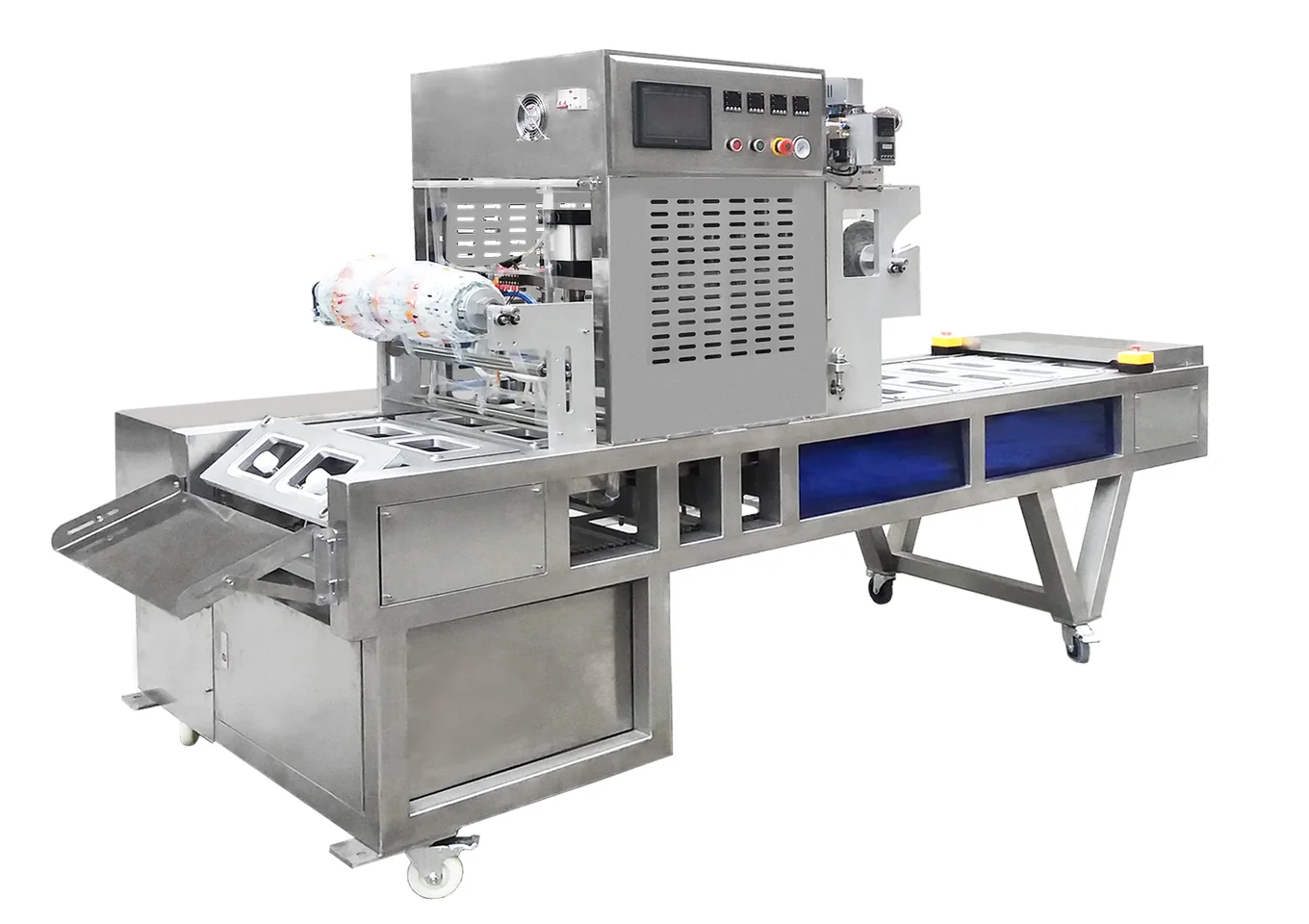
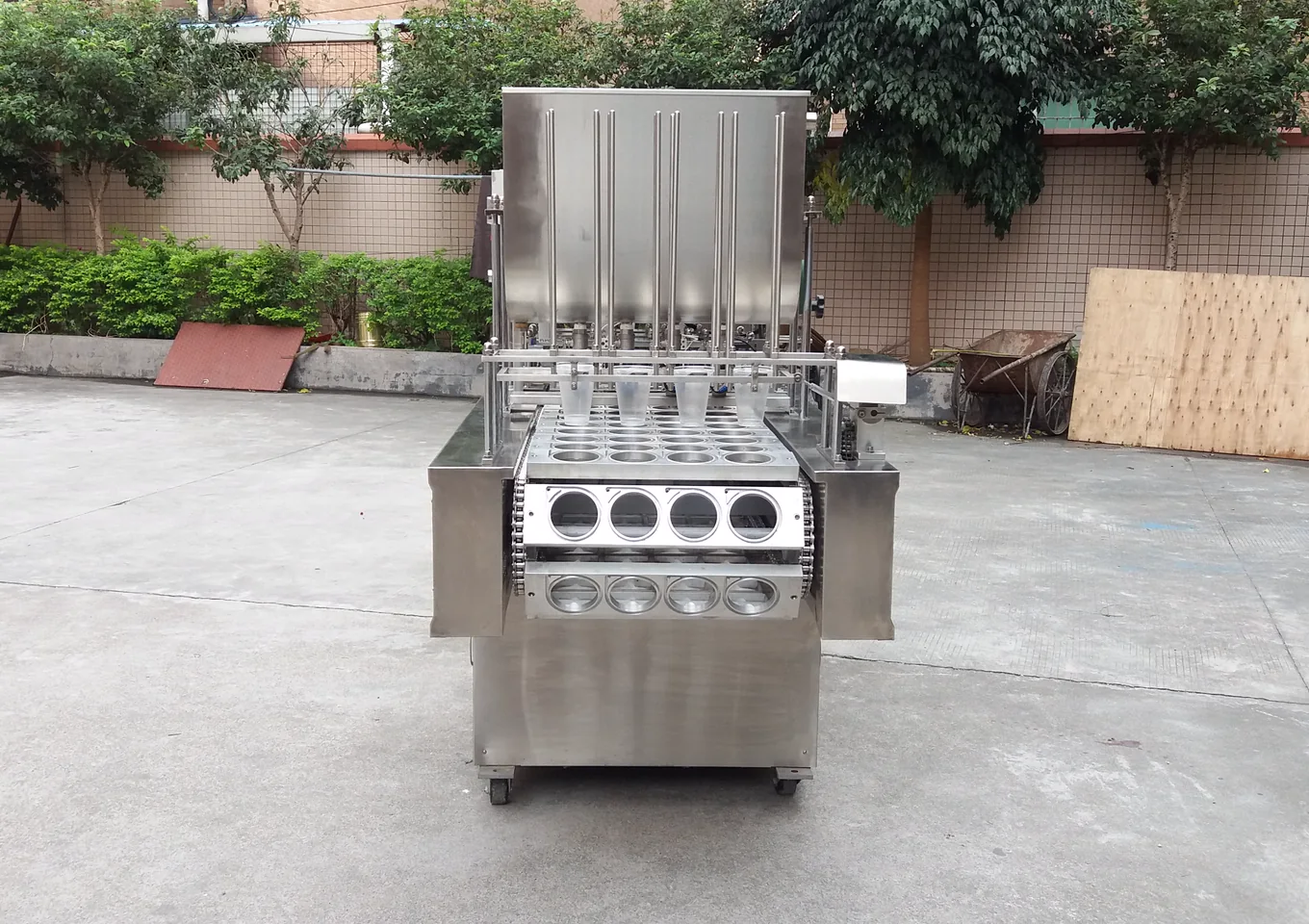
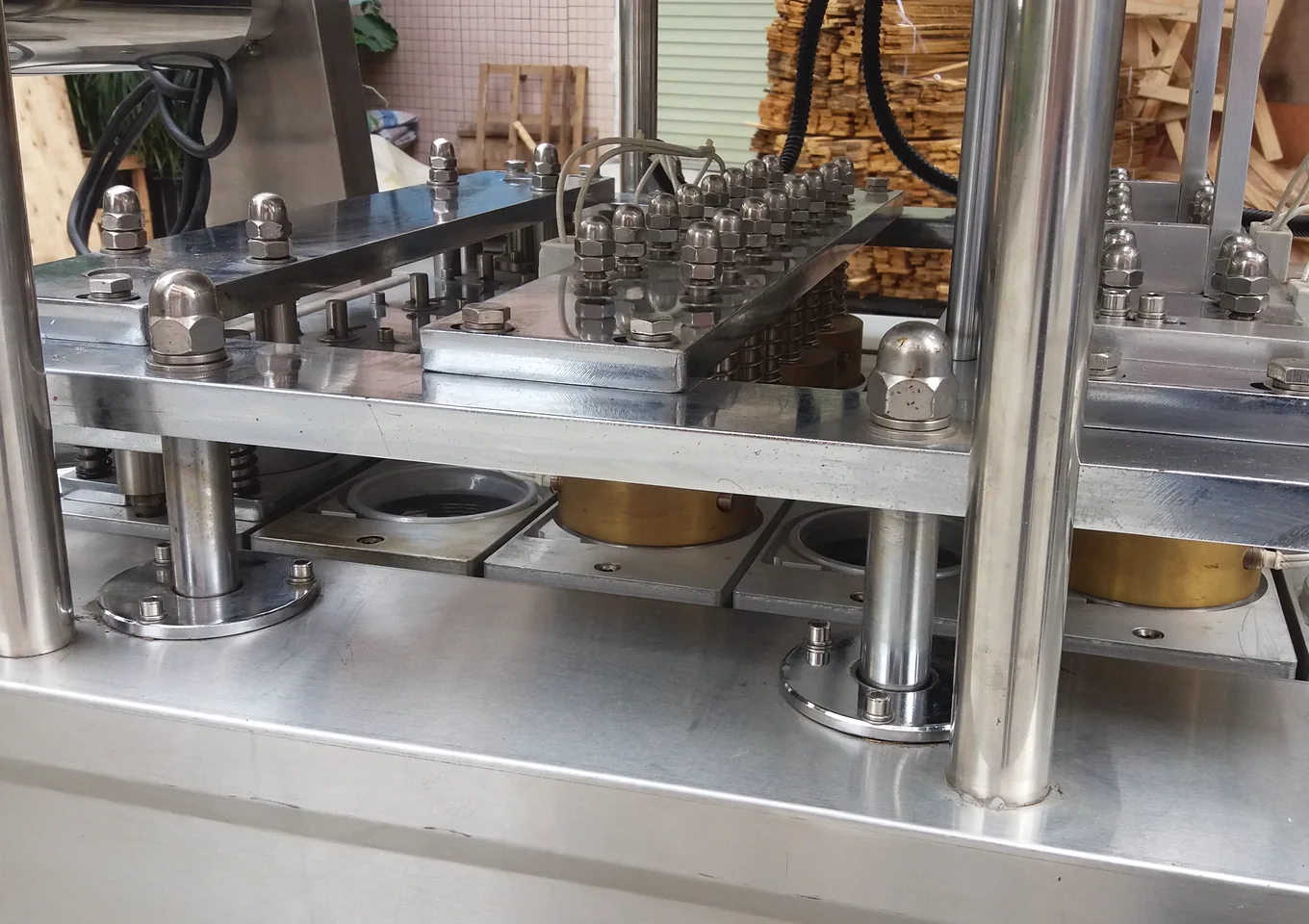
Chain pitch, carrier opening, sealing mold, film path, and whether to add cup denesting, filling, coding, and downstream conveying all need to be confirmed around actual samples and production process.
Actual cup/box or tray samples, rim dimensions, depth, arrangement, and allowable deformation range are required.
Only after confirming material state, fill volume, accuracy, contact material, and cleaning method is the corresponding filling system configured.
Cycle time depends on number of lanes, manual or automatic feeding, filling time, sealing method, and upstream/downstream integration; no unsupported fixed values are published.
First check samples, then determine structure
The more complete the information, the easier it is to determine sealing feasibility, module boundaries, and overall line length.
First check samples, then determine structure
Chain pitch, carrier opening, sealing mold, film path, and whether to add cup denesting, filling, coding, and downstream conveying all need to be confirmed around actual samples and production process.
Confirmed based on number of lanes, feeding method, filling time, sealing process, and upstream/downstream cycle times
Can be expanded from manual tray placement and continuous sealing to cup denesting, filling, coding, and downstream line integration
Cups, boxes, meal boxes, aluminum foil boxes, and preformed trays; irregular containers require sample evaluation
Confirmed based on actual container, rim shape, depth, arrangement, and allowable deformation range
Liquids, pastes, or materials with small particles require separate confirmation of fluidity, temperature, accuracy, and cleaning method
Roll film or pre-cut film; the heat seal layer must match the container rim material and be verified through trial sealing
Tray/cup placement or denesting, chain conveyor positioning transport, optional filling, film pick-up/feeding, heat sealing, film cutting, and discharge
Made according to container rim, number of cavities, arrangement, and sealing appearance; changing specifications requires evaluation of replacement scope
Common solution boundaries
The more complete the information, the easier it is to determine sealing feasibility, module boundaries, and overall line length.
Confirm dimensions, rim, material, film layer, and target sealing appearance.
Use actual samples to verify heat seal window, peel effect, leak risk, and carrier positioning.
Confirm whether cup denesting, filling, film pick-up, film cutting, coding, and downstream line integration are required.
Check continuous operation and changeover according to agreed samples, process, and acceptance criteria.
Common solution boundaries
Standalone sealers, rotary filling-sealing machines and chain conveyor lines differ in changeover, cleaning, station expansion and line interfaces, not machine length or a video cycle alone.
Cups / Bowls / Boxes / Trays Sealing Equipment
Standalone sealers, rotary filling-sealing machines and chain conveyor lines differ in changeover, cleaning, station expansion and line interfaces, not machine length or a video cycle alone.
First check samples, then determine structure
Chain pitch, carrier opening, sealing mold, film path, and whether to add cup denesting, filling, coding, and downstream conveying all need to be confirmed around actual samples and production process.
It can be evaluated, but requires comparison of different containers' rims, shapes, depths, arrangements, and film widths. Usually involves replacing chain conveyor carriers, sealing molds, or film guides; cannot be judged by name alone.
No. The page video demonstrates tray positioning, automatic film pick-up, and sealing process. Cup denesting, filling, coding, and downstream equipment need to be confirmed separately based on samples, materials, cleaning, and capacity requirements.
Send sample information
Send cup or tray samples, lidding samples, product and particle size, fill amount, rim photos, seal acceptance, cleaning needs, target cycle, coding or cartoning needs and plant layout.