Solution topic
Meal Tray Sealing Line: Standard Heat Seal or MAP, Coding and Checkweighing
Build a meal tray line around one route: standard heat sealing or MAP. Trial tray, film, product and acceptance method, then add loading, coding, labeling and checkweighing.
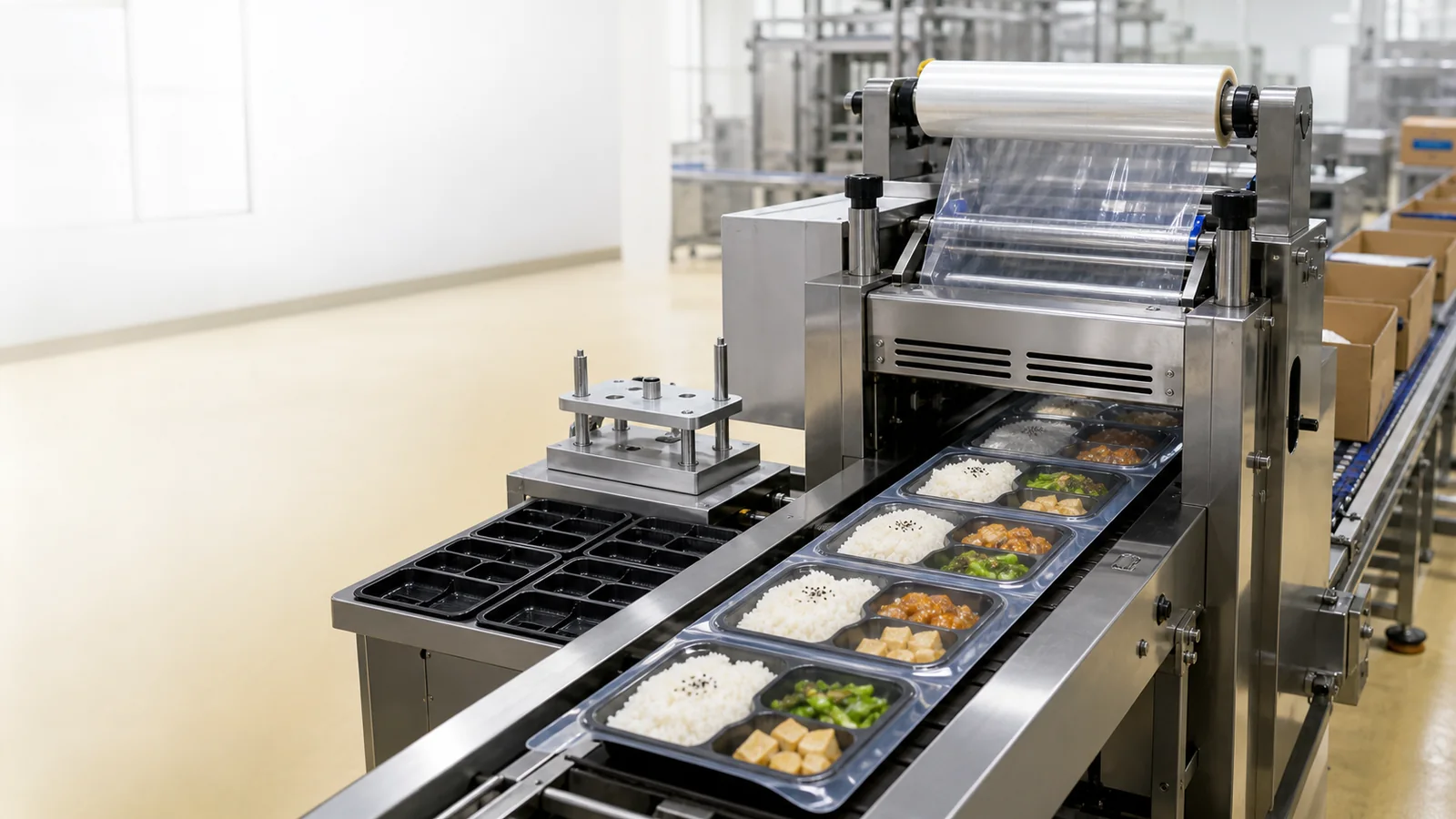
MAP Tray Sealing Machine | Vacuum, Gas Flush and Film Seal
Running video of the MAP tray sealer. Vacuum/gas-flush sequence, tray and film fit, gas specification and acceptance criteria are confirmed by the food process and sample trials.
- Select standard sealing or MAP from the finished-pack process, trial production trays, film, and product, then add loading, conveying, coding, labeling, and checkweighing after the main seal is stable.
Solution summary prepared for you
- Use standard heat sealing when no gas-replacement target exists; select MAP only after gas, barrier film, and finished-pack checks are defined.
- Trial the tray, lidding film, and filled-rim condition as one set; a tray name or empty dimensions cannot fix tooling, sealing conditions, and cycle.
- A typical line is loading or filling → tray locating → standard sealer or MAP machine → coding/labeling → project-specific checkweighing and collection.
Route comparison
- Suitable for multi-compartment meal trays and cooked food trays without gas flushing requirements, mainly for tray mouth sealing.
- Process focuses on tray-film fit and seal edge; suitable for establishing simple and clear mold change and sealing trial records with main tray shapes first.
- Sealing is affected by tray mouth ribs, film heat seal layer, content contamination, and tray body force; empty tray results cannot replace finished products.
- When MAP gas flushing and barrier film processes are already proposed, ordinary heat sealing should not be treated as the same route.
- Tabletop multi-compartment meal tray sealing machine handles ordinary multi-compartment trays; roll film trays are evaluated with actual samples using tabletop roll film tray sealing machine.
- Suitable for prepared meal or fresh food trays where the process side has defined gas flushing, barrier film, and finished product inspection methods.
- Tray MAP sealing machine can combine gas treatment and tray sealing in one station, facilitating finished product recording according to defined methods.
- Gas conditions, film barrier properties, tray mouth state, and leak judgment must be provided as a set; equipment itself cannot replace freshness process.
- When MAP process target is not yet formed, or tray-film combination is still changing frequently, complete sample and packaging material verification first.
- Tray MAP sealing machine is configured according to formal tray, film, and contents; film supply form and inline scope are confirmed with project information.
- Suitable for projects where pre-cut film or roll film format is already determined, and stable film supply, continuous box conveying, and post-sealing batch coding are required.
- Film supply mechanism and tray conveying can be arranged around main specifications; continuous production facilitates connection with collaborative date/batch coding.
- Pre-cut film static adhesion, roll film misalignment, tray pitch, and mold change all take actual operation time; observe during inline operation.
- When the bag film format is undecided, box types change frequently, or interface information between upstream and downstream is lacking, it is not advisable to lock in continuous equipment first.
- Pre-cut film uses automatic pre-cut film pick-and-place tray sealing machine; roll film uses tabletop roll film tray sealing machine; after batch stability, evaluate chain plate cup/tray continuous sealing line (optional filling).
Associated Equipment / Consumables
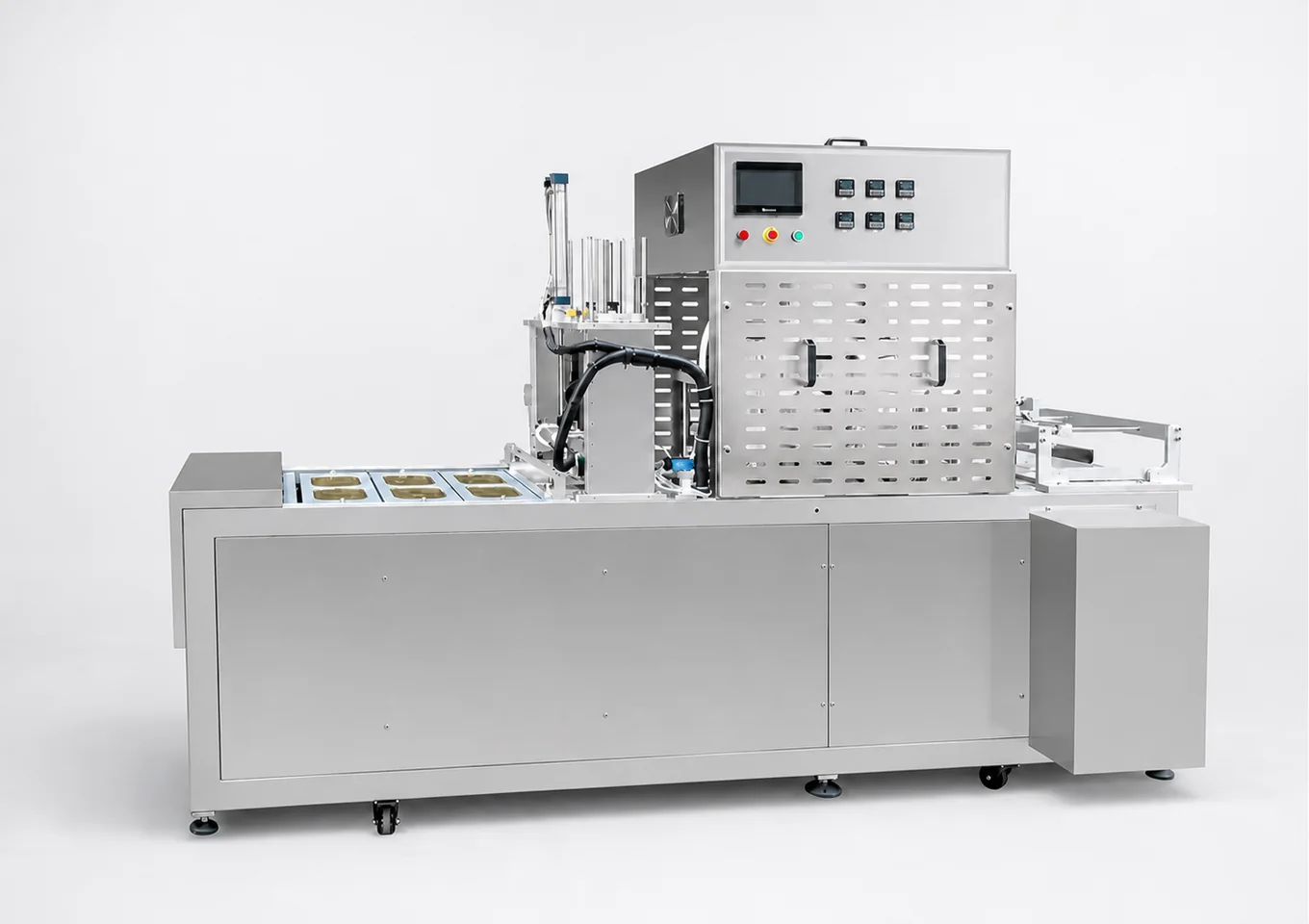 Chain Conveyor Cup and Tray Filling Sealing Line
For continuous positioning, optional dosing and filling, lidding, sealing and downstream connection of preformed cups, boxes and trays. Validate rim geometry and strength, product flow and particles, filling drip, sea...
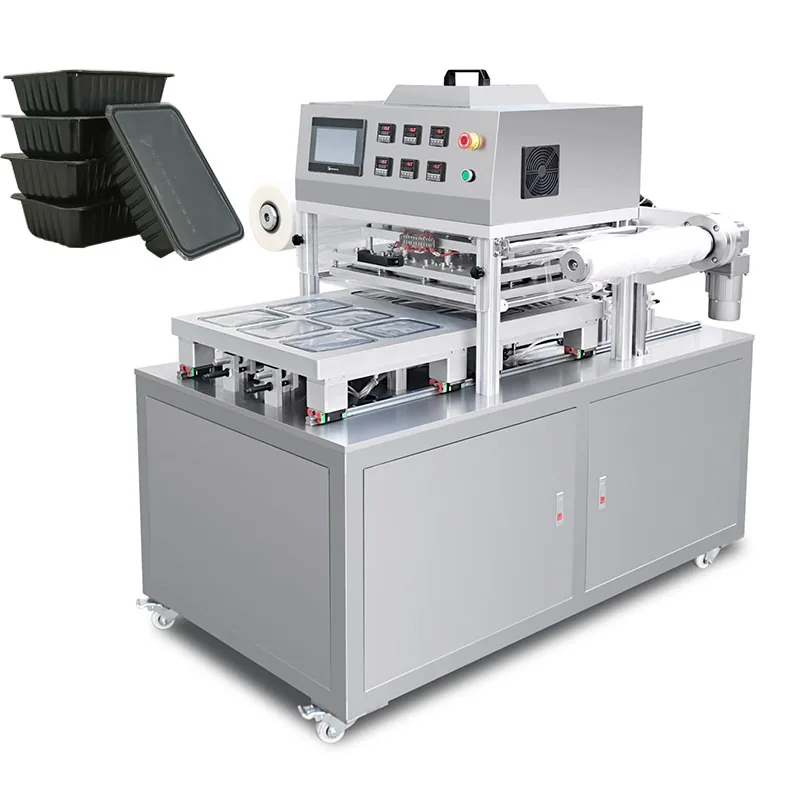 MAP Tray Sealing Machine
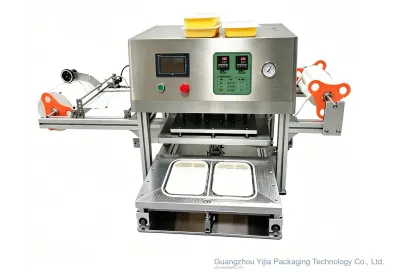 Tabletop Multi-Compartment Meal Tray Sealer
Use for standard sealing without gas replacement; still trial the tray, film, and filled-rim condition.
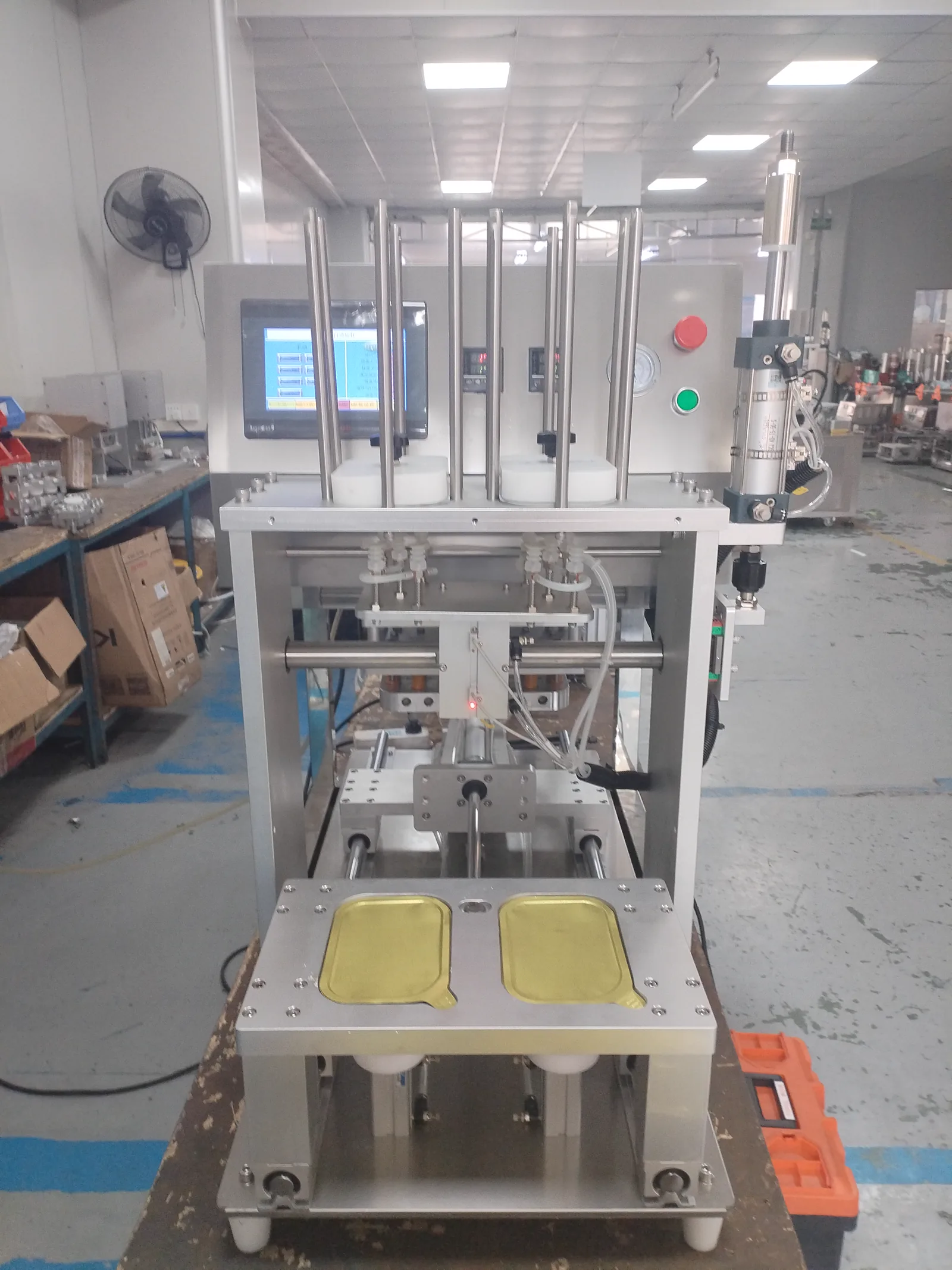 Automatic Pre-Cut Lid Pick-and-Place Tray Sealer
Use when pre-cut lidding is fixed and automatic separation/placement is required; validate static, direction, and position.
Core process
Place the main tray shape, corresponding film, and actual contents in the same sealing trial to observe tray mouth fit, contamination, and finished product handling state.
Multi-compartment meal trays without gas flushing target use ordinary heat sealing; prepared meal or fresh food trays requiring MAP enter the gas flushing branch.
For pre-cut film, check sheet separation, direction, and drop position; for roll film, check film width, travel, and cutting; film supply form follows formal packaging materials.
After tray shape and order rhythm are stable, evaluate chain plate continuous sealing; date/batch coding is trial-printed in the readable area of sealed products via collaborative equipment.
Ordinary heat sealing checks seal edge, film peeling, and tray body force; MAP also requires special inspection according to gas and leak methods provided by the process side.
Tray entry, exit, film refill, finished product sampling, and operator access share space; multi-tray projects also need mold change and first article recheck.
Sample details
Tray mouth shape and compartment structure affect mold fit, force, tray removal, and continuous conveying posture.
Please provide all main tray shapes, indicating tray mouth dimensions, compartment count, ribs, material, and stacking state.Pre-cut film separation and roll film travel use different mechanisms; film material also changes sealing and cutting trials.
Please prepare pre-cut film or roll film, and indicate heat seal side, film width, printing direction, easy-tear, and barrier requirements.Residue on the tray mouth affects filling finish, cleaning method, and sealing trial conditions; cannot judge with empty trays only.
Please describe oil, water, sauce, or particles in the contents, and provide photos of the tray mouth after filling and representative samples.MAP route requires gas, barrier film, and leak rules in addition to seal edge; ordinary heat sealing does not automatically include these processes.
Please state sales, refrigerated transport, gas flushing, and finished product inspection requirements; the process side will provide MAP acceptance criteria.Order structure changes the organization between tabletop, pre-cut/roll film equipment, and chain plate continuous sealing.
Please provide planned cycle time, shifts, changeover frequency for each tray shape, and whether continuous conveying or optional filling is needed.Film refill, mold change, finished product sampling, and collaborative coding all need operable space in the equipment layout.
Please provide site dimensions, tray entry/exit direction, power and air supply, operator access, and date/batch coding area.Common selection mistakes
Without tray mouth dimensions and actual samples, targeted trials for ordinary heat sealing, film pick-and-place, and continuous conveying cannot be completed.
Filling finish, tray mouth cleaning, and seal edge inspection should be included in the same trial run, not just adjusting the sealing machine.
Freshness goals, gas conditions, and leak judgment are determined by process requirements; the equipment executes and records according to defined conditions.
Each formal film material must be paired with the main tray shape for feeding and sealing tests; multi-spec projects also need to record changeover steps.
The exit orientation of chain plate continuous sealing should be integrated with collaborative coding and finished product collection.
View detailed technical notes
Determine whether MAP is needed before sealing meal boxes
For ordinary takeaway meal boxes that only require heat sealing of the box mouth, you can start with a tabletop machine. Only when prepared meals or fresh food require gas replacement do you move to the tray MAP sealing machine route.
Box mouth and film are common prerequisites for both routes
Whether for ordinary heat sealing or MAP, the box mouth rim, compartment ribs, film heat-seal layer, and post-filling contamination must all be checked with the same set of finished samples.
Ordinary multi-compartment meal boxes use simple heat sealing
The tabletop multi-compartment meal box sealing machine is used for sealing the box mouth edge without MAP requirements. The mold is made according to the box mouth and ribs. Trial sealing should observe seal continuity, film peeling status, box body stress, and oil or water residue.
MAP route requires process conditions first
The tray MAP sealing machine is configured based on the already defined gas replacement, barrier film, and finished product inspection methods. Gas selection and freshness determination are provided by the process team and cannot be directly inferred from the food name.
Film supply format determines pre-cut film or roll film equipment
For pre-cut film, verify separation, orientation, and film drop position. You can evaluate an automatic pre-cut film pick-and-place tray sealing machine. For roll film, check film width, film feeding, and edge cutting, and use a tabletop roll film tray sealing machine for corresponding trial sealing.
Continuous sealing is based on stable box types
When the main box type, film supply format, and production schedule are stable, you can evaluate a chain conveyor cup/tray continuous sealing line (optional filling). Optional filling is not considered a fixed station and still needs separate confirmation based on the contents.
Molds and formal packaging materials are trial-produced together
Box mouth dimensions only solve geometric fit. Film heat-seal surface, thickness, static electricity, and stacking will also affect feeding and sealing. Only after the formal film is in place should you fix mold change and operating conditions.
Box mouth contamination is handled at the filling stage
When sauce, oil, or water falls on the box mouth, first check filling finish and cleaning, then compare the sealing edges of clean and contaminated sample boxes. Do not leave all problems to sealing temperature adjustment.
Batch number is placed after the sealed finished product
After the meal box is sealed and kept in a stable position, a collaborative date batch inkjet coder can be used for trial printing in the agreed area. Character orientation, readability, and collaborative supply scope are confirmed separately.
Each route uses its own acceptance criteria
Ordinary heat sealing records the film fit and sealing edge after handling. MAP also requires specific gas and leak testing methods. For multi-box-type projects, retain samples separately to avoid sharing unverified conditions.
Common questions
How does standard tray sealing differ from MAP?
Standard sealing mainly bonds lidding film to the tray flange. MAP also evacuates or replaces gas before sealing and requires barrier film, gas conditions, and finished-pack checks to be validated together.
Can tray dimensions alone define a quotation?
Dimensions only guide initial tooling. Final configuration also needs tray and film samples, filled-rim condition, gas and leak checks, target cycle, and site layout.
Can the machine define gas composition and shelf life?
No. The buyer’s food process and test specification defines gas, shelf-life target, residual oxygen, or leak acceptance. The machine executes and records the confirmed conditions.
How is the MAP sealer integrated into a line?
Stabilize loading, tray locating, film feed, and sealing first; then confirm conveyor height, direction, pitch, coding or labeling position, checkweighing, buffering, and signals.
Can pre-cut lidding and rollstock share one film-feed system?
Not by default. Pre-cut lids require sheet separation, static, direction, and placement checks; rollstock requires web width, tension, tracking, and cutting trials with production film.
What is the minimum information for an inquiry?
Send tray and film photos, key rim dimensions, product and filled condition, standard-seal or MAP target, required cycle, and layout. Production samples and acceptance methods follow before final quotation.