Solution topic
How to Configure a Small-Cup Sauce Line: Denesting, Dosing, Filling, Lidding, Coding and Cartoning
Configure denesting, dosing, filling, lidding, sealing, coding, inspection and cartoning from cup rim, sauce flow and particles, fill amount, drip control, seal layer, cleaning and
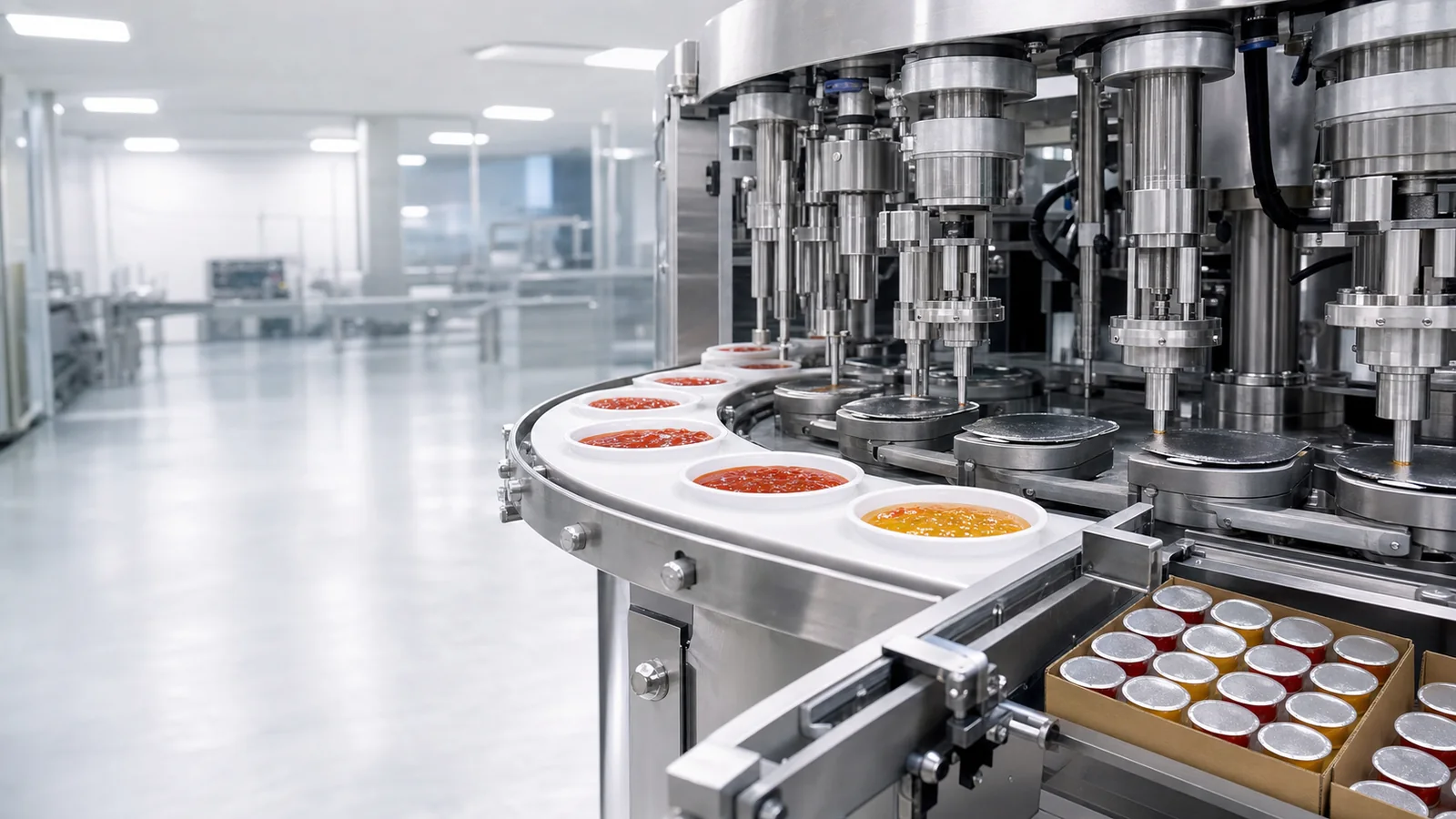
- Single-cup filling and film sealing and multi-cup tray repackaging are two-level processes. The sauce viscosity, cup rim and film material determine the front section, while the tray structure and freshness preservation requirements determine ordinary sealing or gas flushing. Coding should be arranged according to the final visible packaging surface.
Solution summary prepared for you
- Small-cup sauce first completes single-cup primary packaging with a sauce piston filling machine and small-cup filling and sealing machine, then determines whether combination tray secondary film sealing is needed.
- When the tray uses pre-cut film, use an automatic pickup tray sealing machine. Only when packaging explicitly requires modified atmosphere should a tray MAP sealing machine be used for verification.
- A food-grade conveying line connects sealed cup trays, and a date batch inkjet coding machine can establish traceability on the single-cup film surface or tray film surface.
Route comparison
- Suitable for projects where the actual sauce, small cups, and cup film are already defined and automatic single-cup quantitative filling and primary sealing are required.
- The sauce piston filling machine and small-cup filling and sealing machine concentrate quantitative filling, cup denesting, and primary film sealing verification, making it easier to control rim cleanliness.
- Cup type, film material, particles, and cleaning all affect the continuous cycle, and outer tray packaging is not completed in this main machine.
- When the project only purchases sealed small cups and only needs outer tray film sealing, there is no need to configure a single-cup filling and sealing main machine again.
- Organize single-cup primary packaging according to sauce piston metering, automatic cup denesting, filling, film supply, and sealing.
- Suitable for orders where sealed small cups need to be combined into trays for sale and ordinary film sealing or MAP targets are already determined.
- The automatic pre-cut film pickup tray sealing machine handles outer tray film, while the tray MAP sealing machine serves the clearly defined MAP freshness branch.
- Cup tray arrangement, film separation, and outer tray rim need sample signing. The MAP route must also define gas and leak detection.
- When there is no outer tray, or freshness targets are not yet defined, tray film or MAP stations should not be added by default.
- For ordinary secondary film sealing, use pre-cut film tray equipment. If there is indeed a MAP requirement, switch to the corresponding MAP main machine for independent sampling.
- Suitable for cup tray products where primary sealing and secondary packaging are stable and continuous conveying with date batch coding is needed.
- The food-grade conveying line stabilizes cup tray orientation, and the date batch inkjet coding machine can perform online traceability on the selected packaging layer.
- Need to confirm film surface adhesion, printing area, and upper/lower layer batch association. The existing equipment combination does not include automatic carton case packing.
- When packaging levels and batch rules are not determined, it is not appropriate to fix the coding position and conveying trigger method.
- According to the final sales level, connect a food-grade conveying line and date batch inkjet coding machine after single-cup or tray sealing.
Associated Equipment / Consumables
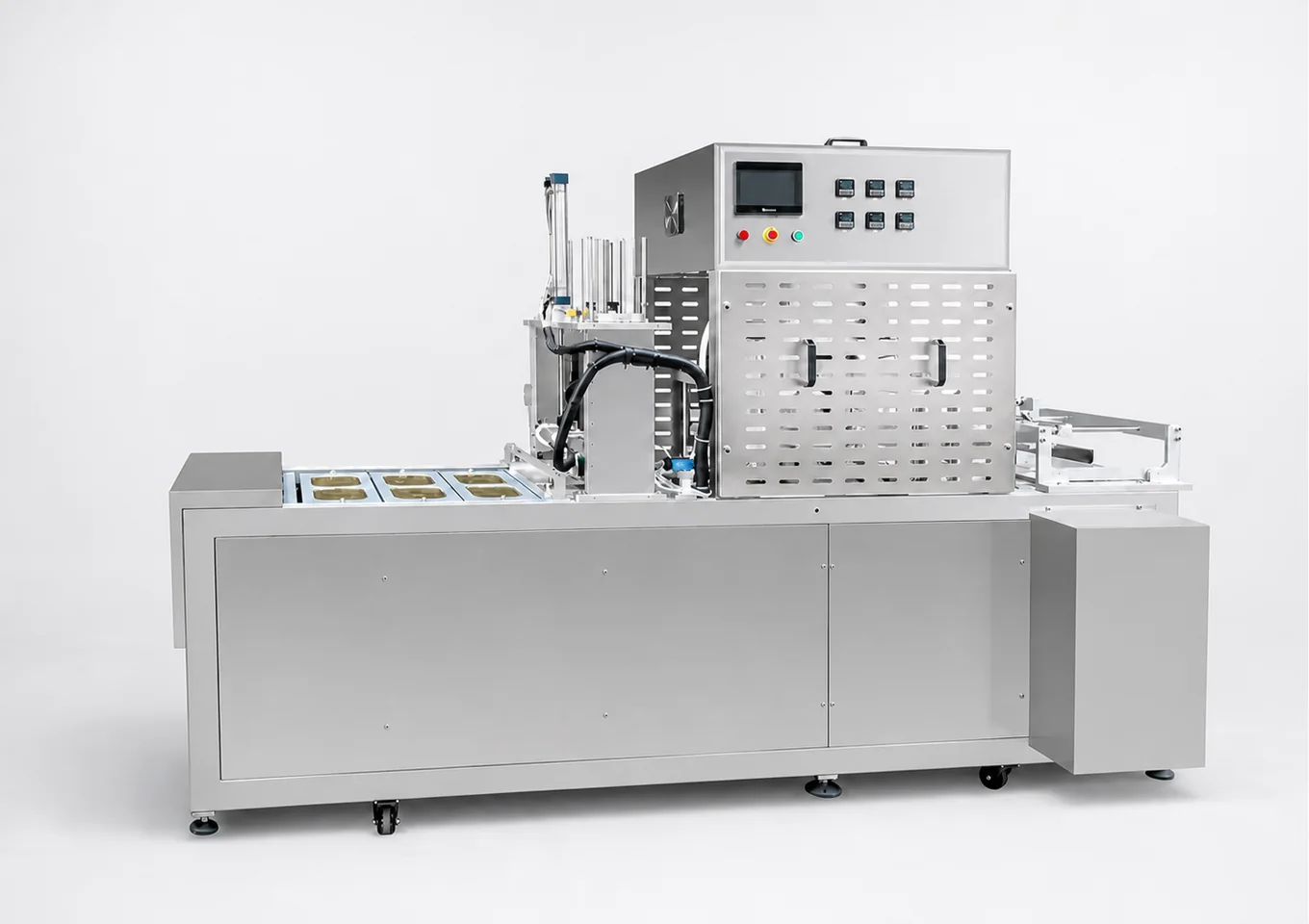 Chain Conveyor Cup and Tray Filling Sealing Line
For continuous positioning, optional dosing and filling, lidding, sealing and downstream connection of preformed cups, boxes and trays. Validate rim geometry and strength, product flow and particles, filling drip, sea...
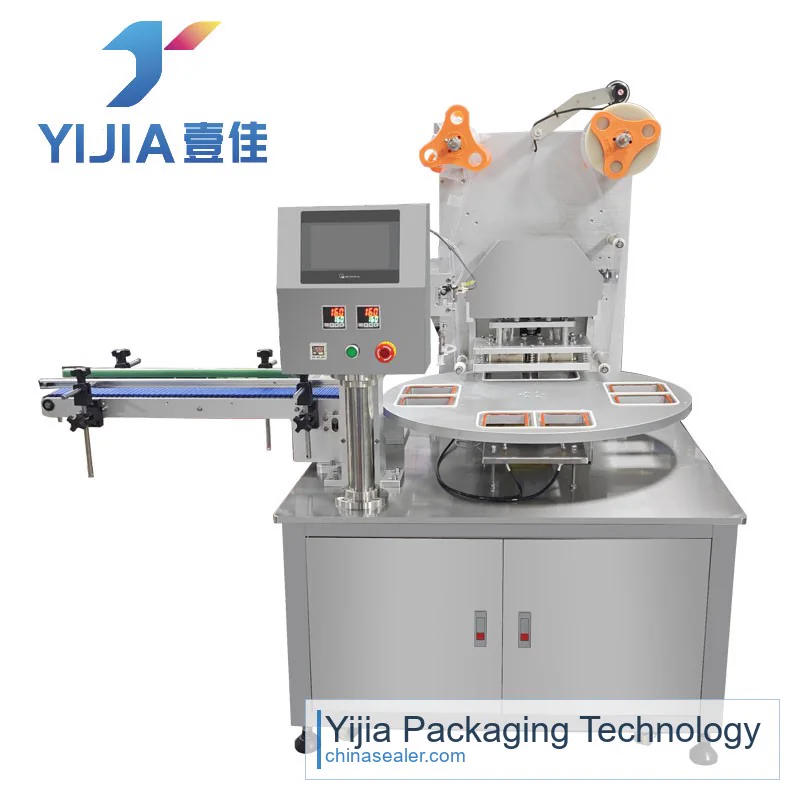 Automatic Small-Cup Filling and Sealing Machine
Single-cup filling and primary film sealing; Particle passage, filling nozzle cutoff, and cup mouth contamination must be tested with actual material, not inferred from...
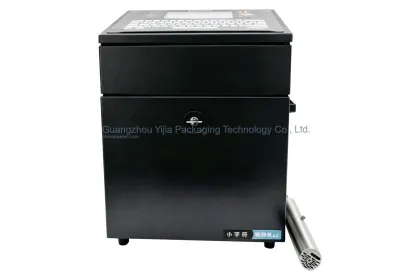 Date & Batch Inkjet Printer
Packaging levels and delivery boundaries; There are clear machines for cup filling/sealing, tray film sealing, and coding conveying. Automatic carton case packing belongs to another packag...
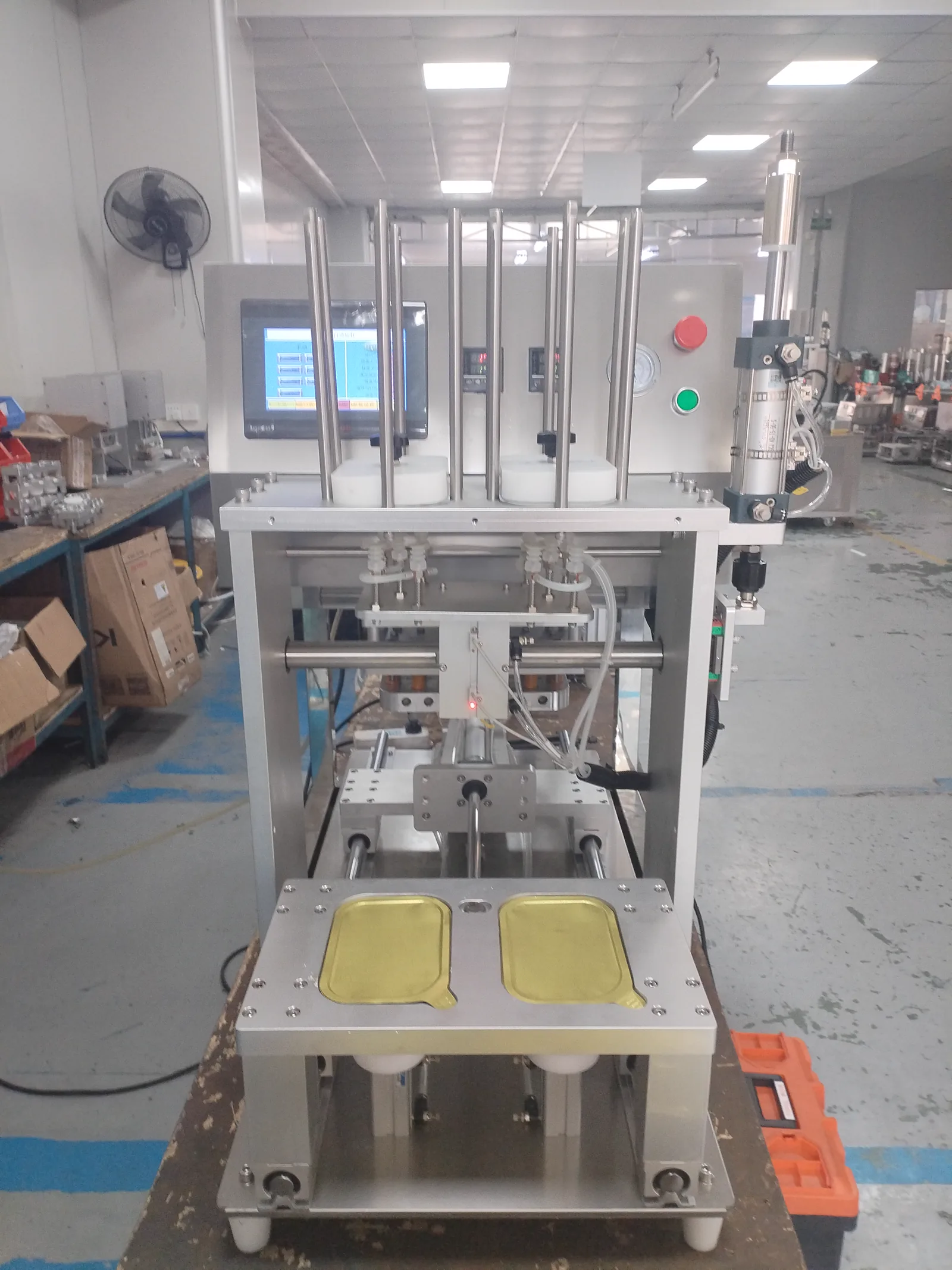 Automatic Pre-Cut Lid Pick-and-Place Tray Sealer
Automatic pre-cut film pick-and-place tray sealing machine: Two-level packaging sample confirmation; Single-cup film sealing and outer tray film sealing use different positioning references, so samples must be recorde...
Core process
First use small cups, sauce, and cup film to verify filling landing point, rim cleanliness, film sealing, and opening state, then consider tray secondary packaging.
The sauce piston filling machine performs quantitative filling based on viscosity and particles, and the small-cup filling and sealing machine combines cup denesting, filling, and single-cup film sealing into the primary packaging cycle.
If multiple sealed small cups need to enter a tray and be covered with film, an automatic pre-cut film pickup tray sealing machine can handle film separation, positioning, and sealing.
Only when freshness targets and gas conditions are clearly defined should a tray MAP sealing machine be evaluated. Ordinary secondary heat sealing does not default to adding MAP.
The food-grade conveying line connects stations according to the orientation of sealed cups or trays, and the date batch inkjet coding machine marks on a stable film surface.
The information must clarify responsibilities for single-cup primary packaging and tray secondary packaging, avoiding mixing manual tray loading, automatic film pickup, and carton case packing into the same action.
Sample details
Observe sauce viscosity, particles, stringiness, and cleaning to determine piston metering and filling nozzle passage and cutoff.
Actual sauce sample, particle state, target fill volume, production temperature, and cleaning/changeover requirementsCup material, rim, cup stacking, and cup film supply determine the mold and sealing conditions of the small-cup main machine.
Small-cup sample, cup mouth dimensions, material marking, roll film or pre-cut film, and opening directionExplain how the tray holds the sealed small cups, and verify pre-cut film dimensions, stacking, and secondary sealing edges.
Tray sample, cell positions, cup arrangement, pre-cut film, and manual tray loading methodConfirm whether there is indeed a modified atmosphere target, and whether date printing is on the single cup or outer tray, then arrange conveying.
Freshness target, gas and film requirements, batch level, planned cycle time, and quality rulesWhen information is insufficient, first list gaps separately for primary and secondary packaging, and freeze molds and line interfaces after samples are completed.
Existing photos and dimensions, on-site direction, procurement stage, sample shipping arrangement, and delivery boundariesCommon selection mistakes
The small-cup film seal provides the primary seal for the contents, while the outer tray film seal provides the combined package. The containers, molds, and acceptance targets are different.
Films with the same name may have different heat-seal layers and opening directions. Without the official cup film, the primary seal cannot be confirmed.
Particles, stringiness, or dripping can affect metering and rim cleanliness. Standard settings cannot cover all sauces.
Pre-cut film tray equipment requires stable cell positions, rims, and film separation. It is not equivalent to adding an ordinary carton-loading action.
Whether coding is placed on the single cup or outer tray changes triggering, reading, and batch association. A last-minute decision can easily lead to traceability gaps.
View detailed technical notes
First draw the two-level packaging structure clearly
The small-cup sauce project includes single-cup primary packaging and optional tray secondary packaging. First clarify which layer the consumer opens, then arrange filling, film sealing, tray loading, and coding.
Materials and the two packaging materials separately determine the stations
Sauce viscosity and particles determine piston metering and filling nozzle, the small-cup rim and cup film determine the primary seal, and the tray cell and film constrain the outer packaging.
First Stabilize Single-Cup Filling and Main Film Sealing
The sauce piston filling machine completes the metered filling, while the small cup filling and sealing machine handles cup denesting, filling, film feeding and the main sealing. The actual product trial run must record particle passage, dripping and cup rim contamination at the same time, not just the fill volume. The outer tray film sealing is not completed on this single-cup main machine either.
Secondary Packaging Uses Sheet Film Tray Equipment
After the sealed small cups are loaded into matching trays, the automatic pre-cut film pick-and-place tray sealing machine can handle the outer sheet film. The tray cell positions, cup height, rim and sheet film stacking must be jointly verified, and it must be clearly stated whether tray loading is manual or a defined upstream action.
Gas Flushing Requirements Cannot Be Added to Ordinary Sealing
If the packaging truly has gas flushing and freshness preservation goals, the tray gas flushing sealing machine should be evaluated as an independent branch. Gas conditions, barrier film, tray structure and leak detection criteria must all be defined by the project; ordinary secondary heat sealing results cannot replace gas flushing verification.
Coding Position Is Determined by the Traceability Level
The date and batch code can be placed on the single-cup film surface or the outer tray film surface. The choice is based on the sales level, reading method and batch association, and it is not assumed that both locations are configured.
Conveying Interface Does Not Equal Automatic Case Packing Capability
The food-grade conveying line only connects stabilized cups or trays. Whether tray loading is done manually or by a defined mechanism should be stated separately; it cannot be loosely referred to as automatic case packing.
Sign Off on the Two Layers of Film Materials Separately
The cup film, tray film and printing surface all require formal consumable trials. After material or batch changes, re-confirmation should be carried out according to the quality plan.
Quotation Materials Must Cover Primary and Secondary Packaging
When submitting the proposal materials, provide the sauce, small cup film, tray sheet film, packaging levels, target cycle time and site orientation, so that the two main machines and the connection method can be determined.
Confirm the Line Results After the Two-Layer Sample Trial
Before the samples are frozen, the single-cup, tray or gas flushing branch can be judged, but the mold, sealing conditions and continuous performance should all be reserved for the trial sample conclusions.
Common questions
How should equipment for two-level packaging of small-cup sauce be calculated?
The equipment scope is determined jointly by the sauce state, the small cup and film material, whether a tray secondary film sealing step is added, modified atmosphere requirements, coding level, and continuous conveying range, and must be checked separately for the two packaging levels.
How is the full-line production cycle time verified?
Run cup denesting, filling, film sealing, and cup discharge using the actual small cups, sauce, and film, then test tray film pickup and sealing separately. The final cycle time is determined by the limiting station in the two-level process.
Can planning be done without all cup and tray samples?
You can initially judge the single-cup filling/sealing or tray film direction based on photos and dimensions, but mold, particle passage, and sealing results still need to wait for physical samples.
How should the single-cup sealing film be selected?
Selection should be based on the cup material's heat-seal layer, contents, opening method, and storage/transport requirements. Aluminum foil, easy-peel, or composite lidding films must be trial-sealed together with the rim as a set.
Does sauce with particles affect small-cup filling?
Yes. You need to submit the actual sauce with particles, and check particle size, valve path, and filling nozzle passability. If there is a clogging risk, adjust the contact structure and retest with the material.
After single-cup sealing, is tray packaging still needed?
If the retail package requires an outer tray, plan manual or established tray loading after the single-cup primary seal is stable, then seal with a tray film sealing machine. This is different from automatic carton case packing.