Machine scope
Used for storing, separating, picking and placing pre-cut film sheets or lid sheets, and feeding to the sealing station.
Conveying, Feeding and Packaging Line Auxiliary Equipment
Used for storing, separating, picking and placing pre-cut film sheets or lid sheets, and feeding to the sealing station.
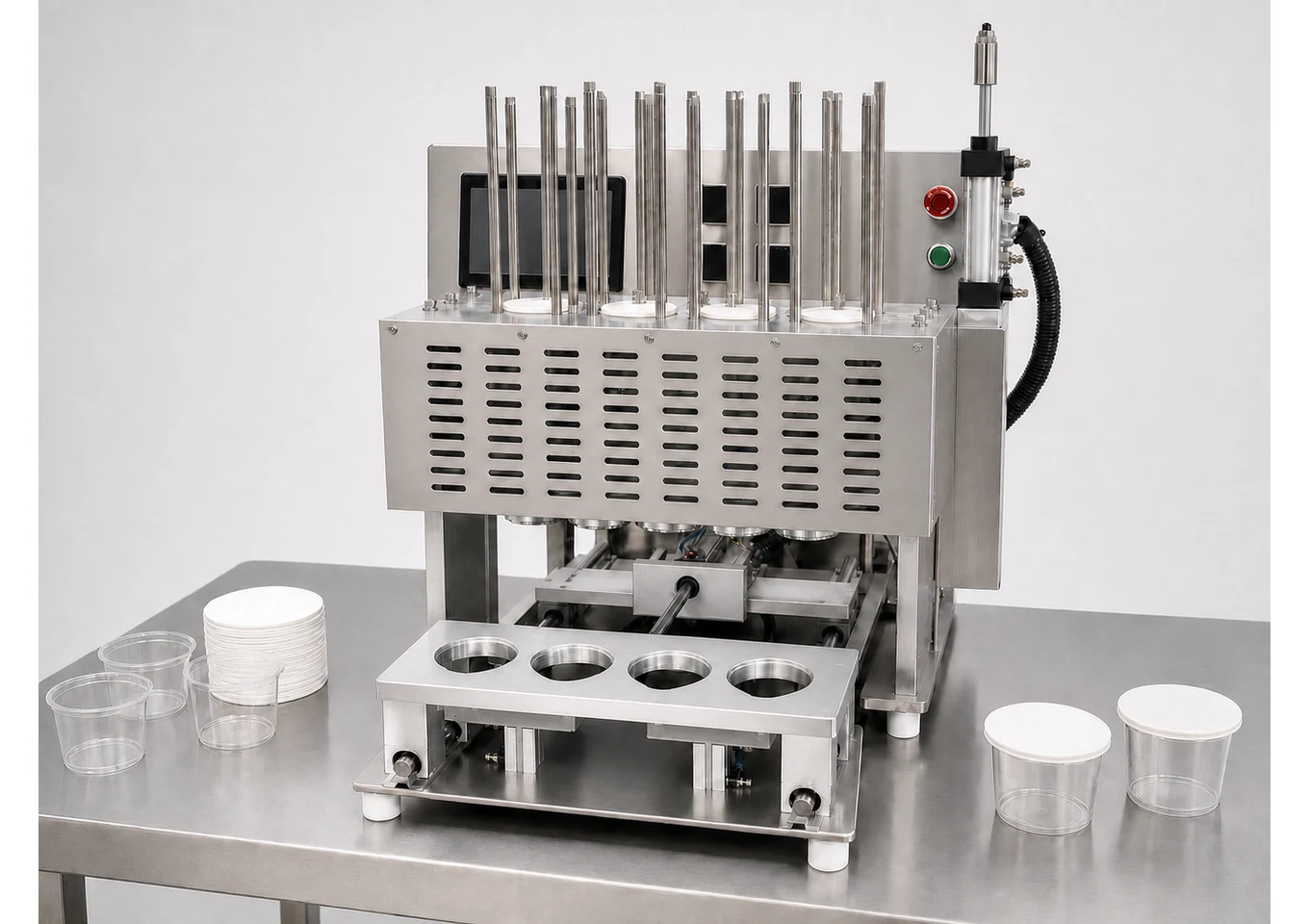
This reference helps explain possible stations and process relationships. Final layout, configuration and capability follow the agreed samples and technical list.


Selection guide
Start by checking container, product, size and output.
Used for storing, separating, picking and placing pre-cut film sheets or lid sheets, and feeding to the sealing station.
As a film feeding module at the front end of the sealing machine, it handles stacked pre-cut film sheets or lid sheets. Material static, surface friction, warpage, thickness and pick-and-place orientation affect separation stability. Vision positioning, peel detection and the sealing main unit are independently confirmed.
Selection guide
Photos, key dimensions, and packaging material details are enough to start; if details are incomplete, we will review the direction first.
Selection guide
Automatic separation and pick-and-place; vision, missing sheet detection and magazine change method confirmed per project
This machine does not directly handle containers; it serves the pre-cut lid film sealing station for cups, boxes, trays, bottles or jars
Stacked pre-cut aluminum foil sheets, composite film sheets, plastic lid sheets or paper-plastic lid materials
Dimensionally stable pre-cut lid films or lid sheets that can be reliably separated and picked up
Lid film storage, separation, pick-up, orientation or position confirmation, transfer to sealing station
Confirmed based on samples, motion cycle time, process time, upstream/downstream speed and final configuration.
When film sheet shape, size or material changes, the magazine, suction tooling and positioning parts need to be replaced.
Dual magazine non-stop material change, vision positioning, missing sheet or double sheet detection and static elimination are optional modules.
Confirmed based on export region, drive structure, site layout and final configuration.
Needs to interlock with the sealing main unit's cycle time, pick-and-place position, start/stop and alarm signals.
Please provide at least one full batch of actual film sheets, stacking method, allowable warpage, pick-and-place orientation, cycle time and sealing machine interface drawing.
Photos, drawings, or samples help confirm diameter, height, stacking, and sealing contact surface.
Material, thickness, easy-tear or leak-proof requirements affect sealing temperature, pressure, and tooling.
Hourly capacity, manual or automatic feeding, conveying, and downstream packaging determine final configuration.
Configuration Selection
Start with lid specifications and stack condition. Check separation, pickup, orientation and placement requirements, then compare standalone feeding with an integrated station against the main machine’s cycle.
Check the sealing machine’s existing separation and pick-and-place functions first. Add a standalone feeder only for missing operations, defining position signals, cycle and transfer location to avoid duplicate equipment.
Feeding handles storage, separation and placement; the corresponding sealing machine performs heat sealing. Trial production packaging to confirm the coating, container rim and tooling fit.
Conveying, Feeding and Packaging Line Auxiliary Equipment
Selection guide
Please provide at least one full batch of actual film sheets, stacking method, allowable warpage, pick-and-place orientation, cycle time and sealing machine interface drawing.
No. Dual magazine non-stop material change, vision positioning, missing sheet or double sheet detection and static elimination are optional modules. All need to be separately confirmed per project scope.
Cannot promise without actual samples and line conditions. Speed, compatibility range, tooling quantity and acceptance criteria are based on sample testing and final technical proposal.
Provide sample details
Send lid-sheet and container photos, the planned feeding method and approximate output for an initial review of separation and transfer. You can inquire before drawings or complete parameters are available.