Solution topic
Roll Film or Pre-Cut Lids for Tray Sealing? Compare Rim, Sheet Separation, Trimming, Changeover and Material Supply
Compare roll unwinding and trim cutting with pre-cut lid separation and placement. Select from tray rim, seal layer, static and flatness, changeover, material supply and real seali
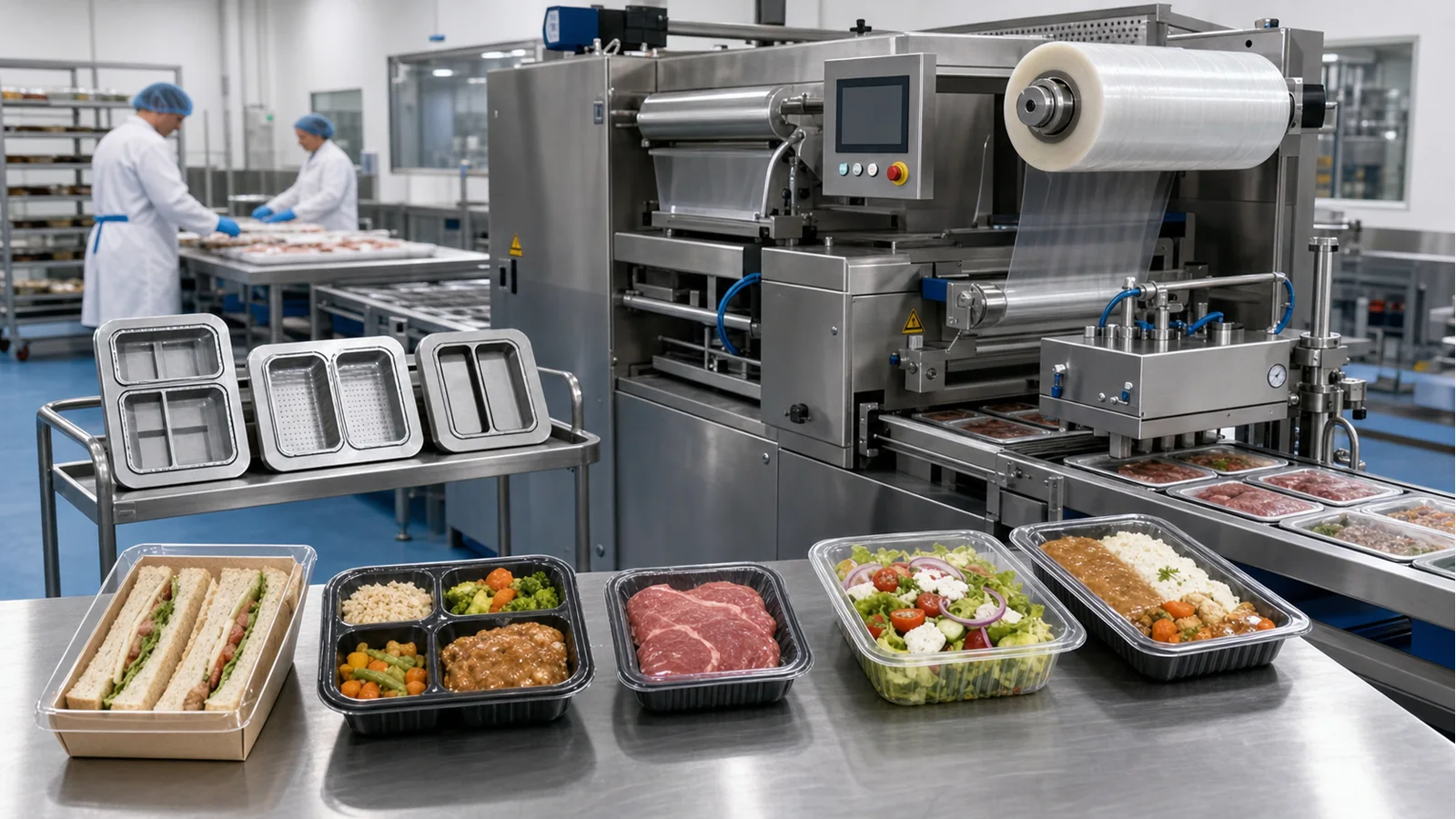
- The roll film route connects feeding, registration, and cutting within the main machine, while the pre-cut film route requires controlling single-sheet separation and placement. Container contour, film edge dimensions, changeover frequency, and whether modified atmosphere is used together determine which automation structure is more suitable.
Solution summary prepared for you
- The roll film route integrates feeding, positioning, and cutting into the main machine cycle. The core of the precut film route is single-sheet separation, orientation recognition, and accurate placement.
- For precut film, first establish a finished sample on tabletop equipment. After the production film stack can be stably separated, evaluate automatic feeding and pick-and-place sealing stations.
- Modified atmosphere requires separate definition of gas, barrier film, and packaging acceptance. Outer shrink is scheduled after the cup/tray main seal passes.
Route comparison
- Suitable for projects where the container rim and incoming direction are stable, and where feeding and cutting need to be integrated into a continuous sealing cycle.
- Roll film is continuously fed, positioned, and cut within the main machine, suitable for repeated cycles after the film path and container direction are stable.
- Film width, winding direction, print registration, tension, container support, and cutting all need actual sample testing. Specification changes affect the film path and tooling.
- When container positioning and roll film coverage are not yet repeatable, or orders frequently change film width and print direction, single-machine verification should be done first.
- Use a tabletop roll film tray sealing machine to verify roll film. For continuous cup packaging, evaluate a small cup filling-sealing machine or a chain-plate cup/tray continuous sealing line (optional filling).
- Suitable for cup/tray projects with clearly defined precut film contours that need to upgrade from manual film placement to automatic separation and pick-and-place.
- Precut film can be made for specific contours. After manual confirmation, gradually automate single-sheet separation and film placement.
- Film stack, static, stiffness, and orientation affect separation. Automatic equipment also requires dedicated container positioning and film picking tests.
- If precut sheets do not yet have stable dimensions and stack condition, or manual single-sheet sealing still has misalignment, automatic pick-and-place should not be fixed directly.
- Use a small-diameter cup sealing machine SGP-03 or tabletop multi-compartment meal tray sealing machine to verify film sheets. Then use a precut lidding film automatic separation feeder and an automatic precut sheet pick-and-place tray s...
- Suitable for projects where the main sealing route is determined and there are additional gas flushing requirements or outer combination needs.
- Modified atmosphere equipment can integrate the gas process into the sealing cycle, but its value is determined by food process and packaging tests, not by film form.
- Modified atmosphere depends on gas conditions, barrier film, and acceptance methods. Shrink depends on finished arrangement and heating conditions. They are not the same upgrade module.
- When the modified atmosphere target or outer sales unit is not yet defined, do not add corresponding equipment first.
- When gas flushing is needed, evaluate a tray modified atmosphere sealing machine. If only outer combination packaging is needed, use an L-type cut-seal shrink packaging line after main sealing.
Associated Equipment / Consumables
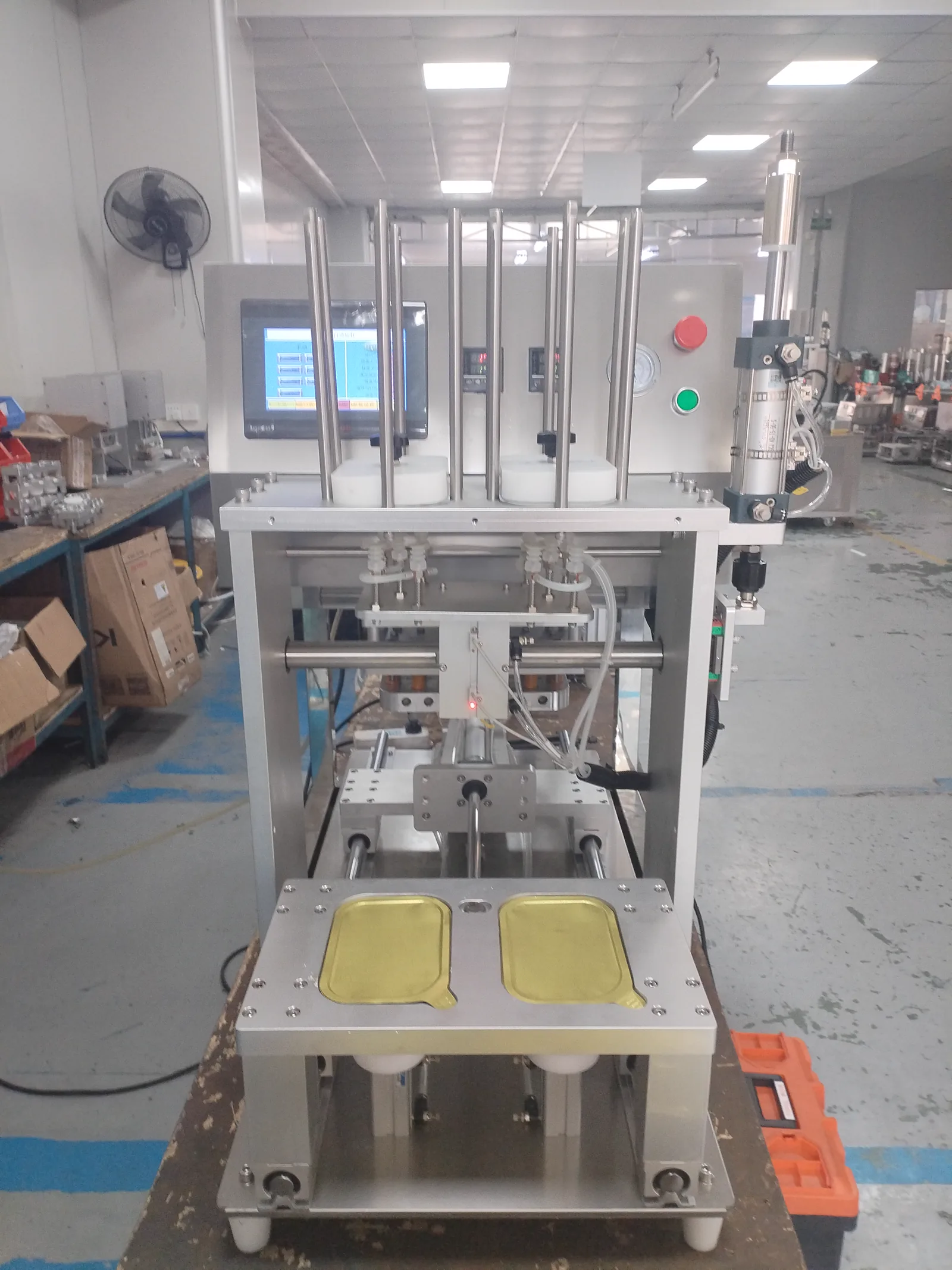 Automatic Pre-Cut Lid Pick-and-Place Tray Sealer
Automatic pre-cut film pick-and-place tray sealing machine: Establish container and film baseline; Photos and dimensions can provide a preliminary judgment, but warpage, static, stacked sheets, and deformation after f...
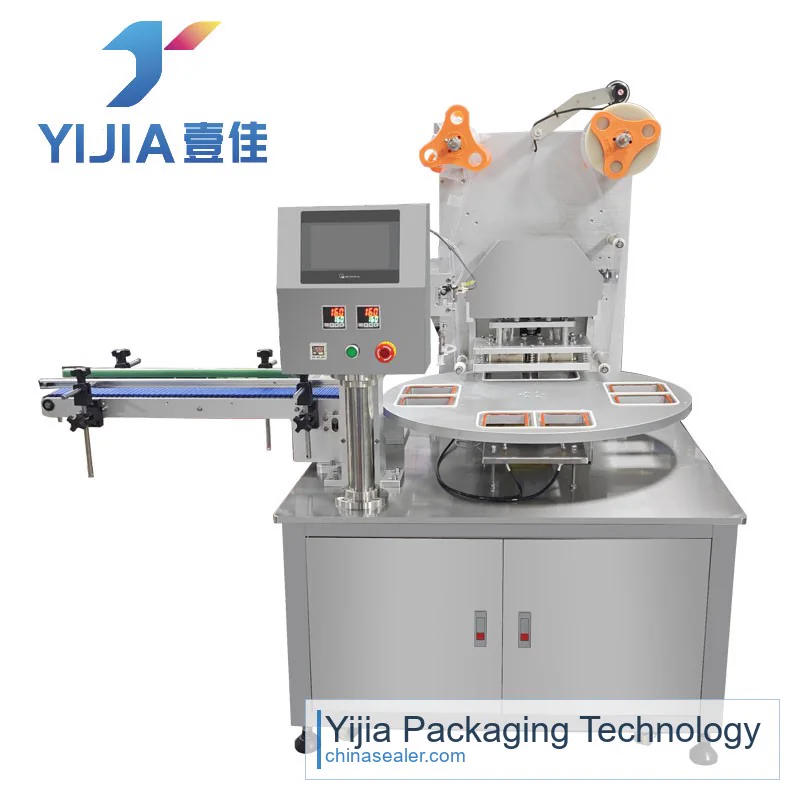 Automatic Small-Cup Filling and Sealing Machine
Establish container and film baseline; Photos and dimensions can provide a preliminary judgment, but warpage, static, stacked sheets, and deformation after filling stil...
Core process
First check rim contour, flatness, ribs, heat-seal layer, and acceptable film edge with real cups/trays and film, then choose the film supply structure.
Precut film is first manually placed on a small-diameter cup sealing machine or tabletop multi-compartment meal tray sealing machine to confirm orientation, margin, and heat-sealed finished sample.
After the film sheets can be stably separated, use a precut lidding film automatic separation feeder, or a tray sealing machine with a pick-and-place station.
The roll film route is verified by a tabletop roll film tray sealing machine for feeding and cutting. For continuous cup/tray lines, evaluate a filling-sealing main machine or chain-plate line according to the process.
If the project proposes gas flushing, the tray modified atmosphere sealing machine requires containers, barrier film, gas conditions, and food packaging acceptance methods.
When the main seal passes and outer combination is needed, evaluate shrink based on the finished cup/tray arrangement. Guides and heating must not damage the rim film.
Sample details
The rim contour, ribs, warpage, and filling deformation of the container determine tooling support and film supply feasibility.
Multiple cup/tray samples, rim dimensional tolerances, number of compartments, materials, and filled stateRoll film feeding and precut sheet stacking require different information. Print direction and static also affect automatic actions.
Production roll film or precut film, structure thickness, heat-seal layer, winding or stacking direction, and easy-peel requirementsAutomatic separation must first prove that single sheets can be consistently separated from the production stack while maintaining front/back and orientation.
Full stack of precut film sheets, edge condition, static condition, front/back marking, and allowed pick-and-place areaExisting filling and incoming direction determine whether to do sealing only, choose a filling-sealing main machine, or connect a continuous cup/tray line.
Upstream equipment, manual actions, target shift, changeover frequency, in/out direction, and site layoutModified atmosphere and shrink have different input conditions. Food process and final combination samples must be provided separately.
Whether modified atmosphere is needed, gas and acceptance methods, or finished cup/tray arrangement, shrink film, and sales packaging samplesCommon selection mistakes
If the film material is only written as aluminum foil or composite film, it is impossible to determine whether it enters the equipment as a roll for continuous feeding or as sheets for separation.
Irregular or multi-compartment rims do not necessarily rule out roll film. The key is whether continuous support, film band coverage, and cutting pass with actual samples.
Cups and trays with the same diameter may have different depths, ribs, and warpage. Tooling and changeover parts cannot be shared based only on outer diameter.
Precut sheets may stick together, have static, or be misoriented in the stack. Manual separation does not mean automatic separation is feasible.
The filling-sealing main machine also includes cup feeding and filling actions. If there is already an upstream section, direct configuration may cause duplicate stations.
View detailed technical notes
First, see how the film enters the sealing station
The difference between roll film and precut film is not just the shape of the consumable. Roll film requires continuous feeding and cutting, while precut film requires separating single sheets from a stack and accurately placing them on the rim.
Rim and film layers jointly determine the main seal
Container contour, ribs, warpage, and filling state determine tooling support. The film's heat-seal layer, excess edge, and tear direction determine contact conditions. Both sets of physical samples should be verified together.
Manual placement establishes the pre-cut film baseline
For pre-cut film, first use a small-diameter cup sealing machine or a tabletop multi-compartment tray sealing machine for manual placement. Only after single-sheet orientation and seal samples are stable, proceed to automatic dispensing trials. Manual samples should also cover multi-compartment ribs, tear edges, and rim condition after filling.
The automation challenge lies in dispensing and pick-and-place
An automatic pre-cut film dispenser handles single-sheet separation, while an automatic pre-cut film pick-and-place tray sealing machine further completes pick-and-place and heat sealing. A full stack of production film is a key input; double sheets, missing sheets, flipped sheets, and misalignment should all be recorded as dispensing anomalies.
Roll film integrates feeding and cutting into the cycle
The roll film route lets the main machine handle web feeding, registration, and cutting. A tabletop roll-fed tray sealing machine can first verify the film path and print registration; after orders stabilize, evaluate a filling-sealing or chain-plate continuous line.
Complex contours require actual tray comparison
For multi-compartment or irregular trays, do not rule out a route based only on the name. Check each rim support segment, roll film coverage, and pre-cut sheet excess edge, then compare finished samples and changeover work.
Modified atmosphere is not a third film form
Modified atmosphere is a food packaging process that requires gas conditions, barrier film, and separate acceptance. It cannot replace the choice between roll film or pre-cut film feeding.
Outer shrink wrap does not participate in the main seal of cups or trays
After main seal acceptance, if the finished cups or trays need to be sold in combination, an L-type shrink wrap line can be evaluated. Shrink heat and guiding should not damage the rim film.
Changeover records cover film supply details
The changeover kit should record container positioning, tooling, roll film parameters or pre-cut sheet stacking, tear direction, and finished samples. When resuming production, check the first article against this record.
Common questions
How do roll film and precut film compare in changeover and consumables?
You need to compare film supply, waste, changeover, manual film placement, and automatic sheet separation tests, not just compare a single machine and a single piece of film.
Can roll film be used for multi-compartment meal trays?
It can be evaluated. Both routes need to use actual containers to check rib support, film edge coverage, and cutting. The number of compartments itself does not directly determine the film supply method.
How to choose the film supply method based on output?
Selection should be based on per-shift orders, changeover frequency, staffing, and actual machine cycles. A single daily quantity is not enough to determine the automation structure.
Is it okay if the sealing film is prepared by the customer?
You may purchase production film yourself, but you need to submit the material structure, feed dimensions, and actual samples in advance, and retain the same batch for equipment testing.
How to troubleshoot leakage after sealing cups and trays?
Sample and check each item from the film heat-seal layer, rim contamination, rib support, temperature-pressure time, and film position. Do not replace root cause analysis with a single parameter adjustment.
Can automatic film supply be upgraded after manual sealing?
It can be built in stages. When adding automatic film supply or a continuous line, you still need to re-validate according to the containers, film materials, incoming direction, and orders at that time.