Applicable Containers
Creams / Lotions / Ointments
Bottle / Pail / Can Sealing Equipment
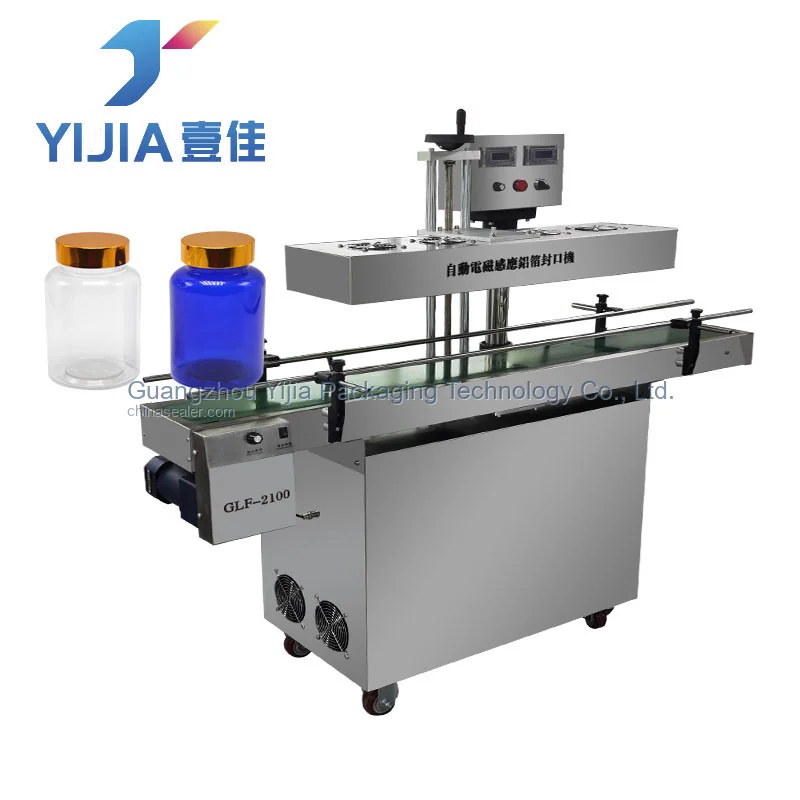
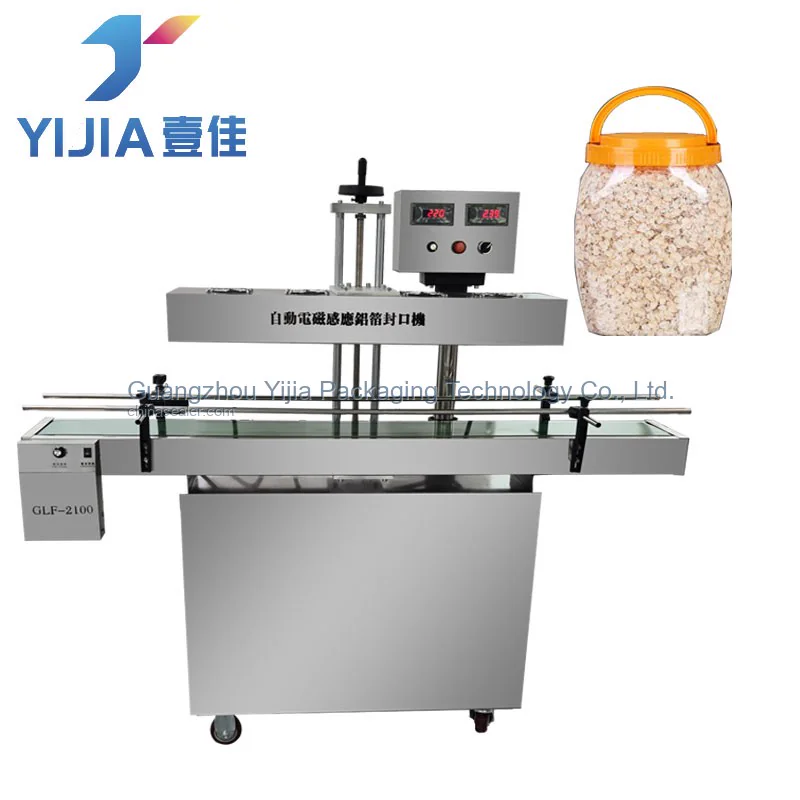
The sealer operates after the cap has been correctly tightened and compresses a compatible liner. It is not a capless direct-sheet heat sealer and should not be selected by product name alone. Container material, rim flatness, liner heat-seal layer, cap pressure and diameter, bottle spacing, conveyor speed, head height, environment and continuous load determine the air- or water-cooled route. Prove the cap-liner-container combination with peel, leak or project acceptance tests.
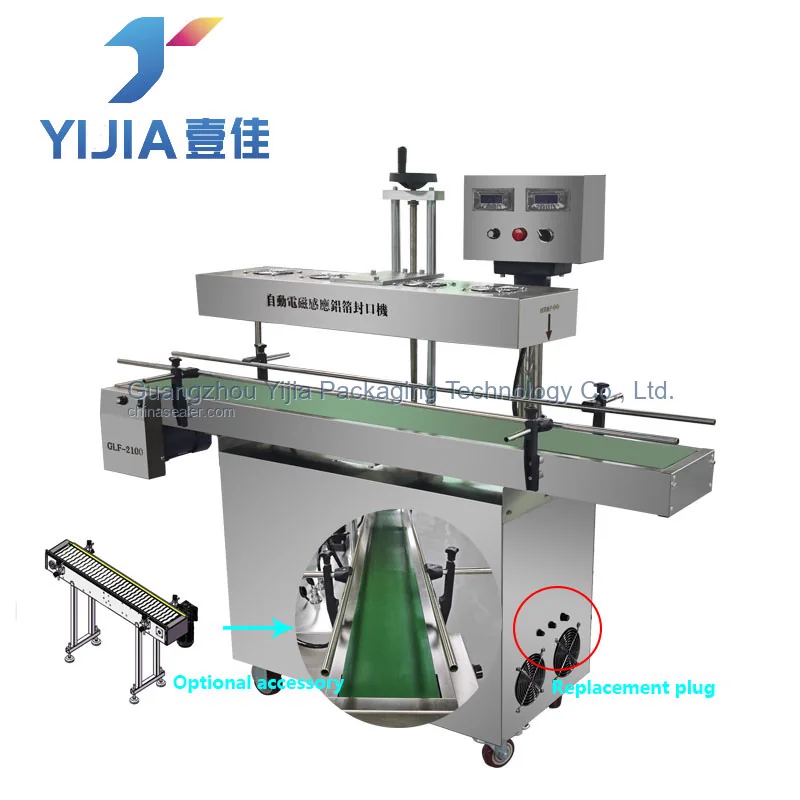
These are factory photos of the actual machine only. Packaging format, materials and final configuration are confirmed with trial samples and the agreed list.
Selection points
These details decide machine structure, changeover method and quotation accuracy.
Creams / Lotions / Ointments
Aluminum foil liners, composite liners, bottle caps, cap inner liners
Non-contact induction foil sealing
Confirmed by sample testing and line cycle time; can be configured as benchtop, semi-automatic, or inline conveyor
Selection points
Photos, key dimensions, and packaging material details are enough to start; if details are incomplete, we will review the direction first.
Selection points
These details decide machine structure, changeover method and quotation accuracy.
YJ-LBFK-ZX500
Confirmed based on container size, material state, process, number of stations, and target speed. 40–80 bottles/min
Can be configured as benchtop, semi-automatic, fully automatic, or inline per project.
Bottles, cans, pails, and paper cans
Confirmed based on sample dimensions, mouth diameter, height, and sealing edge width.
Food, sauces, daily chemicals, cosmetics, pharmaceutical consumables, and chemical packaging
Consumables and accessories confirmed based on samples and final process.
Aluminum foil inner sealing and leak prevention.
Configuration selection
Photos, key dimensions, and packaging material details are enough to start; if details are incomplete, we will review the direction first.
Send product, container, material, dimensions and target output.
Confirm configuration by process, changeover, cycle time and line needs.
Test sealing, filling, labeling or inspection results when needed.
Quote after confirming power, layout, lead time and spare parts.
Configuration selection
Inline induction sealing, benchtop induction sealing and capless direct-sheet heat sealing use different feeding and heating structures. Continuous load and environment then determine air or water cooling.
Bottle / Pail / Can Sealing Equipment
Inline induction sealing, benchtop induction sealing and capless direct-sheet heat sealing use different feeding and heating structures. Continuous load and environment then determine air or water cooling.
Selection points
These details decide machine structure, changeover method and quotation accuracy.
It can be judged based on standard structure first, but not just by name. Need to confirm pail mouth diameter, pail height, sealing film material, pressing time, and then check whether the mouth diameter, number of stations, sealing method, and conveyor speed are suitable for the on-site cycle time.
Non-contact induction foil sealing is affected by the dimensions of plastic pails, wide-mouth pails, food pails, aluminum foil liners, composite liners, bottle cap structure, and the state of sauces, condiments, powders. The clearer the samples, the easier to determine tooling, temperature, pressure, torque, or inspection method.
It can be configured as benchtop, semi-automatic, or inline conveyor. If there are upstream/downstream equipment, the conveyor height, direction, speed, and signal interface need to be confirmed simultaneously.
It is recommended to review sample test results, key dimensions, consumable specifications, power supply, air supply, cleaning and maintenance methods, and spare parts list to avoid modifying tooling or adjusting stations on site.
Send Sample Information
Send bottle, cap and foil-liner samples and material data, cap diameter and rim, capping condition, spacing and speed, continuous run time, ambient temperature, power supply and peel or leak acceptance criteria.