Solution topic
Bottle Capping and Induction Foil Sealing Are Separate Steps: Sequence, Liner and Trials
Cap first to the required fit and torque, then induction-seal a compatible foil liner. Select by container rim, liner sealant, compression, speed, load, air or water cooling and co
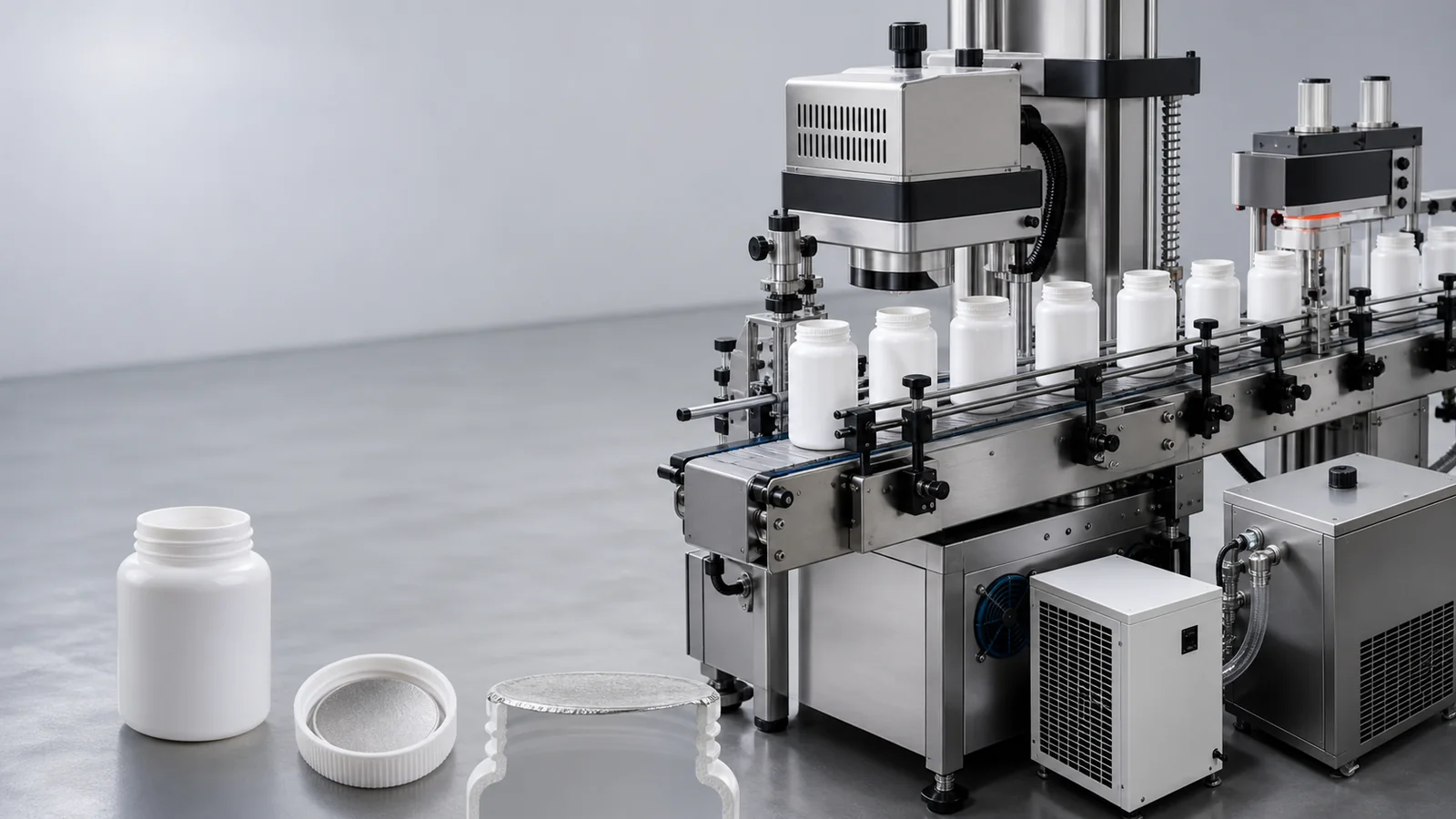
- Tighten the cap so it consistently compresses a compatible liner before inline induction heating. More power cannot correct a mismatched cap, liner or rim.
Solution summary prepared for you
- Screw capping and aluminum foil induction sealing perform different tasks. Without a cap inner gasket, only screw capping is needed. With a compatible aluminum foil gasket inside the cap, usually screw capping is followed by induction. I...
- Initial judgment requires photos of the bottle mouth and cap interior structure. Complete samples can further confirm the equipment direction. Focus on cap type, gasket position, bottle material, and mouth condition after filling.
- Induction inner sealing should be tested with actual bottles, caps, and gaskets together. Foil adhesion and packaging test results are used to confirm process parameters, not just the induction equipment name.
Route comparison
- Bottled products that do not use aluminum foil gaskets and whose cap structure already meets the established packaging inspection requirements.
- The process is concentrated on cap assembly, making it easy to adjust cap placement and tightening for threaded or press-on caps.
- Barrier and opening characteristics are provided by the cap, inner plug, or sealing ring structure, and acceptance methods need to be defined separately.
- When the project explicitly requires an aluminum foil barrier inside the cap or visible tamper evidence, cap assembly alone is not sufficient.
- Choose an automatic screw capping machine or automatic screw capping and press capping machine based on cap type, and trial-run with complete cap samples.
- Packaging with a threaded cap containing an aluminum foil composite gasket that requires inner sealing of the bottle mouth after capping.
- After the gasket is evenly compressed inside the cap, it enters the induction station, suitable for continuously completing cap assembly and aluminum foil inner sealing.
- A cap inner aluminum foil composite gasket compatible with the bottle material must be used, and the mouth condition after filling must be controlled.
- When there is no compatible gasket inside the cap or the gasket cannot be pressed flat against the bottle mouth, the packaging material structure should be adjusted first.
- An automatic screw capping machine followed by an in-line induction foil sealing machine. For small batch samples, a bench-top air-cooled induction foil sealing machine can be used first.
- Products where an aluminum foil film is placed directly on the bottle mouth and bonded by heat sealing, followed by assembly of an outer cap.
- The film directly covers the bottle mouth, allowing the sealing process and outer cap assembly to be set up and inspected separately.
- Film placement and removal, bottle mouth support, and heat seal layer compatibility all need to be verified with actual samples.
- If the packaging structure uses an induction gasket inside the cap, it should not be configured as a direct heat sealing film process on the bottle mouth.
- Evaluate an in-line bottle heat sealing machine, and configure the outer cap station with screw capping or press capping equipment based on cap type.
Associated Equipment / Consumables
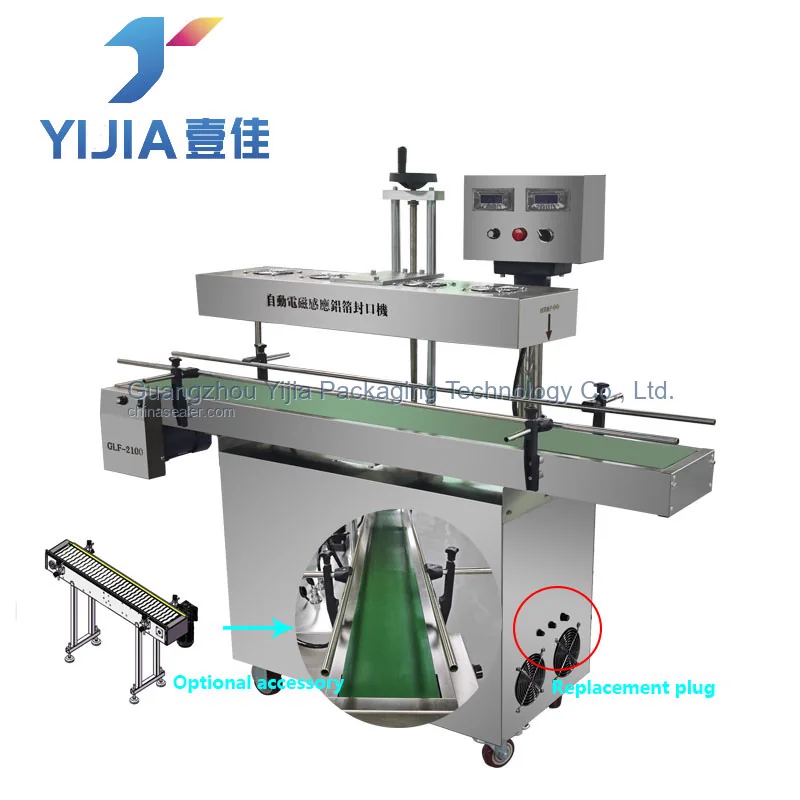 Inline Induction Foil Sealer
The sealer operates after the cap has been correctly tightened and compresses a compatible liner. It is not a capless direct-sheet heat sealer and should not be selected by product name alone. Container material, rim...
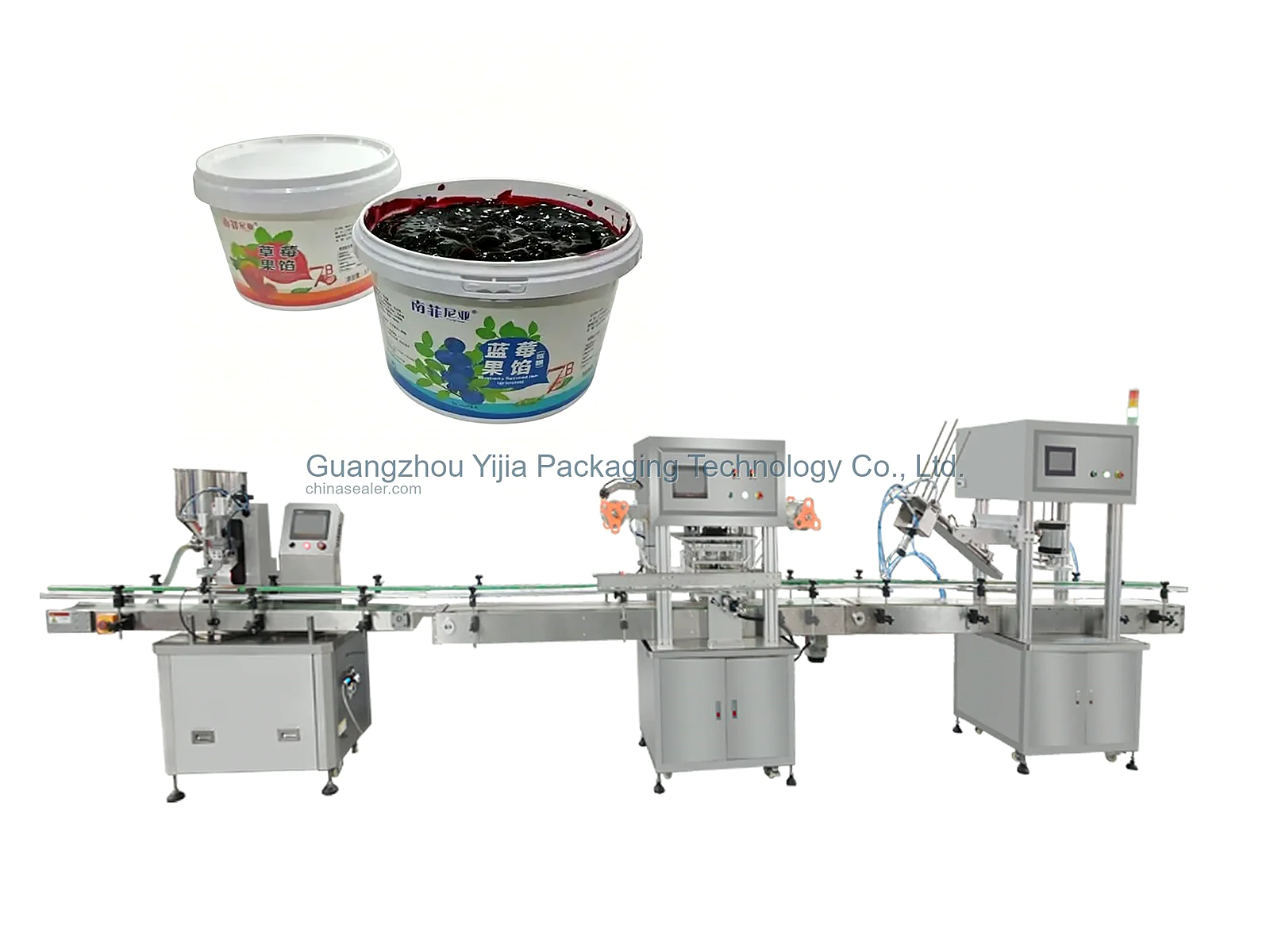 Paper Can and Plastic Pail Foil Heat Sealing and Capping Machine
Cap assembly; First use caps and bottle samples to check cap placement, bottle holding, and tightening action, then determine whether upstream and down...
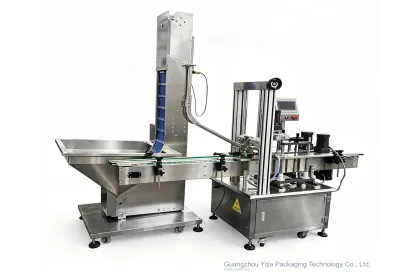 Automatic Screw Capping Machine
Induction inner sealing after screw capping; Capping speed, bottle height, and neck size must be trial-run together with the induction station. Inner seal results are confirmed by actu...
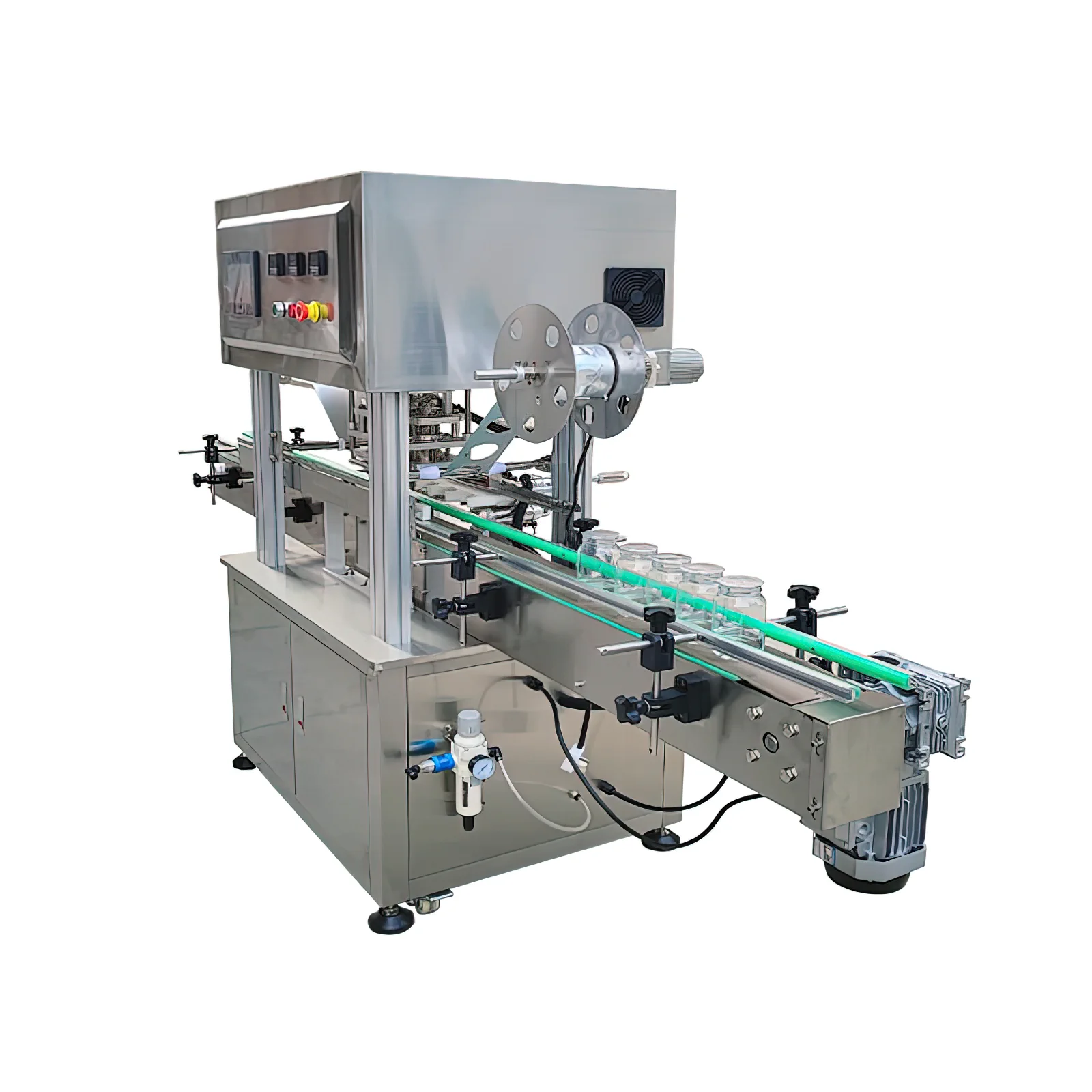 Inline Heat-Press Bottle Sealing Machine
Offline trial sealing and heat sealing diversion; The two types of equipment correspond to different sealing structures. Test records should separately note the conditions for...
Core process
When there is no aluminum foil inner seal requirement, choose an automatic screw capping machine or automatic screw capping and press capping machine based on threaded cap, press-on cap, and bottle stability.
After the cap inner gasket is evenly pressed against the bottle mouth, the in-line induction foil sealing machine completes non-contact heating inner sealing.
For small batches with cap inner gaskets, a bench-top air-cooled induction foil sealing machine can be used for validation. When film is placed directly on the bottle mouth, evaluate an in-line bottle heat sealing machine.
First submit the complete cap combination, close-up of the bottle mouth, and key dimensions to determine by physical samples whether the direction is cap assembly, induction inner sealing, or direct heat sealing.
For plastic bottles, glass bottles, and different rim structures, the heat seal layer of the gasket or film, cap fit, and contact surface cleanliness must be checked separately.
Before connecting equipment, first lock in the actual process among cap assembly, cap inner induction, or bottle mouth heat sealing, then verify the upstream filling and downstream conveying interfaces.
Sample details
Bottle stability and rim geometry affect the pass-through conditions for bottle holding, capping, and sealing stations.
Provide full bottle view, close-up of bottle mouth, and key dimensions such as neck size and bottle heightWhether the cap contains an aluminum foil composite gasket is key to distinguishing between induction inner sealing after capping and capping only.
Submit complete cap and gasket samples, and explain the cap assembly methodContinuous production requires checking the rhythm of bottle supply, capping, induction, and bottle discharge. Trial production projects can first evaluate independent equipment.
Specify target production speed, shift arrangement, and whether connecting to upstream and downstream stationsProduct splashed on the bottle mouth changes the sealing contact condition. Liquid, sauce, and powder should be described separately.
Provide photos of the product condition and bottle mouth after filling, and explain the rim cleaning methodTrial sealing must use the bottles, caps, gaskets, or films intended for production, and inspection items must be defined in advance.
Send actual packaging material combinations, and provide acceptance requirements for opening, adhesion, or packaging testsCommon selection mistakes
Induction heating acts on the foil layer, but whether it ultimately bonds to the bottle mouth depends on the gasket's heat seal layer and the bottle material. For glass bottles and other packaging, use a gasket with the corresponding structure and perform trial sealing.
A cap that is too loose causes uneven gasket compression, while one that is too tight may damage the cap or threads. Capping condition should be established with complete samples to set inspection requirements.
Residual sauce, liquid, or powder on the rim will separate the heat seal contact surfaces. Whether to add cleaning measures should be determined based on the actual condition after filling.
After induction, allow a stabilization period according to the gasket structure used, then perform opening or packaging tests. The required conveying section is confirmed by trials and on-site speed.
The coil type is related to container neck size, bottle height, and pass-through method. For multi-specification projects, the changeover range must be checked against each sample.
View detailed technical notes
Capping and Film Sealing Are Not the Same Process
For bottle projects, first distinguish between cap assembly and bottle mouth film sealing. Screw capping seats the cap as required, induction equipment handles the aluminum foil gasket inside the cap, and film placed directly on the bottle mouth belongs to heat sealing. These three cannot be mixed based solely on the name 'foil sealing'.
Determine Process Sequence from Cap Inner Structure
A quick way to decide is to inspect an actual cap assembly. If there is no foil liner, choose screw capping or press capping based on the cap type. When the cap has a compatible liner, screw capping is usually done first, followed by an inline induction sealing station. If the foil membrane is placed directly on the bottle mouth, use dedicated heat sealing equipment and add a separate cap assembly step.
Without a Liner, Complete Assembly by Cap Type
The screw-capping-only route applies to packaging that does not use an aluminum foil inner seal. Choose an automatic screw capper or automatic screw capping and press capping machine based on thread type, press-on method, and bottle stability. Packaging performance should be confirmed by cap structure and established tests; do not assume that the tightening action also completes the foil seal.
With Cap Liner, Use Induction Sealing After Capping
When the cap has a composite aluminum foil liner, the cap must be screwed on so the liner lies flat against the rim, then the bottle passes through an inline induction foil sealing machine. For small batches, a benchtop air-cooled induction foil sealer can be used for trials. Bottle material, liner heat-seal layer, rim cleanliness, and capping condition should be recorded as one set of parameters.
Direct Membrane Placement: Use Bottle Mouth Heat Sealing
When the aluminum foil membrane is placed directly on the bottle mouth, the process does not rely on a cap liner. Evaluate an inline bottle heat sealing machine. Sample tests should observe membrane positioning, rim support, and heat-seal layer bonding. If an outer cap is needed, it can be applied by a screw capping or press capping station.
Equipment Starting Point Is Cap Assembly
Changes in cap type affect the cap feeding, bottle holding, and tightening mechanisms. You can first run a trial with an automatic screw capper or automatic screw capping and press capping machine, then connect downstream sealing equipment depending on whether a cap liner is used.
Induction Inner Seal and Direct Heat Sealing Are Configured Separately
When using a cap liner, configure an inline induction foil sealing machine; for offline trials, a benchtop air-cooled machine is optional. When placing the membrane directly on the bottle mouth, configure an inline bottle heat sealing machine. The two routes should be validated separately with sample tests and packaging acceptance.
Common questions
Can the process direction be determined when information is incomplete?
Start by reviewing photos of the bottle body, neck, and cap interior structure. If you can provide a complete cap sample, we can further distinguish between screw capping only, induction foil sealing after screw capping, and direct heat sealing on the bottle mouth.
What samples are needed to confirm equipment configuration?
Please prepare complete cap samples, key bottle neck dimensions, gasket or film information, the condition of the bottle mouth after filling, target production speed, and line integration requirements.
How does production speed change equipment arrangement?
Target production speed and the supply status of upstream and downstream stations will change the choice between bench-top validation and in-line integration. The capping machine and induction sealer must also be matched to the same operating rhythm.
Why is it necessary to trial seal with actual gaskets?
The heat seal layer of the gasket, bottle material, and neck condition cannot be judged by specification name alone. Only by trial sealing with the actual packaging combination can a reproducible process window be established.
How is the induction inner seal result accepted?
First check foil adhesion, edge condition, and opening performance, then conduct the appropriate packaging tests according to product requirements. The evaluation method and acceptance criteria must be agreed upon before sampling.
When is it suitable to connect the capping and induction stations in line?
When specifications are stable and the capping, induction, and conveying speeds need continuous connection, an in-line combination can be evaluated. For multi-specification trial production, independent stations can be retained first to observe changeover and operating conditions.