Sealing Position
Inner Aluminum Foil Sealing at Pail/Can Mouth
Bottle / Pail / Can Sealing Equipment
First distinguish foil placed directly on the pail rim for heat pressing from an in-cap liner sealed by induction after capping; materials, sequence and equipment differ.
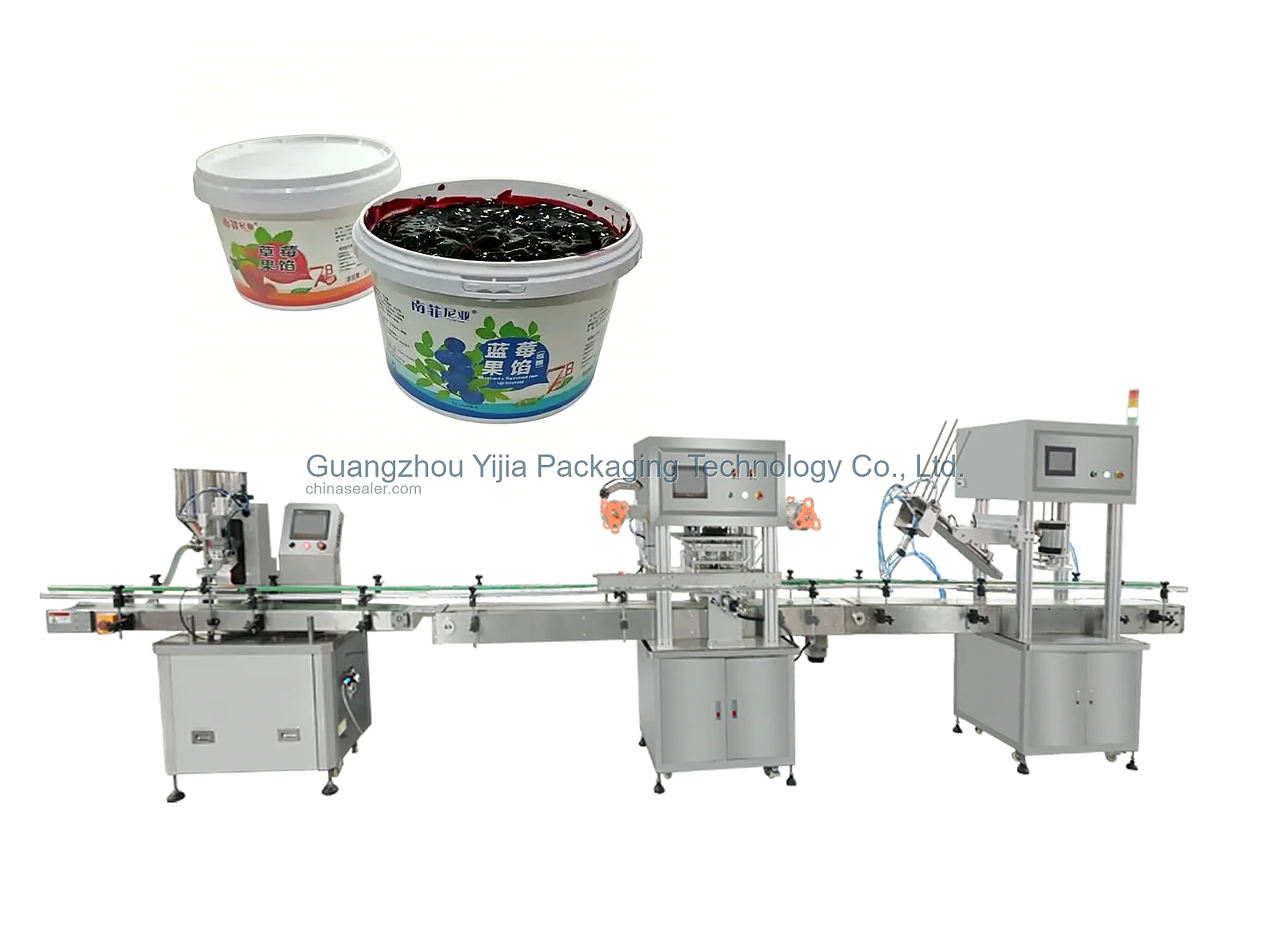
Actual equipment photos from the factory. Confirm the final configuration with the containers, product, sample trials and agreed equipment scope.


Selection points
These details decide machine structure, changeover method and quotation accuracy.
Inner Aluminum Foil Sealing at Pail/Can Mouth
Press Inner Cap, Outer Cap, or Snap Cap
Diameter, Rim, Foil Material, and Cap Structure
Food, Powder, Paste, Daily Chemical, and Chemical Pail Packaging
Selection points
Photos, key dimensions, and packaging material details are enough to start; if details are incomplete, we will review the direction first.
Selection points
YJ-LBFK-ZD320
Confirmed based on container size, material state, process, number of stations, and target speed.
Bottles, jars, pails, and paper cans
Food, sauces, daily chemicals, cosmetics, medical consumables, and chemical packaging
Inner aluminum foil sealing and leak prevention.
Send product, container, material, dimensions and target output.
Confirm configuration by process, changeover, cycle time and line needs.
Test sealing, filling, labeling or inspection results when needed.
Quote after confirming power, layout, lead time and spare parts.
Configuration selection
Direct foil heat pressing, in-cap induction lining, standalone cap pressing and large-diameter pail sealing should be compared by rim, material set, cycle and acceptance method.
Confirm sample compatibility, effect and basic parameters first.
Focus on station count, operating rhythm and changeover method.
Evaluate feeding, discharge, coding, inspection and floor space separately.
Bottle / Pail / Can Sealing Equipment
Selection points
It can be initially assessed based on standard structure, but not just by name. Need to confirm pail mouth diameter, pail height, sealing foil material, pressing time, then check if diameter, number of stations, sealing method, and conveying speed match the on-site cycle time.
Non-contact induction aluminum foil sealing is affected by plastic pail, wide-mouth pail, food pail dimensions, aluminum foil liner, composite liner, cap structure, and the state of sauces, condiments, powders. The clearer the samples, the easier to determine mold, temperature, pressure, torque, or inspection method.
Can be configured as benchtop, semi-auto, or inline conveyor. If there are upstream/downstream equipment, need to simultaneously confirm conveying height, direction, speed, and signal interface.
It is recommended to review sample test results, key dimensions, consumable specifications, power/air supply, cleaning and maintenance methods, and spare parts list to avoid modifying molds or adjusting stations on site.
Send Sample Information
Send empty containers, filled-rim photos, diameter and height, both sides and layers of the foil, inner/outer or snap caps, target cycle, changeover sizes and peel, leak and appearance criteria.