Solution topic
Heat Sealing Aluminum Foil, Induction Liners and Press Capping Routes for Paper Cans and Plastic Pails
Focusing on paper can and plastic pail aluminum foil sealing and press capping machines, compare air-cooled, water-cooled and online induction aluminum foil equipment, and connect
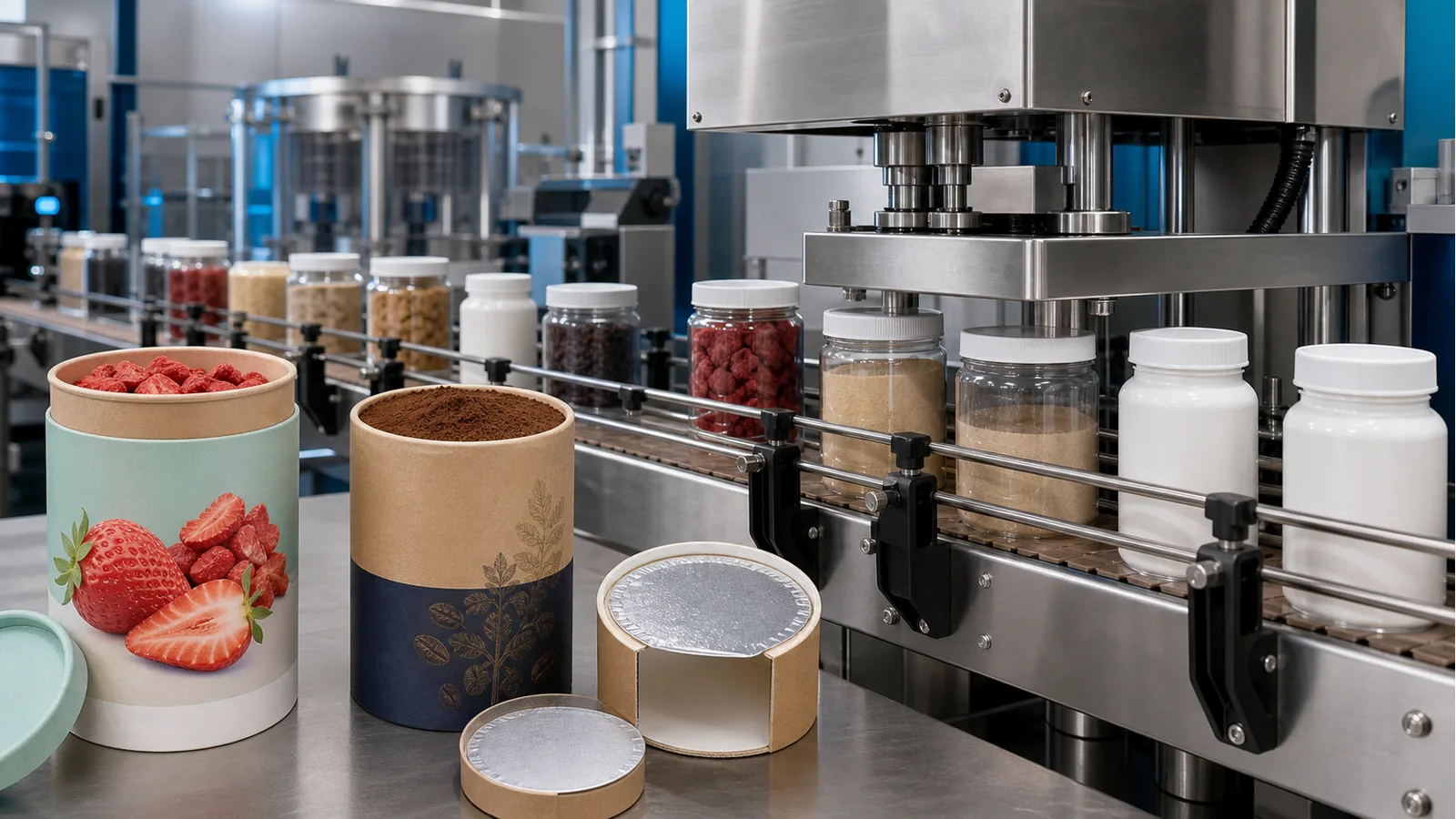
- Direct film heat sealing and induction sealing with lid liners are two different processes. The can mouth flatness, membrane structure and outer lid type determine whether to use a dedicated sealing and capping machine or a step-by-step integrated line.
Solution summary prepared for you
- For paper cans and plastic pails, first determine whether the aluminum foil is a direct film or a cap liner, then enter the heat sealing or induction sealing route respectively.
- The paper can/plastic pail aluminum foil film sealing and capping machine is suitable for the combination of direct film and outer cap. The can mouth, film, and cap depth should be trial-produced as a set.
- Air-cooled, water-cooled, and online structures of induction equipment are only compared in the cap liner route, and the choice is based on samples and operating conditions.
Route comparison
- Suitable for paper cans, plastic pails, and other packaging where aluminum foil film is directly placed and an outer cap is pressed after film sealing.
- Direct film sealing and outer cap pressing are connected by a dedicated main machine, reducing can/pail transfer between the two processes.
- The rim plane, film heat seal layer, pail body force resistance, and outer cap structure must all match each other. Any change may require adjusting changeover parts.
- If the cap structure requires independent screwing, or the can/pail is prone to deformation under continuous capping, the sealing and cap closing should be evaluated separately.
- The paper can/plastic pail aluminum foil film sealing and capping machine handles direct film heat sealing and outer cap pressing. Tooling is trial-produced according to the can mouth and cap depth.
- Suitable for plastic cans and pails where the outer cap contains a matching aluminum foil liner and the plan is to complete screw capping and induction inner sealing in steps.
- The cap liner is processed by induction after the cap is in place, and can be connected in sequence with the already configured screw capping station.
- Can/pail material, rim condition, liner layers, and cap closing position need to be tested together. Air-cooled or water-cooled structures cannot be chosen by name alone.
- If the packaging does not have a cap liner, or physical sealing tests do not support the induction route, switch to heat sealing equipment that matches the direct film.
- The packaging is first closed with an automatic screw capping machine or automatic screw capping and pressing machine, then benchtop air-cooled, water-cooled, or online induction foil sealing machines are compared based on operating cond...
- Suitable for large-diameter pails, frequent specification changes, or scenarios where film sealing and outer cap actions need to be operated and inspected separately.
- Large-diameter pails can separate heat sealing and cap closing into independent stations, making it easier to change pressing or screwing equipment for different caps.
- The step-by-step process requires arranging pail body transfer and positioning. Each diameter still needs to verify film material, tooling, and cap closing force.
- When the project clearly requires direct film sealing and outer cap pressing to be completed continuously, priority should be given to trial-producing the paper can/plastic pail aluminum foil film sealing and capping machine.
- A large-diameter pail heat sealing machine or bottle/can/pail sealing machine handles the direct film, and then an automatic screw capping and pressing machine is selected based on the cap type.
Associated Equipment / Consumables
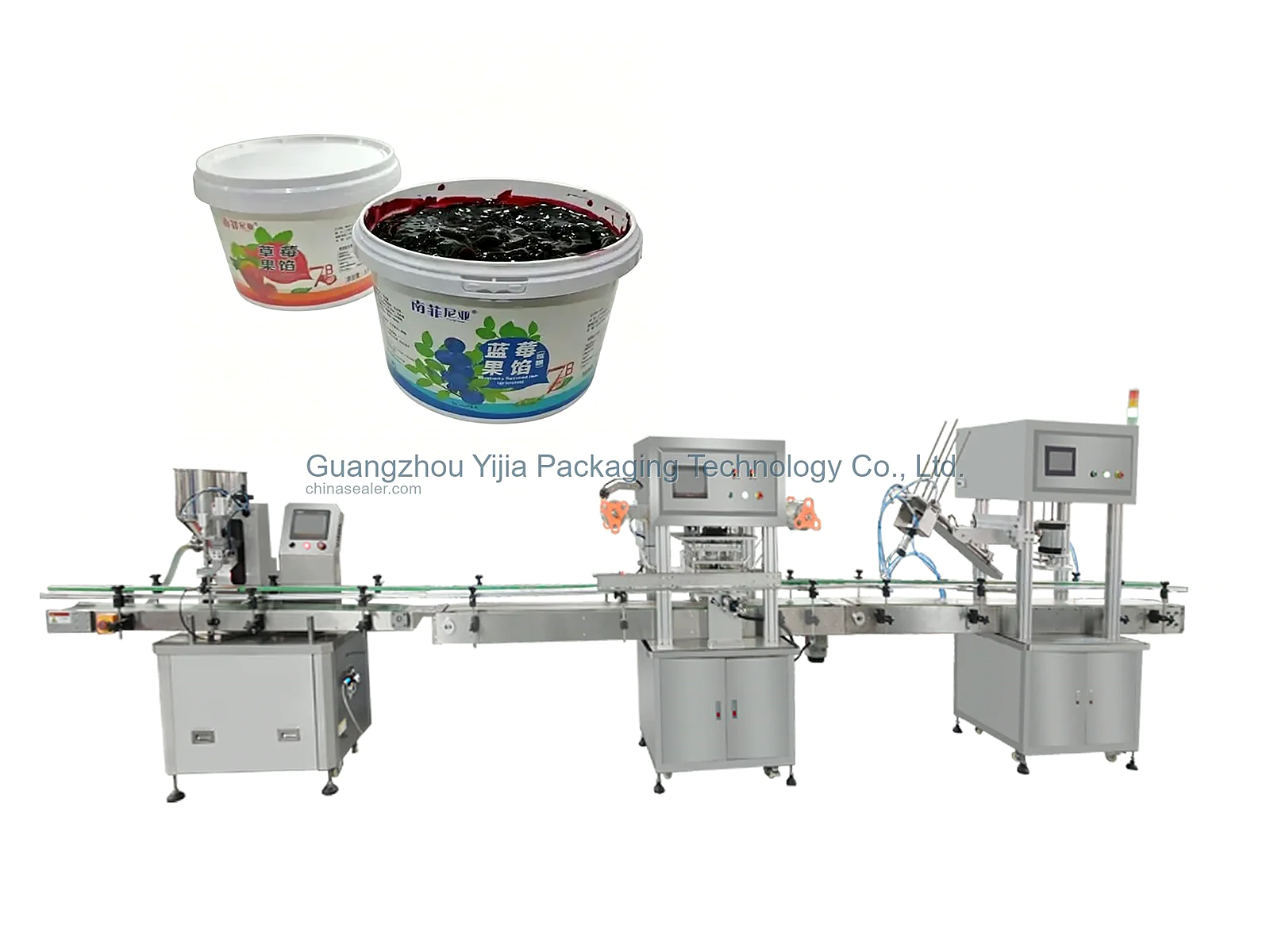 Paper Can and Plastic Pail Foil Heat Sealing and Capping Machine
The machine places foil directly on a paper can, plastic can or pail rim, heat-seals it, then presses the required closure. This differs from induction sealing a foil liner inside a tightened cap. Trial the container,...
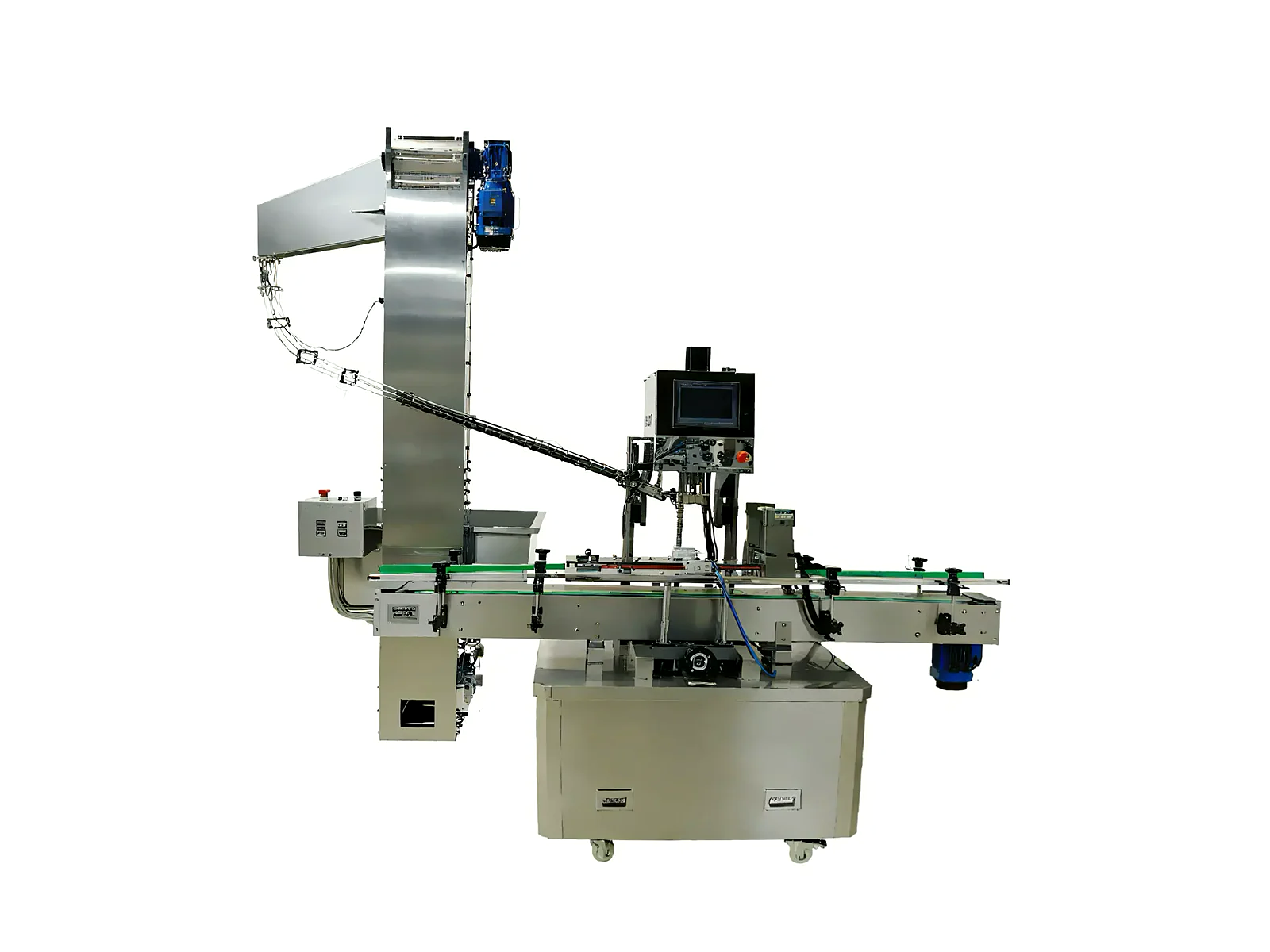 Automatic Screw Capping and Press-On Capping Machine
Automatic Screw Capping and Press Capping Machine: Direct film sealing and outer cap pressing; The combination of direct aluminum foil film and outer cap can be handled by a dedicated main machine for film sealing and...
 Date & Batch Inkjet Printer
Check the combination of can mouth, film, and cap; First separate direct film heat sealing from cap liner induction, then check can mouth flatness, pail body force resistance, and cap clos...
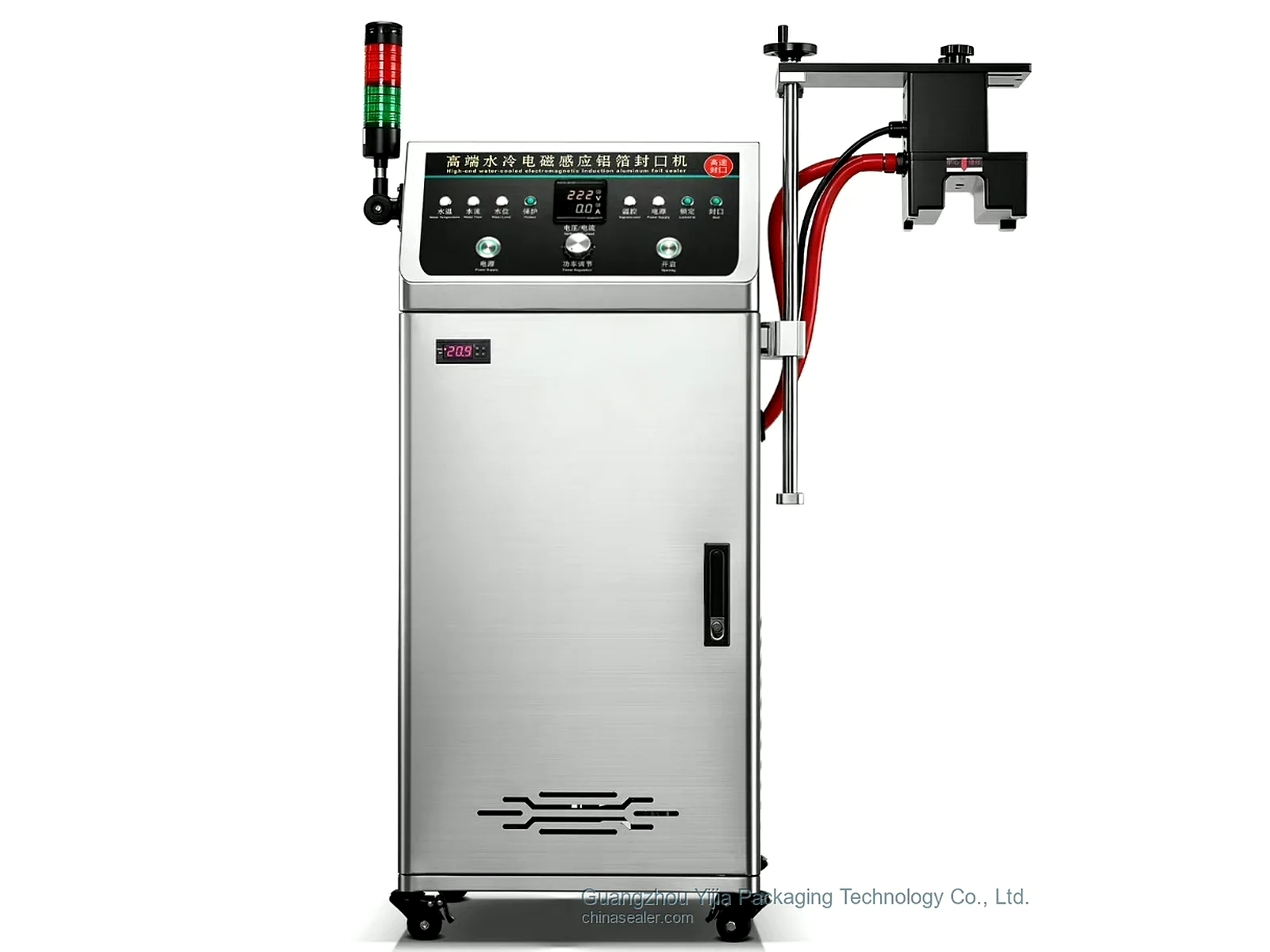 Inline Induction Foil Sealing Machine
Direct film sealing and outer cap pressing; The combination of direct aluminum foil film and outer cap can be handled by a dedicated main machine for film sealing and capping. To...
Core process
Sample details
The can/pail rim and wall affect positioning, sealing tooling, and capping force. Rebound or deformation also needs to be observed on the physical sample.
Please provide can/pail samples or multi-angle photos, and mark the rim, pail height, appearance, and pail body material.The heat seal layer of direct film and the induction layer of cap liners have different purposes. Specification data must clearly correspond to the packaging position.
Please separately describe the layer structure of the aluminum foil film or liner, the feeding form, and its matching relationship with the can mouth or cap.Outer cap closing may be screw-on, snap-on, or press-in. The action direction and force position must be determined from the cap sample.
Please send the inner cap, outer cap, and matching can/pail, and state the expected cap assembly order and opening method.Station cycle time and number of changeovers affect whether to use an integrated machine or step-by-step configuration, and also relate to upstream and downstream buffering.
Please list the main specifications, production plan for each variety, shifts, and whether continuous line integration is needed.The contents determine the upstream filling method. Residual powder, liquid, or hanging material on the can mouth will directly enter the sealing process evaluation.
Please describe the material form, filling method, rim condition after filling, and the planned filling equipment to be connected.Common selection mistakes
View detailed technical notes
First determine the position of the aluminum foil in the packaging
For paper cans with powder, plastic pails with sauce, or other can and pail packaging, you first need to determine whether the aluminum foil material is placed at the can mouth or inside the cap to decide on sealing and cap closing equipment.
Heat sealing, induction sealing, and capping each have their own prerequisites
Film directly placed at the can mouth uses the heat sealing process, while cap liners use the induction process. The outer cap may be screw-on, snap-on, or press-in. The can/pail, film, liner, and cap should be submitted as a complete packaging set.
Direct film placement uses a sealing and capping main machine
The paper can/plastic pail aluminum foil film sealing and capping machine is designed for the combination of direct aluminum foil film and outer cap, and can connect film sealing and capping. Can mouth tolerance, film heat seal layer, pail body force resistance, and outer cap depth need to be observed together during trial production. Before film sealing, check for residue on the rim after filling. After capping, retain samples to check the film surface, cap position, and pail body shape. If the cap needs to be screwed on, separate the cap closing action into an independent station.
Cap liners enter the induction process
When there is already an induction aluminum foil liner inside the cap, first use an automatic screw capping machine or automatic screw capping and pressing machine to close the outer cap, then compare benchtop air-cooled, water-cooled, and online induction foil sealing machines. The cooling form and operation mode should be determined by sample testing and on-site conditions. Test records should cover liner sealing, cap closing, and can/pail material performance separately, and equipment should not be specified based only on diameter or planned cycle time. Labeling and checkweighing stations are connected after the induction result is confirmed.
Large-diameter pails can be processed in steps
For large-diameter pails where film sealing and cap closing need to be separated, a large-diameter pail heat sealing machine or bottle/can/pail sealing machine can handle the direct film, and then an automatic screw capping and pressing machine completes the corresponding outer cap action. Each main diameter should be tested with the corresponding pail body, film, and cap. When specifications change, also check tooling, positioning, pail body force resistance, and transfer methods between stations.
Samples must correspond to the specific process
Clearly indicate the purpose of the can/pail, direct film, cap liner, and outer cap. During testing, record the rim condition, sealing surface, and sample performance after cap closing.
Dedicated Main Machine for Combined Film Sealing and Press Capping
When direct film sealing and press-in outer lids are required, use the paper can/plastic pail aluminum foil sealing and press capping machine as the main unit for mold trials.
Changeover Scope Determined by Both Cans/Pails and Lids
Changes in can mouth or lid type affect the sealing, positioning and lid-closing components. For multi-specification shared machines, clarify the change parts and adjustment steps.
Upstream Filling Selected Separately by Material
For liquids or pastes, evaluate servo piston liquid filling machines; for pail metering, compare weighing-type pail filling machines or food pail filling and sealing machines. The choice still depends on the product and filling method.
Downstream Section Completes Labeling, Batch Coding and Weight Verification
After sealing and capping, cans and pails can be connected to round/square bottle labeling machines, collaborative date/batch coding machines and online checkweighers. Curved surface application and weight rules are set with finished samples.
Common questions
Do both paper cans and plastic pails require heat sealing?
Directly placed aluminum foil film is usually tested using the heat sealing route. Only when the packaging uses an induction liner inside the cap should you move to comparing induction foil sealing equipment.
Can a plastic pail be sealed with film first and then capped?
It can be evaluated, but you also need to check the flatness of the pail rim, the pail body's resistance to force, the heat seal layer of the film, and the outer cap action before deciding on an integrated machine or separate stations.
Can one main machine be shared for multiple diameters?
Similar specifications can be evaluated for changeover using corresponding tooling, but cans and pails with larger differences need to have positioning, force resistance, and sealing surfaces checked separately.
Can we inquire before the dimensions are finalized?
You can first determine the process branch based on clear photos, rim dimensions, and cap structure, but tooling and sealing conditions must be confirmed after receiving samples.
How to connect marking and inspection after sealing and capping?
After sealing and capping, you can configure a labeling machine for round and square bottles, a collaborative date/batch coding machine, or an online checkweigher, and coordinate container transfer in advance.
What should be provided first when packaging specifications are not finalized?
First submit photos of the cans and pails, rim, film and cap structure, contents, and production schedule. We will then distinguish between heat sealing, induction sealing, and cap closing actions, and list the sample submission items.