Container and film compatibility
Plastic reagent bottles, cups, strips and reagent boxes or cartridges; confirm fixtures separately for the actual sealing surface, dimensions and layout.
Container and film compatibility
Need to film-seal containers for fluorescence or antigen test reagents, extraction solutions or buffers? Assess the fixture and sealing station around reagent bottles, cups, strips or cartridges. Send actual containers and sealing film to check the sealing surface, positioning, opening method and trial cycle before choosing the configuration.
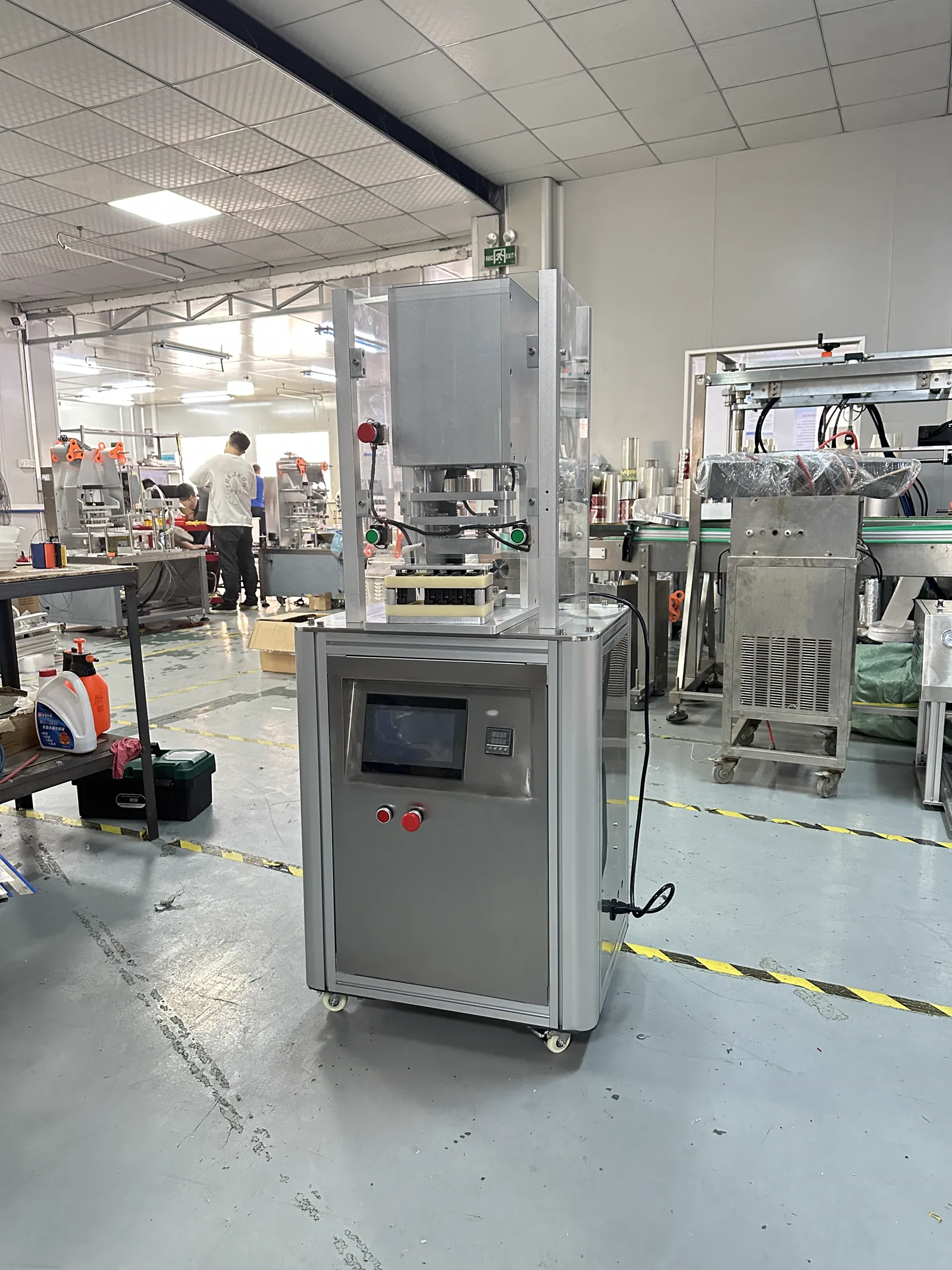
Actual equipment photos from the factory. Confirm the final configuration with the containers, product, sample trials and agreed equipment scope.

See Actual Working Conditions First
The actual machine footage shows manual fixture loading, pressing and removal. Automatic handling, film feed, filling and line integration require separate assessment.
Plastic reagent bottles, cups, strips and reagent boxes or cartridges; confirm fixtures separately for the actual sealing surface, dimensions and layout.
Match the sealing film to the container material and trial seal appearance, peel and seal-integrity requirements.
See Actual Working Conditions First
The more complete the samples, packaging materials, and site information, the easier it is to determine equipment route, changeover scope, and integration boundaries.
See Actual Working Conditions First
Fixture positions, sealing time and manual handling determine the cycle; confirm it through sample trials.
The actual machine footage shows manual fixture loading, pressing and removal. Automatic handling, film feed, filling and line integration require separate assessment.
Plastic reagent bottles, cups, strips and reagent boxes or cartridges; confirm fixtures separately for the actual sealing surface, dimensions and layout.
Match the sealing film to the container material and trial seal appearance, peel and seal-integrity requirements.
Plastic reagent bottles, cups, strips and reagent boxes or cartridges; confirm fixtures separately for the actual sealing surface, dimensions and layout.
Match the sealing film to the container material and trial seal appearance, peel and seal-integrity requirements.
Fixture positions, sealing time and manual handling determine the cycle; confirm it through sample trials.
Common Configuration Routes
Packaging projects for fluorescence and antigen test reagents, sample extraction solutions, assay buffers, clinical chemistry reagents and immunoassay reagents can be submitted for container-and-film assessment. A reagent name does not establish compatibility with a rim, well layout, film or opening method. Sealing a test cassette's outer pouch is a different operation.
Fixture positions, sealing time and manual handling determine the cycle; confirm it through sample trials.
Agree cleanliness, cleaning, material compatibility and validation documentation separately. Sealing does not sterilize or establish reagent stability.
Container and film compatibility
See Actual Working Conditions First
Not necessarily. Feeding stability, film placement action, sealing dwell time, discharge, and upstream/downstream cycle rates can all become bottlenecks. Evaluation must consider the entire process flow.
Do not assume shared tooling from the reagent or container name. Check each rim or well layout, sealing surface, spacing, support and film. Different containers generally need different fixtures or tools and a new sealing trial.
Send Samples and Requirements
Send container photos or drawings, sealing film, contents and target cycle to assess tooling, sealing conditions and configuration.