Solution topic
Small-Dose Filling for Reagent Bottles and Dropper Bottles: Magnetic Pump and Servo Piston Routes
For low-viscosity small-dose liquids, evaluate a magnetic pump main machine; for higher viscosity or when servo control is needed, compare piston and volumetric filling equipment.
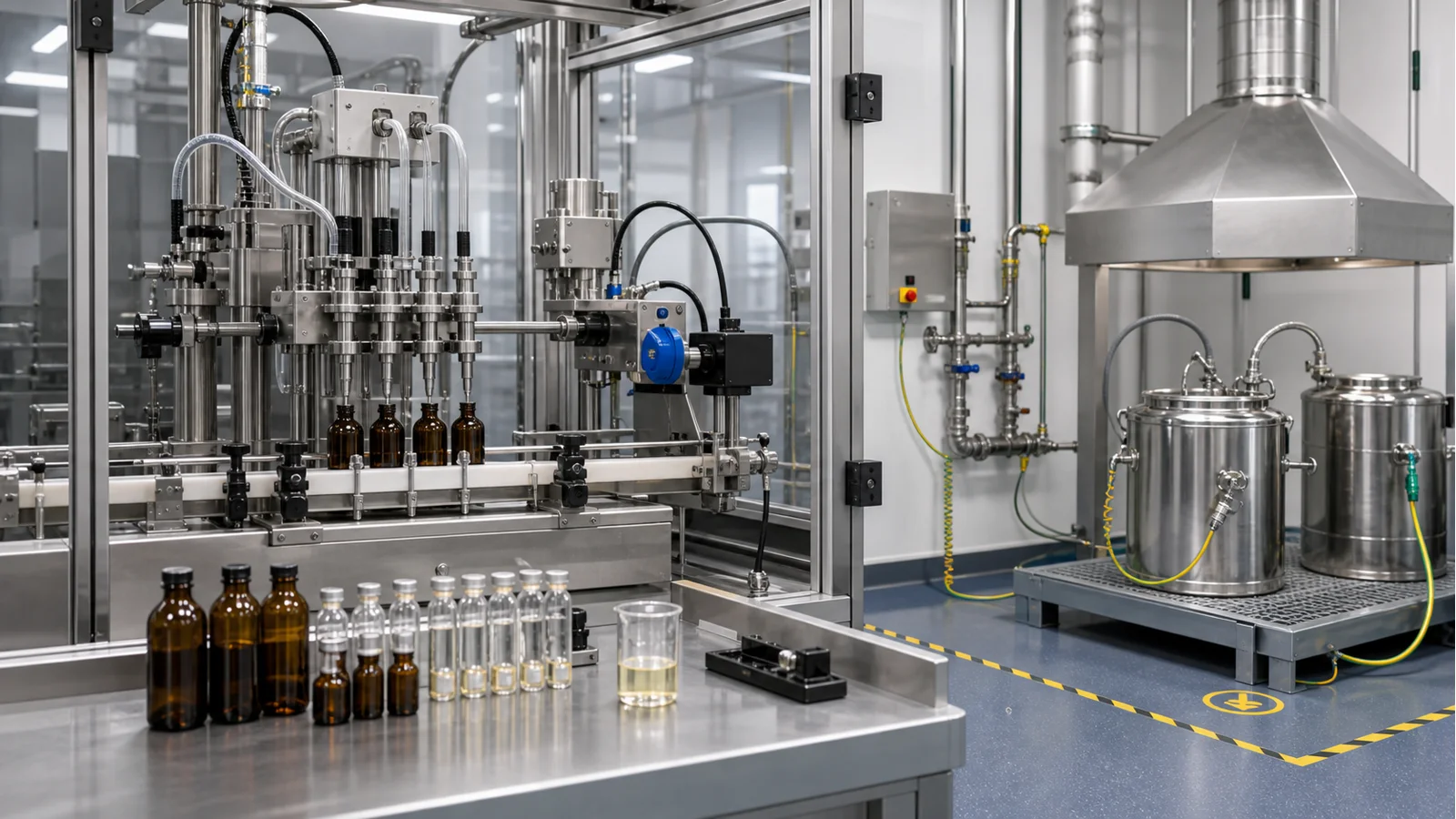
- Small fill volume does not mean material compatibility and container positioning can be ignored. For reagent bottles, essence bottles, or perfume bottles, compare filling methods based on flowability, bottle mouth, and contact part requirements.
Solution summary prepared for you
- For reagent bottles and dropper bottles, first compare magnetic drive pump, servo piston, and liquid metering filling based on sample liquid flow, fill volume, bottle mouth, and wetted parts requirements.
- The reagent tube aluminum foil sealing machine only handles tube mouths using the corresponding foil. The round and square bottle labeling machine and date batch code inkjet coding machine are located after the filling finished product.
- Sample liquid, all bottle types and caps, fill volume list, contact requirements, and label layout are the most useful information for small-dose equipment and changeover judgment.
Route comparison
- Suitable for reagent or daily chemical liquids with good flowability, stable bottle mouth positioning, and small-dose volumetric filling requirements.
- A magnetic pump small-dose filling machine is convenient for verifying metering, nozzles, and cleaning with low-viscosity small-bottle liquids, making it a good starting point for a lightweight route.
- When material viscosity, particles, foaming, or compatibility changes, the magnetic pump route may no longer be suitable; you cannot only look at fill volume.
- When the sample liquid is viscous, contains particles, or measured metering and end-of-fill cutoff do not meet requirements, switch to other volumetric structures for comparison.
- For low-viscosity sample liquids, first evaluate a magnetic pump small-dose filling machine and verify contact requirements with formal bottles and liquids.
- Suitable for projects where sample liquid state, fill volume range, or control method has been tested and confirmed to better suit a piston or conventional volumetric route.
- Servo piston liquid filling machines and liquid volumetric filling machines offer different metering directions and can cover sample liquids or fill volume tasks unsuitable for magnetic pumps.
- Liquid-contact structure, cleaning disassembly, bottle positioning, and multi-spec parameters all need separate verification; you cannot rely solely on 'servo' to determine metering results.
- When the bottle-liquid combination is not finalized, or there is no clear changeover and cleaning method, do not fix the piston and piping configuration prematurely.
- When sample liquid and fill volume are better suited to a piston, compare servo piston main machines and also evaluate liquid volumetric filling machines.
- Suitable for products that require aluminum foil sealing at the reagent tube mouth after filling and are willing to verify sealing with formal tubes and foils.
- A reagent tube aluminum foil sealing machine can complete sealing of matching tube mouths and foils in dedicated fixtures and produce sealed samples.
- Tube mouth size, flatness, foil layer structure, and positioning fixtures must match; this machine does not replace cap assembly for dropper bottles.
- When the packaging does not include reagent tube aluminum foil sealing, or foil and tube mouth are not confirmed, do not default to adding this machine.
- When reagent tubes use aluminum foil process, arrange a reagent tube aluminum foil sealing machine for independent trial sealing.
- Suitable for small bottle packaging where bottle type and filled product are stable and product labels and batch information need to be added.
- A round/square bottle labeling machine handles bottle-surface labels; an inkjet date/batch coder collaborates as needed for variable information; the two can be arranged separately.
- Small bottle curvature, cap height, label size, and printing surface all limit the layout; after changing bottles, re-verify positioning.
- When label and batch content are not yet determined, or the bottle body lacks a stable labeling surface, do not lock in continuous marking stations prematurely.
- After filling or sealing products are stable, choose labeling based on the bottle surface and configure inkjet date/batch coding in reserved areas.
Associated Equipment / Consumables
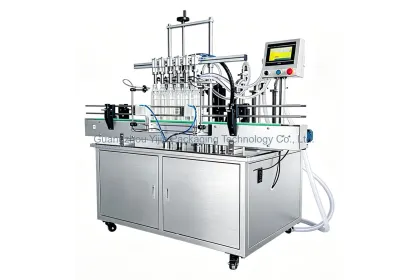 Liquid Quantitative Filling Machine
Liquid Quantitative Filling Machine is configured for Material Quantitative Filling on Bottles, pails, cans, flexible pouches.
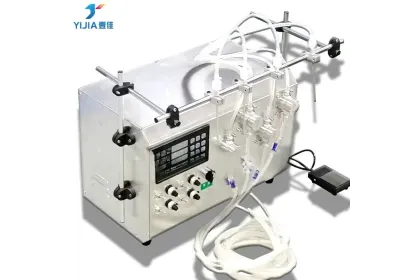 Magnetic pump small-dose filling machine
Combined confirmation of sample liquid and fill volume; After changing to a different sample liquid in the same small bottle, pumping, suck-back, and cleaning performance may...
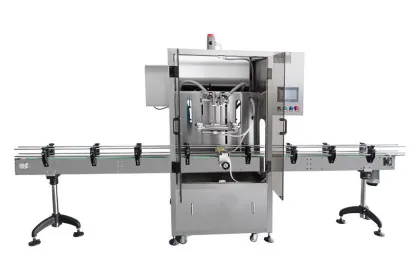 Servo Piston Liquid and Paste Filling Machine
Combined confirmation of sample liquid and fill volume; After changing to a different sample liquid in the same small bottle, pumping, suck-back, and cleaning performance...
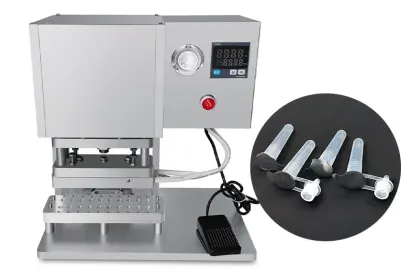 Reagent Tube Aluminum Foil Sealer
Reagent tube aluminum foil sealing branch; If dropper bottles or ordinary small bottles do not use this tube mouth aluminum foil process, the reagent tube sealing machine should not...
Core process
Even for small fill volumes, observe flow, foaming, hanging liquid, and contact part requirements, and establish a metering method with formal sample liquid.
For low-viscosity small doses, first evaluate a magnetic drive pump main machine. If the material or fill volume is more suitable for a piston, then compare servo piston and liquid metering equipment.
Reagent tubes using aluminum foil sealing can be connected to a reagent tube aluminum foil sealing machine. The tube mouth, foil, and fixtures must be trial-sealed as a set.
For multi-material switching, arrange food-grade seals, cleaning consumables, and changeover parts around wetted part disassembly, cleaning, and re-metering.
The round and square bottle labeling machine handles compatible small bottle labels, while the date and batch code inkjet coding machine writes variable information in the area left on the bottle or label.
During trial production, retain finished products from filling, sealing, labeling, and coding separately, and verify fill volume and appearance according to the agreed method.
Sample details
First describe the purpose, flow, foaming, and hanging liquid behavior of each sample liquid, and list the corresponding fill volume specifications in the same list.
Sample liquid or flow video, material description, all target fill volumes, working temperature, wetted material requirements.Bottle shape, mouth, dropper or cap determine nozzle entry, bottle clamping, and label available area.
Actual bottle and cap samples, inner and outer dimensions of bottle mouth, bottle height and shape, finished product after dropper assembly.Metering requirements should specify sampling method and acceptance range, while production arrangement is used to compare single machine, multi-spec changeover, or downstream integration.
Fill volume acceptance method, planned output, shifts, manual positions, changeover frequency for different bottle-liquid combinations.For multi-product projects, record which wetted parts are disassembled during changeover, what cleaning medium is used, and when to re-sample for confirmation.
Changeover sequence, cleaning steps, cleaning consumables, seal and nozzle replacement parts, first article release method.Reagent tube aluminum foil, bottle labels, and date batch codes are different downstream processes. Provide packaging materials and layouts separately, arranged according to the actual finished product.
Foil and sealing samples, label size and application surface, batch code content, printing position, downstream single machine or line requirements.Common selection mistakes
If sample liquids with the same fill volume have different viscosity, foaming, or hanging liquid, the pumping and suck-back performance will also change. Capacity alone cannot determine the main machine.
Using standard wetted parts without confirming material compatibility may result in unsuitable seals or cleaning solutions.
Liquid left at the bottle mouth after the nozzle withdraws can interfere with reagent tube sealing, dropper assembly, or bottle cleanliness. This needs to be observed during trial filling.
Small bottle curvature, dropper caps, and label sizes affect each other. If labeling and batch code layout are finalized last, a stable area may not be found.
Manual bottle placement during sampling differs from stable production changeover, cleaning, and marking. A small number of samples cannot directly infer the entire line scope.
View detailed technical notes
Small Fill Volumes Also Start from Sample Liquid Behavior
For small-dose filling, first assess how the sample liquid flows, whether it foams or clings, and whether wetted parts are compatible. Fill volume and planned output only solve part of the problem; formal selection should also include bottle mouth positioning, cleaning, and changeover in trials.
Use Sample Liquid to Differentiate Three Filling Structures
For low-viscosity small-bottle liquids, you can first trial a magnetic pump small-dose filling machine. If the actual material, fill volume, or control method suits a piston better, compare a servo piston liquid filling machine. A liquid volumetric filling machine can also serve as another metering route.
Multi-Volume Co-Machine Requires a Complete Changeover Checklist
Whether multiple fill volumes can share one machine cannot be determined by changing parameters alone. Nozzles, bottle positions, liquid-contact tubing, and seals may all change with the bottle-liquid combination. You should list the scope of change parts and redo first-piece metering after each changeover.
Reagent Tube Sealing Is Not the Back-End for All Small Bottles
A reagent tube aluminum foil sealing machine only serves sealing tasks that use the corresponding tube mouth and foil material. Ordinary dropper bottles, essence bottles, or perfume bottles without this process should be handled according to their actual caps and secondary packaging, not mixed into a dedicated sealing route.
Liquid Contact and Cleaning Conditions Confirmed Separately
When the sample liquid has special contact or cleaning requirements, first submit the material description and cleaning medium, then confirm food-grade seals, cleaning consumables, and change parts. The liquid-contact configuration should be finalized after compatibility tests.
Label and Batch Layout Follow Small Bottle Design
Small bottle labels are often limited by curvature, dropper cap height, and available labeling area. A round/square bottle labeling machine must be verified with actual bottles; an inkjet date/batch coder serves as an optional collaborative station, arranged according to the printable area on the bottle surface or label.
First Differentiate Pump Types, Then Finalize with Formal Samples
For the first inquiry, you can submit the sample liquid name, flow video, fill volume list, bottle cap photos, and label sketches. This information is enough to first compare magnetic pump and piston directions; after formal samples arrive, complete metering, sealing, and labeling trials.
Common questions
Are magnetic drive pumps suitable for all small-volume liquids?
Not necessarily. For low-viscosity small-dose liquids, you can first evaluate a magnetic drive pump. If the material is more viscous, or the fill volume range or metering method differs, then compare servo piston and liquid metering routes.
Can corrosive reagents be filled?
A compatibility assessment can be done first, but you must provide the material composition or safety data sheet, concentration, working temperature, and cleaning medium. The wetted parts conclusion must be confirmed by sample liquid testing.
Can one small-dose machine switch between multiple bottle types?
Multiple specifications can be evaluated. If fill volumes and bottle mouth sizes differ significantly, the nozzle, wetted parts, bottle positioning, and parameters may need a complete changeover.
Can aluminum foil sealing and marking be done after filling?
It can be integrated with compatible labeling machines for round and square bottles, and inkjet coding machines for date and batch codes. If reagent tubes use aluminum foil sealing, a dedicated sealing machine can also be evaluated separately.
Can we discuss the solution first without physical samples?
You can first provide the material name, fill volume list, and bottle photos to determine the direction. Metering, wetted parts, and sealing confirmation still require formal sample liquid and packaging materials.
How to handle residual liquid at the reagent bottle mouth?
Observe whether liquid hangs on the nozzle after it withdraws, and whether residual liquid interferes with sealing, dropper assembly, or labeling. If there are issues, adjust the filling and liquid contact solution first.