First verify applicable objects
Suitable for can, valve, and inner bag combinations in two-component aerosol systems; interface, dimensions, materials, and pressure ratings must be confirmed by samples and technical data
Two-Component Aerosol Filling and Valve Sealing
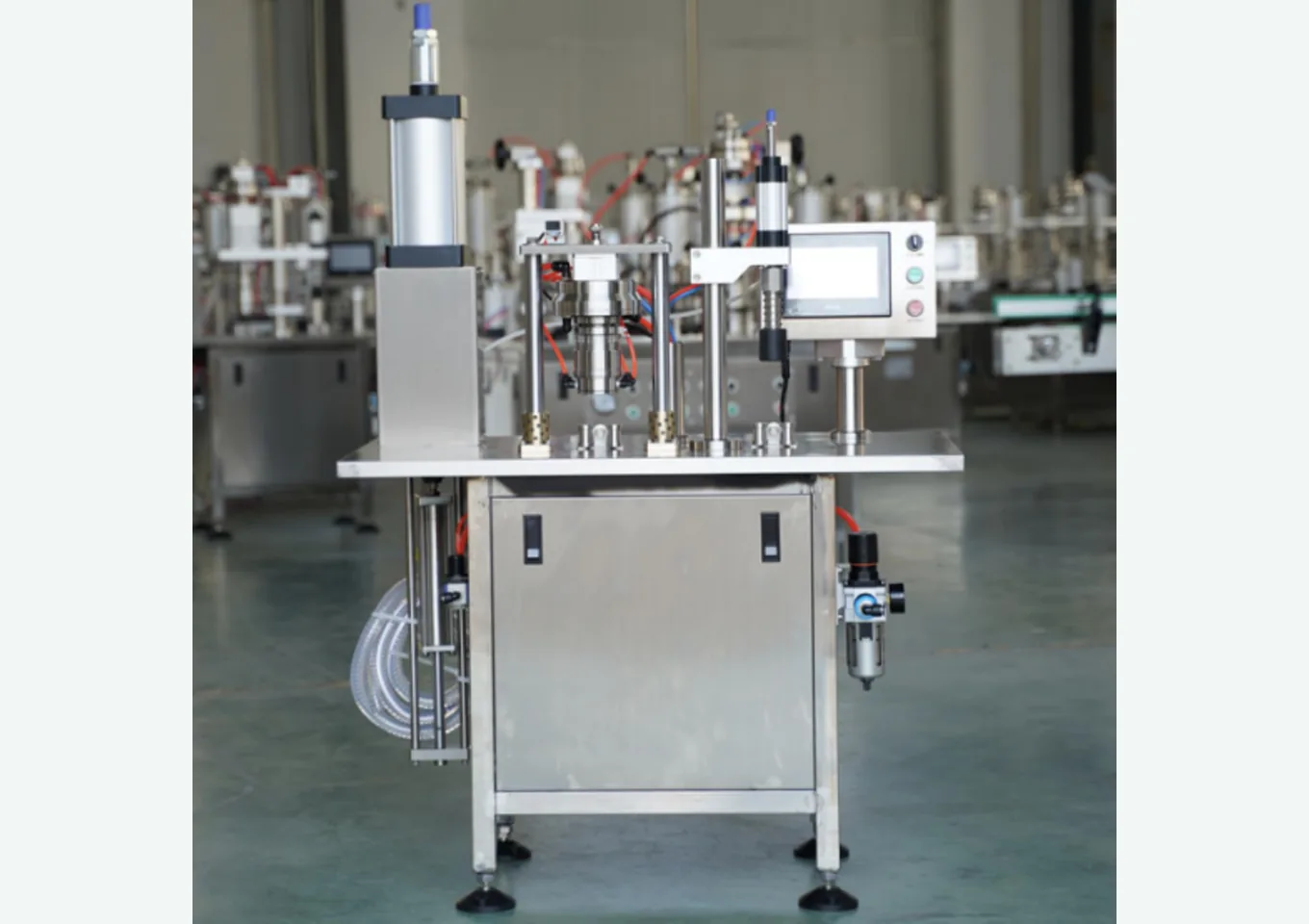
The two-component aerosol filling and sealing machine is configured around the can, inner bag or valve, product filling, sealing, and propellant process. Container and valve structure, material compatibility, pressure, safety zoning, and regulatory requirements must be confirmed by project documentation. Related part feeding, inspection, and protection are not included as default modules.
First see actual working conditions
Please provide the complete packaging system, product, propellant, pressure and seal standards, regulatory and safety requirements, target process, and site conditions.
Suitable for can, valve, and inner bag combinations in two-component aerosol systems; interface, dimensions, materials, and pressure ratings must be confirmed by samples and technical data
Cans, valves, inner bags, seals, and propellant form a complete system; any component replacement requires re-validation; container and valve preparation, product filling, valve assembly, sealing, optional propellant process, inspection, and discharge
Optional container and valve feeding, pressure process, leakage or weight inspection, rejection, data recording, and safety interlocks.
Please provide the complete packaging system, product, propellant, pressure and seal standards, regulatory and safety requirements, target process, and site conditions.
First see actual working conditions
The more complete the samples, packaging materials, and site information, the easier it is to determine the equipment route, changeover scope, and line integration boundaries.
First see actual working conditions
Please provide the complete packaging system, product, propellant, pressure and seal standards, regulatory and safety requirements, target process, and site conditions.
Confirmed based on container and valve supply, product filling, sealing, pressure process, inspection, and safety interlocks; no fixed values are published without project validation
Filling and valve sealing stations are configured per project; part feeding, pressure process, inspection, rejection, and safety interlocks are optional based on requirements
Suitable for can, valve, and inner bag combinations in two-component aerosol systems; interface, dimensions, materials, and pressure ratings must be confirmed by samples and technical data
Liquids, pastes, or other products compatible with containers, valves, and inner bags; viscosity, corrosiveness, temperature, and cleaning conditions must be specified
Cans, valves, inner bags, seals, and propellant form a complete system; any component replacement requires re-validation
Container and valve preparation, product filling, valve assembly, sealing, optional propellant process, inspection, and discharge
Evaluate fixtures, filling parts, sealing tools, part feeding, and program switching based on can, valve, inner bag, and filling range
Determine equipment dimensions, power, air supply, maintenance space, and upstream/downstream interfaces based on liquid contact system, pressure medium, safety zoning, ventilation interlocks, inspection, and conveying
Common configuration routes
The more complete the samples, packaging materials, and site information, the easier it is to determine the equipment route, changeover scope, and line integration boundaries.
Confirm can, valve, inner bag, seal, pressure rating, and component compatibility.
Test filling, valve assembly, sealing, and necessary pressure processes.
Check medium, zoning, ventilation, interlocks, inspection, and abnormal handling.
Accept according to agreed regulations, packaging system, sealing, pressure, and continuous operation standards.
Common configuration routes
Do not select from the machine name alone. Compare bag-on-valve structure, pressure process, filling sequence, leak testing and traceability boundary and confirm the boundary with actual samples.
Two-Component Aerosol Filling and Valve Sealing
Do not select from the machine name alone. Compare bag-on-valve structure, pressure process, filling sequence, leak testing and traceability boundary and confirm the boundary with actual samples.
First see actual working conditions
Please provide the complete packaging system, product, propellant, pressure and seal standards, regulatory and safety requirements, target process, and site conditions.
No. Complete can, valve, inner bag, propellant, pressure, and regulatory information are also required; otherwise, the process and equipment boundaries cannot be safely determined.
Not by default. The propellant type, pressure process, safety zoning, ventilation, and local compliance requirements must be confirmed separately.
Send samples and requirements
Send actual product or pack samples, critical dimensions, bag-on-valve structure, pressure process, filling sequence, leak testing and traceability boundary, target cycle, layout and acceptance criteria. Photos, videos or drawings can be reviewed first.