Solution topic
For meal tray roll-film sealing, check the tray rim first, or the benchtop machine first?
Choose YJ-TS120 from tray rim, material and roll-film heat-seal layer. Send tray and film samples to confirm tooling, cycle and acceptance method.
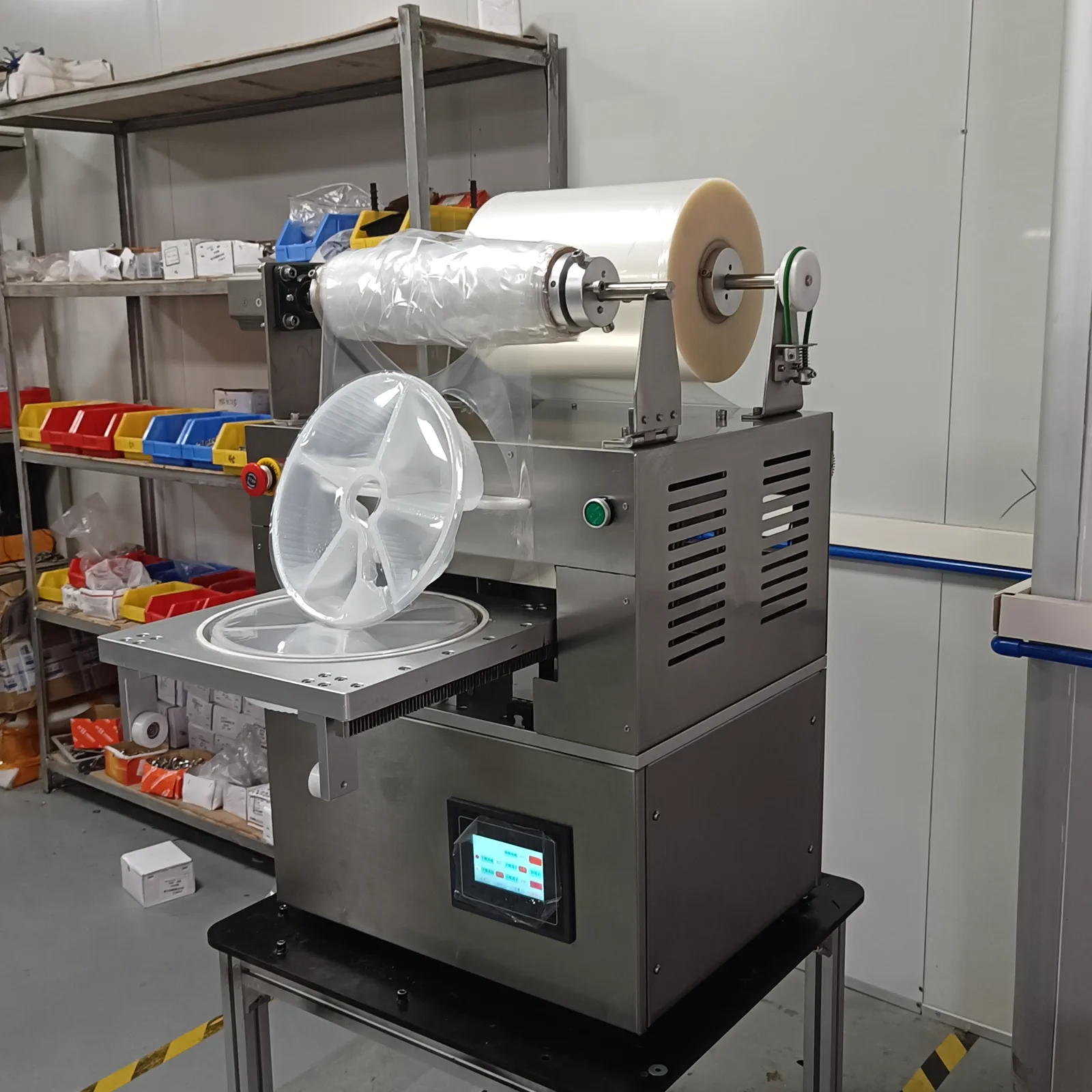
- The TS120 is a benchtop electric sealing machine that combines roll-film feeding with a single meal tray work station. Selection should start with the tray rim, tray material, and the heat-seal layer of the roll film, then confirm the mold, film feeding and cutting actions, manual loading/unloading cycle time, and acceptance methods.
Solution summary prepared for you
- Which tray, rim and roll-film samples are needed before choosing a benchtop meal tray sealer?
- Does the TS120 use roll film and a single tray station
- How to determine whether the tray sealing film can heat seal with the tray material
Route comparison
- Projects with very small demand, mainly to verify tray, film, and sealing performance.
- Simpler equipment and operation route, easy to determine whether heat sealing is feasible with a small number of samples.
- Operation relies on manual labor; consistency and sustained cycle time need to be evaluated with actual personnel.
- When electric cycling, touch operation, and stable repetitive actions are clearly required, the solution should not be judged only by hand press models.
- Can compare hand press cup/tray sealing machines, but they are not an equivalent automation replacement for the TS120.
- Tray projects with manual loading/unloading, using upper roll film and electric sealing cycle.
- The TS120 integrates single tray positioning, upper roll film feeding, and electric sealing in a compact station.
- Mold, film feeding, pressing, film cutting, temperature, and cycle time all need to be confirmed with actual samples.
- When tray specifications change frequently, or continuous automatic tray feeding and discharge are required, a single-station configuration is not suitable.
- Focus on evaluating the YJ-TS120 and complete trials with trays and the same batch of roll film.
- Projects that later require continuous positioning, film sealing, discharge, or discussion of filling interfaces.
- A chain-plate continuous cup/tray sealing line can place multiple processes on a continuous conveying platform for evaluation.
- The line is not a simple speed-up version of the TS120; the number of stations, cycle time, and interfaces need to be redefined.
- When the product is still in the trial stage and the tray type and film are not yet frozen, it is premature to lock in a continuous line.
- Treat the continuous line as a comparison item for expansion; the current single-machine need remains primarily the TS120.
Associated Equipment / Consumables
Benchtop Electric Meal-Tray SealerFirst-party media verifies a benchtop electric machine with a top film roll, single tray station, touchscreen and emergency stop. Tray range, tooling, film path, sealing cycle, utilities and safety logic are confirmed...
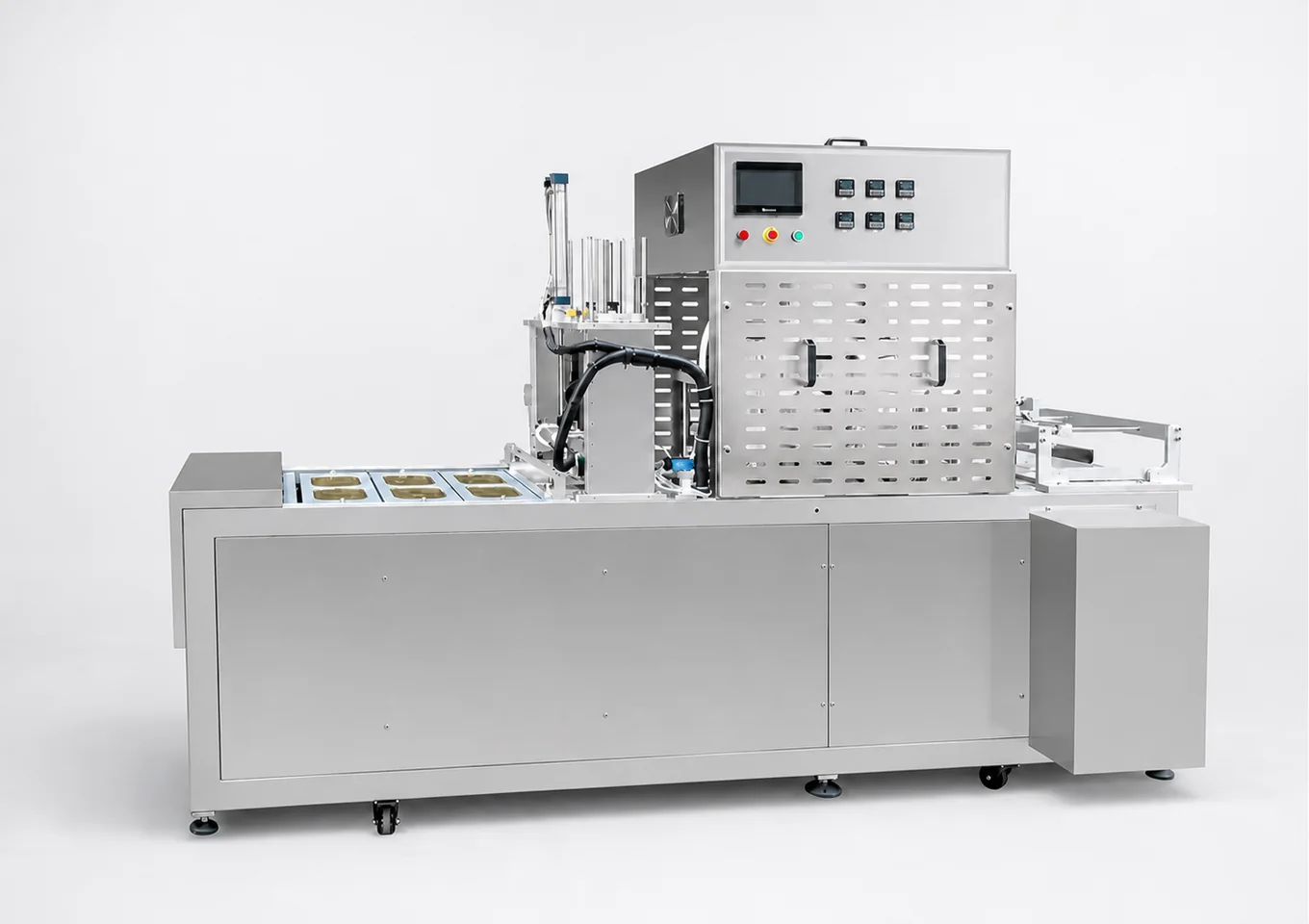 Chain Conveyor Cup and Tray Filling Sealing Line
Step 2: Single-station electric sealing; For manual loading/unloading projects, a single tray station can confirm positioning, film feeding, and electric sealing cycle...
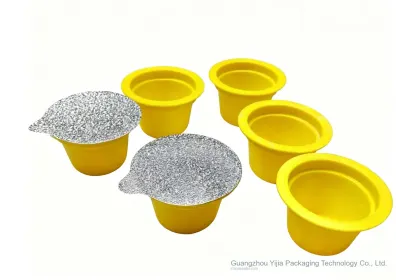 Cup Sealing Film and Easy-Peel Lidding Consumables
Step 1: Tray and roll film matching; First confirm whether the tray material, rim, and film heat seal layer can form repeatable trial conditions; Tray actual sample,...
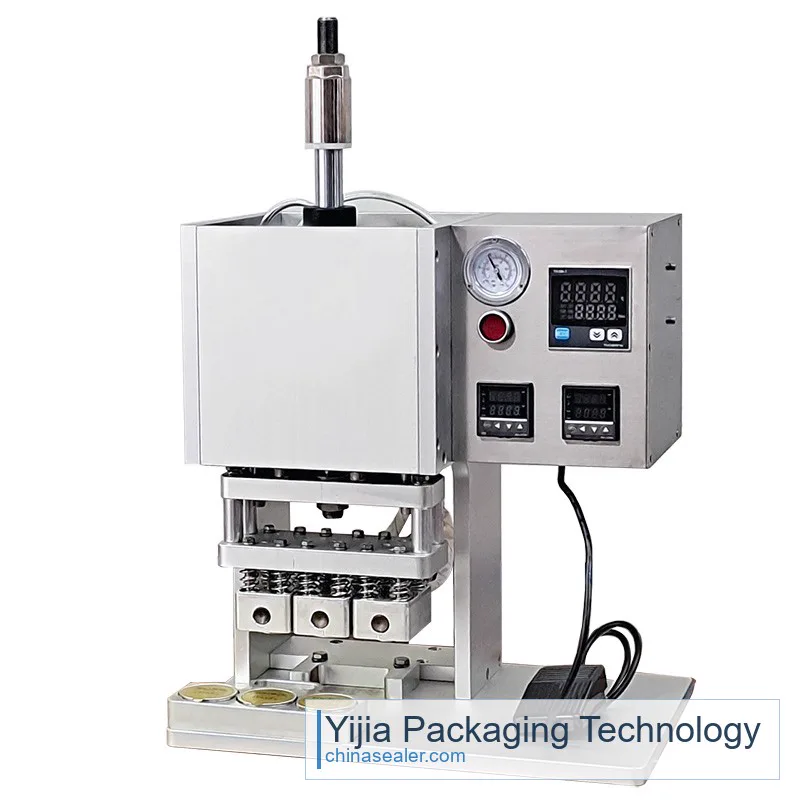 Small-Diameter Cup Sealer SGP-03
Step 2: Single-station electric sealing; For manual loading/unloading projects, a single tray station can confirm positioning, film feeding, and electric sealing cycle; YJ-TS120 bench...
Core process
Sample details
The actual tray and multi-angle dimensional data are used to confirm the mold entry direction, support positions, and whether the mold needs to be verified with actual samples.
Provide the actual tray, top and side photos, and complete dimensionsTray material, rim, and multi-cavity structure affect force support and sealing consistency; the allowable deformation range should be confirmed with the sample tray.
Specify the tray material, rim structure, cavity count, and allowable deformationThe roll film heat seal layer, width, roll diameter, and print marks need to be provided as a set to verify the unwinding path and sealing/cutting positions.
Provide the roll film material, heat seal layer, width, roll diameter, and print registration requirementsFilling temperature, liquid content, and rim contamination risk affect the sealing trial and daily cleaning schedule; they need to be described according to the actual product.
Specify the content state, filling temperature, liquid content, and cleaning requirementsTarget output, shift duration, and manual tray loading/unloading rhythm are used to determine whether the benchtop machine can meet the plan, not just compare nominal speed.
Specify the target hourly output, shift duration, and manual loading/unloading methodQualified finished products and the judgment methods for appearance, easy-tear, peel, or leak should be agreed before the trial, as the basis for mold and process confirmation.
Agree on the acceptance methods for seal appearance, easy-tear, peel, or leakCommon selection mistakes
View detailed technical notes
Real customer question
We have round or regular-shaped meal trays and want to use roll film for single-station electric sealing with manual tray loading and unloading. How can we determine whether the existing trays and film are compatible with the TS120, and how should we expand when production volume increases later?
First determine the packaging route
The TS120 is a benchtop electric sealing machine combining upper roll film and a single tray station. Selection should start with the tray rim, tray material, and roll film heat seal layer, then confirm the mold, film feeding and cutting actions, manual loading/unloading cycle, and acceptance methods.
Hand press trial production route
Suitable for: projects with very small demand, mainly to verify tray, film, and sealing performance. Advantages: simpler equipment and operation route, easy to determine whether heat sealing is feasible with a small number of samples. Limitations: operation relies on manual labor; consistency and sustained cycle time need to be evaluated with actual personnel. Not recommended: when electric cycling, touch operation, and stable repetitive actions are clearly required, the solution should not be judged only by hand press models. Equipment direction: can compare hand press cup/tray sealing machines, but they are not an equivalent automation replacement for the TS120.
Benchtop electric single-station route
Suitable for: tray projects with manual loading/unloading, using upper roll film and electric sealing cycle. Advantages: the TS120 integrates single tray positioning, upper roll film feeding, and electric sealing in a compact station. Limitations: mold, film feeding, pressing, film cutting, temperature, and cycle time all need to be confirmed with actual samples. Not recommended: when tray specifications change frequently, or continuous automatic tray feeding and discharge are required, a single-station configuration is not suitable. Equipment direction: focus on evaluating the YJ-TS120 and complete trials with trays and the same batch of roll film.
Continuous cup/tray line route
Suitable for: projects that later require continuous positioning, film sealing, discharge, or discussion of filling interfaces. Advantages: a chain-plate continuous cup/tray sealing line can place multiple processes on a continuous conveying platform for evaluation. Limitations: the line is not a simple speed-up version of the TS120; the number of stations, cycle time, and interfaces need to be redefined. Not recommended: when the product is still in the trial stage and the tray type and film are not yet frozen, it is premature to lock in a continuous line. Equipment direction: treat the continuous line as a comparison item for expansion; the current single-machine need remains primarily the TS120.
Recommended equipment route: Step 1: Tray and roll film matching
First confirm whether the tray material, rim, and film heat seal layer can form repeatable trial conditions.
Recommended equipment route: Step 2: Single-station electric sealing
For manual loading/unloading projects, a single tray station can confirm positioning, film feeding, and electric sealing cycle.
Recommended equipment route: Step 3: Process and acceptance confirmation
Use the same batch of trays and roll film to determine the acceptance methods for seal appearance, easy-tear, peel, or leak.
Recommended equipment route: Step 4: Compare separately when expanding production
Only after the requirements for multi-cavity cycle time, continuous tray feeding, film sealing, and discharge are clearly defined should you evaluate a high-speed main machine or a complete line; these should not be considered standard features of the TS120.
Common questions
Is the TS120 a hand press machine?
No. The TS120 is a benchtop electric single-station machine with a touchscreen and emergency stop.
Can it seal round meal trays?
Round meal trays can be submitted for evaluation, but the tray material, rim, dimensions, and mold still need to be confirmed with actual samples.
Does the machine come with roll film?
The machine structure includes a film roll feeding path; the actual film specifications and delivery scope need to be confirmed in the order.
Can different meal trays share one mold?
It depends on whether the rim, shape, and positioning dimensions are consistent; without actual samples, it cannot be directly assumed that they can be shared.
How to confirm that the seal is qualified?
Use actual contents and the same batch of packaging materials for trial sealing, then accept according to the agreed appearance, easy-tear, peel, or leak test methods.
Can it be connected to an automatic tray feeding line?
The TS120 is configured as an independent single-station unit; automatic tray feeding and line integration require separate evaluation.