Solution topic
Before upgrading cosmetic tubes from semi-automatic to fully automatic, first lock down the tube material and tail sealing.
Choose semi-automatic, fully automatic filling and sealing, or standalone sealing equipment based on cosmetic paste, tube material, empty tube feeding, tail sealing and coding, and
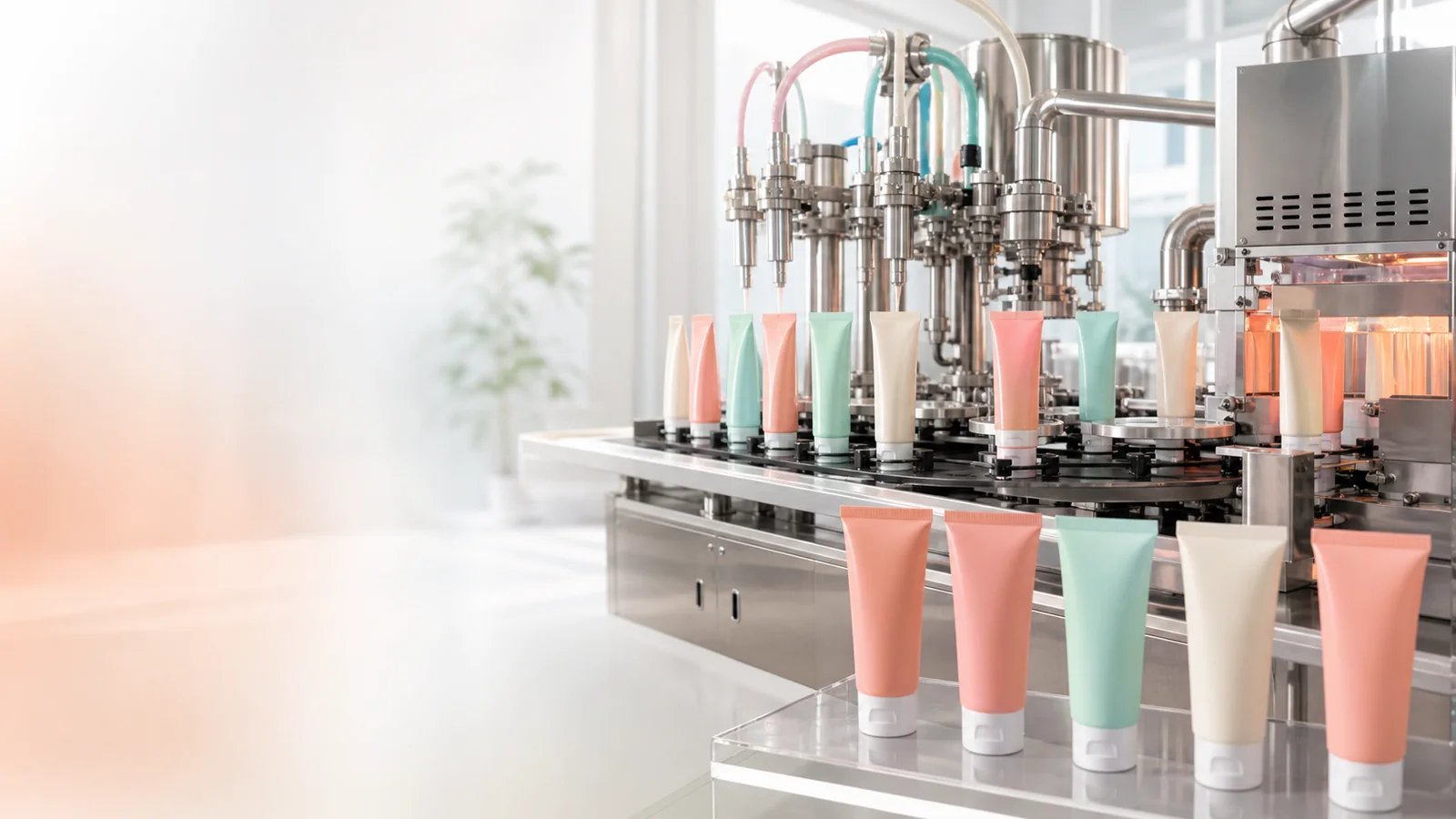
- The difference between semi-automatic and fully automatic filling and sealing is not only capacity, but also empty tube feeding, positioning, coding, and trimming methods. Filled tubes can be sealed only. Provide paste and tube samples, tube material and diameter, tail seal style, batch code, and changeover plan.
Solution summary prepared for you
- Cosmetic tubes can first use a semi-automatic filling and sealing machine to verify paste, tube material, tail sealing, and edge trimming processes with manual assistance.
- After empty tube feeding and sample process are stable, evaluate the fully automatic tube filling and sealing machine; automation differences are not only reflected in capacity.
- When incoming tubes are already filled with paste, use a tube tail sealing and coding machine to complete tail sealing, batch coding, and edge trimming, without repeated filling.
Route comparison
- Suitable for projects that use manual assistance for tube feeding and removal, and first confirm paste filling, tube sealing, batch coding, and edge trimming processes.
- The semi-automatic tube filling and sealing machine facilitates gradual adjustment of sample conditions and observation of operator coordination with the main process.
- Molds and filling tests are still needed for each tube material, diameter, and paste; production cycle time also depends on the organization of manual tube feeding and removal.
- When empty tube feeding and process have been stable for a long time, and the production plan clearly requires a continuous automatic process, further compare fully automatic equipment.
- First use a semi-automatic tube filling and sealing machine to establish the sample process, and record tube feeding, filling, tail sealing, and edge trimming conditions.
- Suitable for projects where empty tube orientation, paste filling, and tail sealing processes are stable, and continuous automatic tube feeding and finished product output are needed.
- The fully automatic tube filling and sealing machine can organize empty tube feeding, positioning, filling, tail sealing, coding, and edge trimming into a continuous process.
- Tube specifications, feeding posture, paste, molds, and changeover steps should all be clear in advance; upgrading cannot be based only on capacity.
- When orders are variable, the process is still in sampling, or manual coordination better fits the production schedule, continue using the semi-automatic solution for verification.
- Use a fully automatic tube filling and sealing machine to take over the mature process, and configure tube feeding, molds, and coding/edge trimming according to actual specifications.
- Suitable for incoming tubes that have already been filled in other processes and only need tail sealing, date batch code, and trimming.
- The tube tail sealing and coding machine focuses on tail processing, avoiding redundant filling station setup outside the existing filling process.
- The filled tube body, tail allowance, tube material, and batch code position must be verified with actual samples; empty tube results cannot substitute.
- When filling from empty tubes is required, choose the semi-automatic or fully automatic filling and sealing route.
- Use a tube tail sealing and coding machine for filled incoming tubes. After tubes and cartons are stable, evaluate the automatic cartoning machine series.
Associated Equipment / Consumables
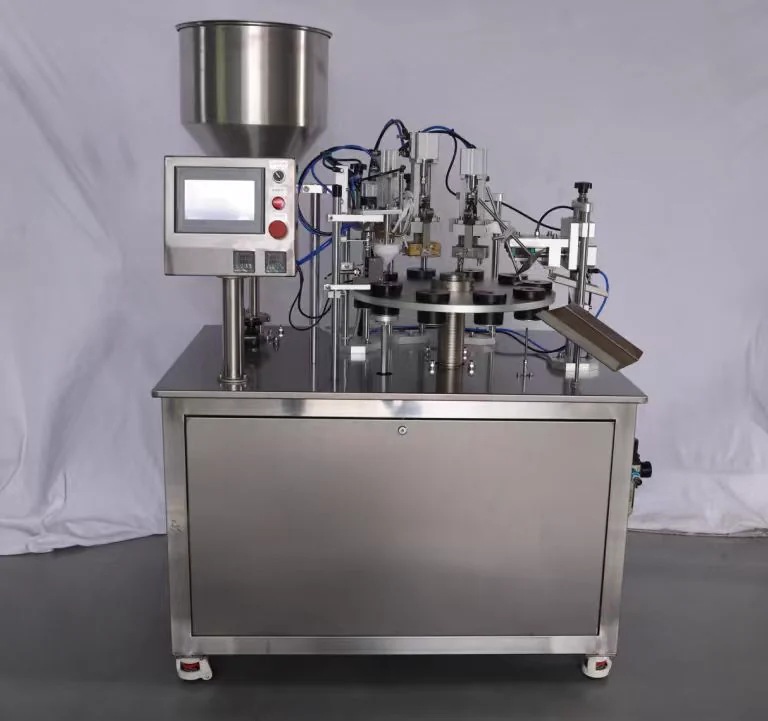 Automatic Tube Filling and Sealing Machine
First confirm the paste, tubes, and tail seal style; Incoming material status determines whether filling is included. Tube material and tail seal requirements determine the...
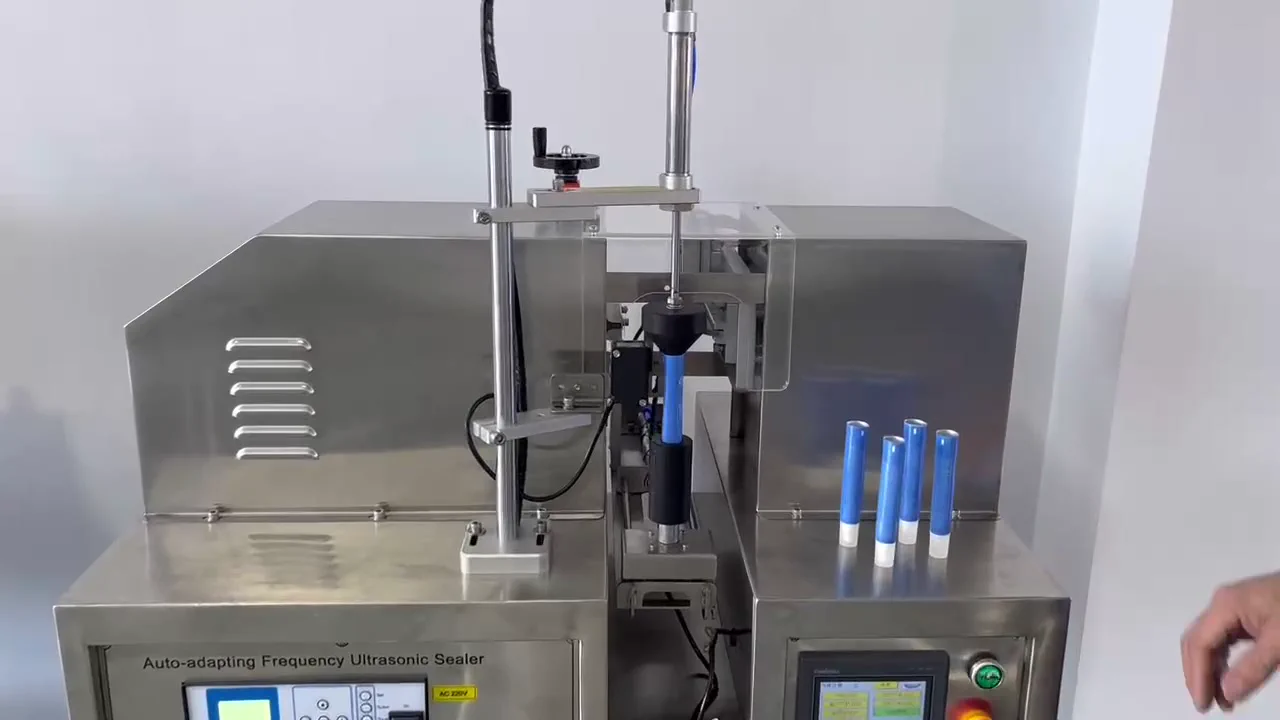 Ultrasonic Tube Sealing Machine
Tube End Sealer Coder: Evaluate fully automatic production after the process is stable; Automatic upgrade is not only about comparing capacity; it also requires confirming whether tube feeding orientation, positioning...
Core process
Prepare paste, empty tubes, and filled tube samples, and list tube material, diameter, length, tail allowance, batch code position, and changeover plan.
The semi-automatic tube filling and sealing machine is suitable for gradually verifying paste discharge, tube positioning, tail sealing, and edge trimming with manual assistance.
After empty tube feeding, filling, and tail sealing processes are clear, the fully automatic tube filling and sealing machine can be used to evaluate a continuous automatic process.
When tubes have been filled by another process, the tube tail sealing and coding machine handles tail sealing, batch coding, and edge trimming, without redundant filling setup.
When tube orientation, carton type, and cartoning cycle time are all determined, the horizontal or vertical automatic cartoning machine series can be evaluated separately as a downstream stage.
Establish tail seal molds, filling nozzles, batch code content, and changeover sequence for each tube material and diameter, and record the applicable semi-automatic or fully automatic method.
Sample details
Material samples are used to verify the filling nozzle and discharge closure, and also help determine the basic process for semi-automatic and fully automatic lines.
Provide face cream, eye cream, or other formal pastes, and specify viscosity, stringing, fill volume, and planned cleaning method.Tube data affects positioning, molds, and edge trimming; multiple specifications should be numbered separately, and one sample tube does not represent all.
Submit actual plastic or aluminum-plastic composite tubes, indicating tube diameter, length, tail allowance, and empty tube feeding orientation.These conditions enter the tail seal mold and coding confirmation, and are also process items that must remain consistent when upgrading from semi-automatic to fully automatic.
Provide the desired seal pattern, sealing width, edge trimming shape, and batch code content, and mark the printing area.Incoming material status is used to distinguish integrated filling and tail sealing or independent tail sealing; the automation scope is also jointly determined by on-site labor division.
Specify whether tubes enter the equipment empty or filled, and list manual tube feeding, automatic tube feeding, and collection requirements.The production mix helps compare semi-automatic and fully automatic processes, and verify molds, filling nozzles, and batch code switching.
List production arrangements for each specification, target capacity, shifts, changeover frequency, and main tubes.Tube and carton matching information is used to determine horizontal or vertical cartoning orientation; if information is temporarily missing, the main tail sealing process can be completed first.
If automatic cartoning is needed, submit finished tubes and actual cartons, and specify the insertion orientation, layout, and upstream/downstream connection.Common selection mistakes
First establish the complete process with samples, then compare automation levels based on on-site labor division and production plan.
For independent tail sealing projects, provide formally filled tubes and complete sample testing with real tail allowance.
When submitting requirements, first attach reference finished products or drawings, and confirm the corresponding tail seal appearance for each tube diameter.
Test fill with each representative paste, record nozzle cleanliness and fill volume, then determine the changeover procedure.
First stabilize the finished tube specifications, then evaluate horizontal or vertical cartoning with tubes and cartons as a set.
View detailed technical notes
First distinguish process validation from automatic upgrade
The difference between semi-automatic and fully automatic is not just capacity. The stability of empty tube feeding, positioning, filling, tail sealing, batch coding, and trimming determines whether the automatic process can connect smoothly.
Tube material and tail sealing are the common foundation for both routes
Plastic tubes or aluminum-plastic composite tubes, tube diameter, tail allowance, and paste state must be confirmed with actual samples. Higher automation will not eliminate these basic tests.
Semi-automatic equipment is used to gradually establish the process
Semi-automatic tube filling and sealing machines use manual tube loading and unloading, allowing step-by-step observation of paste discharge, tube positioning, seal pattern, batch code, and trimming status.
Fully automatic equipment takes over the stabilized process
When empty tube orientation, filling, and tail sealing are clear, fully automatic tube filling and sealing machines can organize continuous production. Changeover and coding still need to be verified by specification.
Filled tubes only enter the tail sealing station
The tube tail sealing and coding machine is for tubes that have already been filled, completing tail sealing, batch coding, and trimming. Trial runs should use real filled tubes and verify the clamping posture.
Batch code and trimming are determined at the mold stage
Tail seal pattern, printing area, and trimming outline are adjacent to each other and should be checked together during mold confirmation to avoid changing the tail layout after production.
Multi-specification upgrades should consider the changeover sequence
Different tube materials, diameters, and pastes change the mold, filling nozzle, and cleaning steps. The production plan should reflect the main specifications and changeover frequency.
Automatic cartoning belongs to the downstream finished product stage
After the tube orientation, carton structure, and cartoning pace are clear, evaluate the horizontal/vertical automatic cartoning machine series, and do not preset cartoning actions in the tail sealing main machine.
Sample records are used to compare boundaries before and after upgrade
The paste, tube, mold, and tail sealing records formed during semi-automatic trials should be carried into the fully automatic evaluation, so that the upgrade comparison is based on the same product conditions.
Common questions
Is the only difference between semi-automatic and fully automatic tube machines the production capacity?
Not only that. Fully automatic also involves empty tube feeding, orientation positioning, continuous coding, and edge trimming. Semi-automatic is more suitable for first establishing the process with manual assistance.
When can we upgrade from semi-automatic to fully automatic?
Evaluate upgrading when paste filling, tube sealing, empty tube feeding, batch coding, and edge trimming are all stable, and the production schedule requires a continuous automatic process.
Do already-filled tubes still need an integrated machine?
Usually repeated filling is not needed; a tube tail sealing and coding machine can handle tail sealing, batch coding, and edge trimming, and use filled sample tubes for testing.
Can plastic tubes and aluminum-plastic composite tubes share molds?
Verification must be done item by item according to tube diameter, tail, and sealing performance; similar appearance alone does not mean molds and processes can be shared.
Can automatic cartoning be determined together with the main sealing machine?
They can be planned simultaneously, but the cartoning equipment should be verified separately after the finished tubes, cartons, orientation, and cycle time are clear.
What samples are needed when preparing proposal materials?
Please provide the paste, empty tubes, filled sample tubes, tail seal references, batch code location, and cartons, and specify the production capacity, changeover, and on-site conditions.