Solution topic
PCB and IC Moisture Barrier Bag Sealing: First Determine Bag Material and Whether Vacuum Is Needed
For PCB, IC trays, and electronic component moisture barrier bags, choose continuous sealing or pre-made bag equipment based on bag material, bag feeding method, whether vacuum is
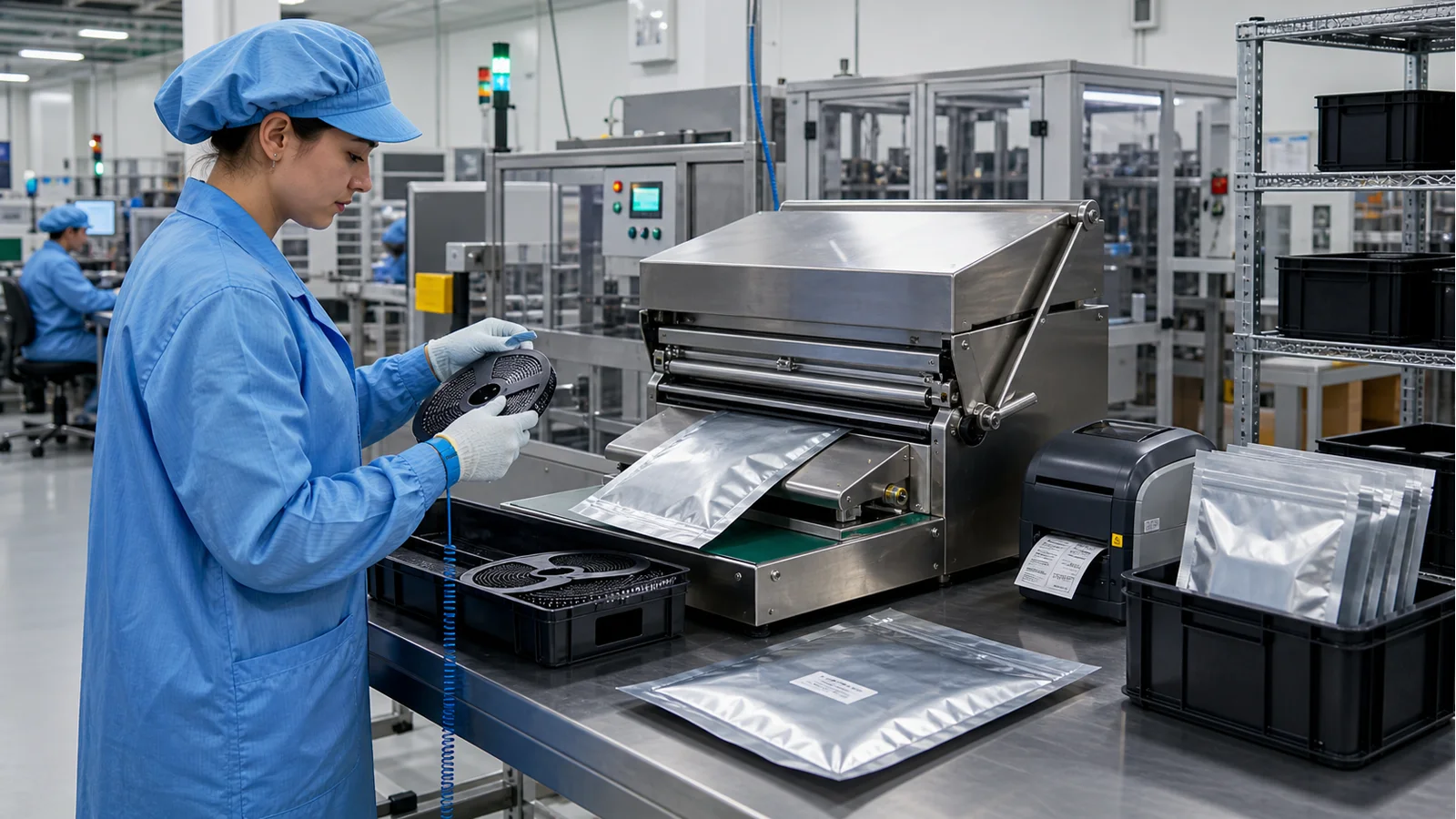
- Aluminum foil bags, shielding bags, and ordinary heat-seal bags have different sealing parameters, and vacuum packaging cannot be achieved by default with a continuous heat sealer. Provide component and bag material samples, bag mouth width, bagging method, moisture-proof or vacuum target, batch number position, and capacity.
Solution summary prepared for you
- For PCB and IC moisture barrier bags, first determine bag material, manual or automatic bagging method, and specify whether vacuum is required. Continuous heat sealing cannot complete vacuum by default.
- After manual bagging, a continuous bag sealing machine can complete bag mouth heat sealing. For automatic packaging, evaluate pre-made bag equipment based on bag type and component feeding.
- Aluminum foil bags, shielding bags, and regular heat seal bags must be test sealed separately; bag mouth width, contamination, and thickness after bagging affect equipment configuration.
Route comparison
- When components are manually bagged and only need to pass through a heat sealing zone continuously for bag mouth sealing, a continuous bag sealing machine can be considered.
- Bagging and sealing boundaries are clear, allowing separate verification of guiding, seal edges, and continuous pass condition with official bag materials.
- It does not include bag picking, component feeding, or vacuum by default; bag material and sealing area cleanliness still need item-by-item confirmation.
- When the project requires automatic bag picking, automatic component loading, or explicitly requires vacuum treatment, simple continuous heat sealing cannot cover the complete process.
- A continuous bag sealing machine can be considered, with trial sealing using actual components and various official bag materials.
- When the project requires automatic bag picking, opening, and sealing, and can provide component feeding method and bag type samples, pre-made bag equipment can be evaluated.
- Bag picking and sealing can be verified at fixed stations, suitable for checking automatic operation after packaging specifications are stable.
- Feeding differences for PCBs, IC trays, or loose parts change the station layout; bag width alone cannot determine configuration.
- When component feeding and bag type are not yet determined, or only simple heat sealing after manual bagging is needed, adding automatic bag picking stations is not recommended.
- Single-lane/three-station pre-made bag filling and sealing machine series can be considered, with trial runs based on components, bag type, and cycle time.
- When the moisture barrier bag has clear batch number content, layout, and readable position, and can be trial printed with official bag material, date coding can be added.
- The traceability station can be independently verified after heat sealing, making it easy to set triggers and layout according to bag posture.
- Bag wrinkles, heat-affected sealing zones, and uneven surfaces after bagging can affect printing, and the position needs to be confirmed with actual samples.
- When the batch number layout and position are not yet determined, or the printing area falls on sealing edges and folded areas, the packaging design should be adjusted first.
- A date and batch inkjet coder can be evaluated, and trial printing completed with official bag material, consumables, and bagging status.
Associated Equipment / Consumables
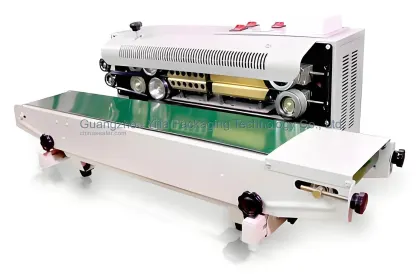 Continuous Bag Sealing Machine
Continuous Bag Sealing Machine is configured for Bag feeding, filling, sealing, or screw capping on Pre-made bags, spout pouches, three-side seal bags, back-seal bags.
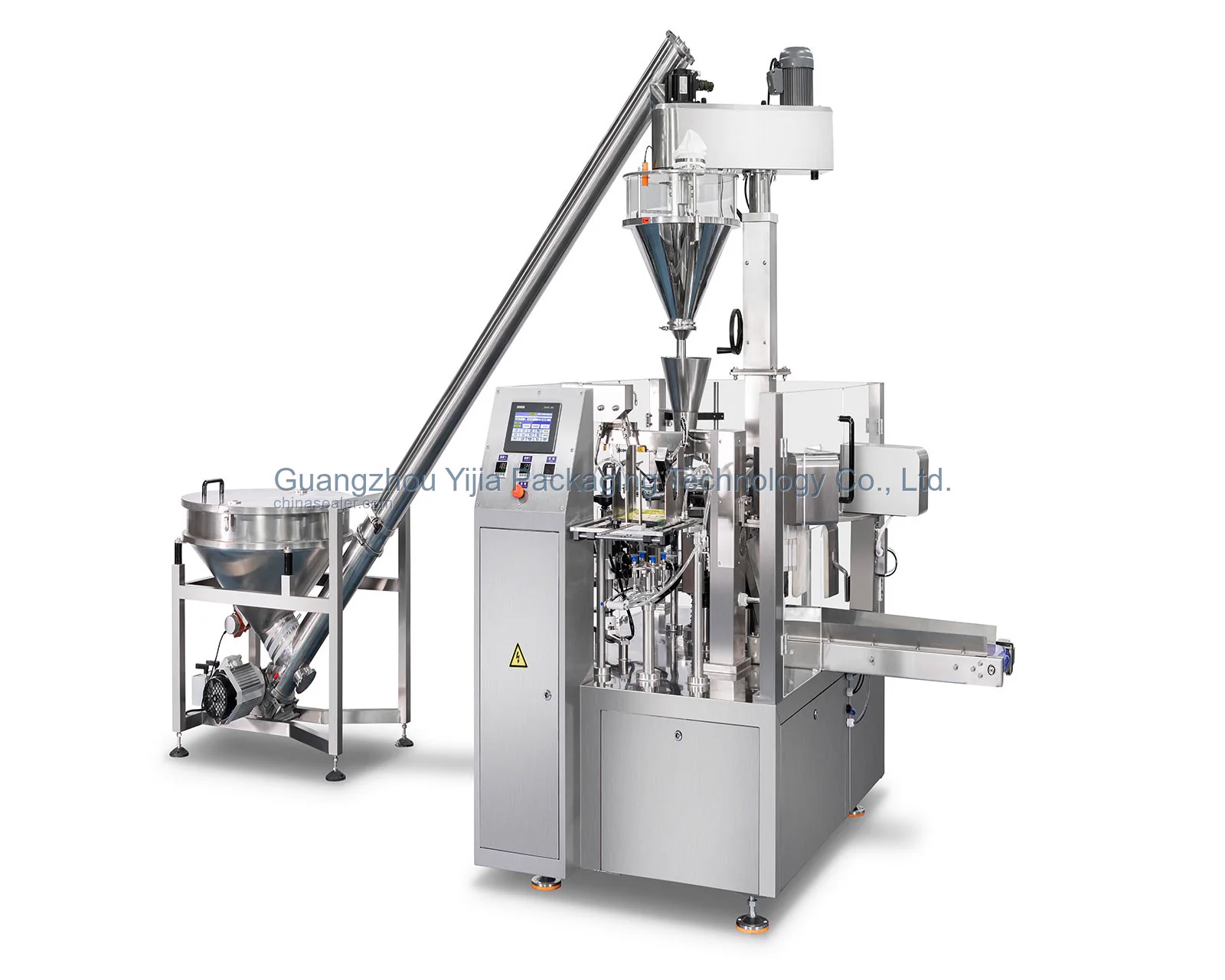 Single-Lane and Three-Station Premade Pouch Filling and Sealing Series
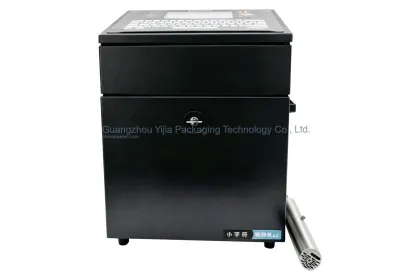 Date & Batch Inkjet Printer
 Pre-made Pouches and Spout Pouch Packaging Materials
Core process
First confirm the bagging method for PCBs, IC trays, or other components, then submit actual samples of aluminum foil bags, shielding bags, or regular heat seal bags. Moisture barrier and vacuum goals must be specified separately.
When products are manually bagged and need to pass through a heat sealing zone continuously for bag mouth sealing, a continuous bag sealing machine can be considered.
When automatic bag picking, opening, and sealing are needed, single-lane or three-station pre-made bag filling and sealing machines can be considered, with trial runs based on component feeding method and bag type.
The date batch inkjet coder should be trial printed at the agreed traceability position on the moisture barrier bag; the layout should avoid heat-affected sealing areas, folds, and uneven areas after bagging.
Only when weight range or appearance inspection criteria are clearly defined should inline checkweighing and visual inspection systems be evaluated, and validated with qualified and defective samples.
If the packaging goal includes vacuum, evacuation, bag material, and component pressure resistance conditions must be specified separately. Neither continuous heat sealing nor automatic bag feeding routes cover vacuum treatment by default.
Sample details
Component form and bag laminated structure jointly affect bagging, guiding, and heat sealing; empty bag size alone is not sufficient.
Provide PCB, IC tray, or other component samples, as well as all planned aluminum foil bags, shielding bags, or heat seal bags.These data are used to verify guiding and sealing area; all common bag types still require actual sample test sealing.
Specify bag width, sealable area of the bag mouth, thickness after bagging, and common specifications, and indicate desired seal edge position.Bagging method determines the direction of continuous heat sealing or pre-made bag equipment; cycle time is used to arrange conveying and operation.
Indicate whether manual bagging or automatic bag picking is needed, and provide planned bags per hour or per shift.Vacuum treatment is not a default function of continuous heat sealing machines; it must be clearly defined before equipment configuration.
If vacuum is required, provide evacuation target, bag material, and component pressure resistance concerns. If not, clarify the scope of regular heat sealing.Only when judgment standards are clear can downstream coding and inspection correspond to actual packaging settings.
Provide batch number layout and position. If checkweighing or visual inspection is needed, also provide weight range, appearance criteria, and defective samples.Site boundaries are used to confirm equipment placement; acceptance records are made separately for each bag material and bagging combination.
Specify available space, bag conveying direction, operation method, and desired trial sealing items; if information is insufficient, existing samples can be sent first.Common selection mistakes
The same bag width may have different sealing performance; trial samples should record bag guiding, seal edges, and agreed packaging inspection results.
Separate regular heat sealing and vacuum goals when submitting requirements to avoid discovering missing necessary processes after equipment completion.
Observe bag mouth cleanliness and content position after bagging, then determine whether to adjust operation, guiding, or seal edges.
PCB, tray, or loose part feeding methods differ; station arrangement cannot be derived from bag size alone.
First provide judgment range, qualified samples, and defective samples, then verify triggering, recognition, and exception handling.
View detailed technical notes
First Determine Bag Material, Bagging Method, and Vacuum Requirements
Aluminum foil bags, shielding bags, and ordinary heat-seal bags require different sealing methods, and manual bagging and automatic bag picking also correspond to different equipment. Vacuum packaging needs separate clarification and cannot be inferred directly from continuous heat sealing.
Actual Components and Bag Material Must Be Tested Together
PCB, IC trays, or loose components will change bagging thickness, bag mouth cleanliness, and conveying posture. When submitting requirements, provide the contents, bag samples, seal edge position, and planned output.
Manual Bagging Can Be Followed by Continuous Heat Sealing
When bagged products need to pass continuously through the heat-sealing zone, a continuous bag sealing machine can be evaluated. During trials, pay attention to bag material guiding, cleanliness of the sealing zone, and continuous sealing edges, and use the actual bagging thickness to check whether conveying posture and sealing position are stable.
Automatic Bag Feeding Must Also Verify Component Feeding
When automatic bag picking, opening, and sealing are required, single-lane or three-station pre-made bag equipment can be evaluated. The station configuration is also affected by component shape and bag type.
Traceability Layout Should Avoid Sealing and Folding Edges
Date and batch inkjet coding machines should be tested with the official bag material and bagging posture. The batch number position should avoid heat-sealing zones, wrinkles, and areas prone to friction. Trial printing should also check whether the bag surface is flat after bagging, whether the print layout is complete, and whether the conveying trigger can stably correspond to each bag.
Post-Sealing Inspection Requires Judgment Criteria First
Online checkweighing and visual inspection systems are only evaluated when a weight range or appearance criteria already exist, and should be verified with qualified and defective samples.
Main Machine Selection Depends on Manual or Automatic Bagging
Continuous sealing after manual bagging and automatic bag picking with sealing are two different routes. Vacuum treatment should be confirmed separately, and the three should not be mixed into one equipment requirement.
Downstream Coding and Inspection Configured According to Standards
Submit the batch number layout, weight range, or appearance judgment criteria first, then decide on coding and inspection stations, and coordinate with the actual cycle time of the main sealing process.
Common questions
Can a continuous bag sealing machine also vacuum seal?
Not by default. Continuous heat sealing is suitable for pre-bagged products passing through a heat sealing zone. If vacuum is required, bag material, air evacuation, and component pressure resistance conditions must be specified separately.
How to choose between manual bagging and automatic bag feeding?
For manual bagging followed by continuous sealing, a continuous bag sealing machine can be considered. When automatic bag picking, opening, and sealing are needed, evaluate pre-made bag equipment based on component feeding and bag type.
What samples should be prepared before confirming a moisture barrier bag sealing solution?
Prepare actual components, all bag materials and bag types, and specify bag mouth width, thickness after bagging, moisture barrier or vacuum target, batch number position, and planned output.
Why should different moisture barrier bags be test sealed separately?
Aluminum foil bags, shielding bags, and regular heat seal bags have different laminated structures; heat sealing performance, guiding, and seal edge condition must be confirmed with official bag samples.
How to check the bag mouth seal?
Run continuous trials with actual components and official bag materials, observe bag mouth cleanliness, wrinkles, material entrapment, and seal edges, and record packaging condition according to agreed methods.
When is inline checkweighing or visual inspection needed?
Only configure when the project has provided clear weight range or appearance inspection criteria, and prepare qualified and defective samples for validation.