Solution topic
How to Upgrade Stand-Alone Bottle Machines into a Production Line
Explain the configuration order of cap sorting and placing systems, automatic feeding conveying sealing lines, and food-grade conveying lines, then add labeling coding, checkweighi
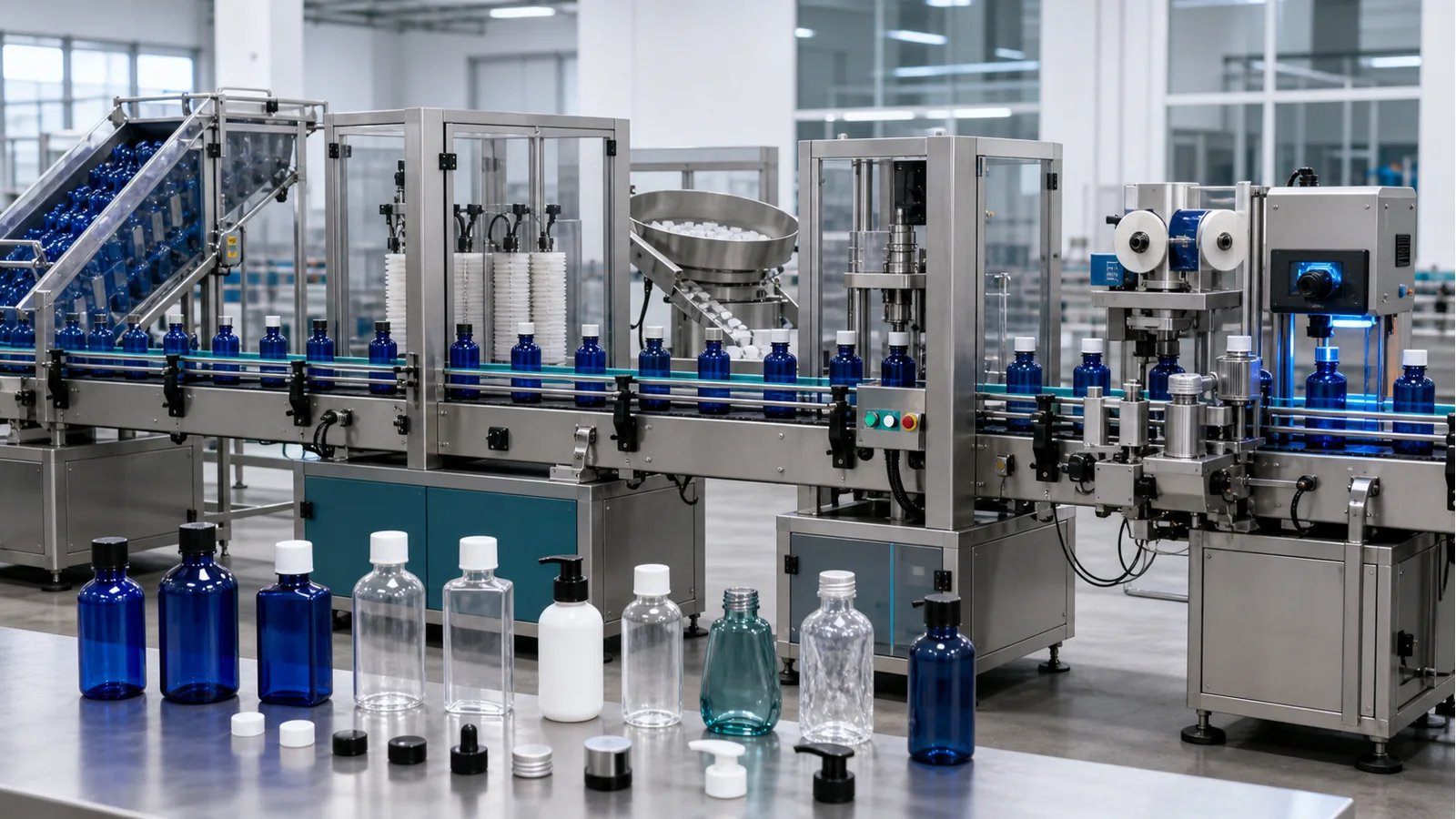
- Use labour bottlenecks, cap orientation, conveyor interfaces, the slowest station, buffers, fault recovery and floor space to choose partial automation or a complete line.
Solution summary prepared for you
- For single machine upgrade to a line, first record manual bottlenecks, then decide whether to add cap sorting and placing, feeding conveying, or collection buffering.
- Cap sorting depends on orientation features, center of gravity, and jamming performance; conveying structure is determined by container orientation, cleaning, and main machine interfaces.
- Labeling and coding should be arranged after product orientation is stable; checkweighing, metal detection, and vision inspection are selected based on risk and acceptance items.
Route comparison
- Suitable for stages where packaging materials and main processes still need trials, and manual operation can flexibly handle multiple packaging variations.
- Convenient for sample changes and observation, quickly identifying issues with the main machine, containers, or packaging materials.
- Fluctuations in manual feeding and collecting can mask the true rhythm of the main machine and hinder continuous bottleneck recording.
- When packaging specifications are stable and the same manual action repeatedly causes waiting, do not stay at this stage long-term.
- First fix core process samples and acceptance methods, while reserving space for subsequent conveying height, signals, and operation space.
- Suitable for projects where cap placing or sorting is most labor-intensive and stable cap types, container orientation, and closing processes exist.
- Only modify the clear bottleneck, retaining flexibility in other manual steps for phased verification.
- Cap orientation, center of gravity, stacking, and jamming can all change the sorting and guiding structure.
- When official cap samples are not finalized, or pump hoses are prone to tangling, conduct continuous feeding tests first.
- The cap sorting and placing system is configured based on official caps, abnormal cap samples, and downstream equipment interfaces.
- Suitable for sites where main processes and packaging specifications are stable, and feeding, buffering, main machine, and output need continuous connection.
- Can unify product orientation and front/rear handover, and integrate stop linkage into the entire line control.
- On-site turns, cleaning, conveying elevations, and product accumulation all change the line and buffering arrangement.
- When entry/exit, logistics direction, or main machine stop logic is unclear, do not fix the conveying direction first.
- Automatic feeding conveying sealing lines are configured according to containers and processes. Food-grade conveying lines are additionally confirmed with samples, hygiene boundaries, and on-site cleaning conditions.
- Suitable for finished products with stable orientation and clear label, batch, weight, metal, or vision judgment requirements.
- After clarifying the order of labeling, inspection, rejection, and rechecking, repeated handling and manual review can be reduced.
- If judgment thresholds, trigger positions, and reject destinations are unclear, equipment signals cannot correspond to on-site handling.
- When adding similar inspection functions just to complete equipment names, return to risk and acceptance checklists to make trade-offs.
- Round/square bottle labeling machines are confirmed with samples, collaborative date/batch coding machines are test-printed, and inspection equipment is selected based on finished product risk.
Associated Equipment / Consumables
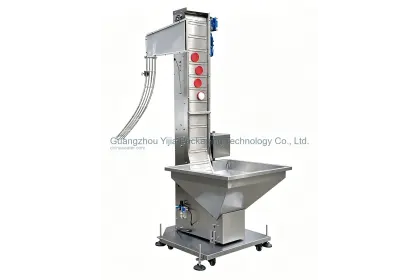 Cap Feeding and Sorting System
Cap Feeding and Sorting System is configured for Cap sorting, conveying, and feeding on Screw caps, press-on caps, inner plugs, special-shaped caps.
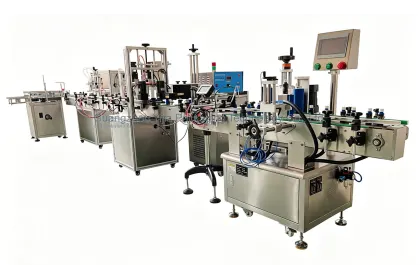 Automatic Feeding Conveying Sealing Line
Conveying and interface connection; Container orientation, main machine stop logic, cleaning methods, and on-site turns together determine the line structure; Automatic feedin...
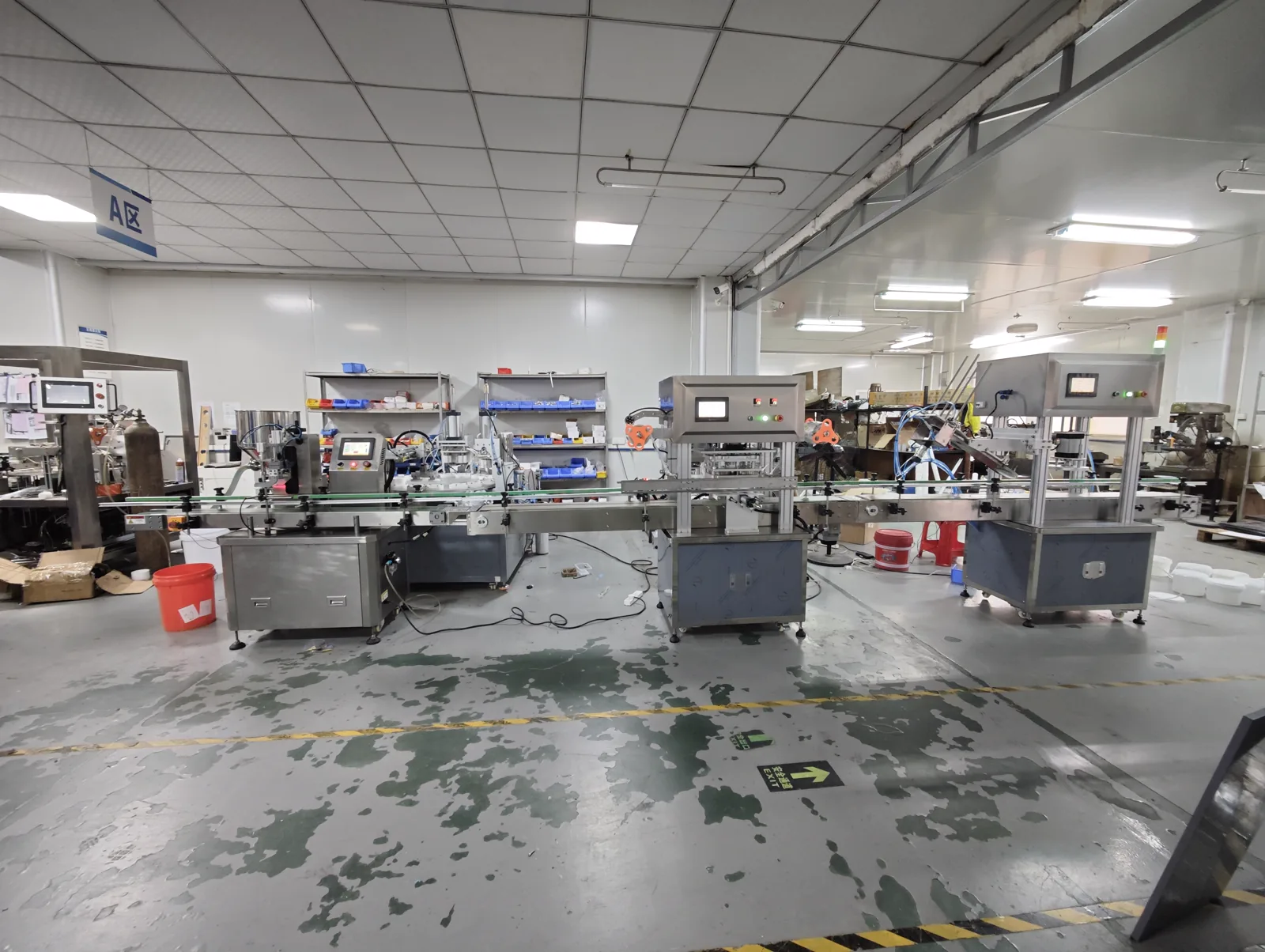 Bottle and Jar Filling, Capping and Sealing Line
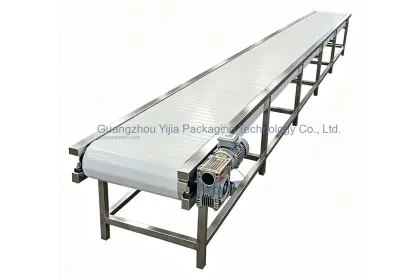 Food Packaging Conveyor and Buffer Line
Conveying and interface connection; Container orientation, main machine stop logic, cleaning methods, and on-site turns together determine the line structure; Automatic feeding...
Core process
Sample details
Continuously record waiting and intervention positions to determine which action to improve first.
List the operation processes for placing bottles, sorting caps, placing caps, collecting products, labeling, and handling.Orientation, center of gravity, friction, and nesting performance affect sorting, guiding, and changeover structures.
Submit formal samples of bottles, cups, boxes, bags, caps, pump heads, and defective caps.Upstream and downstream sections must coordinate during material shortage, blockage, and stops; matching only normal operation is not enough.
Provide existing equipment dimensions, inlet/outlet heights, speed changes, and stop signals.Layout data is used to determine project configuration and placement for straight sections, turns, buffering, and food-grade conveying lines.
Mark raw material inlet, finished product outlet, operation aisles, cleaning areas, and available dimensions.Write down the rejection and recheck actions for each inspection item to select non-duplicative modules.
Specify label layout, batch number content, weight, metal, and vision inspection items.Common selection mistakes
When containers, packaging materials, and core processes are still changing, peripheral interfaces are prone to rework.
For special-shaped caps, pump heads, and thin/light caps, also observe center of gravity, orientation, nesting, and continuous supply status.
Inlet/outlet heights, guides, buffering, turns, and stop linkage all change the actual layout.
Checkweighing, metal detection, and vision inspection each have their own judgment boundaries; divide tasks according to product risk and acceptance items.
In addition to inspection signals, clarify on-site actions for rejection, isolation, manual recheck, and re-release.
View detailed technical notes
Upgrade starting point is manual action recording
First observe the waiting, replenishing, cap placing, collecting, and handling around the main machine. Whichever action continuously interrupts production, start collecting samples and interface data around that position.
Cap orientation is more critical than name
Screw caps, press caps, special-shaped caps, and pump heads differ significantly in center of gravity, orientation, and stacking. The cap sorting and placing system should be determined through continuous feeding tests with official cap samples.
The manual single-machine stage is suitable for validating packaging materials and core processes, while retaining space for quick sample changes. At this time, record equipment height, signals, and operation rhythm to leave reliable interfaces for future upgrades.
If the most obvious problem is cap sorting or placing, configure partial automation first. Cap samples, abnormal orientations, and downstream closing actions should be tested together to avoid smooth operation only when empty.
Once packaging specifications and main processes are stable, connect feeding, conveying, buffering, and output into a continuous flow. The line layout is determined by on-site logistics, cleaning areas, and stop linkage.
Food-grade conveying requires attention to cleaning boundaries
Food-grade conveying lines not only connect equipment but also need structure selection based on contact areas, liquid accumulation risk, disassembly cleaning methods, and container bottom surfaces. Formal configuration requires confirmation with on-site conditions.
Label and code after product orientation is stable
Round/square bottle labeling machines need configuration based on container and label samples. Collaborative date/batch coding machines should be test-printed on actual printing surfaces. Their positions should also avoid accumulation and emergency stop areas.
Inspection functions divided by risk
Online checkweighers, food metal detectors, and collaborative online checkweighing and vision inspection systems have different judgment roles. First specify product risks, acceptance items, and reject flow, then decide the combination.
Use on-site sketches to converge the line gradually
Even if dimensions are not fully measured, you can first mark equipment sequence, logistics direction, and operation positions. Later, complete elevations, passages, and interfaces to confirm the renovation scope in stages.
Common questions
When does a single machine need automatic feeding?
Record the waiting, refilling, and collecting actions for each shift. If one action keeps interrupting the main machine, evaluate automation for that position.
How to evaluate special-shaped caps or pump heads in cap sorting and placing system assessment?
Use formal caps to observe center of gravity, orientation features, cap nesting, and jamming, then confirm the cap sorting and placing structure.
What should be prepared in advance to connect single machines into a line later?
Keep inlet/outlet heights, signal points, conveying drop positions, and stop logic, and record the actual processing rhythm of the main machine.
What conditions should be checked for food-grade conveying lines?
Specify contact areas, cleaning methods, container bottom surfaces, liquid accumulation risks, and hygiene boundaries with adjacent stations.
Do we need checkweighing, metal detection, and vision inspection all configured?
Choose based on product risk and customer acceptance items. First avoid function duplication, then clarify how to reject and recheck defective products.
Can we discuss the upgrade sequence when site drawings are incomplete?
You can first provide process sketches, equipment photos, and manual action records to identify bottlenecks; layout dimensions can be supplemented later.