Solution topic
How to Select a Milk-Tea Cup Filling and Sealing Line
For milk cap tea, fruit tea and flavored cups, choose a small cup integrated machine or small-diameter test sealing equipment based on particle state, PP or PET cup, sealing film a
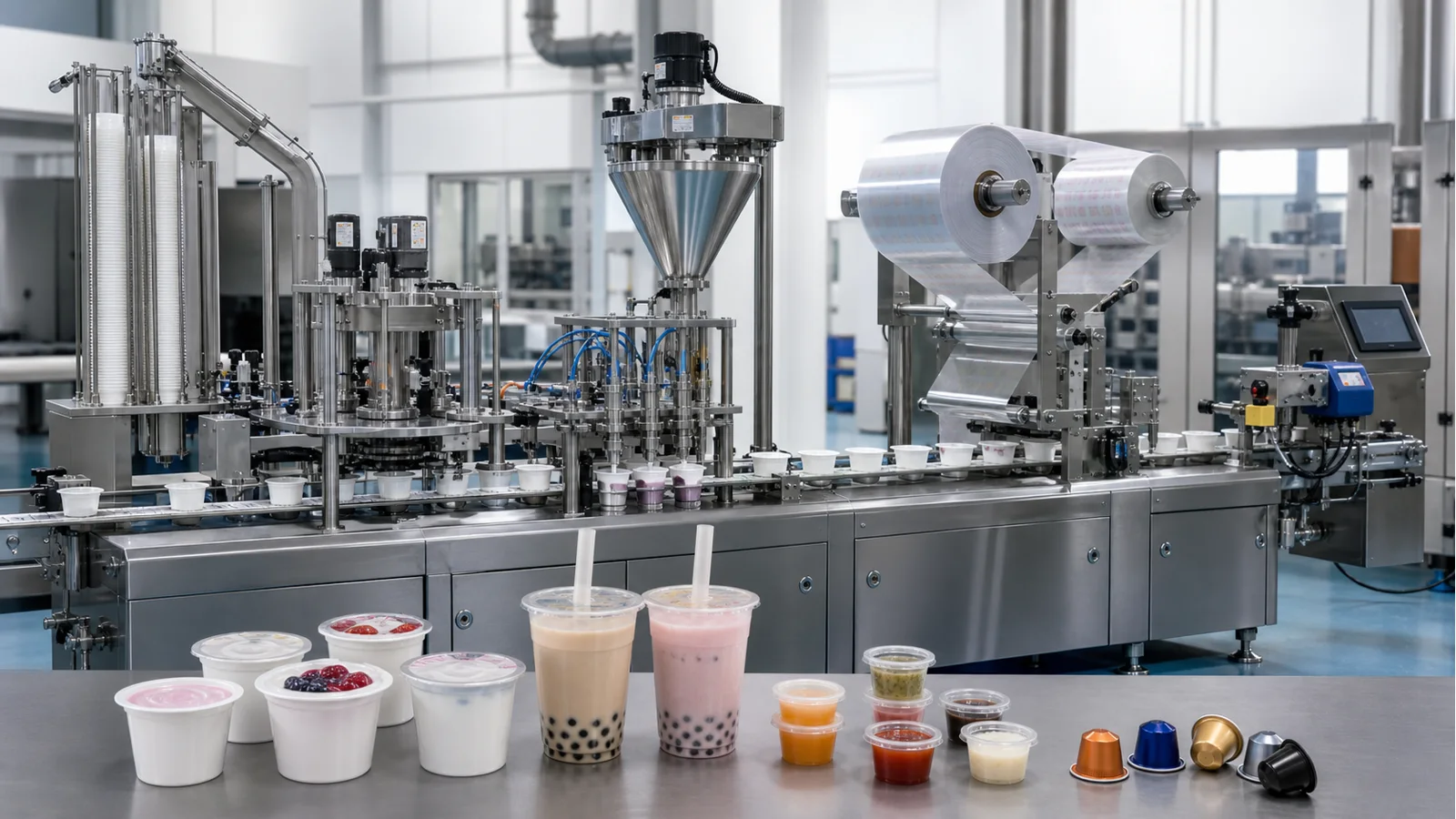
- Compare liquid and particulate products, rollstock and pre-cut lids, then combine denesting, filling, sealing, coding and case packing.
Solution summary prepared for you
- For milk cap tea, fruit tea, and seasoning cups, first confirm cup material, cup rim, beverage consistency, and particles, then decide on small cup filling and sealing machine or small-diameter trial sealing equipment.
- After cup type and particle dispensing process are stable, the small cup filling and sealing machine can connect drop-cup, filling, and film sealing; specific channels are tested with actual material samples.
- The small-diameter cup sealing machine SGP-03 is used to verify the matching of small cup rim, cup material, and sealing film; equipment model cannot replace cup-film samples.
Route comparison
- Suitable for production where cup type, lid film, and beverage filling conditions are confirmed, and needs to connect drop-cup, filling, film sealing, and cup output.
- The small cup filling and sealing machine connects cup handling with filling and film sealing, making it convenient to observe the entire packaging process with the same batch of samples.
- Cup material, cup rim, film roll, beverage consistency, particle state, and cleaning and changeover all need actual trial runs.
- When the cup-film combination has not been verified, or only small-diameter cup trial sealing is needed, small-diameter equipment can be used first.
- The main machine uses a small cup filling and sealing machine, with filling channels and sealing molds configured according to cup, film, and material samples.
- Suitable for cup material and lid film matching tests for small-diameter cups, or sealing tasks that can be completed with manual cooperation after cup sample confirmation.
- The small-diameter cup sealing machine SGP-03 is convenient for first observing heat sealing and opening state, then deciding whether to adopt integrated production later.
- Adaptation range, cup placement and removal actions, and operating pace should be verified with formal cup samples; model cannot be used to infer all cup types.
- When the project requires automatic drop-cup, particle filling, and continuous cup output, compare small cup filling and sealing machine or continuous production solutions.
- The trial sealing equipment uses the small-diameter cup sealing machine SGP-03, with corresponding small cup sealing film or easy-tear film.
- Suitable for cup products where upstream filling, cup positioning and film sealing processes are stable and need to be continuously connected with other stations.
- The chain-plate cup/tray continuous sealing line is convenient for organizing stable feeding and conveying, and provides interfaces for front and rear equipment.
- Cup changeover, film changeover, cleaning, abnormal cup removal, and station pace should all be explained before line design.
- When cup type or beverage changes frequently and sealing conditions are still being adjusted, completing single-machine samples first helps clarify issues.
- Continuous production uses the chain-plate cup/tray continuous sealing line, with lid film uniformly provided by corresponding small cup sealing film and easy-tear film consumables.
Associated Equipment / Consumables
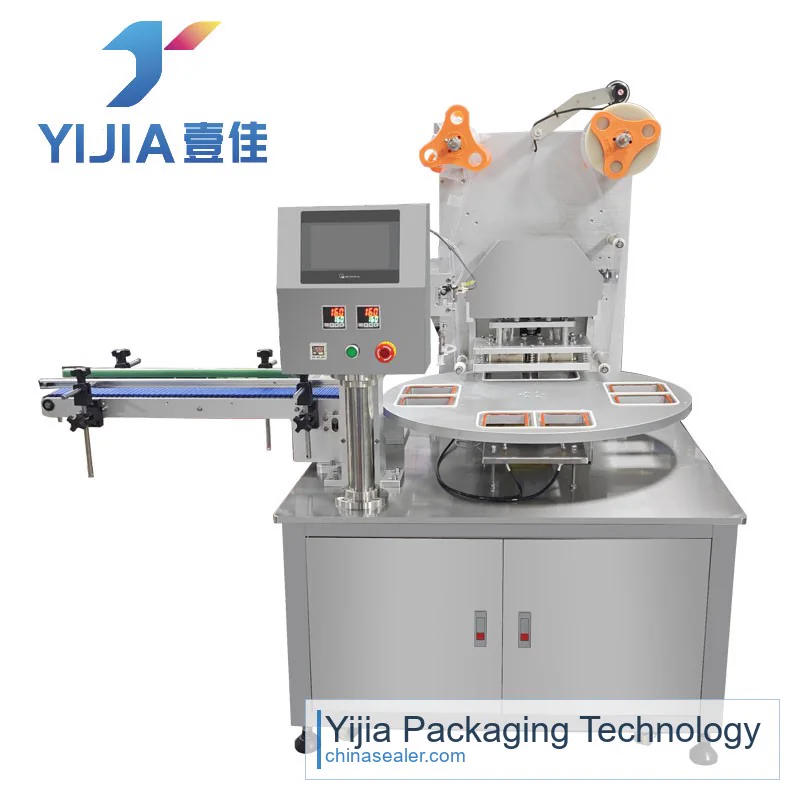 Automatic Small-Cup Filling and Sealing Machine
The machine denests cups, doses product, registers and heat-seals film, trims and discharges. Confirm cup stacking and rim, viscosity, particles, foaming or stringing, rollstock or pre-cut lids, peel and leak criteria...
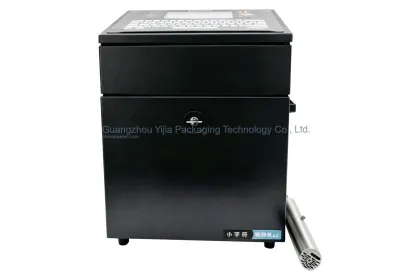 Date & Batch Inkjet Printer
Beverage, cup body, and lid film samples; PP, PET, and paper cups cannot be judged only by cup rim size; cup-film combination and cup rim cleanliness after filling should be recorded separ...
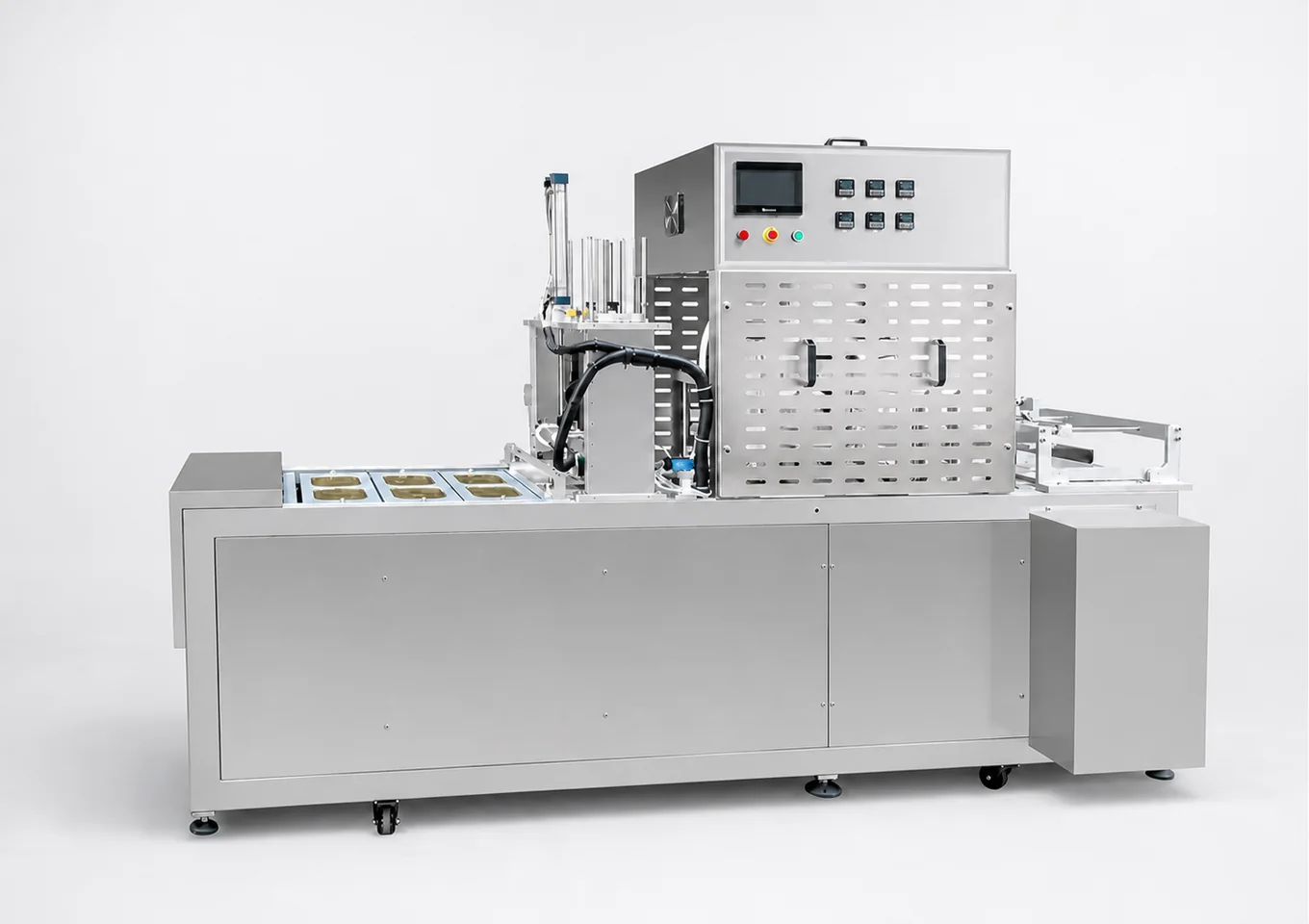 Chain Conveyor Cup and Tray Filling Sealing Line
Small cup filling and sealing; The trial run should cover actual states of pure liquid, milk cap, or particle-containing beverages, observing filling closure, cup rim...
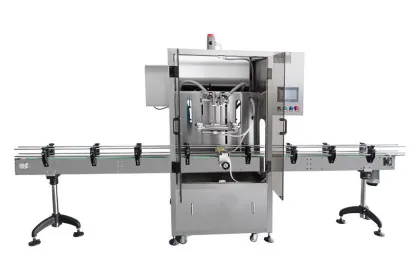 Servo Piston Liquid and Paste Filling Machine
Small cup filling and sealing; The trial run should cover actual states of pure liquid, milk cap, or particle-containing beverages, observing filling closure, cup rim con...
Core process
Pair each cup material, diameter, and lid film, and use actual beverage and particles to check filling channel, fill volume, and sealing contact surface.
After cup type and particle filling process are confirmed, the small cup filling and sealing machine can connect drop-cup, filling, film feeding, heat sealing, and cup output.
For small-diameter cups, first use the small-diameter cup sealing machine SGP-03 to verify heat sealing matching of cup material, rim, and lid film.
First explain the flow and particle state of milk cap tea, fruit tea, or seasoning, then check cup body rigidity, rim flatness, and sealing area after filling.
Submit sealing film for each cup material, specify film roll direction, print registration, and easy-tear edge requirements, and explain changeover arrangements for different cup types.
First choose an integrated machine or small-diameter trial sealing equipment based on cup type, beverage, and film material; after cup positioning and front-end feeding are stable, evaluate the continuous sealing line.
Sample details
Cup body size and rigidity are used to prepare molds and positioning methods, and cup material should be paired with corresponding lid film for testing.
Provide actual PP, PET, or paper cups, and mark cup rim, cup body, cup height, and rim structureFilm material relates to feeding, heat sealing, and opening performance; samples cannot only give film material name without formal film rolls or sheet samples.
Submit aluminum foil film, composite film, or easy-tear film for each cup, and specify roll direction and print registrationActual materials are used to observe flow, particle passage, filling closure, and cup rim residue, and then arrange filling actions.
Provide actual samples of milk tea, fruit tea, milk cap, or seasoning, and list particles such as pearls, coconut jelly, puddingFill volume and pace involve filling heads, station cycles, manual cooperation, and whether continuous conveying is needed.
Provide fill volume for each cup type, shift output, and continuous feeding requirementsThese materials are used to arrange parts in contact with materials, cup and film changeover operations, and front and rear layout, avoiding comparison only during the running stage.
Explain product switching order, number of cup film specifications, cleaning methods, and available siteCommon selection mistakes
Each cup-film combination should be trial sealed with a separate number, recording film surface, cup body deformation, sealing edge, and easy-tear opening state.
Send beverage and particles according to the actual formula, observe dispensing continuity, adhesion, and cup rim contamination, then determine the filling channel.
The trial run should extend from filling to film sealing, not just test heat sealing results with empty cups alone.
Provide actual cup samples to confirm diameter, cup placement and removal methods, and lid film, then determine the trial sealing equipment or small cup integrated machine.
First stabilize cup type, material, and film process separately, then evaluate chain-plate continuous sealing based on changeover and cleaning arrangements.
View detailed technical notes
Cup material and particles together determine the process
Equipment selection for milk cap tea, fruit tea and flavored cups is not only about the cup diameter. PP, PET or paper cups require different sealing films, and pearls, coconut jelly and pudding also change the filling channel.
First prepare a sample group of cups, films and beverages
Each cup body must be paired with its own sealing film number and tested with the actual beverage for filling and sealing. This way, rim contamination, film surface and opening status can be observed at the same time.
The integrated machine connects cup dropping, filling and film sealing
Once the cup type and material process are stable, the small cup filling and sealing machine can complete continuous packaging. For beverages containing particles, focus on verifying passage, closing and cleaning changeover.
For small-diameter cups, first test sealing with SGP-03
The small-diameter cup sealing machine SGP-03 can be used for heat sealing matching tests between cup material and lid film. The equipment adaptation range, manual operation and finished product opening status are confirmed by cup samples.
The continuous line requires stable upstream conditions
Only after filling and cup positioning can be repeated reliably, evaluate the continuous sealing line for chain-plate cup/box and tray. Changeover, cleaning and abnormal cup handling must also be included in the line solution.
The sealing film must correspond to the cup material
For small cup sealing film and easy-tear film consumables, the applicable cup material, roll direction and opening edge should be indicated. After changing cups or films, recheck heat sealing and easy-tear performance.
Machine testing covers real particles and fill volume
Using only water cannot represent the filling state of milk cap tea, thick beverages or particle-containing materials. Formal samples should include the actual recipe, particles and target fill volume.
Include cleaning and changeover in equipment comparison
When product and cup/film changes are frequent, contact part cleaning, filling channel replacement and mold adjustment will take production time and should be evaluated together with the operating stations.
Common questions
Can only photos of cups and beverages determine the direction?
You can first distinguish between an integrated machine or a small-diameter trial sealing based on cup material, rim diameter, beverage state, and particle information. Molds, filling channels, and heat sealing conditions still require actual samples of cups, film, and materials.
What samples are needed for the trial run?
Please prepare each cup body and its corresponding lid film, beverage and particles, planned fill volume, cup film roll direction, easy-tear requirements, production pace, and cleaning and changeover instructions.
How to determine the filling method when containing pearls or coconut jelly?
It depends on particle size, proportion, and distribution state, and use the actual beverage to observe dispensing, adhesion, and cup rim contamination, then choose the filling channel and action.
Why is re-sealing testing needed after changing cup material?
PP, PET, and paper cups have different rim contact layers, and the original lid film and heat sealing conditions may not correspond to the new cup material, so a new cup-film combination should be used for sample inspection.
What stage is SGP-03 suitable for?
The small-diameter cup sealing machine SGP-03 can be used for trial sealing of cup material and lid film for small-diameter cups, and can also evaluate corresponding production tasks based on cup samples and operating pace.
When can the continuous sealing line be upgraded?
When cup positioning, front-end filling, and film sealing processes are stable, and continuous feeding and changeover arrangements can be provided, then evaluate the chain-plate cup/tray continuous sealing line.