Solution topic
Ointment Tube Packaging Downstream: Tail Sealing, Coding and Carton Traceability
Focus on the configuration of ointment tubes from filling with tail sealing or standalone tail sealing to date coding, case sealing and outer carton labeling, explaining how incomi
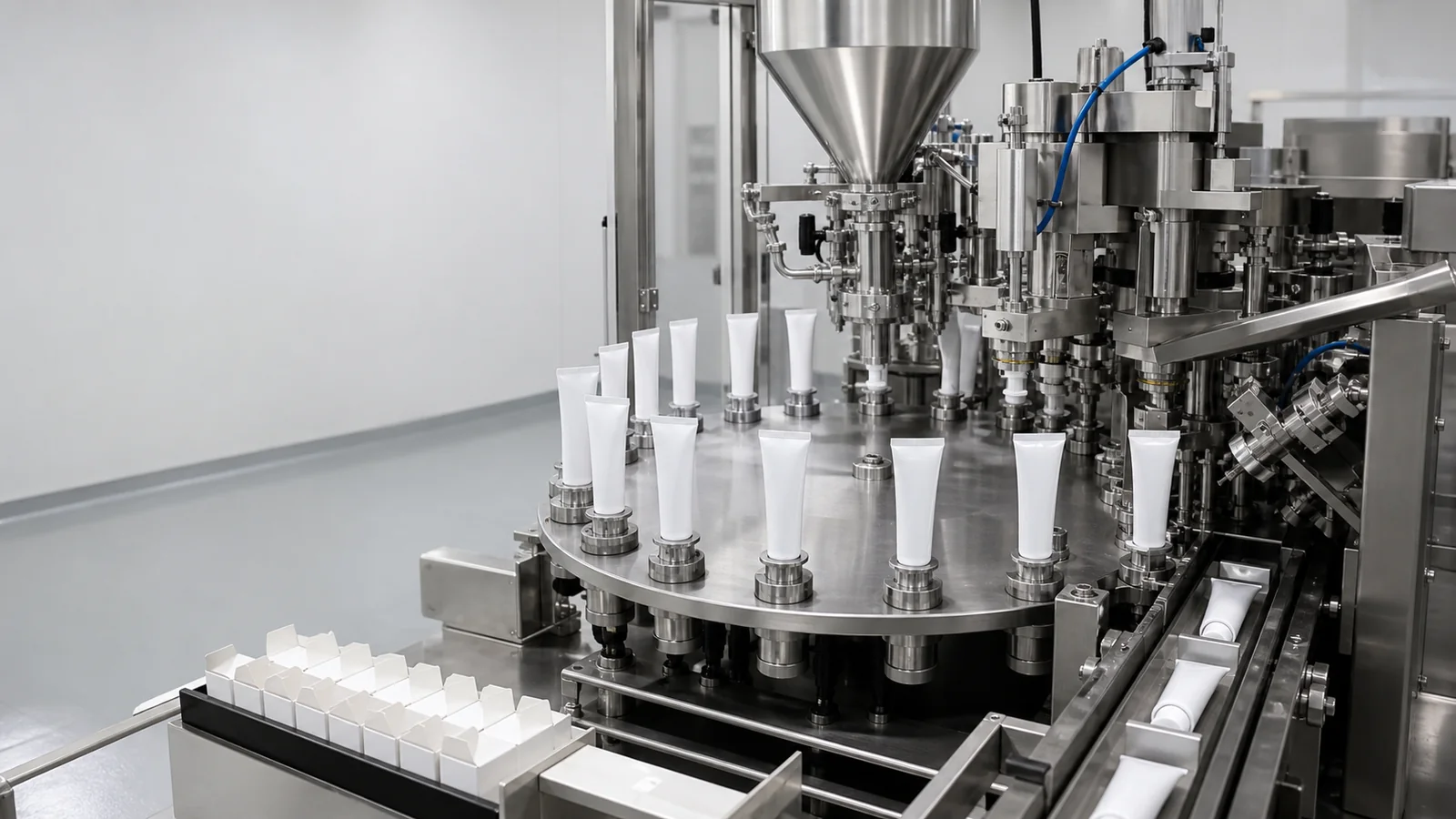
- First distinguish between empty-tube filling with tail sealing and separate tail sealing of pre-filled tubes, then treat tail marking, case sealing and outer carton labeling as independent downstream stages. Special-shaped cap tubes require dedicated positioning and cannot directly use a standard tail sealing configuration.
Solution summary prepared for you
- For ointment tube equipment, first divert by incoming material: empty tubes choose an integrated filling and tail sealing solution; filled tubes choose standalone tail sealing and coding.
- For multi-specification small batches, a semi-automatic tube filling and tail sealing machine can be evaluated. Special-shaped cap tubes require actual samples to confirm positioning fixtures; regular tube holders cannot be used directly.
- Tail batch codes can be handled by a date and batch coding machine. The case sealing and outer case labeling line receives products that have already been cartoned and cased; it does not perform automatic cartoning.
Route comparison
- Suitable for projects that start with empty tubes and ointment and need metering and tail sealing in the same equipment process.
- Empty tubes go from metered filling to tail sealing, reducing transfer and manual tube placement after filling, and the station relationship is more concentrated.
- Must confirm ointment condition, tube material, tube diameter, tail allowance, and cap end positioning. Whether different specifications can share a machine depends on mold change trials.
- When incoming tubes are already filled, or only tail sealing and batch coding are needed, the integrated filling function is unnecessary.
- For batch empty tubes, a fully automatic tube filling and tail sealing machine can be evaluated. For multi-specification trial production, a semi-automatic tube filling and tail sealing machine can verify filling and tail sealing.
- Suitable for tubes that have already been filled upstream and only need positioning, tail sealing, date and batch coding, and trimming per sample.
- A standalone tail sealing station directly receives filled tubes, making it easier to adjust sealing, characters, and trimming, and it can also run separately from an existing filling section.
- Tube tail residue, cap end orientation, seal allowance, and coding area all affect the finished product, so testing with filled tubes is required.
- When the project requires the equipment to also meter the ointment from empty tubes, use a main machine with filling function instead of adding processes to a standalone tail sealer.
- For regular filled tubes, a tube tail sealing and coding machine can be configured. For special-shaped cap projects, combine with a special-shaped cap tube sealing solution for support and positioning.
- Suitable when tail sealing is stable, date and batch coding needs to be added, and finished products that have been cased by manual or other processes need case sealing and outer case labeling.
- Arranging tube body batch codes and outer case labels in layers allows individual tube information and shipping case information to be in clear, scannable positions.
- The current combination does not include an automatic cartoning machine; the outer case stage also needs to verify case specifications, tape, label data, and receiving height.
- When cartons are not yet inserted, outer cases are not yet formed, or case specifications change frequently without verified changeovers, the outer case stage should not be treated as a complete line.
- The date and batch coding machine handles visible characters on tubes or packaging. Cased products can be connected to the case sealing and outer case labeling line.
Associated Equipment / Consumables
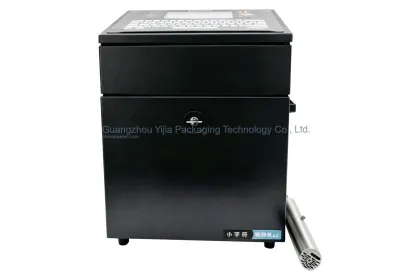 Date & Batch Inkjet Printer
Print date, batch and traceability information on bottles, bags, cartons, labels, cans and outer cases. Confirm the substrate, code content, print size, clarity, adhesion, line speed and installation position. Test cl...
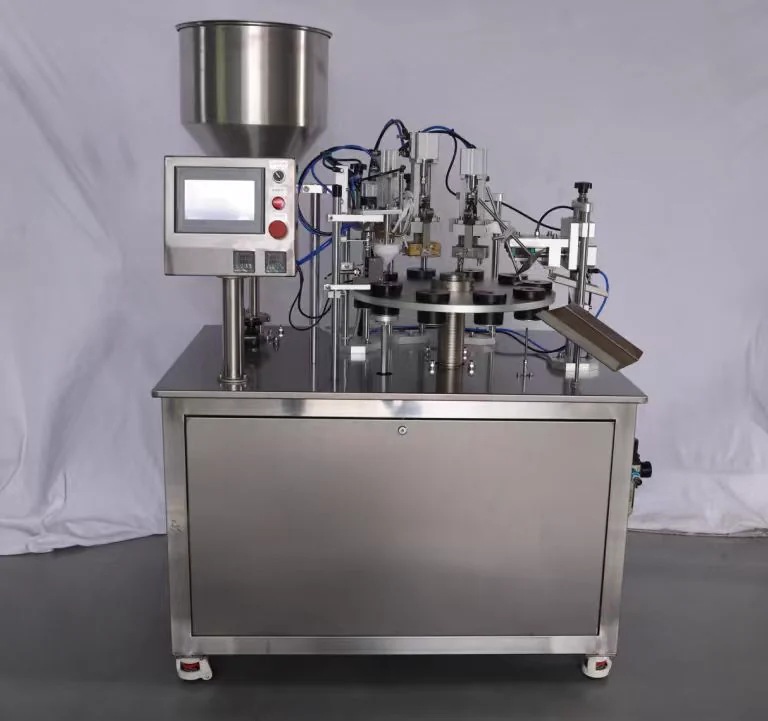 Automatic Tube Filling and Sealing Machine
Verify tube incoming material and contents; The incoming material condition directly determines whether filling is needed; if sample information is insufficient, the main ma...
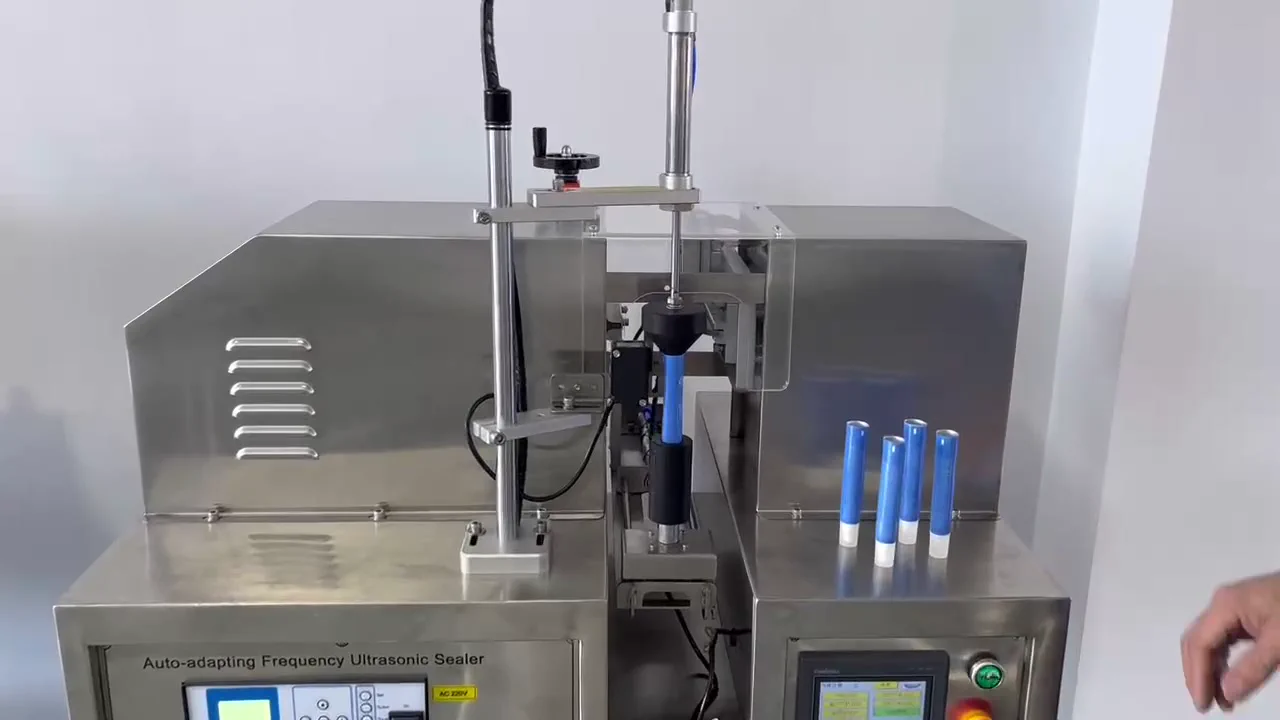 Ultrasonic Tube Sealing Machine
Tube End Sealer Coder: Verify tail sealing, marking, and case specification interfaces; The outer case line receives material that has already been cartoned and cased; it does not replace placing tubes into cartons; P...
Core process
For the same tube project, first distinguish whether the incoming tubes are empty or filled, then verify tube material, cap type, tail, and ointment condition.
For empty tube projects, an integrated filling and tail sealing machine is optional. For filled tubes, focus on tail positioning, sealing, coding, and trimming.
After tail sealing is stable, determine the date and batch code position. Products that have been placed into cartons then enter the outer case sealing and labeling station.
Use front, tail, and cap end photos with actual samples to confirm tail allowance, reference direction, and areas that must not be touched during clamping.
Check tube material, batch code layout, trim shape, cartons, and outer cases as a set of packaging documents to avoid downstream position overlap.
First stabilize tail seal quality, then arrange coding and outer case stages. Confirm with real samples whether each stage needs to be linked.
Sample details
Empty tubes and filled tubes correspond to different main machine functions, so the first document should clearly state the incoming material condition.
Tube samples, whether already filled, tube diameter, total length, and sealable tail areaThe flow and stringing behavior of the contents affect the filling nozzle and anti-drip treatment; filled projects also need to state whether the tube tail has product residue.
Ointment samples, viscosity, whether they contain particles or foam easilyBatch size, changeover frequency, and staffing are used to determine the division between fully automatic, semi-automatic, or standalone tail sealing machines.
Shift plan, main specifications, changeover frequency, and acceptable manual operationsSeal width, trim contour, and character position share the tail space, so they should be marked together on the drawing.
Tail seal finished sample, trim shape, batch code characters, and reading directionOnly by clearly defining the boundary between carton insertion and the outer case stage can the coding, case sealing, and outer case labeling interfaces be correctly configured.
Carton and outer case dimensions, packing arrangement, tape specifications, and outer case label samplesCommon selection mistakes
Empty tubes require filling; filled tubes only need tail processing. If these two types of incoming materials are treated as one, the main machine function will be wrong from the start.
Plastic layer structures and aluminum-plastic composite layers behave differently during heat forming; using molds and conditions from another tube material may cause pinching or opening.
Tail seal, trim, and batch code all occupy the tail area; characters too close may be cut off, and printing on the tube body requires different triggering and orientation.
Special-shaped caps change the tube's center of gravity, standing posture, and fixture clearance; simply changing the regular tube holder may not provide stable positioning.
Outer case sealing and labeling equipment can only handle incoming products that have already been placed into cartons and cases; it cannot replace the automatic cartoning process.
View detailed technical notes
The First Boundary Is the Incoming State of the Tube
Whether the ointment tube enters the equipment as an empty tube or already filled determines whether the main machine needs a metering function. Clarify the incoming material first, then discuss tail sealing, batch number and carton section, to avoid mistaking different processes for the same integrated line.
Tube Material and Cap Type Determine Positioning and Tail Sealing Details
Empty tubes can enter fully automatic or semi-automatic ointment tube filling and sealing equipment. Tubes already containing product are handled by a tail sealing and coding machine for the tail end. Special-shaped caps also affect standing and clamping, so a dedicated positioning fixture must be confirmed with an actual capped sample.
For Empty Tube Projects, Verify Filling and Tail Sealing Together
Fully automatic ointment tube filling and sealing machines suit batch empty-tube projects, while semi-automatic machines retain more manual positioning for multi-specification, small-batch trial production. Both must use real ointment to confirm the filling nozzle, stringing and tube tail cleanliness.
Pre-filled Tubes Keep an Independent Tail Sealing Station
The tube tail sealing and coding machine receives pre-filled tubes and focuses on checking tail residue, seal width, batch number position and trim edge profile. Special-shaped cap tube sealing solutions solve posture issues with dedicated supports, but the structure still needs to be determined with actual samples.
Outer Carton Traceability Is Not Automatic Cartoning
A date and batch inkjet coding machine can add characters to the tube body or packaging. The carton sealing and outer carton labeling line handles products that have already been cartoned and case-packed. Automatically placing tubes into small cartons is not within the scope of this equipment group and should be raised separately when needed.
Sample Stage: First Verify the Tube and Contents
Test the tube material, tube diameter, tail allowance, cap type and ointment sample as a complete set, observe positioning, filling, sealing and trimming results, then determine whether a fully automatic, semi-automatic or tail sealing standalone machine is needed.
Marking Stage: Give the Batch Number a Clear Position
On the finished tail-sealed sample, determine the content, direction and visible area of the date and batch number to avoid characters entering creases or trim lines. Inkjet adhesion must also be verified on the actual surface.
Shipping Stage: Clarify the Boundary Between Cartoning and Case Sealing
If the finished product requires small cartons and outer cartons, first state whether cartoning is done manually, by existing equipment or by separate purchase. The outer carton line only starts configuring sealing, labeling and conveying interfaces from its actual receiving state.
Common questions
How do I verify the configuration of ointment tube sealing equipment?
The configuration must be calculated based on the incoming material condition, tube material, size range, contents, and downstream scope. An accurate configuration cannot be determined from "ointment tube" alone.
Can one tail sealing machine handle multiple tube types?
Verified specifications can be covered by changing molds and parameters, but the compatibility boundary depends on tube diameter, length, tail allowance, and cap type, and each type requires sample testing.
What results should be checked to confirm reliable tail sealing?
Check the seal cross-section, paste entrapment, trim edge, and specified seal test results, and run continuous samples with actual tubes. A smooth appearance cannot replace functional inspection.
Can date and batch codes be printed after tail sealing?
Date and batch coding can be configured, but the trigger and viewing direction differ between the tail seal area and the tube body, so the character layout must be confirmed first.
Which configuration is suitable for small-batch tube projects?
For multi-specification trial production, evaluate with a semi-automatic tube filling and tail sealing machine. If the incoming tubes are already filled, a tube tail sealing and coding machine is more suitable.
Can the entire outer packaging after tail sealing be covered?
It can connect to coding, as well as case sealing and outer case labeling for packed products. Automatically placing tubes into cartons is not included in this equipment combination.