Solution topic
Automatic Premade-Pouch Line or Continuous Sealer for Powder
Compare automatic pre-made bag filling and sealing, continuous sealing of pre-filled bags, and powder filling lines. Explain the configuration boundaries for bag type, bag mouth du
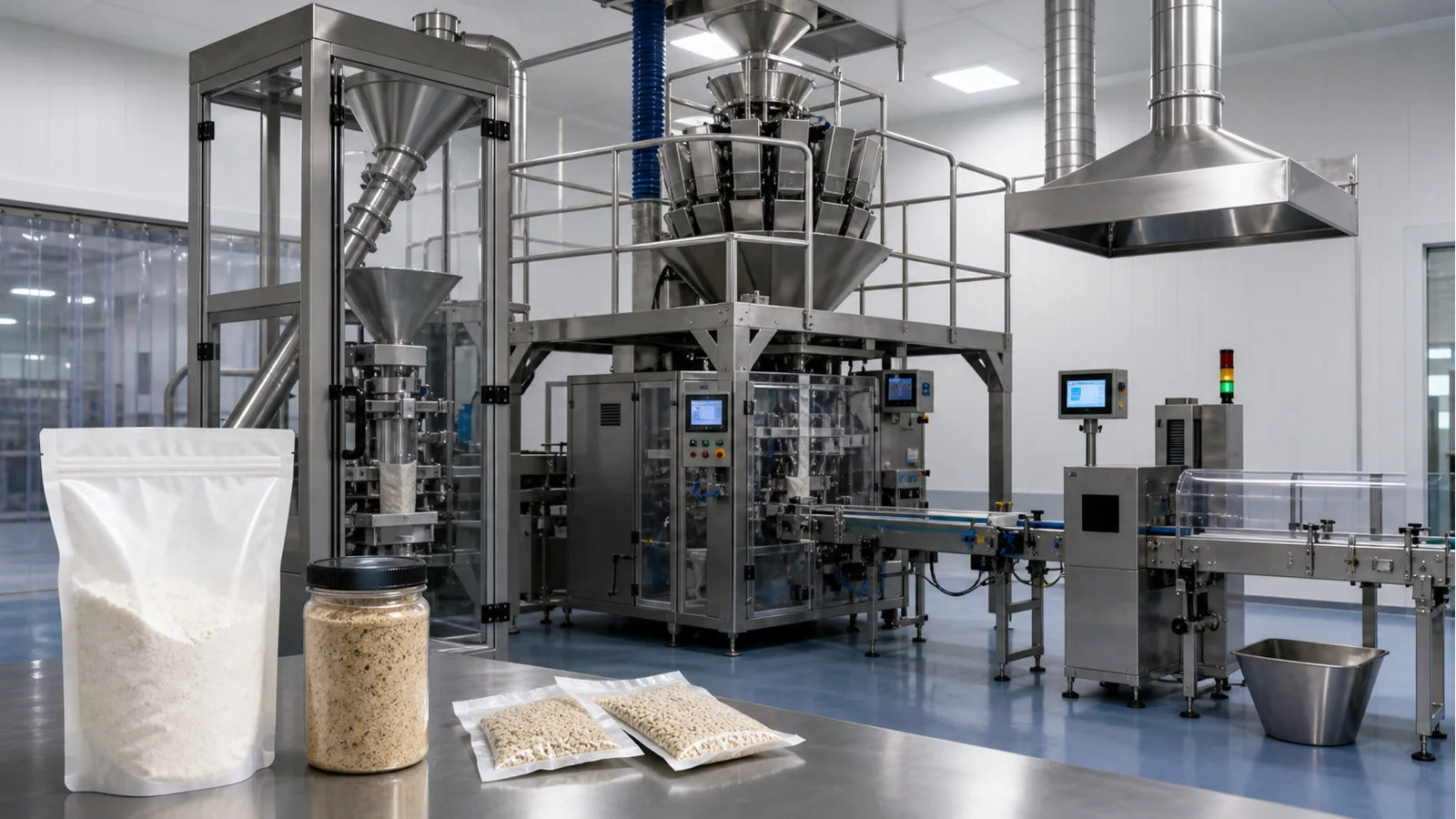
- An automatic pouch line connects dosing, opening, filling and sealing; a continuous sealer suits bags that are already filled.
Solution summary prepared for you
- For the powder pre-made bag line, first use actual powder to confirm metering and powder drop, then the single-lane / three-station pre-made bag filling and sealing machine series handles bag picking, opening, filling, and heat sealing.
- Bags already filled manually or by other equipment can go directly into the continuous bag sealing machine without reconfiguring automatic bag picking and filling.
- Date coding and checkweighing/visual inspection are added according to the finished bag layout and sample rules. Ordinary powder bags do not use the stand-up spout bag filling and screw capping route.
Route comparison
- Suitable for projects with stable production bag types, powder formulas, and order rhythm, requiring continuous bag picking, filling, and sealing.
- Bag picking, opening, powder filling, and main sealing are linked in a continuous cycle, suitable for orders with stable bag types and powder states.
- Powder bridging, dust, bag material friction, and bag opening deformation all require testing with actual materials and bags, and changing bag types requires rechecking the clamping.
- When bag types change frequently, powder metering tests are not yet completed, or there is no sample record of bag opening success rate, segmented verification should be done first.
- Powder/granule filling machine connects to the single-lane / three-station pre-made bag filling and sealing machine series, and organizes powder drop and heat sealing according to the bag mouth state.
- Suitable for projects where filling has been completed manually or by other equipment, bag types vary, or output does not yet require automatic bag feeding.
- Filled bags only need bag mouth finishing and heat sealing, the process is simple, and it is also convenient to retain the original manual or other filling methods.
- The upstream fill weight, bag mouth powder content, and bag feeding posture are still controlled by the previous stations; the sealing machine does not perform metering or bag opening.
- When the project requires automatic bag picking, opening, and metering filling to be completed continuously, configuring only independent sealing will lack the upstream actions.
- Send the filled bags with clean bag mouths into the continuous bag sealing machine, and the date/batch inkjet coding machine can be set independently according to the bag surface position.
- Suitable for projects with stable pre-made bag main sealing, requiring batch traceability, conditional screening, or fixed multi-bag sales units.
- After main sealing, batch code, weight, and visible appearance are inspected in a unified pass direction, and defective bags can be sorted under clear rules.
- Checkweighing and visual inspection depend on sample rules, and shrink wrapping depends on finished bag arrangement and film material. The downstream section cannot eliminate upstream fill weight or powder trapping fluctuations.
- When the main seal samples are not repeatable, weight boundaries overlap, or appearance defects are undefined, stabilize the front section first before fixing the inspection and outer packaging stations.
- After the pre-made bag main line, connect the date/batch inkjet coding machine and online checkweighing and visual inspection system. For multi-bag combination, evaluate the L-type cut-seal shrink wrapping line.
Associated Equipment / Consumables
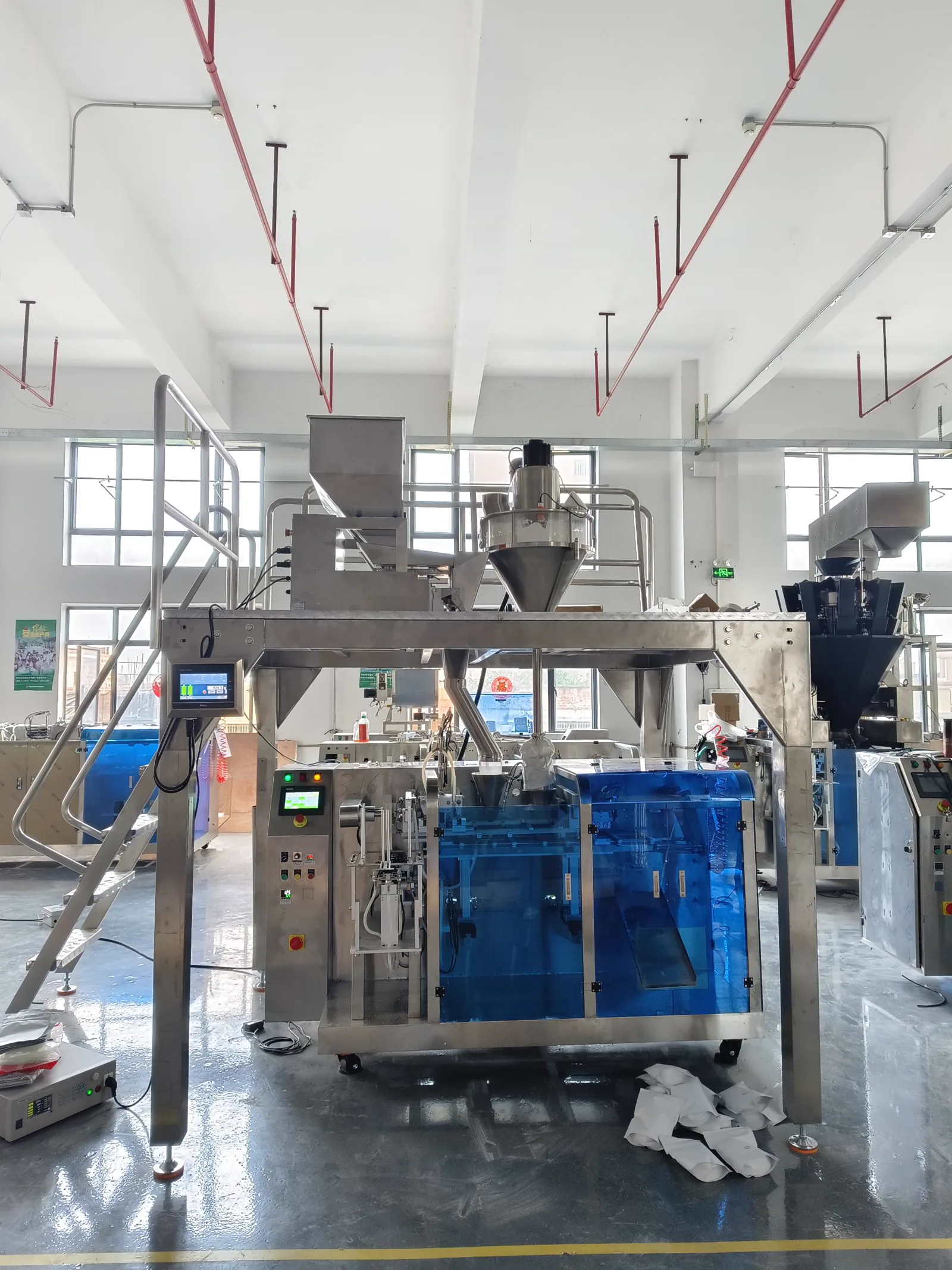 Powder and Granule Dual-Dosing Horizontal Premade-Pouch Machine
The machine packs powders, granules or products needing two dosing units into premade pouches. Confirm flow, bulk density, particle size, dust, static and fragility, separate dose tolerances, discharge sequence, pouch...
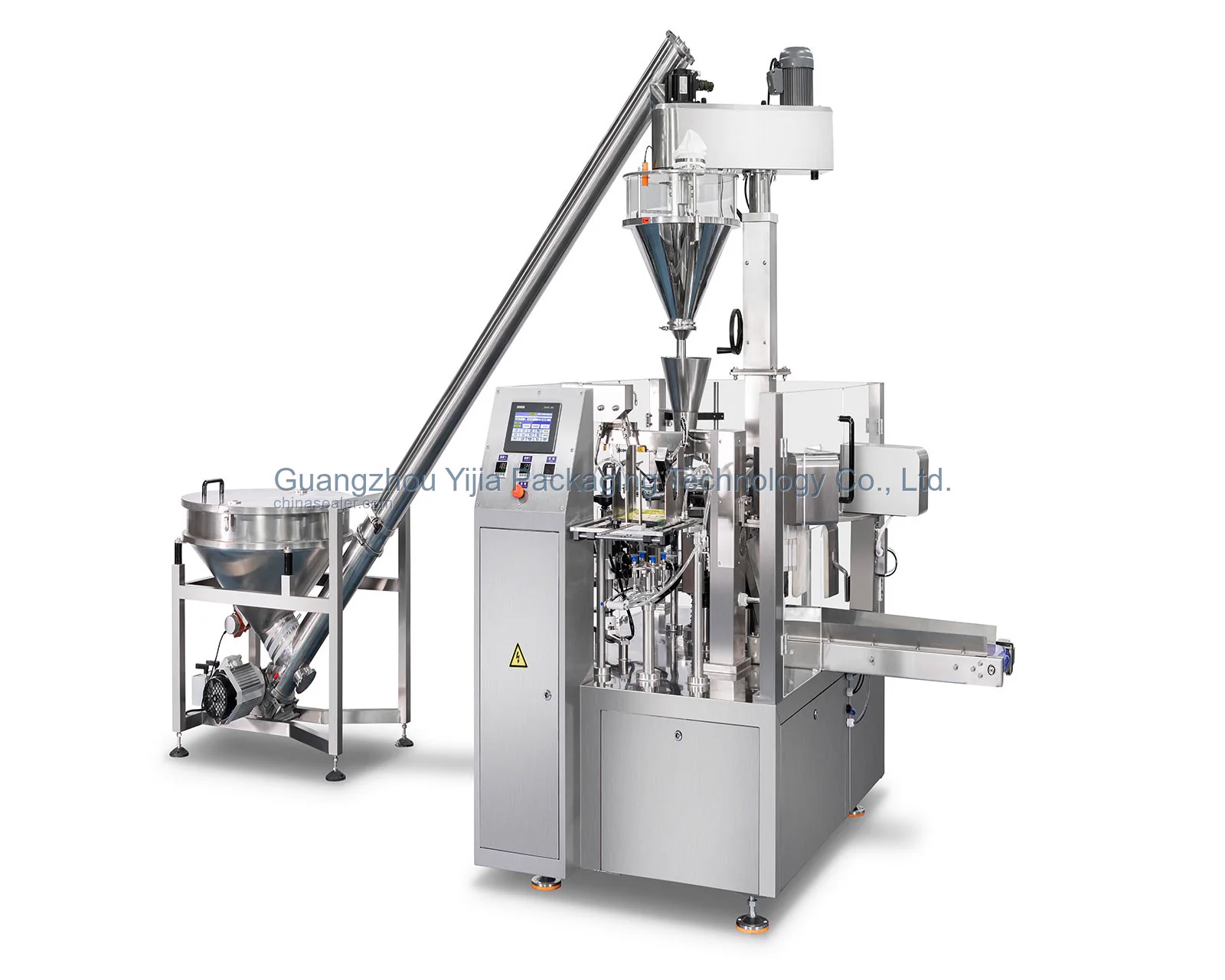 Single-Lane and Three-Station Premade Pouch Filling and Sealing Series
Actual material metering and powder drop verification; The metering direction (auger, weighing, or other) is determined by the material and test...
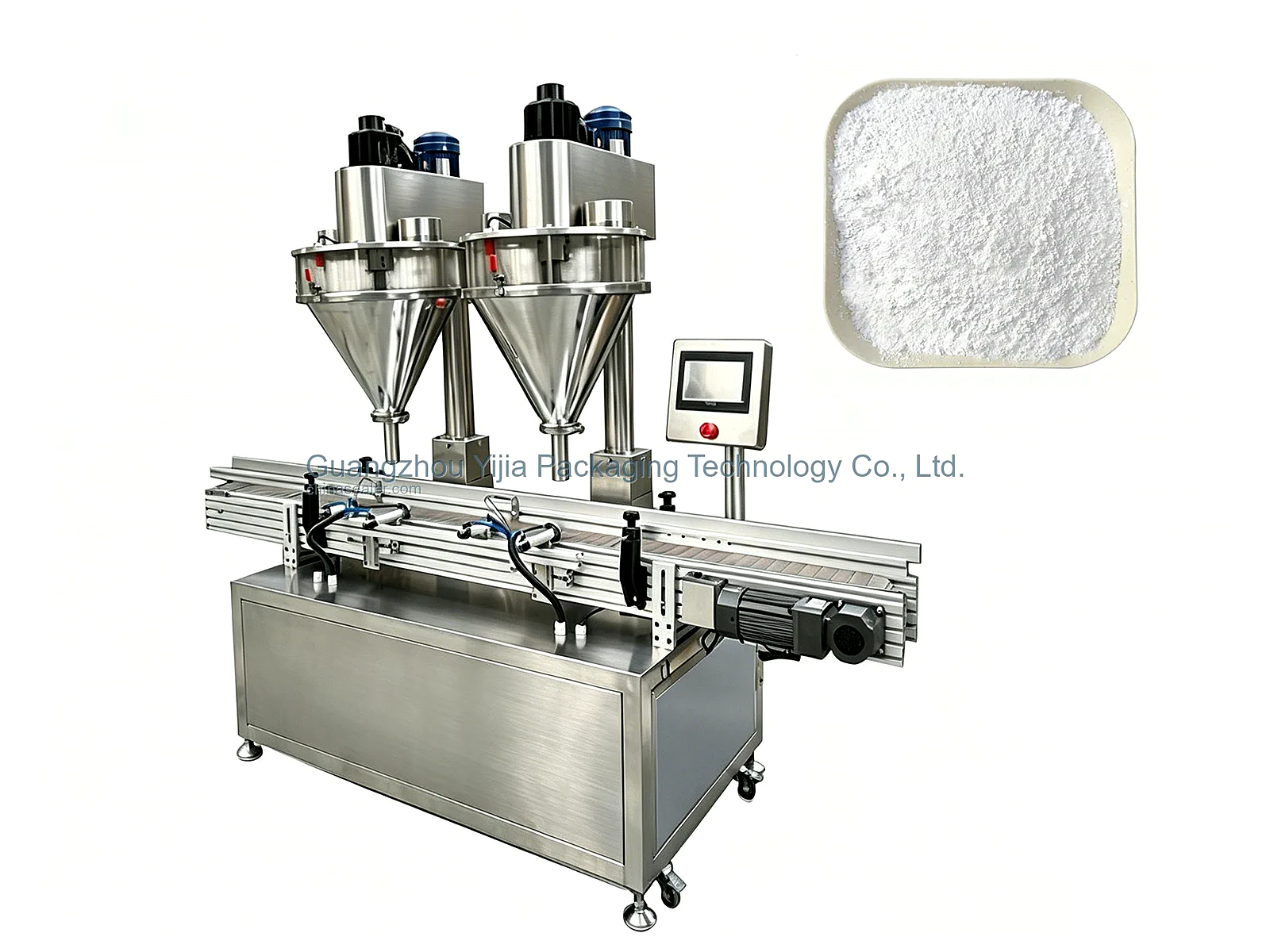 Powder and Granule Dosing Filling Machine
Pre-made bag automatic main line; Bag opening success, filling nozzle insertion depth, bag mouth cleanliness, and sealing completion samples should be recorded separately to...
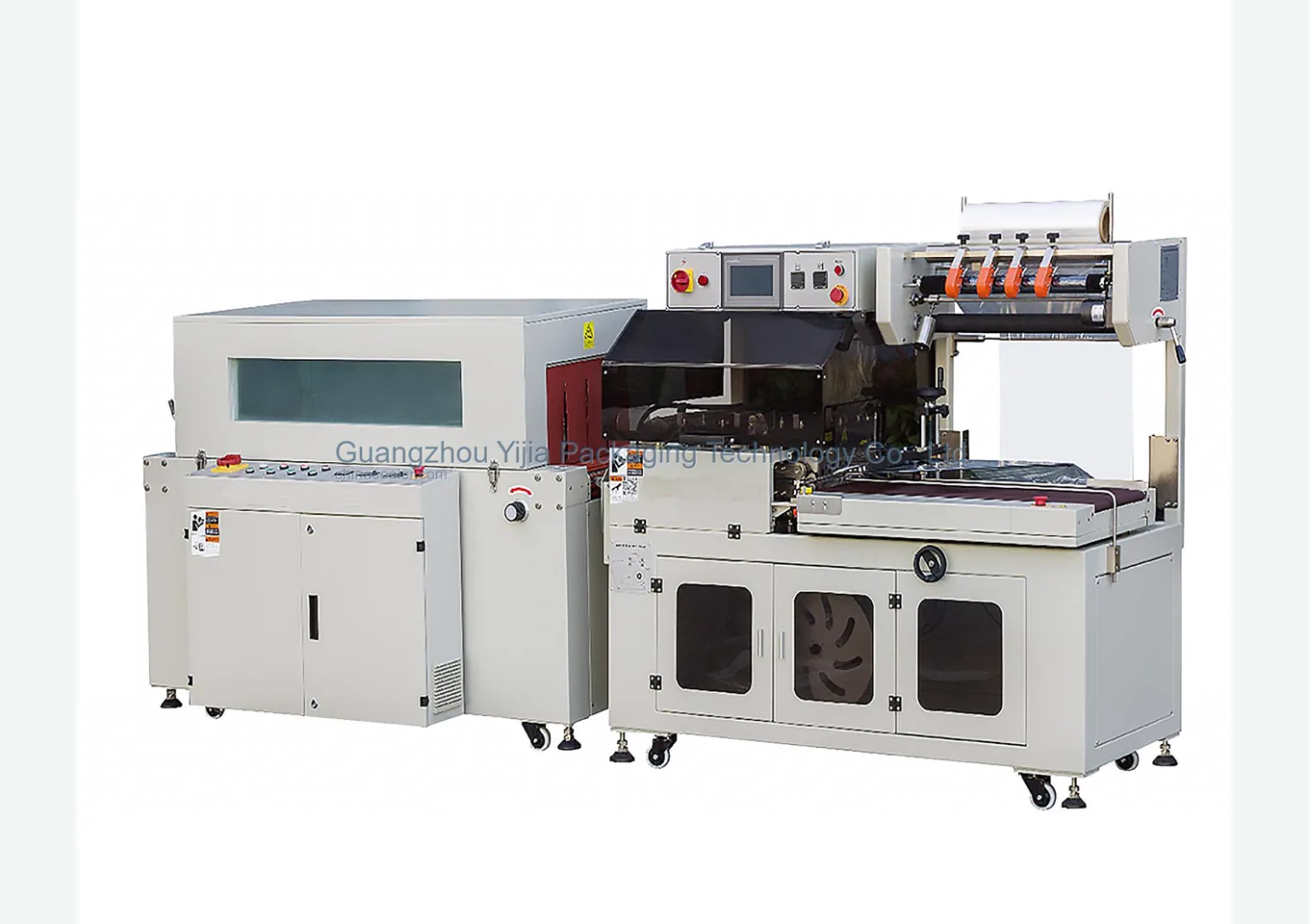 L-Sealer Shrink Wrapping Line
Actual material metering and powder drop verification; The metering direction (auger, weighing, or other) is determined by the material and test results, and cannot be fixed based only o...
Core process
First observe the powder state during feeding, metering, stopping, and restarting, and record bag mouth dust, powder drop, and acceptable fill weight samples.
After the bag type and feeding state are stable, the single-lane / three-station pre-made bag filling and sealing machine series performs bag picking, opening, filling, and main sealing.
If the bags have already been filled manually or by other equipment, the flattened bag mouth with a clean rim can be fed directly into the continuous bag sealing machine.
The date/batch inkjet coding machine triggers characters according to the bag surface layout, and the online checkweighing and visual inspection system screens based on weight and clearly visible defects.
After the powder, bag type, and orders are stable, connect each station and verify main line startup, missing bag, missing material, stop, and abnormal recovery.
If the sales unit requires multi-bag combination, shrink wrapping can be evaluated after the main seal and inspection pass. Ordinary powder bags do not enter the spout bag screw capping process.
Sample details
The flow, caking, bulk, and dust of the powder determine the feeding, metering, and bag mouth contamination state.
Production powder, formula batches, flow and caking conditions, dust state, and cleaning requirementsBag picking, opening, and heat sealing directly depend on the bag material structure, and dimension drawings cannot show all friction and deformation.
Production pre-made bags, bag type dimensions, material structure, bag mouth accessories, and planned bag feeding directionFill weight and production organization together determine the metering, manual feeding, buffering, and line integration scope.
Target fill weight, shift orders, specification quantities, changeover frequency, and acceptable operation methodsCharacter and weight/appearance inspection require the pass direction of finished bags and good/bad samples as the rule source.
Coding content position, weight distribution, visible defect samples, sorting actions, and recording requirementsThe site will limit equipment arrangement, feeding position, cleaning access, and finished bag collection method.
Workshop layout, incoming/outgoing material direction, electrical and air supply, cleaning space, and outer packaging methodCommon selection mistakes
The machine name alone cannot determine the bag mouth width, bag opening method, or powder drop point, and the main machine cannot determine the clamping based on that.
Dust will enter the bag mouth and equipment cleaning areas. If residual powder during stops is not recorded, the continuous trial production results can be distorted.
Different powders may have significantly different flow and bulk properties, so the same metering settings cannot be directly applied to another formula.
Residual powder and bag mouth wrinkles will separate the heat seal layers, and continuing to increase heat may cause bag material deformation.
The automatic bag picking main line and the incoming state of filled bags for sealing are different, and the number of equipment and manual responsibilities are also different.
View detailed technical notes
First look at the bags entering the sealing section
Powder pre-made bag packaging starts from two incoming states: empty bags require bag picking, opening, and filling, while bags already filled with powder only need bag mouth finishing and heat sealing.
Powder state comes before equipment combination
The actual powder determines the metering and dust boundaries. Flowability, caking, and bulk state should be observed during startup, continuous feeding, and stops, and cannot be replaced by another powder.
Verify Metering and Bag Mouth Cleanliness Together
The powder/granule filling machine first establishes the fill weight and product cutoff sample, then checks the filling nozzle position with the pre-made bag machine. If powder falls into the sealing area, address it at the drop point and powder recovery stage, and record the bag mouth condition during continuous feeding and after restart.
Automatic Main Line Requires Stable Bag Type
The single-lane/three-station pre-made bag filling and sealing machine series is suitable for continuous bag picking, opening, filling, and sealing after the bag type is stable. Keep success and abnormal samples for each action, and record missing bags, bag opening failures, and powder trapped in the seal edge by station.
Independent Sealing Does Not Repeat Previous Steps
When powder has already been filled manually or by other equipment, the continuous bag sealing machine can independently handle the bag mouth. It receives flattened, clean, and continuously feedable semi-finished bags. The upstream process remains responsible for fill weight, powder recovery at the bag mouth, and bag orientation; the sealing machine does not redo metering or bag opening.
Downstream Rules Come from Finished Bag Samples
The date/batch inkjet coder is set according to the bag surface material and layout. The inline checkweigher and vision inspection system screen based on weight distribution, characters, or visible appearance samples.
Exclude Spout Bag Capping for Ordinary Powder Bags
Ordinary powder pre-made bags have no spout or screw capping action, so the stand-up spout bag filling and capping machine should not be added to this main line. Similar bag names cannot replace the bag mouth structure judgment.
Outer Shrink Wrap After Main Sealing
When multi-bag combination sales are needed, the L-type shrink wrap line can be evaluated after the main sealing and inspection. Group arrangement, heat exposure, and character visibility are verified with finished bags.
Use Section-by-Section Records to Locate Abnormalities
Acceptance records link powder batch, weighing, bag samples, bag opening, seal edge, characters, and inspection results. When changing formula or bag material, resample from the affected stations.
Common questions
How is the configuration of a powder pre-made bag machine determined?
The configuration must be calculated based on powder metering, bag type, bag picking and opening, sealing, traceability, and inspection scope. It can only be finalized after testing with actual materials and production bags.
How is the packaging capacity per shift confirmed?
It is determined by the slowest and most repeatable step among powder metering, bag picking and opening, filling, and main sealing, and should be recorded through continuous trial production with actual materials.
Can the machine be selected without powder and bag samples?
Photos and dimensions can give a preliminary idea of the bag type, but the formal metering, bag opening, and heat sealing configurations still need to be verified with the actual powder and production bags.
What packaging consumables need to be prepared daily?
Mainly production pre-made bags and inkjet coding consumables. When multi-bag shrink wrapping is used, an outer film matching the grouping method is also required.
Where should you check when powder is trapped at the bag mouth?
First control the filling drop point and residual powder before sealing, then check the bag material's heat seal layer, bag mouth wrinkles, and sealing conditions, and retest each item.
Does powder packaging have to be made into a linked line?
Not necessarily. Filled bags can be sealed independently. Only when the bag type, powder, and orders are stable, and continuous traceability inspection is needed, should it be connected to the main line.