Solution topic
Tomato Ketchup Pouch or Bottle: Choosing Filling and Sealing Equipment Based on Packaging Format
Compare tomato ketchup preformed pouch filling and sealing, spouted pouch spout welding or filling and screw capping, and bottle screw capping with inner sealing routes; selection
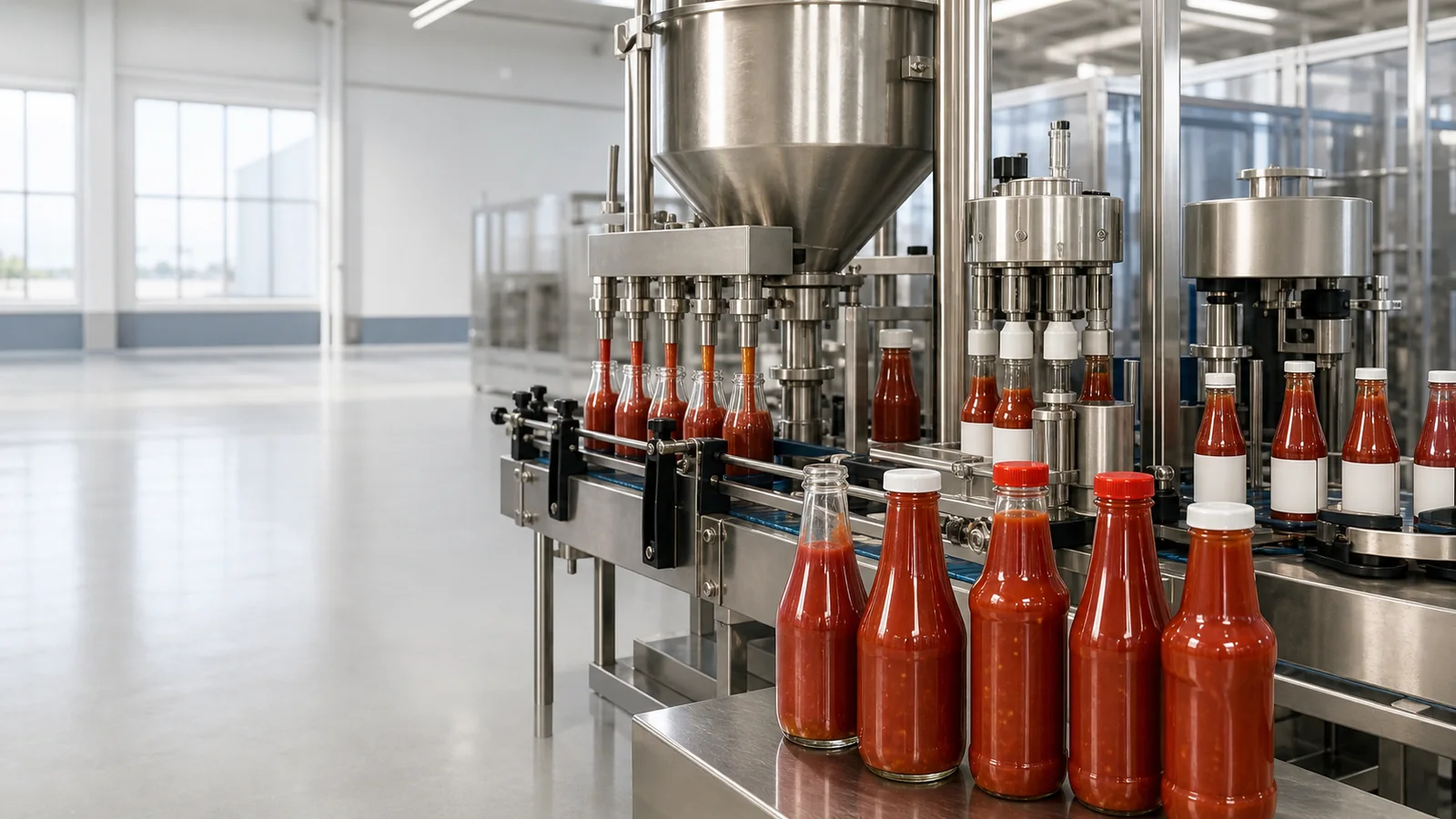
- Preformed pouches, spouted pouches, and bottles correspond to different pouch picking, spout welding, screw capping, and inner sealing actions; sauce viscosity and particles remain the prerequisite for filling. First determine the sales packaging and dispensing method, then configure downstream labeling and coding.
Solution summary prepared for you
- Ketchup equipment is first divided into ordinary pre-made pouch, spouted pouch, and bottle routes, as the feeding and closing logic for the three container types is different.
- Ordinary pouches use a sauce piston filling machine with a pre-made pouch filling and sealing machine. Spouted pouches choose a spout welding and sealing machine or a filling and capping integrated machine based on the incoming material.
- Bottles use a servo piston liquid filling machine, automatic screw capping machine, labeling machine, and inkjet printer. If aluminum foil inner sealing is also required, bottle cap liner information must be provided separately.
Route comparison
- Suitable for orders where heat-sealed pre-made pouches are confirmed and automatic bag picking, ketchup filling, and pouch mouth sealing are required.
- A sauce piston filling machine and a pre-made pouch filling and sealing machine can verify opening, filling, pouch mouth cleanliness, and heat sealing in one process.
- Pouch heat seal layer, opening stability, and sauce entrapment all affect the main seal edge; the equipment does not handle spout welding or bottle cap tightening.
- When the actual packaging is a spouted pouch with cap, or the project has chosen bottles, the ordinary pre-made pouch main line should not be applied.
- The ordinary pre-made pouch route is organized around sauce metering, automatic bag picking and opening, filling, and pouch mouth heat sealing.
- Suitable for projects where ketchup uses spouted pouch packaging and it is clear whether the pouch body is pre-welded with a spout and the capping responsibility.
- A spouted pouch spout welding and sealing machine handles the joining of the spout body and pouch, while a spouted pouch filling and capping integrated machine is for pouch bodies that already have a spout, completing filling and cap clo...
- Spout material, direction, diameter, pouch body support, and cap type all need to be tested as a set; ordinary pouch heat sealing results cannot be extrapolated.
- When the pouch body has no spout structure, or only ordinary pouch mouth heat sealing is needed, do not add spouted pouch equipment.
- Based on the pouch incoming material status, choose between spout welding and sealing and spouted pouch filling and capping as the corresponding main machine, without merging the two steps by default.
- Suitable for ketchup projects where glass or plastic bottles and threaded caps are confirmed, and filling, capping, and bottle traceability are required.
- Bottles can establish an independent retail packaging line with a servo piston liquid filling machine, automatic screw capping machine, labeling machine, and inkjet printer.
- Bottle clamping, bottle mouth cleanliness, cap type, and label surface must be verified for each specification. Induction inner sealing is not included in this combination; if added, the packaging materials need to be rechecked.
- When the sales target is a lightweight heat-sealed pouch or spouted flexible packaging, do not force a bottle line due to appearance preference.
- Complete ketchup filling into bottles, cap closure, bottle labeling, and date and batch code printing in sequence.
Associated Equipment / Consumables
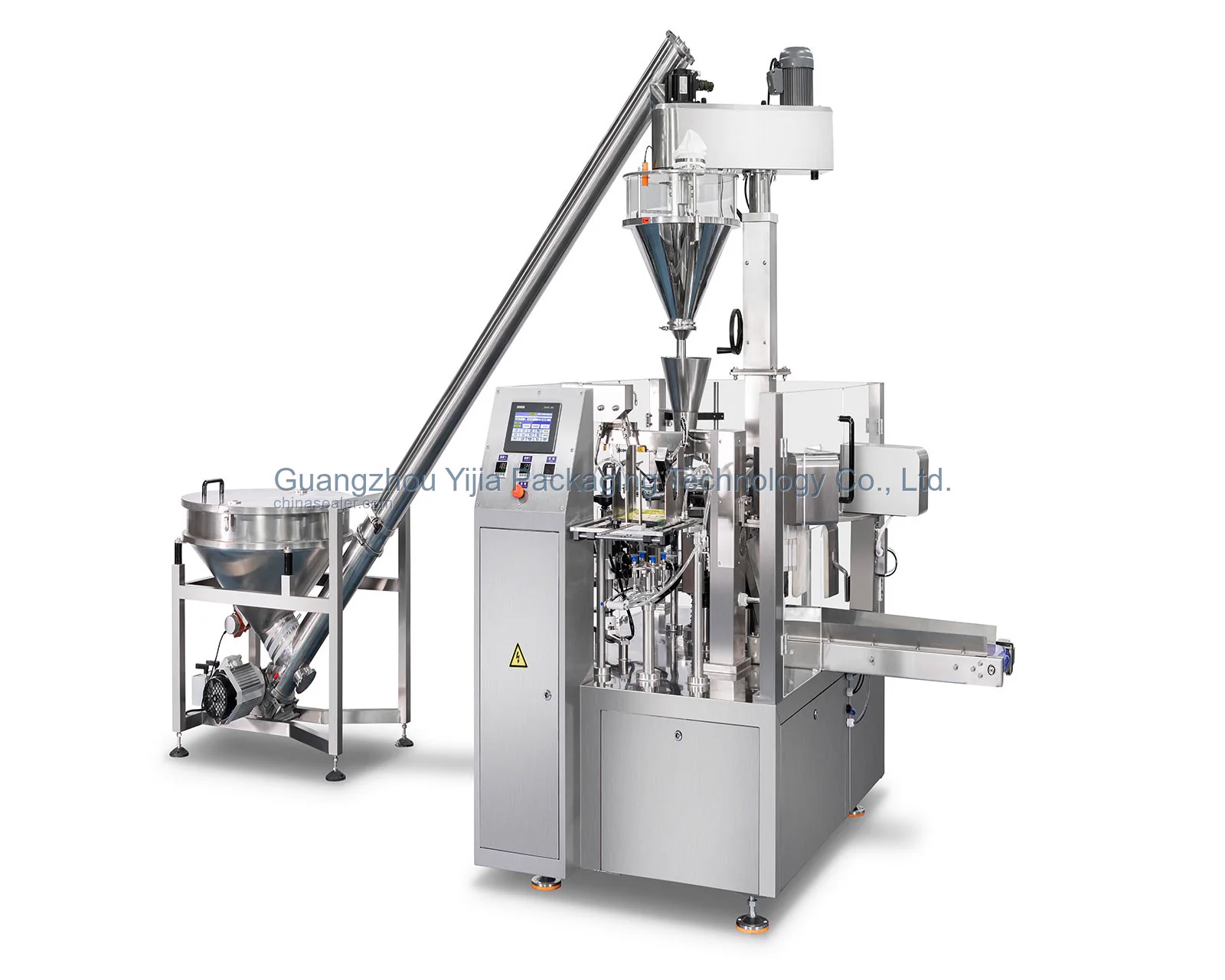 Single-Lane and Three-Station Premade Pouch Filling and Sealing Series
Actual product filling benchmark; Particle passage and drip prevention require sample testing; normal liquid settings cannot be applied to viscou...
 Piston Sauce Filling Machine
Actual product filling benchmark; Particle passage and drip prevention require sample testing; normal liquid settings cannot be applied to viscous sauces; Ketchup piston filling machine f...
Core process
First confirm viscosity, particles, stringiness, and cleaning with actual ketchup, then check the filling landing point for pouch mouth, spout, or bottle mouth separately.
Ordinary pre-made pouches are handled by a pre-made pouch filling and sealing machine that performs bag picking, opening, filling, and pouch mouth heat sealing, protecting the seal edge cleanliness during filling.
For pre-welded spouted pouches, a spouted pouch filling and capping integrated machine can be used. If the project starts from welding the spout to the pouch body, then consider a spouted pouch spout welding and sealing machine separately.
The bottle route uses a servo piston liquid filling machine for metering, an automatic screw capping machine for cap closure, and then enters the bottle marking section.
The round and square bottle labeling machine and date and batch code inkjet printer are arranged according to the stable bottle body surface. For pouches, an independent printing position is selected based on the pouch surface or spout area.
Before confirming the solution, clarify whether the sales packaging is an ordinary pre-made pouch, spouted pouch, or bottle, and submit containers, sealing films, and finished product goals for each route separately.
Sample details
Record ketchup viscosity, particles, stringiness, and cleaning, and determine the shared or independent actual product filling conditions for the three packaging types.
Ketchup actual sample, particle state, target fill volume, production temperature, and flavor change cleaning requirementsFirst choose ordinary pre-made pouch, spouted pouch, or bottle, and explain the sales and opening method, to avoid inquiring about a vague main machine at the same time.
Finished packaging photos, container samples, opening method, main project specifications, and alternative specificationsOrdinary pouches submit the heat seal layer, spouted pouches submit the spout-cap combination, and bottles submit the threaded cap and bottle label surface.
Pouch material structure, spout cap sample, actual bottle cap, key dimensions, and sealing goalList actions according to bag picking or bottle feeding, filling, closing, and marking, then check the planned cycle time against the main specification.
Automation scope, target cycle time, shifts, manual involvement, and existing equipment interfacesInclude label and batch number positions, site direction, power and air supply, and delivery stage in one document for separate route quotations.
Layout draft, printing content, layout drawing, power and air supply, budget stage, and sample shipping planCommon selection mistakes
Ketchup particles and stringiness change the valve path and filling nozzle, so the same packaging shape cannot be directly inferred from other liquids.
Ordinary pre-made pouches rely on heat sealing the pouch mouth, while spouted pouches rely on spout body welding and cap closure; the equipment actions and packaging material benchmarks are different.
Closing a bottle cap does not automatically include aluminum foil inner sealing. When the cap liner structure and sealing goal are not yet confirmed, induction sealing cannot be written as a fixed station.
When pouch width, spout direction, and bottle body shape vary greatly, the changeover parts and cleaning responsibilities for each route should be calculated separately.
If the site does not separately plan bag picking, bottle feeding, finished product collection, and marking areas, forced line integration later can easily cause cross-contamination and blockages.
View detailed technical notes
Packaging Format Comes Before Machine Type
Tomato ketchup can be packed in standard preformed pouches, spouted pouches, or bottles, but the feeding, primary sealing, and usage methods differ for each container type, so equipment should be selected separately by container.
The Same Ketchup Corresponds to Three Sealing Logics
The particle content, viscosity, and stringiness of the sauce determine the filling structure. The heat-seal layer of the pouch film, the spout cap, and the bottle cap each determine the subsequent sealing method, and they cannot be combined into one universal line.
Standard Preformed Pouches End with Heat Sealing at the Pouch Mouth
Standard preformed pouches are handled by a piston filling machine for sauces together with a preformed pouch filling and sealing machine to perform pouch opening, dosing, and heat sealing. The product must be discharged away from the seal area, and for laminated pouches the opening and clamping must be verified; spouted pouches are not part of this route.
Spouted Pouches: First Check the Spout Incoming Condition
For spouted pouches, first clarify whether the spout is already welded to the pouch body. If not, use a spout welding and sealing machine to handle the structure. If the pouch already has a spout, use a filling and screw capping integrated machine to fill and cap; the two responsibilities must not be confused.
Bottle Route Ends with Capping and Marking
Bottles use a servo piston liquid filling machine and an automatic screw capping machine, followed by a labeling machine for round and square bottles and a date/batch coding machine. If the sales packaging also requires an aluminum foil seal inside the cap, the cap liner and sealing target must be submitted separately; it cannot be inferred directly from the capping configuration.
Filling Processes Can Be Compared, but Sealing Cannot Be Mixed
All three routes require control of ketchup particle passage, filling cutoff, and cleaning of contact parts, but container positioning and sealing samples should be recorded separately.
Keep Configuration Boundaries When Packaging Materials Are Not Finalized
If the production pouch, spout cap, or bottle cap is not finalized, only the equipment direction can be divided at this stage. Tooling, change parts, and continuous cycle time must wait for official samples.
Compare Three Packaging Types Using the Same Set of Business Conditions
The solution documentation should submit in one go the ketchup, three optional packaging types, main filling volume, planned cycle time, label/batch requirements, and site layout, to facilitate comparison of real production routes.
Common questions
How do you determine equipment separately for ketchup in pouches and bottles?
Ordinary pre-made bags, spouted pouches, and bottles should be checked against separate equipment because the bag picking, spout handling, capping, and marking actions differ. The configuration can only be finalized after the actual product and packaging materials are confirmed.
How is the cycle time for pouches or bottles confirmed?
The actual product metering, bag picking or bottle feeding, main sealing, capping, and marking must be connected in a trial run, and the rate is determined by the limiting action in the agreed working conditions, without giving a generic capacity figure.
Is it necessary to provide ketchup and packaging samples?
Yes. Ketchup samples are used to verify particles and stringiness, and container samples are used to confirm clamping, filling, and sealing. Photos are only suitable for an initial route assessment.
Who determines the pouch material, spout, and bottle cap?
The final production pouches, spout caps, bottle caps, and labels should be provided and signed off by the project, and the equipment can then propose specifications and adaptation recommendations based on trials.
How can the risk of ketchup packaging leakage be reduced?
Start by controlling the end of filling and the cleanliness of the pouch or bottle mouth, then use the official packaging materials to verify heat sealing or screw capping. No single parameter can replace a complete sample inspection.
Do all three packaging types need to be linked in one line at once?
You can first complete a single-machine trial for one main packaging type, then connect upstream and downstream based on stable orders. When multiple packaging types run in parallel, the boundaries for changeover, cleaning, and traceability should be kept separate.