Solution topic
Tube tail sealing only, or integrated filling and tail sealing? Judge by incoming material state
Explains the applicable boundaries of pre-filled tube tail sealing and coding and empty tube integrated filling and tail sealing machines, and lists the required information on tub
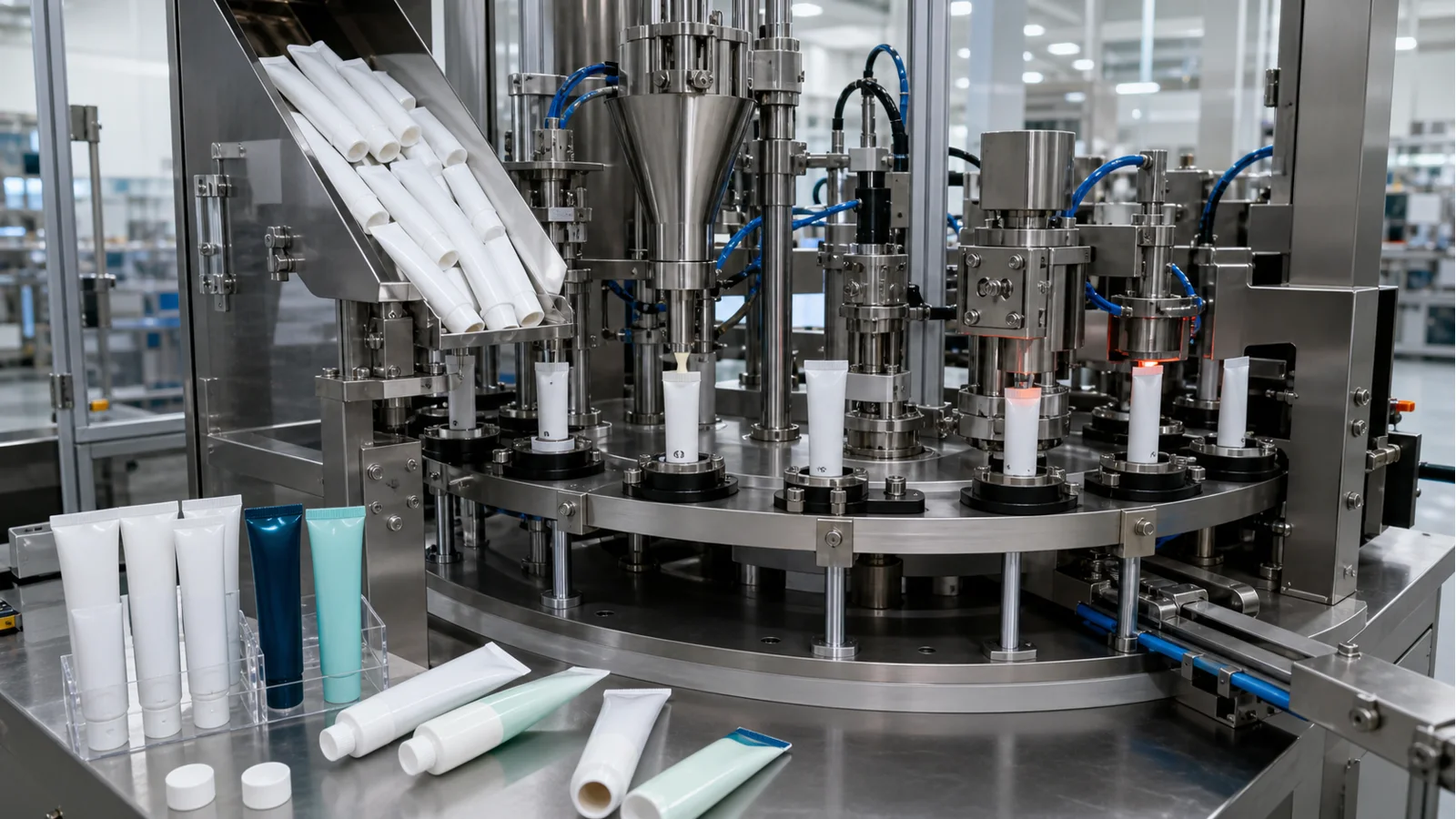
- Pre-filled tubes only need tail sealing and coding; empty tube feeding requires evaluating integrated filling and tail sealing; special-shaped caps are another boundary. Need to confirm plastic or aluminum-plastic tube material, tube diameter, tail seal width, product state, batch code position, and capacity.
Solution summary prepared for you
- When filled tubes enter the equipment, choose a tube tail sealing and coding machine to handle tail sealing, batch code, and trimming.
- If empty capped tubes are to be filled within the equipment, evaluate fully automatic or semi-automatic tube filling and tail sealing machines based on product and tube samples.
- Tube tail sealing process is determined by tube material, diameter, and tail structure, not just by product use or appearance name.
Route comparison
- Tubes already filled before entering the machine, only requiring tail closure and batch code in the tail seal area.
- Only tail sealing, coding, and trimming actions are retained, which can connect to existing manual or other filling processes.
- Product inside the tube must not invade the tail seal area; tube material, diameter, tail allowance, and handling method all require physical sample confirmation.
- When incoming material is still empty tubes and the machine is expected to perform metering filling, do not configure only tail sealing and coding equipment.
- Filled tubes use a tube tail sealing and coding machine, verifying positioning, sealing, code, and trimming with production tube samples.
- Tube products starting from empty tubes, where the equipment is expected to continuously perform quantitative filling and tail closure.
- Tube feeding, positioning, metering filling, tail sealing, and tube discharge can be organized as continuous stations, reducing inter-process transfer.
- Tube unscrambling, color mark, trimming, embossing, coding, and inspection are selected per project; cycle rate is coordinated by test results of each action.
- When stable filling capability already exists, or the site only needs to handle filled tubes, first compare independent tail sealing solutions.
- When empty capped tubes are fed continuously, use a fully automatic tube filling and tail sealing machine and test according to tube material, product, fill volume, and tail seal finished product.
- A production method where empty capped tubes are fed, manual tube feeding is allowed, and filling and tail sealing are completed on the same equipment.
- Manual tube feeding retains some operational flexibility while the equipment completes metering, tail sealing, and other main actions.
- Manual tube supply, placement, and removal constitute the actual operation rhythm; do not only look at equipment action time.
- When continuous automatic tube feeding, orientation positioning, and stable connection to downstream are required, evaluate a fully automatic process.
- When cycle rate and automation requirements are low, use a semi-automatic tube filling and tail sealing machine for real product and tube testing, and verify each manual operation.
Associated Equipment / Consumables
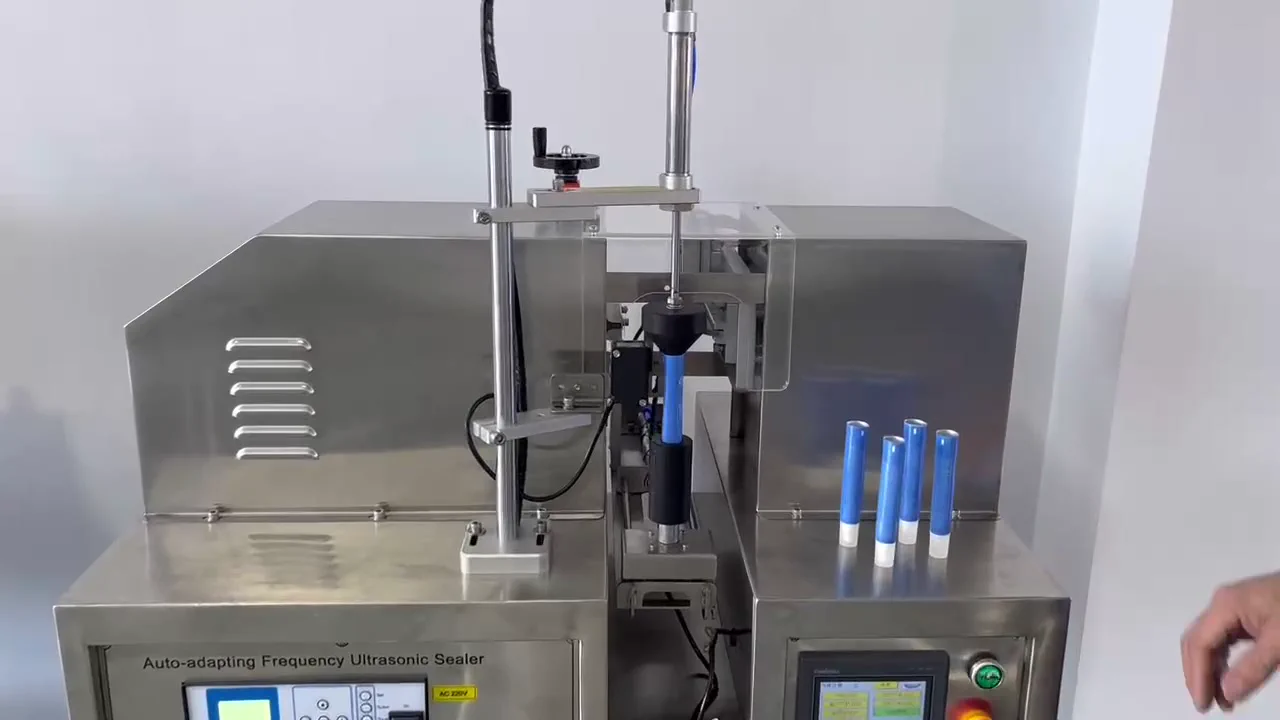 Ultrasonic Tube Sealing Machine
Ultrasonic end sealing for filled plastic or laminate tubes, with optional registration, batch coding and trimming.
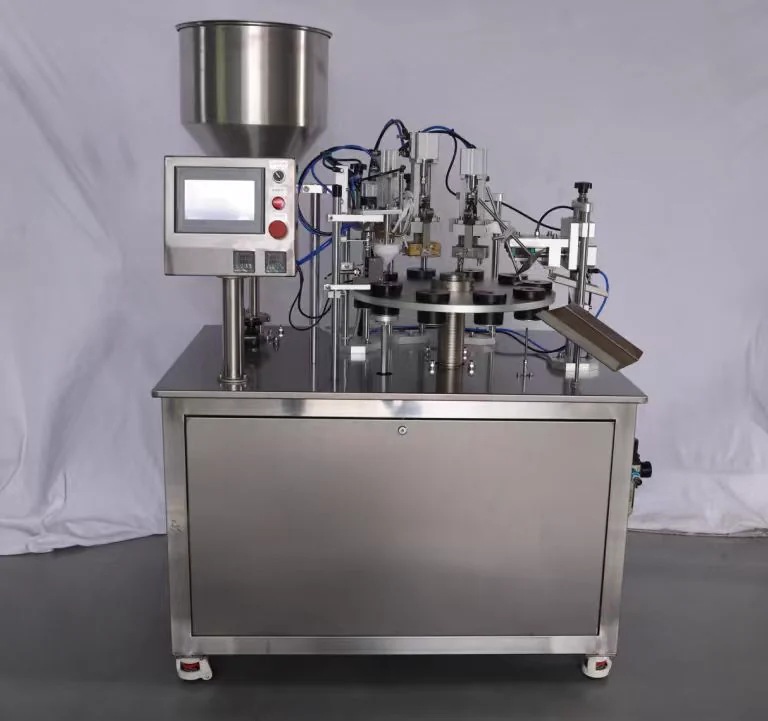 Automatic Tube Filling and Sealing Machine
Continuous stations for empty-tube loading, orientation or eye-mark positioning, dosing, filling, tail sealing, optional trimming or embossing and discharge.
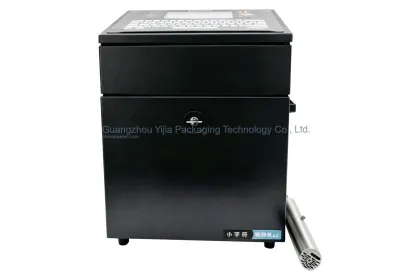 Date & Batch Inkjet Printer
Print date, batch and traceability information on bottles, bags, cartons, labels, cans and outer cases.
Core process
Equipment selection first answers one question: whether the tube entering the machine is already filled or an empty capped tube. Then verify tube material, diameter, length, and tail sealing requirements.
When filled tubes only require tail processing, use a tube tail sealing and coding machine to verify tube placement positioning, tail sealing, batch code, and trimming.
When empty tubes require continuous tube feeding, positioning, metering filling, tail sealing, and tube discharge, evaluate a fully automatic tube filling and tail sealing machine.
When the cycle rate and automation requirements for empty tube production are low, use a semi-automatic tube filling and tail sealing machine to compare manual tube feeding with equipment linkage operations.
When the batch code on the tail seal cannot meet the outer packaging reading position, add a date and batch inkjet coding machine. For continuous transfer needs, evaluate conveying integration after single-machine testing.
Prepare two types of incoming material photos or physical samples, and specify product, fill volume, tail seal style, batch code position, target cycle rate, and on-site operation method.
Sample details
Photos should show whether the tube already contains product before entering the machine, to avoid miswriting tail sealing needs as filling and tail sealing.
Photos of incoming material state, empty tube samples, or filled tube samplesTube material layers, diameter, length, and tail allowance are used to determine positioning, tail sealing, and trimming tooling.
Tube material description and key dimension drawingProduct viscosity, stringing, particles, fill volume, and cleaning conditions only enter equipment judgment when machine filling is required.
Product sample, fill volume range, and filling requirementsThe finished sample should indicate tail seal width, trimming contour, embossing content, and batch code reading direction.
Tail seal finished sample or effect illustrationIndicate whether manual tube feeding is acceptable, planned cycle rate, and upstream/downstream processes to compare semi-automatic and fully automatic operations.
Operation method, target cycle rate, on-site interfaces, and printing positionCommon selection mistakes
If an existing filling process is duplicated with an integrated machine, unnecessary metering stations are added.
Same tube diameter does not mean the same tube material layers and tail sealing response; tooling and process still require tube sample verification.
Product entering the tail seal area hinders material contact and may be squeezed out during tail sealing.
In-machine embossing is usually in the tail seal area and may not match the customer's required traceability surface on the tube body.
Reagent tube foil sealing machines handle the tube mouth foil and do not perform filling and tail sealing for cosmetic tube tails.
View detailed technical notes
First ask whether the tube contains product
Tube equipment selection can be quickly separated by the state of the incoming material. If the tube is already filled before entering the machine, only tail sealing equipment is needed. If empty tubes with caps enter the machine and the machine must also fill the product, an integrated filling and tail sealing process is required.
Pre-filled tubes: handle only the tail
For pre-filled tubes using a tube tail sealing and coding machine, the equipment handles positioning, tail sealing, batch coding, and edge trimming. Before sampling, reserve enough tail area and observe whether the contents shift upward during transfer to prevent product from entering the sealing contact surface.
Empty tubes in continuous production: use an integrated machine
Continuous feeding of empty tubes allows evaluation of a fully automatic tube filling and tail sealing machine. The tube material determines the tail sealing method, the product determines metering, cut-off, and cleaning, while tube diameter, tube length, and fill volume involve changeovers of tube holders, filling nozzles, and tail sealing tooling.
Low automation needs: consider semi-automatic
If manual tube loading is acceptable and the production pace does not require continuous automatic tube supply, compare semi-automatic tube filling and tail sealing machines. During trial runs, include tube loading, positioning confirmation, and tube removal time in the actual operation, not just the machine cycle.
Batch code position determines whether inkjet coding is added
Tail sealing equipment can emboss the batch code in the sealing area, but the code position may be covered by edge trimming or carton packing. If the code needs to be read elsewhere on the tube body, wait until the sealed tube is stable in orientation, then test triggering and direction with a date batch inkjet coder.
Separate the cap and tube tail boundaries
Special-shaped caps are located at the tube head; they may require dedicated positioning and clamping, but they do not change whether the tube tail needs filling. Reagent tube aluminum foil sealing machines handle the foil at the tube mouth and are not part of the cosmetic tube tail sealing route.
Tube material determines tail sealing verification
Plastic tubes, aluminum-plastic laminated tubes, or other structures should have the tail sealing process confirmed with actual samples. Inspection items include seal edges, trim, embossing, tube body deformation, and material condition after opening; the same tube diameter cannot replace material verification.
Keep routes separate during changeovers
For multi-specification production, first group by incoming material state, then verify shared tube holders, filling range, and tail sealing tooling. Each changeover must also record first-piece confirmation, cleaning, and batch code switching.
Prepare samples according to machine entry state
Submit empty or pre-filled tubes, product samples, tail-sealed finished products, key dimensions, batch code position, planned cycle time, and on-site operation method. Arrange the information by machine entry state to make the equipment scope easier to define.
Common questions
What is the fastest way to distinguish between the two tube routes?
If the machine inlet is already filled tubes, only evaluate tail sealing and coding. If the inlet is empty capped tubes and the machine is expected to fill them, compare integrated filling and tail sealing equipment.
Can a tube tail sealing machine be connected after manual filling?
Yes. Provide filled tube samples and specify the handling and transfer method, focusing on whether the product enters the tail seal area and the condition of the tube body under pressure.
How to choose between semi-automatic and fully automatic for empty tube projects?
When the cycle rate is low and manual tube feeding is acceptable, compare semi-automatic configurations. Evaluate fully automatic equipment when continuous tube feeding, positioning, filling, and tail sealing are required.
Can the tail sealing method be determined by tube diameter alone?
Plastic tubes, laminated tubes, and other tube materials have different sealing mechanisms; the sealing edge, trimming, and appearance must be checked with actual tube samples.
Is separate inkjet printing still needed after tail seal coding?
If the content, position, and reading direction of the tail seal code meet traceability requirements, in-machine coding can be retained. Add separate inkjet coding when reading is required at another position on the tube body or outer packaging.
Do special-shaped tube caps change the tail sealing equipment selection?
Special-shaped caps mainly change the tube head positioning or closing conditions. Whether tail filling is needed is still determined by the incoming material state, and the two items are tested separately.