Selection priorities
Continuously trial cases from several supply batches for opening, bottom folding and sealing before fixing magazine, pickup, tape or hot melt and discharge direction.
End-of-Line Cartoning & Palletizing Equipment
Continuously trial cases from several supply batches for opening, bottom folding and sealing before fixing magazine, pickup, tape or hot melt and discharge direction.
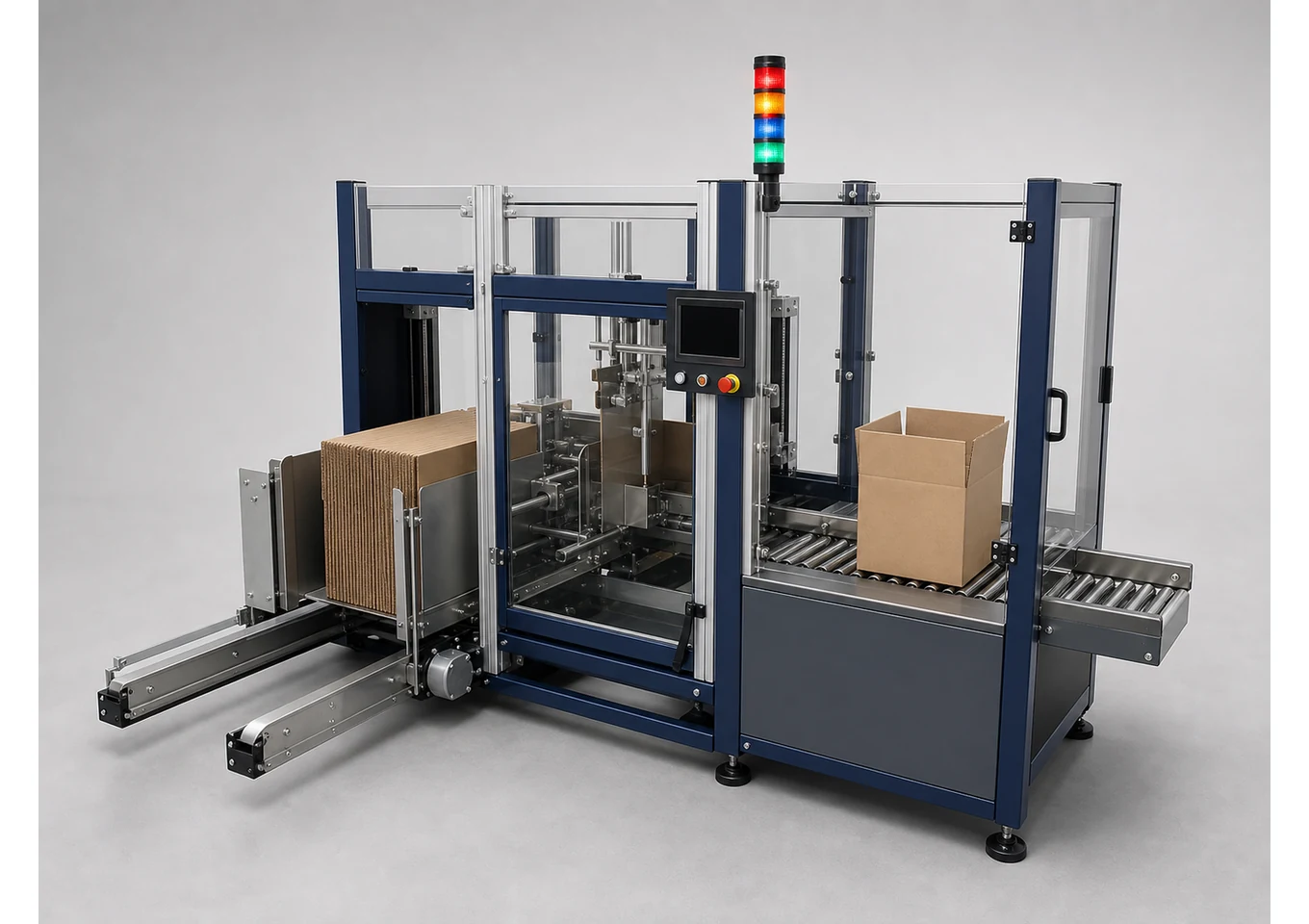
This reference helps explain possible stations and process relationships. Final layout, configuration and capability follow the agreed samples and technical list.
Selection guide
Start by checking container, product, size and output.
Continuously trial cases from several supply batches for opening, bottom folding and sealing before fixing magazine, pickup, tape or hot melt and discharge direction.
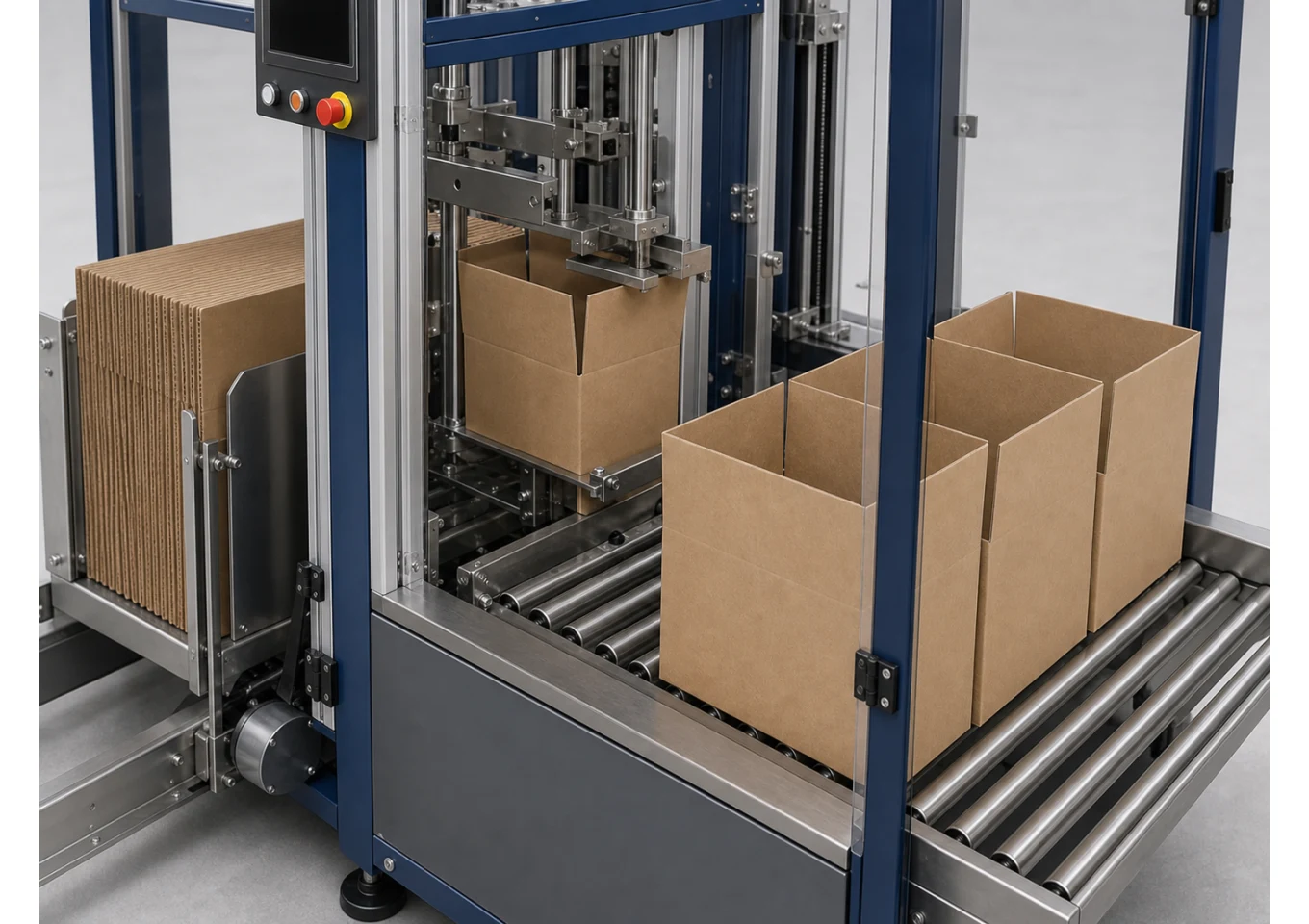
Sample cases first verify forming, samples then verify gripping and arrangement, and after the case is filled, the collaborative line handles closing and outer case labeling.
Selection guide
Photos, key dimensions, and packaging material details are enough to start; if details are incomplete, we will review the direction first.
Selection guide
Automatic erecting and bottom sealing; carton replenishment, abnormal discharge, and tape or glue machine configuration confirmed per project
Corrugated cartons that meet equipment specifications and can be stably erected
Products to be packed do not pass through this machine; this machine handles folded cartons
Corrugated cartons, case sealing tape, or hot melt adhesive
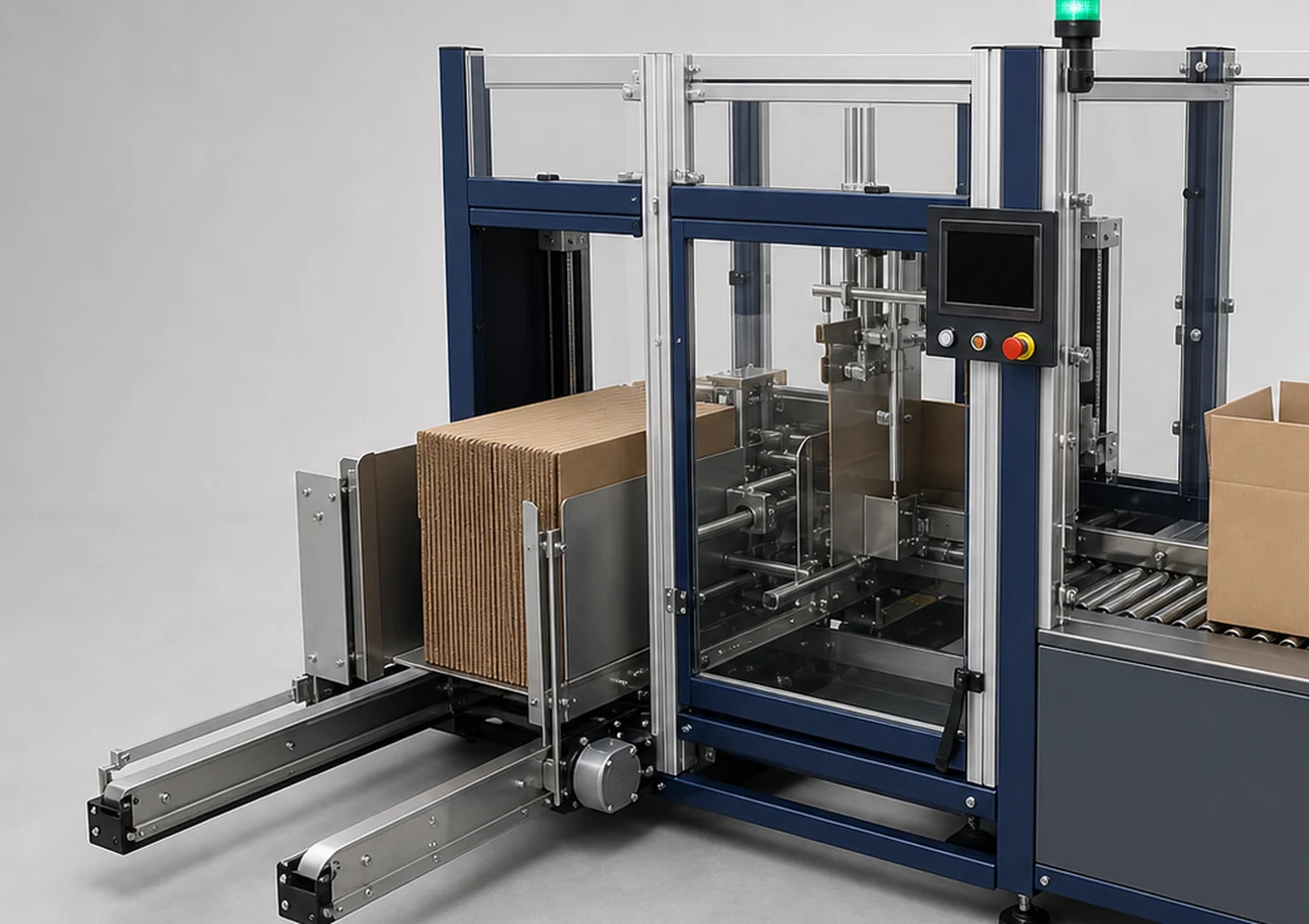
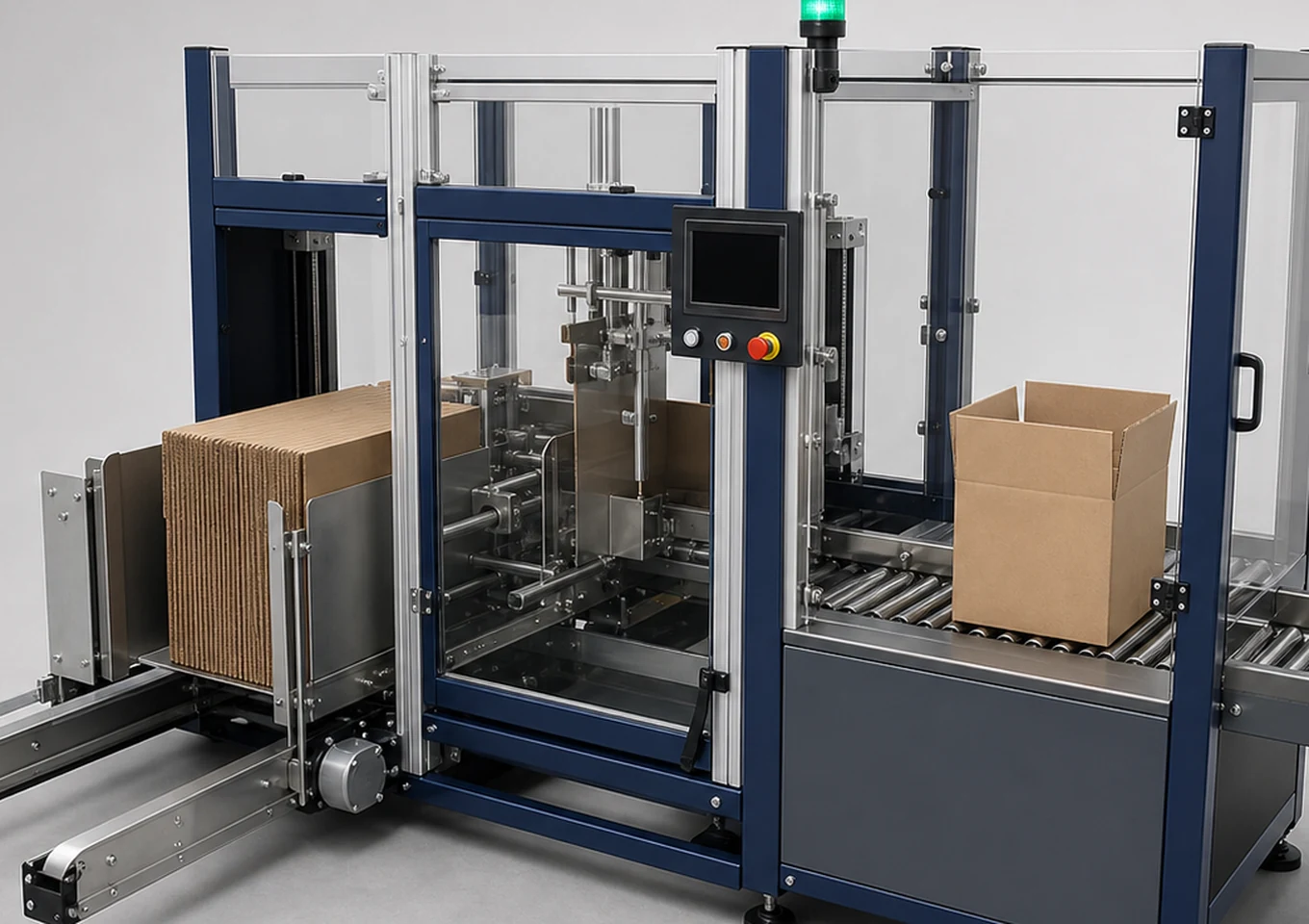
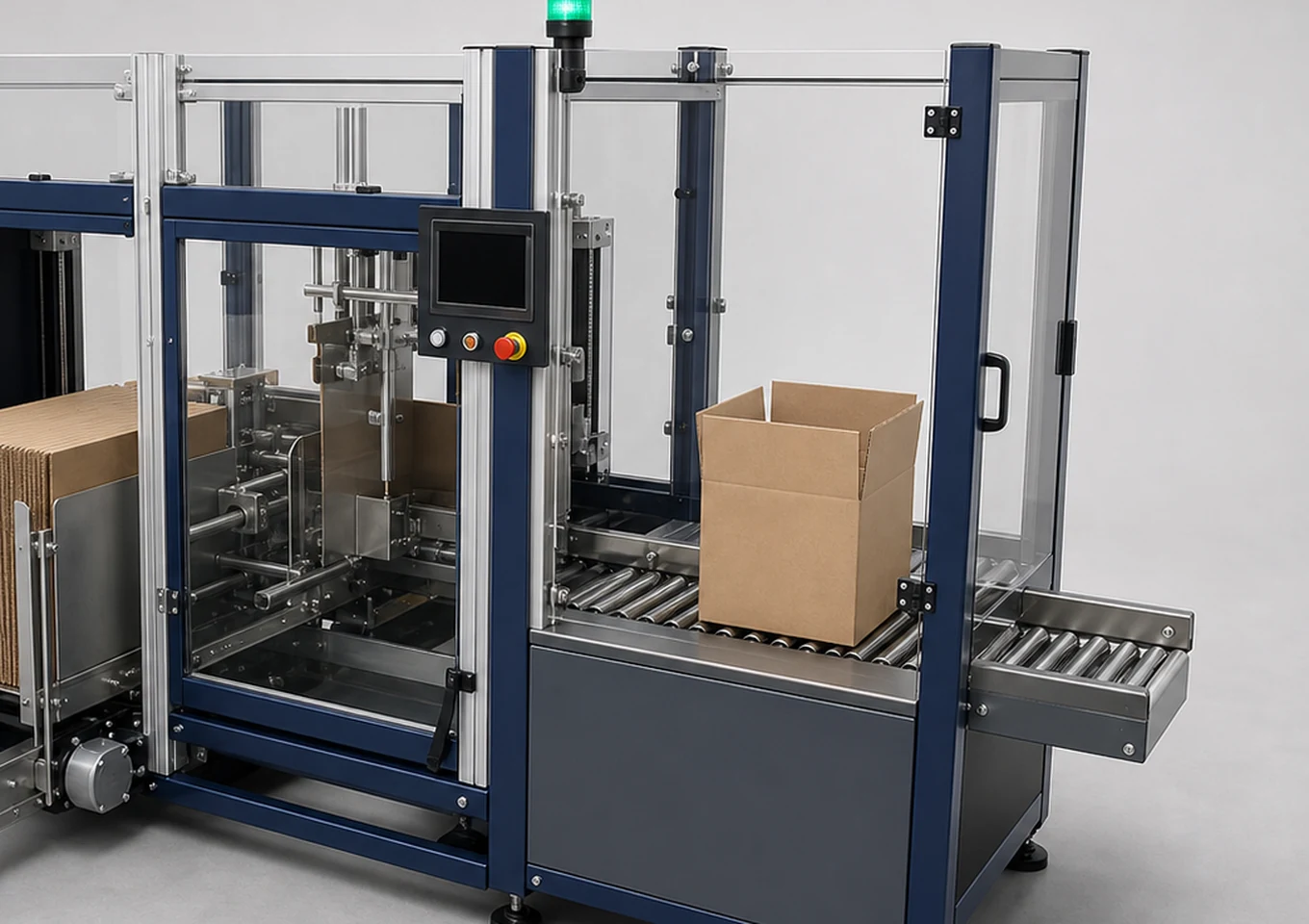
Carton storage, pick-up, erecting, bottom folding, and tape or hot melt adhesive sealing
Confirmed based on samples, motion cycle, process time, upstream/downstream speed, and final configuration.
When carton length, width, or height changes, the magazine, suction, guide, and bottom folding mechanisms need adjustment.
Hot melt adhesive bottom sealing, empty carton alarm, tape detection, buffer conveyor, and remote recipe are optional functions.
Confirmed based on export region, drive structure, site layout, and final configuration.
Can connect to robotic or drop case packers, sealers, checkweighers, and palletizers.
Please provide actual cartons from multiple batches, dimensional tolerances, creases, bottom sealing method, target cycle time, and carton exit direction.
Photos, drawings, or samples help confirm diameter, height, stacking, and sealing contact surface.
Material, thickness, easy-tear or leak-proof requirements affect sealing temperature, pressure, and tooling.
Hourly capacity, manual or automatic feeding, conveying, and downstream packaging determine final configuration.
Configuration Selection
First confirm opening, bottom folding and sealing with production cases. Compare case feeding, discharge direction and downstream interfaces. Include case-batch variation in continuous trials.
Assess bottom sealing against case material, coating, flap construction and downstream needs. Trial production cases continuously before confirming tape or hot melt and access for maintenance and replenishment.
Confirm cartoning, case erecting, case packing, case sealing, outer-case marking and palletizing separately by packaging level and process. Integrate discharge direction, conveyor heights, buffering and stop interlocks into the line.
End-of-Line Cartoning & Palletizing Equipment
Selection guide
Please provide actual cartons from multiple batches, dimensional tolerances, creases, bottom sealing method, target cycle time, and carton exit direction.
No. Hot melt adhesive bottom sealing, empty carton alarm, tape detection, buffer conveyor, and remote recipe are optional functions. All need to be confirmed based on project scope.
Cannot guarantee without actual samples and line conditions. Speed, compatibility range, tooling quantity, and acceptance criteria are based on sample testing and final technical proposal.
Provide sample details
Send packaging-sample photos, the required process and approximate output for an initial machine review. Drawings and complete parameters can follow after the first discussion.