Preformed-box packaging · Start with product and package requirements

Rotary Filling and Sealing Machine for Facial Mask Boxes

The box shape, product contents, and sealing material all affect positioning, filling, and sealing. Review the machine sequence and authentic factory footage, then compare them with your box and materials to assess fit. Confirm the final configuration and results through sample testing.

Box positioning → filling → pre-cut film heat sealing → discharge2 or 4 boxes per cycle: different toolingFit must be verified with representative samples
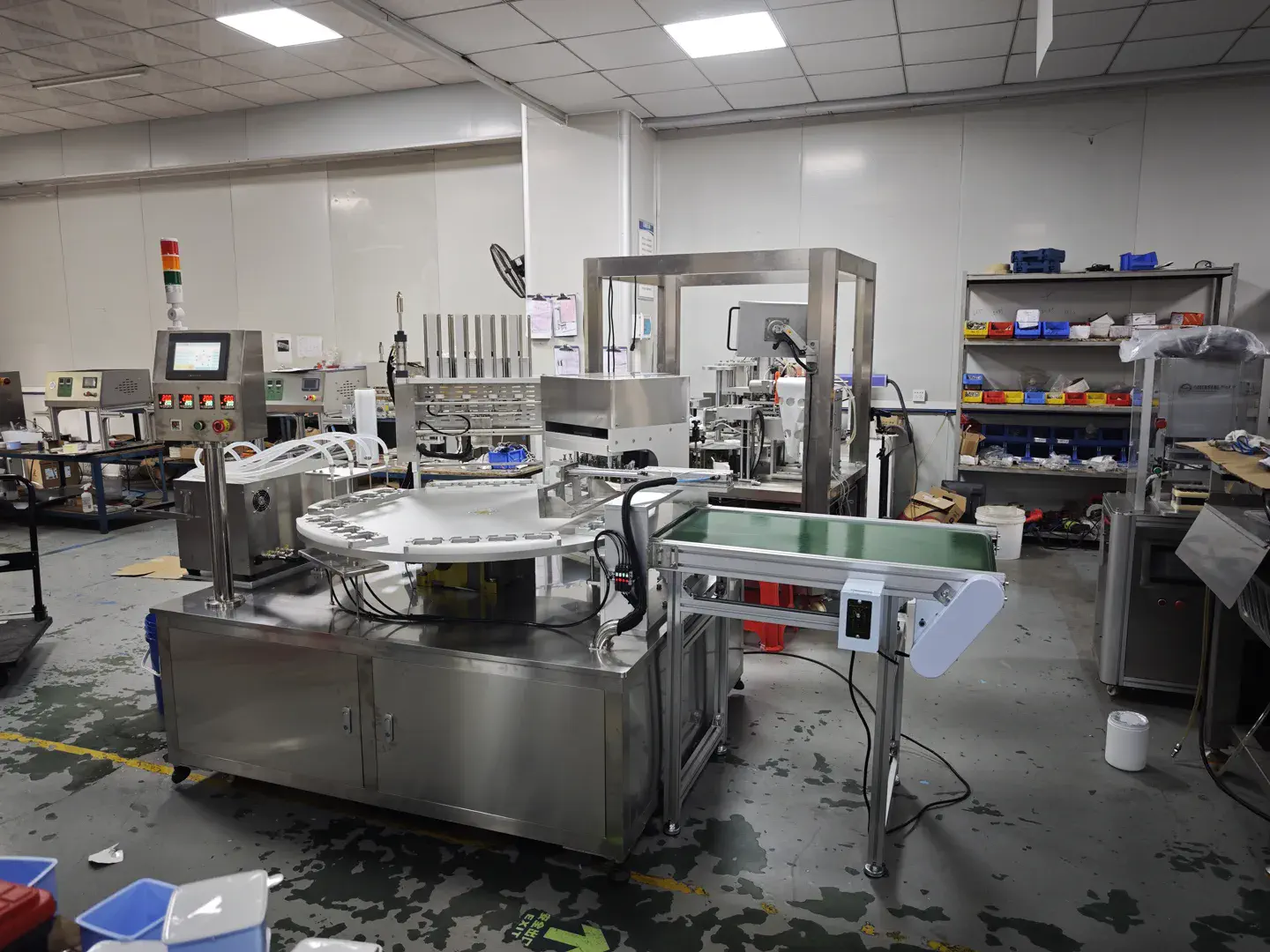
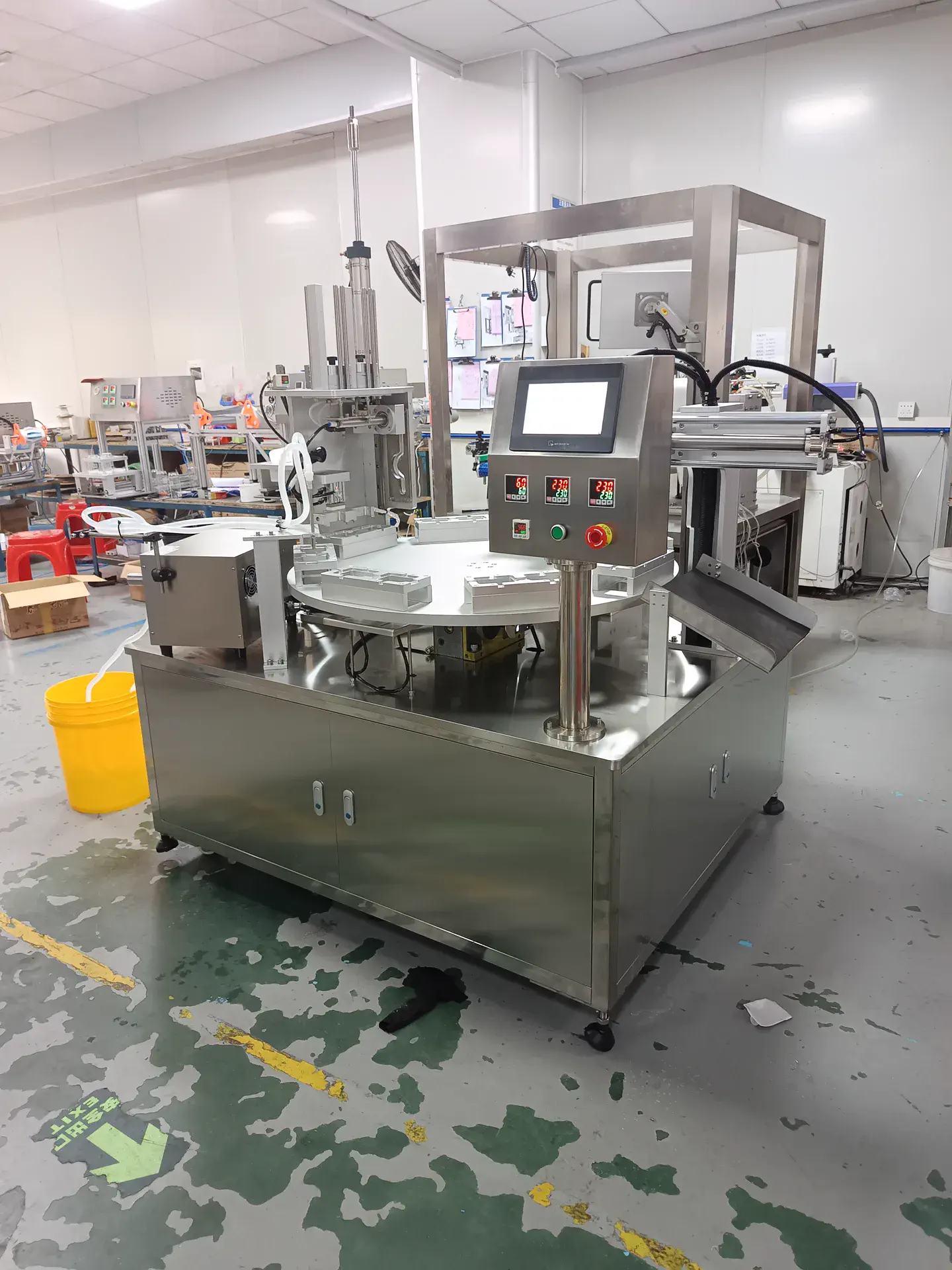
Factory photo showing the front of rotary filling and sealing equipment and its turntable structure
Rotary Filling and Sealing Machine for Facial Mask Boxes · Rotary box filling and sealing machine — complete two-box cycle

Watch machine footage

Rotary Filling and Sealing Machine for Facial Mask Boxes · Rotary box filling and sealing machine — complete two-box cycle

Shows a complete cycle in a two-box configuration. Confirm the box format, product and sealing conditions with production samples and the final configuration.

Watch machine footage

Factory photos and running videos

Photos and clips show their respective equipment or operations; together they do not represent a complete run of one machine. Confirm the final configuration with the containers, product, sample trials and agreed equipment scope.

Box-mask rotary machine | Factory photos (two-up reference)

These factory photos show a one-out-two (two-up) reference configuration. They are separate from the one-out-four operating-video reference and do not prove the same machine, tooling, or output. Confirm the box, contents, lidding film, and process by sample...

Factory photo showing a side view and operating area of rotary box-filling and sealing equipment
Rotary filling and sealing equipment for facial-mask boxes — factory photo 2Factory equipment photo. Final equipment scope follows the agreed project list.
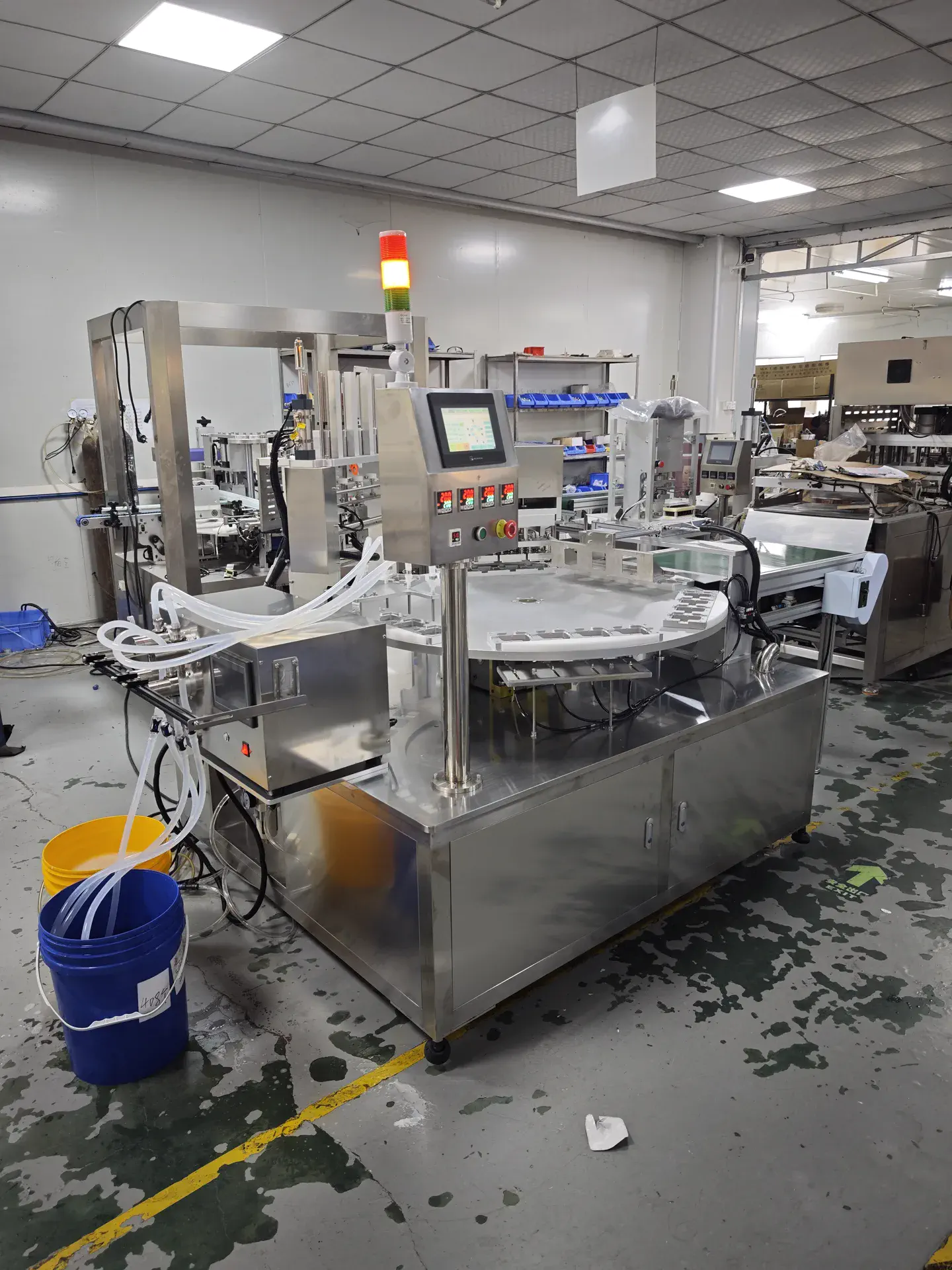
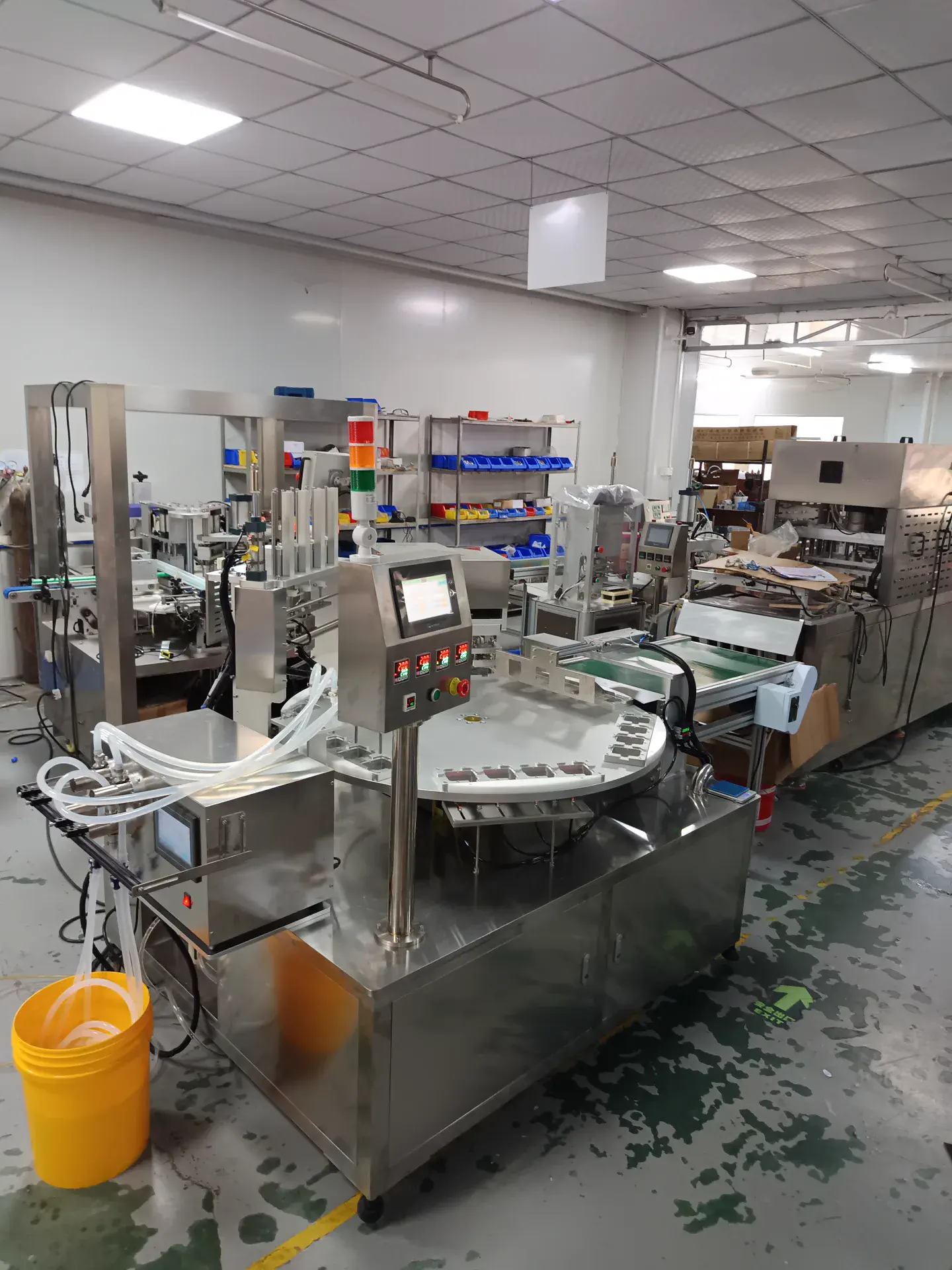
Factory photo of rotary equipment used for box filling and heat sealing
Rotary filling and sealing equipment for facial-mask boxes — factory photo 3Factory equipment photo. Confirm the box design and configuration with production samples.

Factory footage of a two-out rotary configuration: filling and sealing

These factory photos show one two-out setup and keep it distinct from the four-out configuration.

Real factory photo 01 of rotary filling and sealing equipment for boxed facial-mask products in a two-box layout
Factory photo 01 — rotary filling and sealing equipment for boxed facial masksThis is a real factory equipment photo showing a two-box reference layout. Confirm the final configuration, tooling and sealing materials against the project requirements and actual samples.
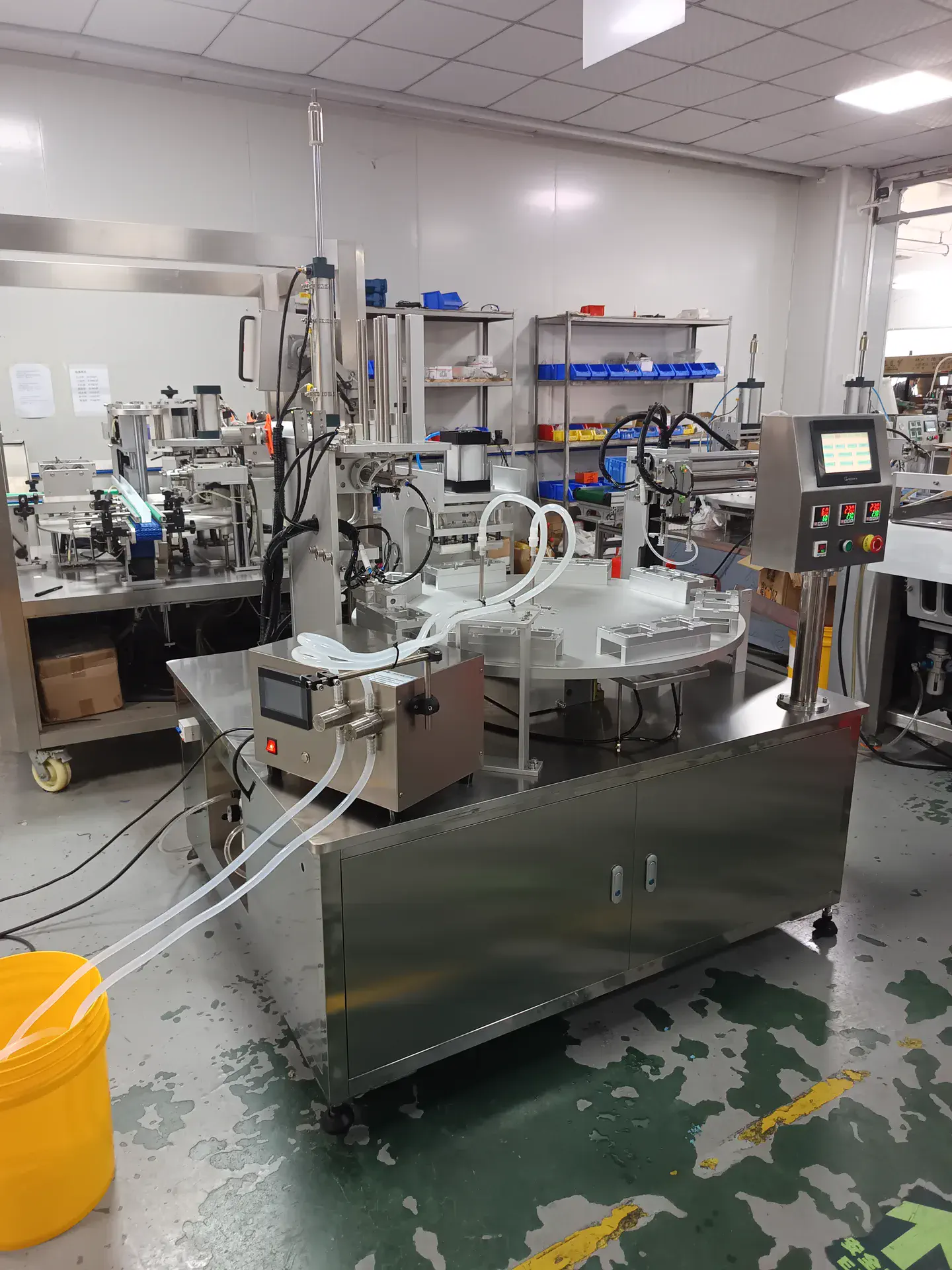
Real factory photo 02 of rotary filling and sealing equipment for boxed facial-mask products in a two-box layout
Factory photo 02 — rotary filling and sealing equipment for boxed facial masksThis is a real factory equipment photo showing a two-box reference layout. Confirm the final configuration, tooling and sealing materials against the project requirements and actual samples.
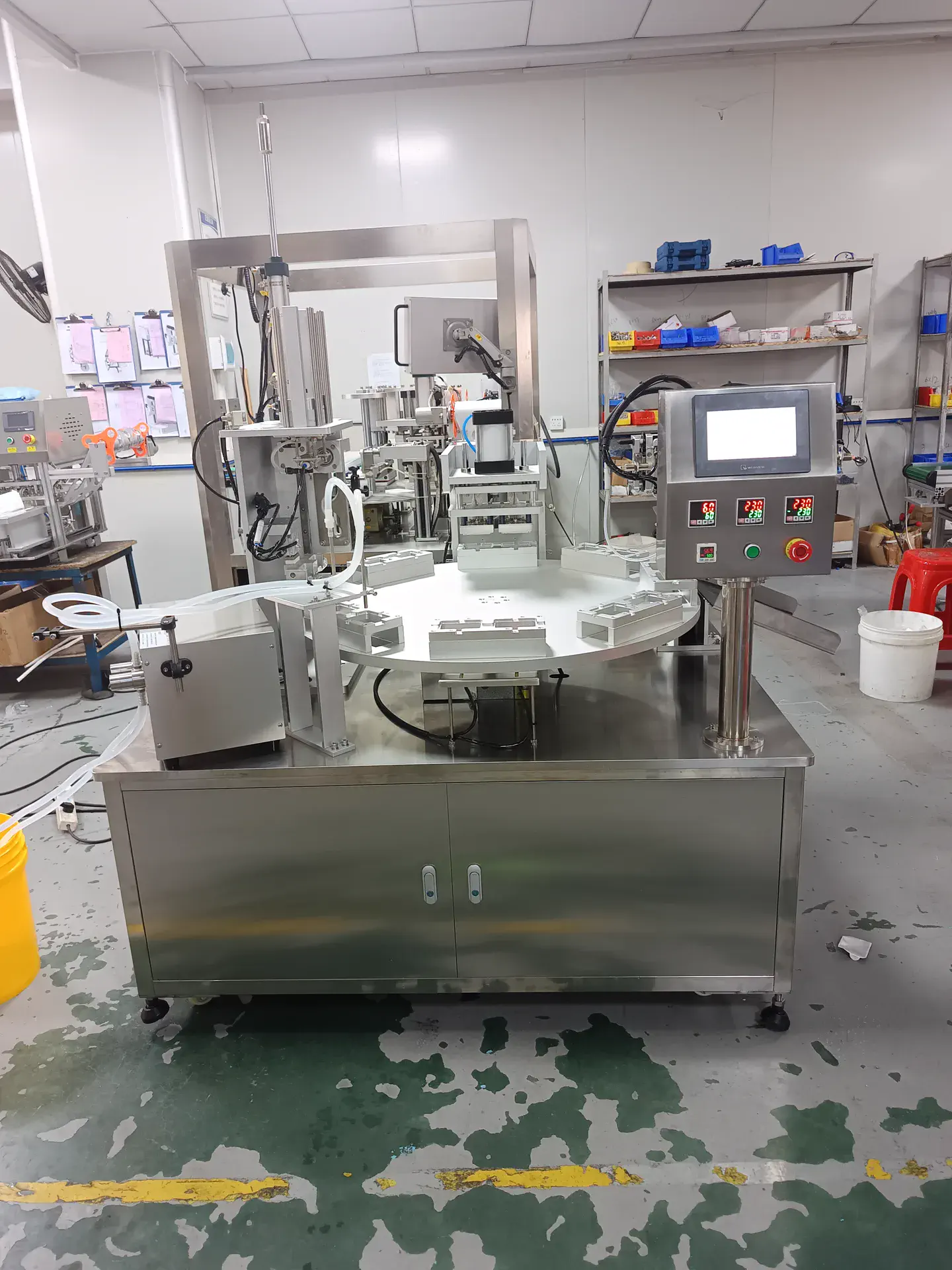
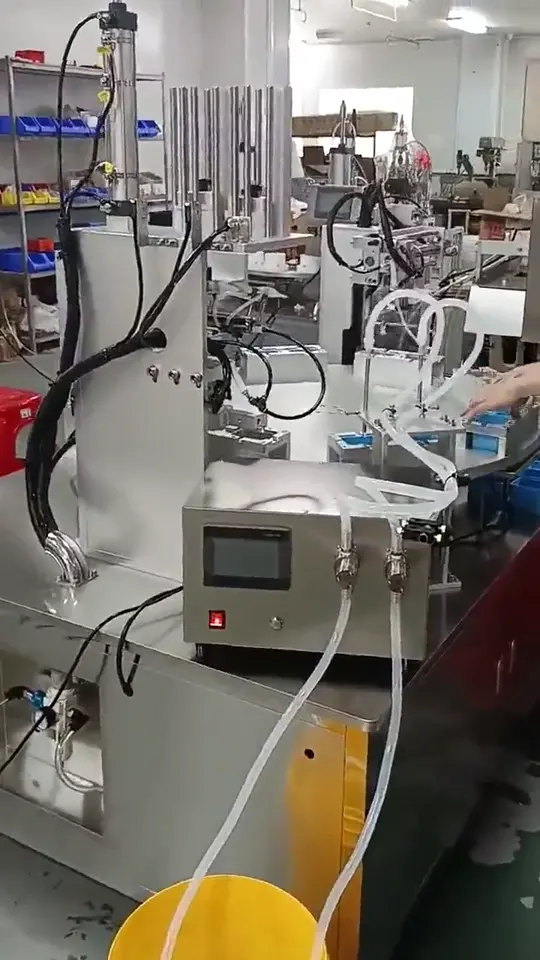
Real factory photo 03 of rotary filling and sealing equipment for boxed facial-mask products in a two-box layout
Factory photo 03 — rotary filling and sealing equipment for boxed facial masksThis is a real factory equipment photo showing a two-box reference layout. Confirm the final configuration, tooling and sealing materials against the project requirements and actual samples.
Rotary box filling and sealing machine — complete two-box cycleShows a complete cycle in a two-box configuration. Confirm the box format, product and sealing conditions with production samples and the final configuration.Rotary box filling and sealing machine — complete two-box cycle
Product filling in a two-box rotary machineShows product dosing in a two-box configuration. Confirm the dosing method and fill volume with samples of the actual product.Product filling in a two-box rotary machine
Show 4 more factory running videos
Placement of pre-cut lidding film on a two-box rotary machineShows pick-and-place of pre-cut lidding film. Confirm the film-piece design, orientation and placement with the approved production material.Placement of pre-cut lidding film on a two-box rotary machine
Heat sealing the box opening in a two-box configurationShows heat sealing at the box opening. Set and confirm temperature, pressure and dwell time through trials with the actual box and film.Heat sealing the box opening in a two-box configuration
Discharge after sealing on a two-box rotary machineShows discharge after sealing. Downstream collection or conveyor connections must be assessed separately against the site interfaces.Discharge after sealing on a two-box rotary machine
Additional filling footage for boxed facial-mask productsShows another segment of filling a boxed product. Confirm the actual dosing method and fill volume with material samples.Additional filling footage for boxed facial-mask products

Factory footage of another two-out configuration

A separate two-out machine is shown here; its footage is not merged with the previous configuration.

Box filling and sealing, two-box configuration — clip AShows a two-box machine configuration in operation. Confirm box-format compatibility and sealing results with actual samples.Box filling and sealing, two-box configuration — clip A
Box filling and sealing, separate two-box configuration — clip BShows another two-box configuration. It is separate from the four-box machine shown in other clips; do not treat the two layouts as interchangeable.Box filling and sealing, separate two-box configuration — clip B

Rotary machine in a 4-box configuration | Operating videos

These clips are shown separately as a reference for a 4-box-per-cycle setup. They do not establish that the photo and video groups show the same machine, tooling, or output. Confirm the final configuration and cycle conditions through representative sample...

Rotary box filling and sealing, four-box configuration — clip AShows a separate configuration for processing four boxes. Output and application scope must be confirmed with the relevant samples and final project.Rotary box filling and sealing, four-box configuration — clip A
Rotary box filling and sealing, four-box configuration — clip BShows another segment of the four-box configuration. Confirm the actual operating cycle with representative samples.Rotary box filling and sealing, four-box configuration — clip B
Show 2 more factory running videos
Rotary box filling and sealing, four-box configuration — clip CShows another segment of the four-box configuration. This footage is not a universal production-rate commitment.Rotary box filling and sealing, four-box configuration — clip C
Rotary box filling and sealing, four-box configuration — clip DShows another segment of the four-box configuration. The applicable scope is subject to the approved project.Rotary box filling and sealing, four-box configuration — clip D

From box loading to discharge: how the machine fills and seals

The project reference includes manual loading of preformed empty boxes, A/B dual-channel metered filling, pre-cut lidding-film pick-and-place, simultaneous two-cavity heat sealing, and mechanical discharge. The source notes the fifth turntable position for discharge and the sixth as reserved. The cards describe process actions, not a one-card-per-station mapping or a capacity promise. Mask-sheet loading, lid pressing, and downstream equipment require separate project confirmation.

Load empty boxes manuallyOn the shown setup, an operator places two preformed empty boxes per cycle. If you need automatic box loading, assess the feeder against your box format and target cycle.
Metered filling through two channelsThe A/B channels meter and fill according to the actual product and target quantity; confirm the method with production samples.
Pick and place pre-cut lidding filmThe machine places pre-cut lidding film over the box opening. This is separate from folding, counting, or loading facial-mask sheets into the box.
Simultaneous two-cavity heat sealingTwo box positions are heat-sealed simultaneously at the same sealing station. Verify results with the box opening, film, and representative trial conditions.
Mechanical box dischargeProject information identifies the fifth turntable position for discharge. Confirm lids, collection, and downstream connections against the actual supply scope.
Reserved turntable positionThe source identifies the sixth position as reserved; it does not mean automatic lid pressing, labeling, or another process is included.
Understand the package before planning the machine

How do the box, product and lidding film affect the process?

Start with the package conditions that affect locating, filling and sealing. Factory footage helps show visible machine structures and motions; it does not mean every facial-mask box project uses the same configuration.

01

Box and opening

Box dimensions, opening geometry and loading orientation affect locating and seal position. If an outer lid is used, its fit with the box also needs review.

02

Product and filling

Product condition and target fill volume affect the filling motion and process sequence; the method must be confirmed with the actual product.

03

Lidding film and box rim

Check the pre-cut lidding structure, size and sealing surface together with the box rim; appearance alone cannot confirm sealing performance.

04

Steps after sealing

Outer lids, inspection, conveying and downstream packing depend on the finished pack and existing line; they are not assumed to be included.

Understand the package before planning the machine

Prepare these details for a more accurate equipment selection.

You do not need to provide everything at once. A box sample or clear photos are a useful starting point; product, film and finished-pack details can follow.

Configuration reference

  • On the shown setup, an operator places two preformed empty boxes per cycle. If you need automatic box loading, assess the feeder against your box format and target cycle.
  • Dual-channel metered filling; confirm the pump type and fill volume with the actual product.
  • Automatic placement of pre-cut lidding film followed by heat sealing at two box positions.
  • The project material lists six rotary-table positions, with mechanical discharge at position five and position six reserved.
  • Loading mask sheets, fitting outer lids, labeling, conveying and cartoning must be reviewed separately as part of the full line scope.

Prepare for selection

  • A representative box sample, or photos showing its opening, dimensions and loading orientation
  • Product condition, target fill volume and relevant material information
  • Pre-cut lidding film samples, or details of the film structure, size and sealing surface
  • Whether the box contains folded mask sheets or other inserts, and whether an outer lid is required

Understand the package before planning the machine

Which configurations should be confirmed with samples first?

01

Container format

Preformed box; confirm the box design, opening dimensions and locating fixture with the production sample.

02

Empty-box loading

The project reference shows an operator loading two empty boxes per cycle; automatic box feeding requires separate evaluation.

03

Metered filling

Dual-channel servo metering; confirm the pump type and fill volume with the actual product.

04

Film handling and sealing

Automatic placement of pre-cut lidding film and simultaneous heat sealing at two box positions; confirm box and film compatibility by trial.

05

Rotary-table layout

The project material lists six positions, with discharge at position five and position six reserved. This is a project reference, not a universal layout.

06

Loading sheet-mask material into the box

This is separate from pre-cut lidding-film placement. Automatic folding, counting or loading of mask sheets requires separate design review.

07

Target output

Confirm output through continuous trials with the agreed samples, configuration and acceptance criteria.

Review these five steps, from box locating to discharge

01Confirm the box and opening

Review box dimensions, opening shape, loading orientation and outer-lid design.

02Confirm the product and fill volume

Describe the product condition and target fill volume so the filling step can be assessed.

03Check the pre-cut lidding film

Compare the film structure, size and sealing surface with the box opening.

04Plan filling and box sealing

Use representative box, product and film samples to discuss stations and trial conditions.

05Confirm discharge and downstream handling

Decide whether lids, inspection, conveying or secondary packing are needed for the finished pack.

Typical process route

What steps are usually considered from box loading to sealing?

This is a way to understand the process, not a claim that every machine has the same stations or that a complete line is standard.

01

Box infeed and locating

Confirm the box shape, opening and loading orientation, and how the box can be held steadily at the station.

02

Filling and sealing

Arrange filling, pre-cut film placement and heat sealing around the product, fill volume and lidding material.

03

Discharge and downstream steps

Decide whether lids, inspection, conveying or secondary packing are needed from the finished pack and site workflow.

Preformed-box packaging · Start with product and package requirements

Understand the package before planning the machine

Frequently Asked Questions

Does the machine automatically place mask sheets into the box?

The project reference describes pre-cut lidding-film placement and sealing at the box opening. It does not mean the machine folds or loads sheet-mask material. If sheet loading is needed, include it as a separate process step in the solution.

Can you confirm whether my box is compatible?

First check the opening dimensions, rim flatness, box support and sealing layer, then trial-seal with production box samples.

Can the machine use roll film?

The project reference uses pre-cut lidding film. Roll-film feeding involves a different film path and process, so it must be evaluated for the actual package.

What is the machine's output rate?

Cycle time depends on the box, product, fill volume, replenishment method and acceptance criteria. Confirm it through continuous trials with samples agreed by both parties.

Can an outer lid be fitted after sealing?

Use the sealed production box and the actual outer lid to check the fit, including the seal edge, box rim and available clearance.

Can the machine connect to an existing production line?

Share your equipment layout, discharge height, target throughput, and photos or drawings of the interfaces. We can review conveyor, inspection and downstream-packing connections, then define the equipment scope required.

Share box and product details

Still comparing box or packaging options? Start with photos or sample details

Tell us about the box, product, lidding film and current packing steps. Box photos, a short video or drawings are also useful starting points. We can first map the conditions that affect the process, then discuss whether equipment or downstream stations are needed.

A representative box sample, or photos showing its opening, dimensions and loading orientationProduct condition, target fill volume and relevant material informationPre-cut lidding film samples, or details of the film structure, size and sealing surfaceWhether the box contains folded mask sheets or other inserts, and whether an outer lid is required

Inquiry

Online Inquiry Form

Please specify container type, sealing material, speed target, sample status, and target market.

* Enter at least an email address or phone / WhatsApp number so we can reply.

Complete the security check before submitting your inquiry.
Discuss Selection & Get a QuoteWhatsApp