Solution topic
Boxed Facial Mask Filling & Sealing: Equipment, Materials & Trial Checks
Compare two-up and four-up rotary fixtures for boxed mask filling and sealing. Confirm box, product, pre-cut film, loading and downstream interfaces; do not infer output from position count.
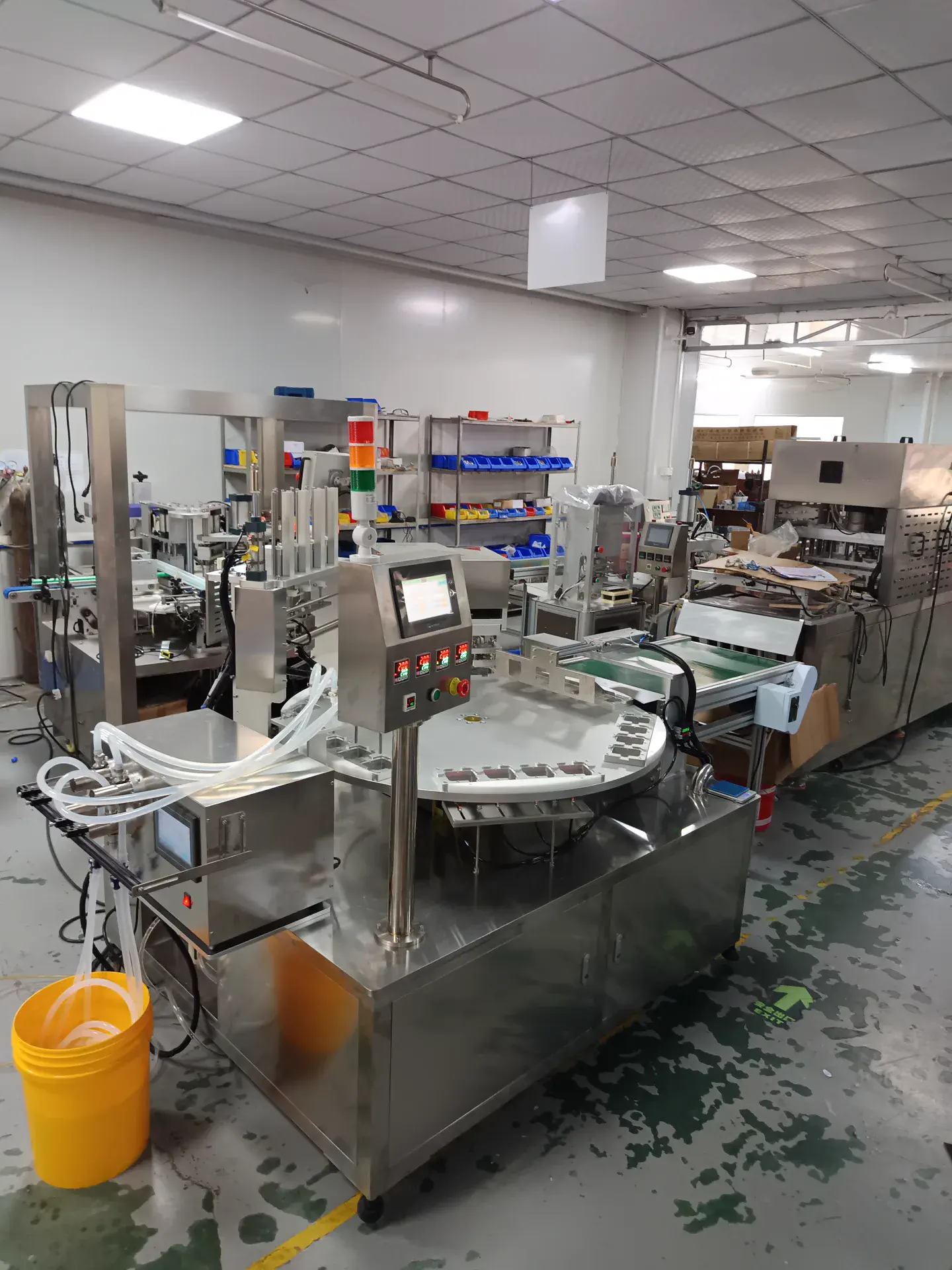
Project Setup & Equipment Selection
These are route and equipment options, not a list of items included as standard or connected in sequence. Confirm the final configuration against samples, process requirements and site interfaces.
| Process | Equipment or Supporting Information | Configuration Notes |
|---|---|---|
| Confirm product and packaging samples first | Preformed box, actual product and pre-cut lidding film | Use one production sample set to confirm machine fit and acceptance criteria. |
| Core filling and sealing | Rotary Filling and Sealing Machine for Facial Mask Boxes | Matches the confirmed preformed box, metered filling and pre-cut-film sealing route. |
| Post-seal appearance screening (optional) | Seal Vision Inspection and Rejection Machine | Used to inspect and reject defined visible seal defects. |
| Post-seal transfer and buffering (optional) | Food Packaging Conveyor and Buffer Line | Connect inspection and collection based on pack orientation, station timing and layout. |
| Add cartoning only when an outer folding carton is required | Horizontal/Vertical Automatic Cartoning Machine Series | Packages the sealed unit into a separate folding carton, not the preformed product box used by the sealer. |
Factory footage
Follow the process from box transfer to sealing and discharge
The video shows the turntable stations, pre-cut film pick-and-place, heat sealing, and discharge on a reference boxed-product filling and sealing machine. Box format, product, fill quantity, film, and final cycle rate must still be confirmed through trials with representative samples and an agreed checklist.
- From empty-box loading and material metering to pre-cut sealing-film pick-and-place, heat sealing, and discharge, determine the equipment combination from real samples, target output, and downstream interfaces.
Route comparison
- Projects that need metered filling in pre-made boxes and closure with pre-cut sealing film.
- The reference main machine can provide dual-channel metering, pre-cut film pick-and-place, simultaneous two-cavity heat sealing, and mechanical box discharge.
- Manual box placement method, box format, product, film, and trial-run rate must each be confirmed.
- The finished product needs automatic folding, counting, and placement of facial mask sheet material, but that operation is not configured in the solution.
- Use the rotary filling and sealing machine for boxed facial masks as the main machine; evaluate downstream equipment separately by interface.
- Projects whose product structure requires folded sheet material to be placed in the box before filling or sealing.
- Confirm sheet handling, in-box positioning, and sealing separately to reduce missing operations in the scope.
- Sheet folding, counting, and box placement are not pre-cut sealing-film pick-and-place functions.
- The project only fills liquid and heat-seals the box opening, with no need to place sheet material inside the box.
- First provide sheet dimensions, folding method, and in-box placement requirements, then confirm a dedicated mechanism or upstream equipment.
- Projects that need continuous collection, labelling, or loading into shipping cartons after sealing.
- Outer-lid pressing, box labelling, conveying and collection, or secondary cartoning can be combined as required, with interfaces and supply scope stated for each unit.
- These are independent downstream units. The suitability and integration method for lid pressing, labelling, and conveying must be confirmed from box samples, target rate, and site space.
- The finished outer packaging, target rate, or discharge direction has not yet been established.
- First confirm the outer lid, surfaces requiring labels, finished-product packaging level, and interfaces; then decide whether lid pressing, labelling, conveying, or cartoning equipment is required.
Associated Equipment / Consumables
Rotary Filling and Sealing Machine for Facial Mask BoxesWhen filling and sealing boxed sheet-mask products, the box position, product dose and lidding film need to work together. A rotary machine can arrange these steps across stations; two-up and four-up versions use diff...
Can inspect visible seal appearance on boxed packs after sealing and reject defined defects. Validate with the actual box orientation, lidding film and defect samples; visual screening does not establish seal strength...
Can connect the sealing machine with inspection, collection or downstream stations. First test support, transfer height, spacing, buffering and jam risks using actual sealed boxes before fixing the layout.
Consider only when the sealed mask box must also go into a folding carton. The preformed sealing container and the outer carton are different packaging layers; provide finished-pack orientation and carton samples or d...
Core process
Use production boxes and actual product to confirm positioning, metering and operator cycle.
Mask sheets and lidding film are different materials; lidding-film placement is not sheet loading.
Two-position simultaneous sealing describes the reference station, not a guaranteed output rate; the source identifies the sixth turntable position as reserved.
The candidate inspection unit is intended for sealed boxed products that can be imaged consistently and for defined visible defects. Validate camera view, box orientation, defect samples and line rate; it does not replace seal-strength or leak testing.
A food-packaging conveyor and buffer can transfer packs between post-seal stations. Test tipping, scuffing, jams and start-stop accumulation with finished samples, based on box-base stability, size, orientation, target rate and floor layout.
The horizontal/vertical cartoner series handles an outer folding carton, not the preformed product box used by the sealer. Test the complete pack with individual-box dimensions, product orientation, carton dieline and any leaflet or accessory requirements.
Accept against mutually agreed samples and criteria, not a single demonstration or station count.
Sample details
Confirm the preformed box material, dimensions, opening shape and rim flatness first; these affect stable positioning and the available sealing area.
Box dimensions, opening structure, rim flatness, and outer-lid requirements.Product condition, viscosity and fill quantity per box affect metering and filling; verify with the actual product. This does not mean mask sheets are folded or loaded by the machine.
Actual product, fill quantity per box, viscosity, temperature, and cleaning requirements.Check whether the sealing layer, material structure and lid-piece dimensions suit the box rim. Pre-cut film and roll-fed film are different routes; roll feeding is not assumed in this reference setup.
Sealing layer, material structure, film-piece dimensions, and whether the film is pre-cut or roll-fed.Plan a continuous sealing trial with the actual box, product and film, and agree on appearance and seal-integrity criteria. Confirm separately whether mask-sheet loading, outer lids, inspection, conveying or cartoning are needed and included.
Production box, actual product and sealing film; mask sheets, outer lid and downstream needs, if applicable.Treat target output as a trial objective. Actual cycle time also depends on manual box loading, filling, film handling and collection; verify in a continuous trial rather than infer output from turntable stations.
Target output, existing equipment, discharge direction, and available space.Common selection mistakes
View detailed technical notes
First distinguish sealing film from facial mask sheet material
This route handles filling the contents into pre-made boxes and sealing the box opening: the reference configuration automatically picks and places pre-cut sealing film and heat-seals it. If one or more facial mask sheets must also be placed inside the finished box, sheet folding, counting, and placement are separate operations. Automatic film placement must not be interpreted as automatic sheet insertion.
Combine the main machine around the reference project route
The reference project uses manual placement of two empty boxes per cycle, dual-channel servo metering, automatic pick-and-place of pre-cut film, simultaneous two-cavity heat sealing, and mechanical box discharge. The equipment material lists six turntable positions, with the fifth used for discharge and the sixth reserved. This is a project configuration reference, not a fixed structure for every rotary machine.
Confirm additional process steps separately
The reference configuration covers pre-cut lidding-film pick-and-place and heat sealing at the box opening. If the project needs labels on the film, roll film, automatic folding or placement of facial-mask sheets, vacuum, or modified-atmosphere packaging, define each as a separate process requirement. Provide representative samples, materials, and test conditions so the equipment boundary can be confirmed. The machine's film-pick motion does not mean these additional steps are included.
Test the box opening, contents, and packaging materials together
Before testing, prepare approved boxes, sealing film, and actual product. Record box-opening dimensions and flatness, sealing-layer structure, fill quantity per box, viscosity, temperature, foam, and cleaning requirements. If the finished product needs an outer lid, test the actual latch using a sealed sample box. Roll film and pre-cut film use different feeding methods and must not be assumed to share one configuration.
Evaluate lid pressing, labelling, and conveying after sealing
Outer-lid pressing, single-side or two-side box labelling, discharge conveying, and secondary cartoning are distinct downstream operations. Select them one by one according to the outer-lid structure, labelling surface, packaging level, and existing equipment. Confirm the sequence with an approved general arrangement and interface list; these units are not performed by the sealing machine by default and do not prove a fully automatic line.
Use continuous trial results to establish acceptance conditions
Before formal confirmation, conduct continuous trials with the agreed box samples, actual contents, and sealing film. Record replenishment, stops, manual actions, sealing condition, and acceptance decisions. Target output and acceptance criteria should be written into a mutually confirmed document, not inferred from turntable positions or a short no-load demonstration.
How to define seal appearance and trial acceptance
Run a continuous trial with production boxes, actual product and lidding film. First agree on visual criteria such as seal-line continuity, edge wrinkles or misalignment, contamination in the seal area and outer-lid fit. Then define sample quantity, trial duration and an applicable seal-integrity test. One sealed sample or the number of machine stations cannot replace a continuous acceptance trial.
From the sealing machine downstream: build around the finished pack
The base route uses the rotary boxed-mask machine for box loading, metered filling, pre-cut lidding-film placement, heat sealing and mechanical discharge. For visible seal-appearance screening, assess a vision inspection and reject unit with defect samples; it does not test leaks or seal strength. To connect inspection or collection stations, assess a food-packaging conveyor and buffer. If retail packaging also requires a folding carton, assess a horizontal or vertical cartoner using the finished-box orientation and carton samples. Each downstream module is optional; confirm dimensions, rate, interfaces and supply scope by trial.
Two-up or four-up? Check the application before estimating output
The available factory footage shows separate two-up and four-up box-fixture references from different video/configuration groups. It should not be read as one machine switching between the two merely by changing a mold. Compare box-opening dimensions and locating, metering time, pre-cut lidding-film feeding and placement, heat sealing and cooling, manual or automatic box loading, discharge, and downstream interfaces together. Four-up does not automatically mean twice the output of two-up. Start with production box, product, film, target cycle and loading method; then confirm tooling, station layout, continuous-trial results and supply scope.
Common questions
Can the boxed facial-mask rotary machine automatically place facial mask sheet material into the box?
The current reference material confirms filling, pre-cut sealing-film pick-and-place, heat sealing, and discharge. It does not include automatic folding or placement of facial mask sheet material. If that process is required, it must be separately defined and equipped.
Why are approved box samples and sealing film required?
The box-opening location, rim, sealing layer, and film pick-and-place must be checked. Trial sealing should confirm temperature, pressure, time, and the clearance required for any finished-product outer lid.
Can a fixed output per minute be promised?
Output cannot be promised from the number of turntable positions alone. Run continuous tests with representative boxes, actual product, and sealing film, then agree the acceptance criteria.
Are conveying and cartoning equipment included?
They are not included by default. Evaluate them separately against discharge direction, packaging level, box dimensions, target rate, and existing equipment.
How should seal appearance and integrity be accepted?
Run a continuous trial with production boxes, product and lidding film. Agree in advance on visible-defect definitions, sample quantity and an applicable seal-integrity test, then record the criteria and results. The test method depends on the product and customer requirements.
Does a four-up setup always produce twice as much as a two-up setup?
Not necessarily. The position count describes a fixture/layout arrangement; actual output also depends on box loading, metered filling, film placement, sealing and cooling, discharge, and operator intervention. The available two-up and four-up footage belongs to separate reference groups; it does not prove that one machine switches directly between them or guarantee output. Run a continuous trial with production samples and define cycle and acceptance conditions in the written specification.