Automation type
In-line automatic inspection; number of cameras, lighting, rejection, and traceability interfaces confirmed per project
Inspection, Weighing and Traceability Equipment
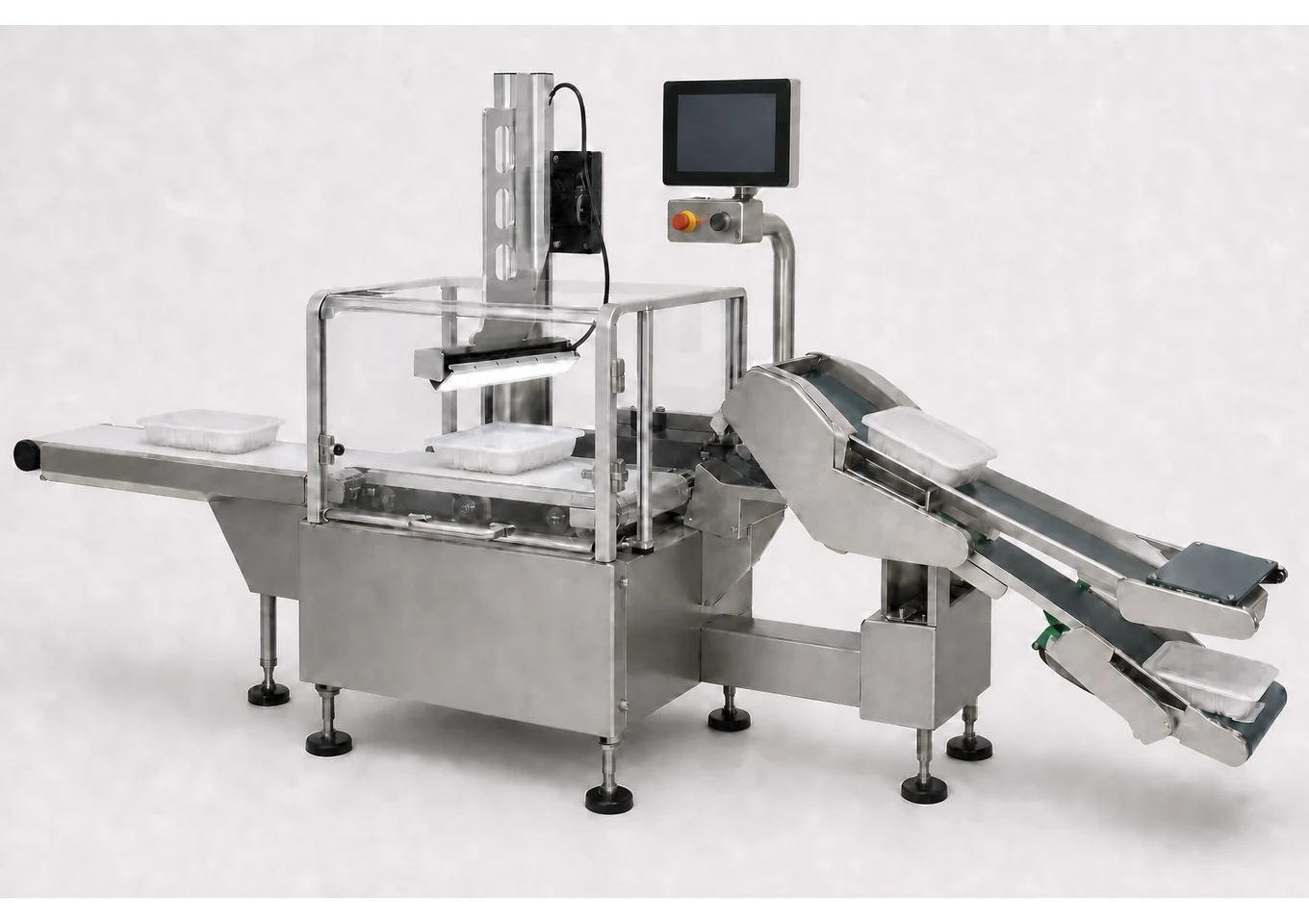
Used to detect missing film, misaligned film, obvious wrinkles, contamination, damage, or other definable sealing appearance anomalies. Vision inspection can only identify defects based on established samples and rules, and cannot replace seal strength, leak, or microbiological validation. Rejection and traceability are configured per project.
Selection guide
Start by checking container, product, size and output.
In-line automatic inspection; number of cameras, lighting, rejection, and traceability interfaces confirmed per project
Cups, boxes, trays, bottles, cans, or bagged products with stable imaging of the sealing area
Finished packaged products after sealing
Sealing film, lid stock, bag mouth, or seal edge must have identifiable appearance features
Selection guide
Photos, key dimensions, and packaging material details are enough to start; if details are incomplete, we will review the direction first.
Selection guide
Start by checking container, product, size and output.
In-line automatic inspection; number of cameras, lighting, rejection, and traceability interfaces confirmed per project
Cups, boxes, trays, bottles, cans, or bagged products with stable imaging of the sealing area
Finished packaged products after sealing
Sealing film, lid stock, bag mouth, or seal edge must have identifiable appearance features
Product trigger, image capture, defect judgment, result recording, and defective rejection
Confirmed based on samples, motion cycle, process time, upstream/downstream speed, and final configuration.
When product specifications, sealing appearance, or defect rules change, guides, camera positions, and inspection recipes need adjustment.
Multi-camera, OCR, barcode association, image archiving, alarm statistics, and defective product lock box are optional modules.
Configuration Selection
Photos, key dimensions, and packaging material details are enough to start; if details are incomplete, we will review the direction first.
Photos, drawings, or samples help confirm diameter, height, stacking, and sealing contact surface.
Material, thickness, easy-tear or leak-proof requirements affect sealing temperature, pressure, and tooling.
Hourly capacity, manual or automatic feeding, conveying, and downstream packaging determine final configuration.
Configuration Selection
Do not select from the machine name alone. Compare defect definition, visible features, camera position, trigger, rejection confirmation and records and confirm the boundary with actual samples.
Inspection, Weighing and Traceability Equipment
Do not select from the machine name alone. Compare defect definition, visible features, camera position, trigger, rejection confirmation and records and confirm the boundary with actual samples.
Selection guide
Start by checking container, product, size and output.
Please provide acceptable and unacceptable samples, defect definitions, allowable false rejection rate, line speed, product pitch, and rejection method.
No. Multi-camera, OCR, barcode association, image archiving, alarm statistics, and defective product lock box are optional modules. Each must be confirmed based on project scope.
Cannot be guaranteed without actual samples and line conditions. Speed, compatibility range, tooling quantity, and acceptance criteria are based on sample testing and final technical proposal.
Provide sample details
Send actual product or pack samples, critical dimensions, defect definition, visible features, camera position, trigger, rejection confirmation and records, target cycle, layout and acceptance criteria. Photos, videos or drawings can be reviewed first.