Solution topic
Irregular-Container Sealing Line: Datum, Custom Fixturing, Closing and Inspection
Establish stable handling and a repeatable datum for irregular containers, design guides and fixtures, choose heat pressing, induction or capping from closure samples, then define
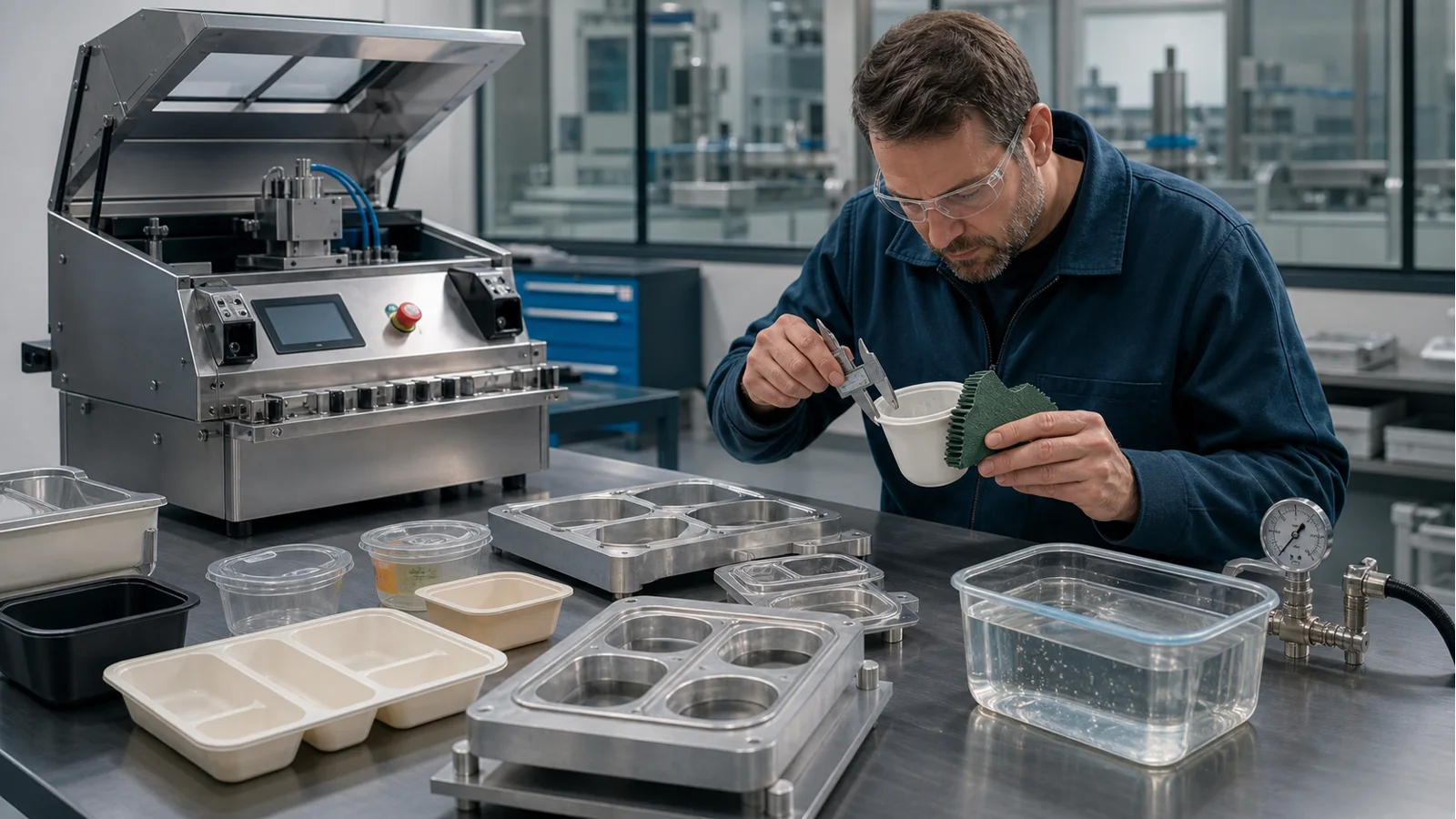
- Do not copy round-bottle assumptions. Establish a repeatable datum, choose heat pressing, induction or capping from the rim and closure, then define inspectable defects.
Solution summary prepared for you
- For irregular container sealing, first find a repeatable positioning reference, then divide into heat sealing, spin capping and induction processes according to exposed rim, threaded lid, press-in lid or lid liner.
- Large-diameter pail and bottle online heat sealing equipment is configured according to rim size; induction sealing is only used for circular mouths where the lid liner can be stably pressed.
- Sealing visual inspection only judges defined appearance anomalies; online checkweighing only executes established weight rules; neither can replace leakage or sealing strength verification.
Route comparison
- Suitable for irregular bottles, cans or pails with exposed rims for direct film sealing, where the actual sample can be repeatedly positioned in the custom fixture.
- Direct film contacts the exposed rim, and the container positioning and pressure area can be verified in the same station through custom molds.
- Rim flatness, effective pressure surface, film contact layer, filling residue and positioning repeatability all need testing; the equipment size range is also confirmed by samples.
- When the container is closed by threaded or press-in lids, or the exposed rim cannot form a stable pressure surface, the direct heat sealing route is not used.
- For large-diameter irregular pails, evaluate the large-diameter pail heat sealing machine; for bottle/can mouths, evaluate the bottle online heat sealing machine; molds are customized according to actual samples.
- Suitable for irregular containers with clear thread, press-in or snap-fit structures, where circular mouths and matching liners can further evaluate induction inner sealing.
- Lid type action and lid liner process are verified separately, allowing separate handling of irregular lid positioning, spin capping closing and aluminum foil inner sealing.
- Lid type, container stability, spin capping tooling, mouth shape and liner contact all need actual sample confirmation; automatic cap unscrambling and placement are project-configured modules.
- When the lid cannot be repeatedly positioned, or the mouth and liner do not meet induction conditions, only keep the verified closing action and do not add an induction station.
- For threaded or press-in lids, evaluate the automatic screw capping and press capping machine. When the mouth is circular and the lid liner is stably pressed, add the induction foil sealing machine.
- Suitable for irregular container projects where the main sealing has formed a stable finished product and there are visible defect samples or clear weight handling rules.
- Appearance images and weight judgment correspond to clear samples and actions, allowing abnormal results to be sent to the agreed rejection or recording process.
- Visual equipment configuration is confirmed after sample and rule verification; checkweighing relies on weight standards; neither can prove sealing strength or leakage status.
- When the main sealing is still unstable, defect definitions are unclear, or weight rules are missing, do not configure automatic inspection and rejection first.
- After sealing appearance is stable, evaluate the sealing visual inspection rejection machine; after weight range and abnormal product handling are clear, configure the online checkweigher.
Associated Equipment / Consumables
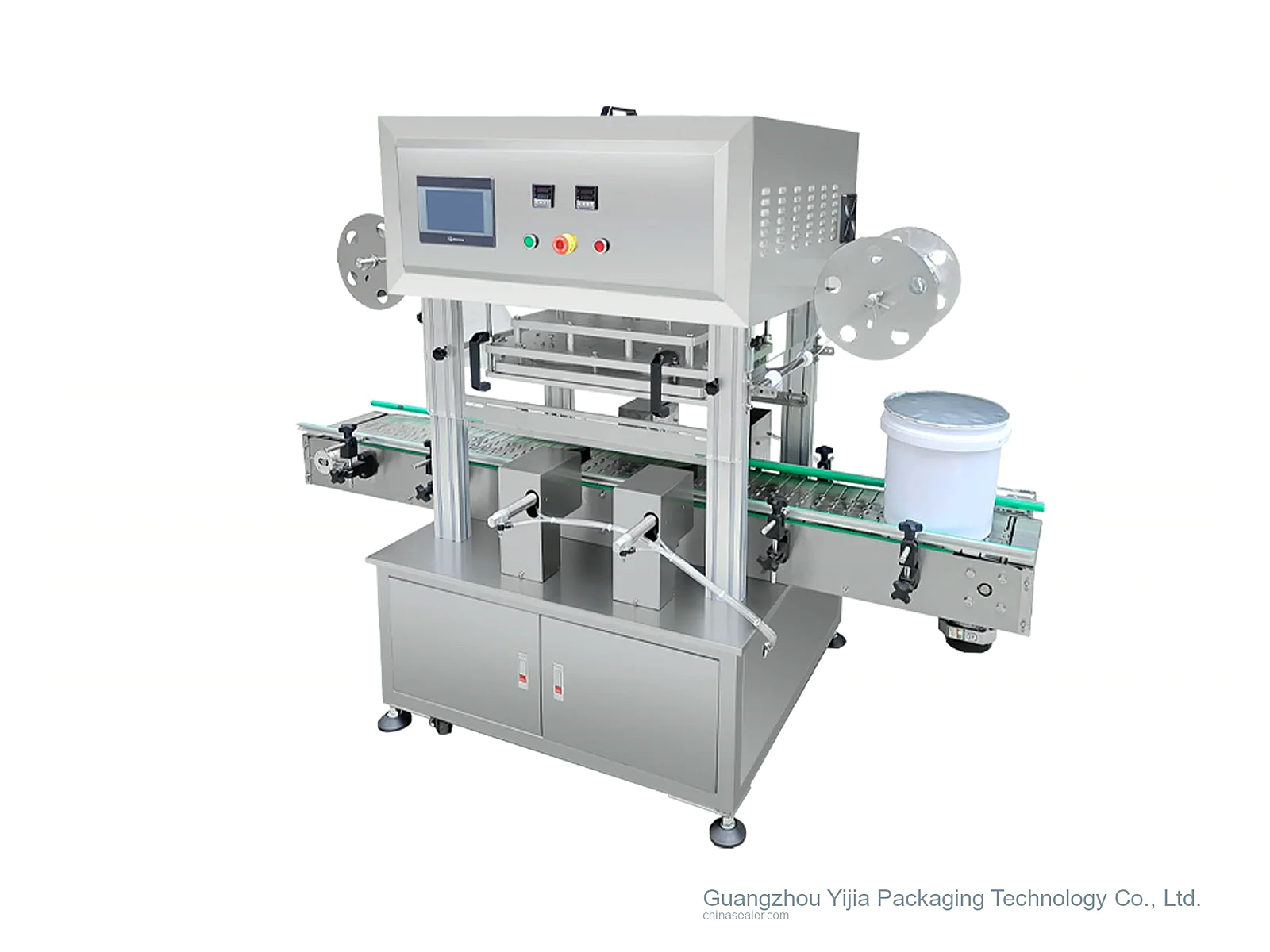 Large-Diameter Pail Heat Seal Sealer
Establish container positioning reference; Similar container appearance does not mean the rim and positioning reference are the same; photos are only for initial screening, and to...
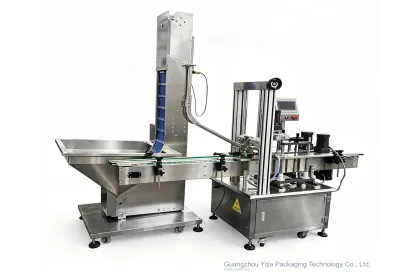 Automatic Screw Capping Machine
Establish container positioning reference; Similar container appearance does not mean the rim and positioning reference are the same; photos are only for initial screening, and tooling...
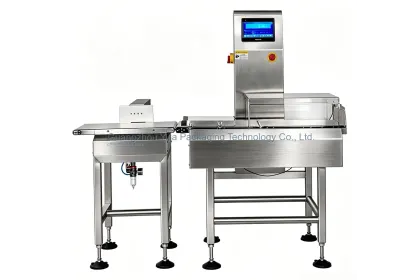 Inline Checkweigher
Establish downstream inspection rules; Visual equipment configuration is confirmed after sample and rule verification; it only judges defined appearance features and does not replace sealing stren...
Core process
First find a repeatable clamping and positioning reference on the container, then check the rim contact surface, lid film structure and posture changes after filling.
For exposed rims with direct film, select bottle or pail heat sealing equipment according to mouth size; for containers with lids, verify screw capping, press capping and lid liner induction separately.
After the main sealing is stable, configure visual inspection according to visible defect samples, and evaluate checkweighing after weight judgment and abnormal product disposition are clear.
Container photos, key dimensions and filling state are used to form a preliminary positioning direction; tooling and inspection recipes are still based on actual sample testing.
Film, liner and lid are submitted as a complete set according to the actual layers, to distinguish direct heat sealing, threaded screw capping, press-in closing or induction inner sealing.
Write positioning, main sealing, appearance inspection and weight judgment into the acceptance process separately, avoiding using one inspection result to replace another process conclusion.
Sample details
The overall shape and rim details are used for preliminary judgment of clamping, pressure surface and lid film layers; the actual sample verifies the repeatable positioning of the tooling.
Provide multi-angle photos or videos of the container, showing the rim, bottom and clampable positionsDimensions and filling state change the support, center of gravity and conveying posture; record both empty container and finished product states.
Submit the actual container sample, noting the mouth length/width or diameter, rim width, overall height and filled weightLids, film and liners are used to distinguish direct heat sealing, screw capping/press capping and induction inner sealing, and form the corresponding tooling input.
Prepare direct heat seal film, threaded lids or press caps, lid liners and their material descriptionsThe operation arrangement is used to determine single-machine manual feeding or custom conveying line integration, and to verify the changeover method for multi-specification tooling.
Specify shift output, number of container specifications, changeover frequency, infeed/outfeed direction and available floor spaceInspection configuration requires normal and abnormal samples, defect definitions and weight rules; acceptance content cannot be inferred from the equipment name.
Provide appearance defect samples, weight judgment range, abnormal product handling method and other independent verification requirementsCommon selection mistakes
First check the rim contact surface, lid film layers and positioning reference, then select the main equipment and custom fixtures according to these process elements.
Use the actual rim and film material to check flatness, pressure surface and mold positioning; a wide mouth appearance cannot be equated with a heat-sealable structure.
First confirm whether the mouth is circular and verify whether the lid can stably press the matching liner onto the rim, then evaluate induction equipment.
Establish normal and abnormal appearance samples, and set up independent tests for leakage, strength or other requirements, recording conclusions separately.
First verify the fixture and closing action with representative samples, then design change parts and single-machine or line structure according to specification variations.
View detailed technical notes
Selecting Machines by Sealing Contact Surface, Not Outer Shape
For irregular containers, the key is not the outer shape name but the rim pressure surface, lid film layers, and repeatable positioning reference. Establish these three inputs first before judging heat sealing, spin pressing, or induction processes.
Positioning Fixtures Verified in Finished Product State
Empty containers and filled finished products may differ in center of gravity, deformation, and conveying posture. The fixture should be checked for clamping, support, and sealing position in the finished product state; photos are only for initial screening.
Direct Heat Sealing Based on Rim and Film Material
When directly film-sealing an exposed rim, select bottle-type or pail-type heat sealing equipment based on mouth size. Custom molds only serve verified container and film material combinations and cannot be shared across specifications by default. The filled state must also enter trial molding and positioning checks.
Induction Inner Sealing Requires Mouth and Liner Conditions
Threaded caps and press-in caps should be verified separately for screw capping or press capping. Only when a round mouth, matching liner, and stable compression are all present should induction foil sealing be connected after the closing station. Record closing and induction results separately.
Irregular Cap Automation Starts with Positioning Trials
If irregular caps can establish repeatable positioning, custom screw capping heads or press capping parts can be made based on samples. Whether cap feeding, cap sorting, and automatic cap placement are feasible requires separate review of cap posture and continuous trials. If stable cap feeding is not possible, retain manual cap placement.
One Set of Physical Samples Runs Through the Main Machine and Downstream
Containers, films, caps, liners, and filled finished products must be submitted as a complete set. Samples are used simultaneously to verify the main sealing tooling, vision imaging position, and checkweighing conveying posture.
Vision Equipment Only Handles Defined Appearance
Sealing vision inspection reject machines establish rules based on visible samples such as missing film, offset film, obvious wrinkles, contamination, or damage. Configuration requires sample confirmation; optional camera, traceability, and reject functions are described separately.
Inspection Results Cannot Substitute Across Items
Online checkweighers execute judgment and reject actions based on the finished product weight range. Leakage, sealing strength, and other quality items use independent methods and cannot be inferred from vision or weight results.
Common questions
What should be prepared first for an irregular container project?
First provide multi-angle information on the container, rim, lid or film material, and state the posture after filling. The tooling and main sealing still need verification with actual samples.
What kind of irregular rim can be evaluated for direct heat sealing?
Direct heat sealing for bottles or pails can be evaluated only when the exposed rim forms a stable pressure surface, the film material matches the contact layer, and the custom mold can achieve repeatable positioning.
Can induction foil sealing be used for irregular bottle bodies?
The container body can be irregular, but the mouth must meet the induction process requirements, and the lid liner must be stably pressed onto the circular rim by the lid. Both need sample confirmation.
Can automatic screw capping or press capping be achieved for irregular lids?
First test-fit according to thread, press-in or snap-fit structures. Only when the lid and container can be repeatedly positioned, further configure the screw capping head, press capping part or cap feeding mechanism.
What items can visual sealing inspection check?
It can identify appearance anomalies such as missing film, misaligned film, obvious wrinkles, contamination or damage based on samples, but it does not judge sealing strength, leakage or microbiological results.
How is online checkweighing integrated into the downstream of irregular containers?
The project first defines the finished product weight range and the handling action for abnormal products, then uses an online checkweigher to execute the judgment. It does not replace appearance or leakage verification.