Solution topic
Prepared-Meal Tray End-of-Line: Sealing, Inspection, Bundle Shrinking, Case Packing and Palletising
Validate tray, lidding and optional MAP first, then configure inspection, sleeve shrink bundling, case erecting and packing, case sealing, marking and palletising by shipping forma
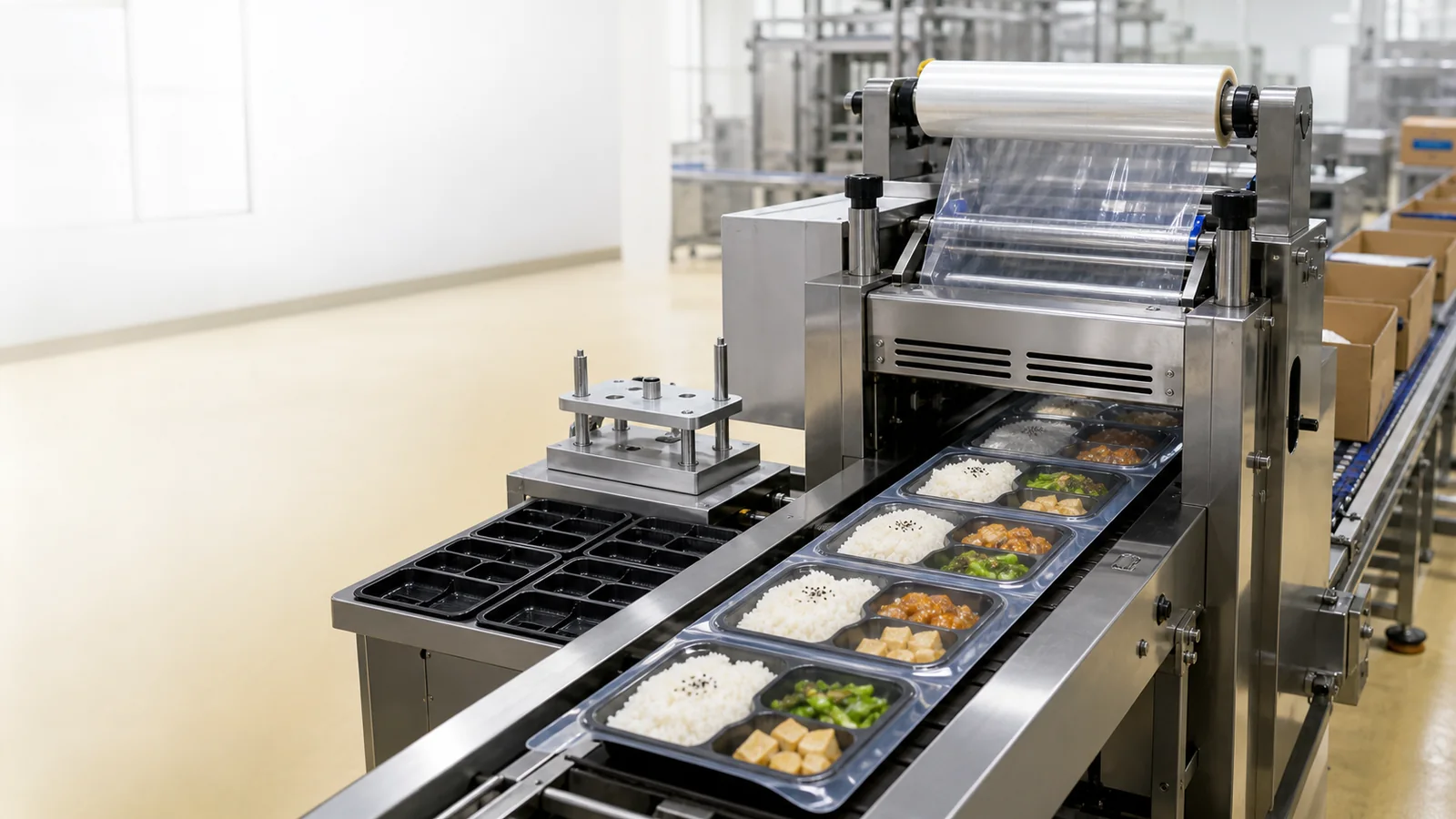
- Stabilise tray sealing or a validated MAP process first, then add inspection, sleeve shrinking, case packing, sealing or palletising from pack collation, shipping format, case, cycle and space.
Solution summary prepared for you
- For ordinary heat sealing of prepared meals, a tabletop multi-compartment tray sealing machine or automatic pre-cut film tray sealing machine can be used first, establishing finished samples with real dishes, trays, and film.
- Only configure the tray-type modified atmosphere sealing machine when gas displacement conditions and packaging acceptance methods are clear. Shelf life is still confirmed by product and storage/transport testing.
- After sealing is stable, connect seal visual inspection and date coding, then add automatic case opening, robot case packing, case sealing with outer box labeling, and robot palletizing according to case specifications.
Route comparison
- Suitable for first validating conventional heat sealing, multi-variety small batches, or prepared meal trays without gas displacement requirements.
- Tabletop or automatic pre-cut film equipment is convenient for sampling with real trays, film, and dishes; molds can be managed by specification when changing tray types.
- Does not include gas displacement. Filling height, rim contamination, film positioning, and mold changeover still need per-tray validation.
- When the product process clearly requires modified atmosphere, or stable orders require continuous conveying sealing, evaluate the corresponding dedicated route.
- For small batches of multi-compartment trays, a tabletop multi-compartment tray sealing machine can be used. When automatic film separation and placement are needed, evaluate an automatic pre-cut film pickup tray sealing machine.
- Suitable for projects where gas displacement and packaging acceptance are clear, and continuous conveying, seal appearance screening, and date traceability are required.
- Modified atmosphere equipment completes defined gas displacement and film sealing; food-grade conveying can connect seal visual inspection and date coding.
- Gas, film, inspection good/bad samples, and coding position all need confirmation. Vision does not replace seal or product inspection.
- When the modified atmosphere process is not yet formed, or tray sealing and conveying attitude are still changing, it is not advisable to lock the inspection line directly.
- Use a tray-type modified atmosphere sealing machine and food-grade conveying line, with seal visual inspection rejection machine and date/batch code inkjet printer after sealing.
- Suitable for continuous shipping projects where sealing and inspection are already stable, and case specifications, per-case arrangement, and palletizing method are defined.
- Case opening, robot case packing, case sealing and labeling, and palletizing can form qualified trays into shipping units according to defined case specifications.
- Requires stable tray output, complete case specifications, gripping tests, buffers, safety guarding, and pallet layer patterns; cannot be combined based only on nominal upstream capacity.
- When box type, packing arrangement, or pallet scheme still changes frequently, and manual case packing can meet current orders, downstream expansion interfaces can be reserved first.
- Configure automatic case erector, robot case packer, case sealing and outer box labeling line, and robot palletizer in sequence.
Associated Equipment / Consumables
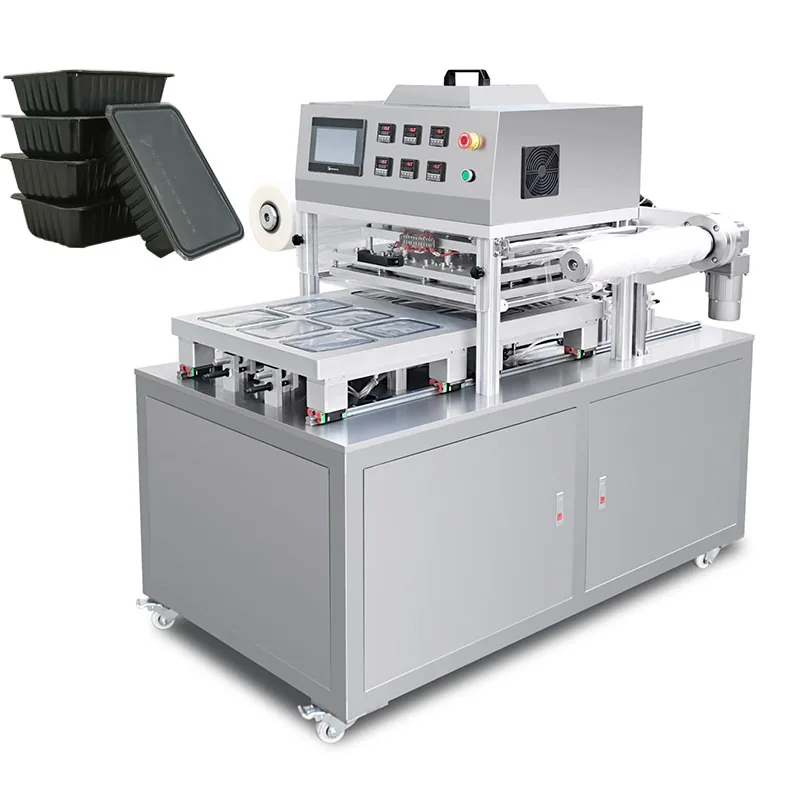 MAP Tray Sealing Machine
 Tabletop Multi-Compartment Meal Tray Sealer
Desktop Multi-Compartment Lunch Box Sealer: Modified atmosphere sealing and continuous conveying; Gas conditions, residual detection, tray-film barrier, and cold chain validation must be defined by the project; equipm...
Core process
For ordinary heat sealing, first use trays filled with real prepared dishes and production film to verify rim cleanliness, mold fit, and sealed finished samples.
Only configure the tray-type modified atmosphere sealing machine when the product process confirms the need for gas displacement, and use a food-grade conveying line to connect stable finished products.
After the seal sample standard is clear, the vision system inspects the specified film surface or seal edge features, and the inkjet printer prints the date/batch code at the designated position.
Submit trays, sealing film, dishes, and finished packaging samples as a set, recording rim, filling height, and post-seal running attitude.
Downstream design starts from sealed and inspected trays, first determining per-case arrangement, divider needs, box orientation, and pallet layer patterns.
After tray main sealing and inspection are stable, connect case opening, robot case packing, case sealing with outer box labeling, and robot palletizing in sequence according to actual cycle time.
Sample details
Tray rim and filling height determine mold contact and food-trapping risk; multi-compartment ribs must also be fully shown.
Actual tray samples, material, length/width/height, compartment count, rim cross-section, and photos of the filled trayThe heat-seal layer, barrier, and supply form of the sealing film separately affect ordinary heat sealing or modified atmosphere equipment configuration.
Production film samples, material structure, thickness, roll film or pre-cut form, and easy-peel requirementsModified atmosphere requirements must be translated into executable gas conditions, inspection, and product validation, not vague shelf-life goals.
Whether modified atmosphere is required, responsibility for gas scheme, packaging acceptance, sales temperature range, and storage/transport testingVision and date coding stations need clearly defined visible defects, good/bad samples, character layout, and abnormal tray flow.
Seal defect samples, judgment rules, date/batch code position, rejection, and data recording requirementsCase opening, case packing, case sealing, and palletizing are all constrained by case specifications, arrangement, and on-site safety space.
Flat corrugated boxes and formed boxes, per-case arrangement, label samples, pallet layer patterns, and layout drawingsCommon selection mistakes
Empty trays and clean film cannot cover the effects of soup, grease, food debris, and filling height on the seal edge; mold closure does not mean mass production is feasible.
Gas displacement is only part of modified atmosphere packaging; film barrier, seal integrity, product hygiene, and storage/transport conditions jointly affect the result.
Vision systems can only identify defined and visible film wrinkles, contamination, or position anomalies; they cannot directly prove internal seal integrity or food safety.
The downstream cycle time comes from qualified tray output and per-case arrangement; if the upstream is unstable, adding robots only transfers fluctuations to the buffer area.
Corrugated boxes with the same external dimensions may have different opening directions, internal arrangements, tape, and label positions; palletizing also involves pallets and layer patterns.
View detailed technical notes
Automatic Downstream Depends on Qualified Sealing
A prepared meal tray line should first solve tray-film heat sealing, then decide whether to use modified atmosphere packaging. Only when qualified meal trays are output stably can vision inspection, coding, case packing, and palletizing have a reliable upstream condition.
Standard Heat Sealing and MAP First Split by Product Process
Standard heat sealing verifies film compatibility and rim cleanliness. MAP also requires defining gas replacement and packaging acceptance. Both main sealing routes use real meals in trays to avoid empty-tray samples ignoring broth and grease.
Standard Heat Sealing Starts from Finished Meal Tray Samples
A tabletop multi-compartment meal tray sealing machine is suitable for small-batch sampling. An automatic pre-cut film pick-and-place tray sealing machine is suitable for projects requiring mechanical film separation and placement. Both configure tooling according to tray type and check whether contents enter the rim.
MAP Equipment Executes a Defined Preservation Process
Tray MAP sealing machines are configured only after gas conditions, film barrier properties, and inspection methods are defined. Food-grade conveying lines connect finished products, but shelf life must be confirmed jointly by formulation, hygiene, packaging materials, and storage and transport tests.
Post-Seal Inspection and Batch Coding Each Have Their Boundaries
A sealing vision inspection reject machine checks visible seal contamination, film wrinkles, or position features against representative good and bad samples, and sends abnormal trays to an agreed direction. A date batch inkjet coder handles traceability characters. Vision, coding, seal testing, and product inspection are accepted separately; camera results cannot replace packaging function checks.
After Case Specifications Are Stable, Connect Case Erecting, Packing, and Sealing
After trays pass main sealing and inspection, an automatic case erector prepares outer cartons, a robotic case packer places trays according to the arrangement, and a case sealer and outer carton labeling line complete shipping case processing.
Palletizing Is Verified with Real Outer Cartons and Layer Patterns
A robotic palletizer handles sealed outer cartons based on pallet, case, and layer pattern. Gripping, buffering, safety guarding, and abnormal case routing must be defined in the on-site solution.
Build the Full Line in Stages According to Maturity
In the first phase, only standard heat sealing or MAP and necessary inspection may be implemented, with downstream space, direction, and signals clearly reserved. After case specifications and orders stabilize, add case packing and palletizing in stages.
Common questions
How do ordinary heat sealing and modified atmosphere equipment compare in process scope?
The two differ in functional scope, gas system, and validation content; the price difference must be calculated after confirming the tray-film samples, product process, cycle time, and automation scope.
Can one sealing machine cover multiple meal trays?
Tray types confirmed through sample testing can be handled by changing tooling. The greater the differences in size, compartment count, and rim, the more molds, guides, and changeover steps are required.
Can the entire line be planned without actual samples?
Photos and dimensions can initially indicate the direction for ordinary heat sealing, modified atmosphere, and downstream processes. Formal molds, inspection rules, and equipment scope still require meal tray, film, and dish samples.
Can modified atmosphere sealing film be used across different tray types?
No, they are not interchangeable. The heat-seal layer, barrier properties, easy-peel feature, and film supply specifications of the modified atmosphere film must be validated together with the tray and gas process.
What should be checked first when prepared meal trays show seal leakage?
First check tray rim flatness, soup and grease contamination, film material compatibility, mold fit, and filling height, then re-verify the seal against the signed sample method.
Can case packing and palletizing be added later to a sealing machine?
It can be reserved in stages, but before later integration, the sealing cycle time, tray spacing, case specifications, on-site space, and safety interfaces should be re-verified.