Check applicable objects first
Pre-formed trays, meal trays or cups that can be stably placed in turntable carriers; rim, depth and arrangement confirmed per actual sample
Turntable vacuum tray sealing
Evaluating a rotary tray sealer for vacuum packaging? Don’t choose by station count alone: tray rim and depth, lidding-film sealant layer, product compression tolerance and target cycle rate all affect tooling and process design. Send the tray, film and product samples for a fit review. The video shows rotary indexing and sealing-head motion; vacuum performance and seal results still need sample testing.
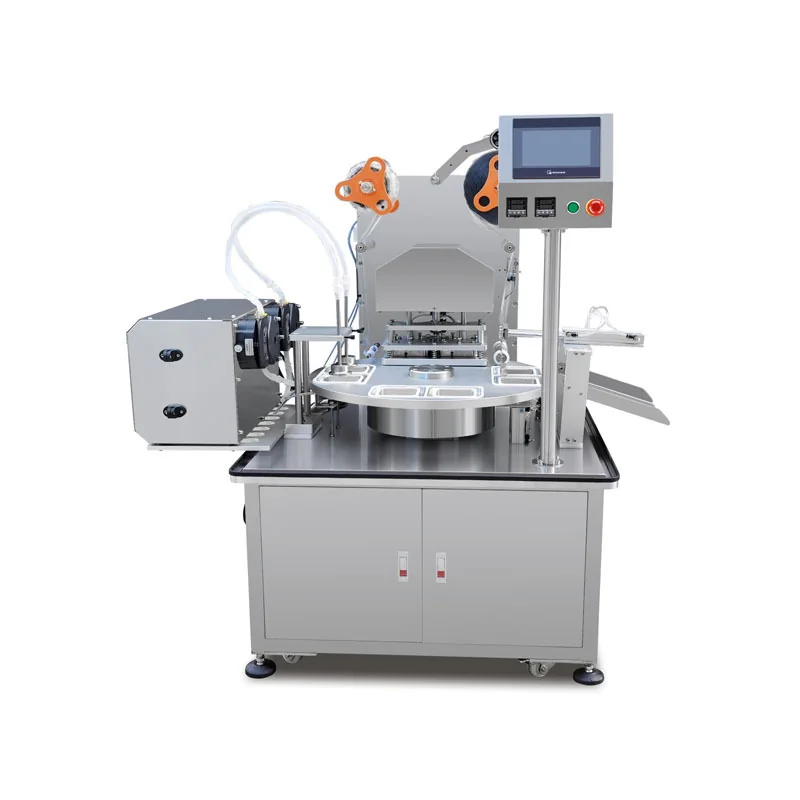
View actual equipment materials
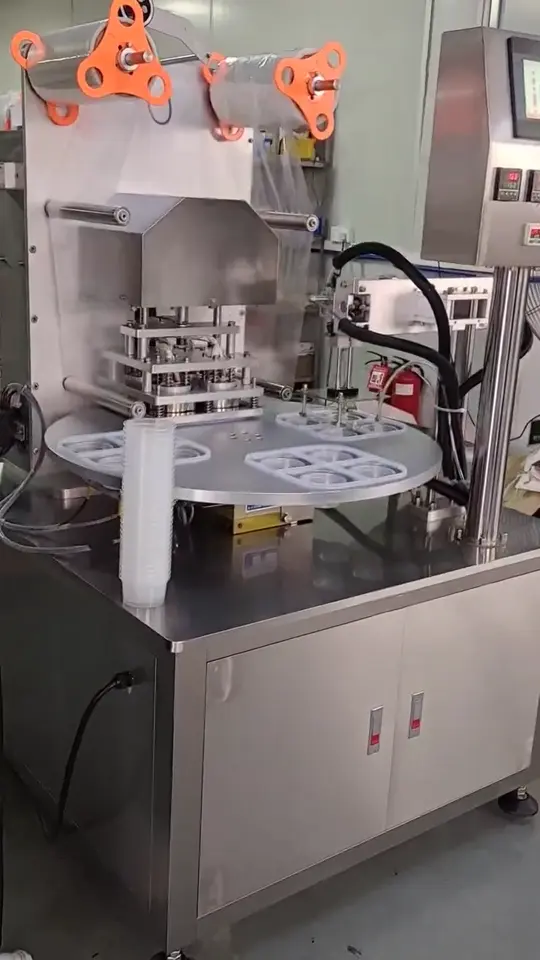
The factory video shows a four-cavity plastic tray on a rotary table, the sealing head pressing down, and a removed sealed sample. No clearly identifiable vacuum or gas-flushing cycle is shown, so the footage does not establish vacuum level, leak rate, or shelf-life performance. Confirm the tray, tooling, lidding film, and target vacuum with representative samples.
Actual equipment and its operating steps. Confirm the final configuration with the containers, product, sample trials and agreed equipment scope.


See actual conditions first
Please provide trays, film, product to be packed, vacuum or gas target, sealing standard, target speed and site conditions.
Pre-formed trays, meal trays or cups that can be stably placed in turntable carriers; rim, depth and arrangement confirmed per actual sample
The route confirmed here is rotary vacuum tray sealing. If gas flushing is being considered, first verify support for the exact model and configuration, then validate with samples; the current video does not show that process.
Automatic tray loading, filling, inspection, rejection, coding and downstream conveying are assessed by project. Gas flushing is not a confirmed function of this configuration; verify the exact model first.
Please provide trays, film, product to be packed, vacuum or gas target, sealing standard, target speed and site conditions.
See actual conditions first
Start with container photos, the intended lidding material and approximate output. You can enquire before drawings or full material specifications are ready; we will review the process and identify the samples needed.
See actual conditions first
Confirmed based on number of turntable stations, manual or automatic feeding, vacuum or gas time, sealing hold and discharge. Actual capacity is confirmed by project trials.
Turntable multi-station vacuum sealing; automatic tray feeding, filling, gas, inspection, rejection and conveying optional per project
Pre-formed trays, meal trays or cups that can be stably placed in turntable carriers; rim, depth and arrangement confirmed per actual sample
Fresh food, cooked food, prepared meals or other tray products; product height, liquid seepage, rim contamination and pressure resistance must be specified
Roll film or pre-cut film route determined per project; heat seal layer, barrier, easy-peel and print registration confirmed by sample trial sealing
Tray feeding and positioning, optional vacuumizing or gas flushing, film lidding, heat sealing, optional film cutting and discharge
Replace or adjust carriers, vacuum chamber, sealing tooling, film path and program per tray shape, rim and film material
Equipment dimensions, power, air supply, maintenance space and upstream/downstream interfaces confirmed based on turntable drive, vacuum and optional gas, sealing heating, film handling and conveying
Confirm rim, depth, film heat seal layer, barrier and finished product appearance.
Verify product pressure resistance, atmosphere target, film and sealing window.
Match feeding, positioning, vacuum, sealing, film cutting and discharge actions.
Accept according to agreed tray, product, atmosphere, speed and changeover standards.
Common configuration routes
The following routes are used to define procurement scope; final combination still needs confirmation based on samples, process and site conditions.
Multi-station cyclic processing, suitable for separate loading, vacuum, sealing and discharge.
Continuous conveying with carriers, easy to expand feeding, filling and downstream integration.
Trays enter and exit in a straight line; structure and footprint selected per speed and process.
Turntable vacuum tray sealing
See actual conditions first
It depends on tray differences, tooling weight and station adjustment. Turntable facilitates separate stations, but changeover may still involve complete carriers, vacuum chamber and sealing tooling.
Not by default. Gas type, target, interface, safety, detection and acceptance method must be confirmed before separate configuration.
Send samples and requirements
Start with container photos, the intended lidding material and approximate output. You can enquire before drawings or full material specifications are ready; we will review the process and identify the samples needed.