Solution topic
Where to Place Cap Inspection in a Bottle Line: Capping, Missing or Skewed Cap Check, Rejection and Labeling
Configure cap vision inspection, alarm, rejection and records from bottle and closure samples, capping method, defect samples, line pitch, reject location and labeling interface.
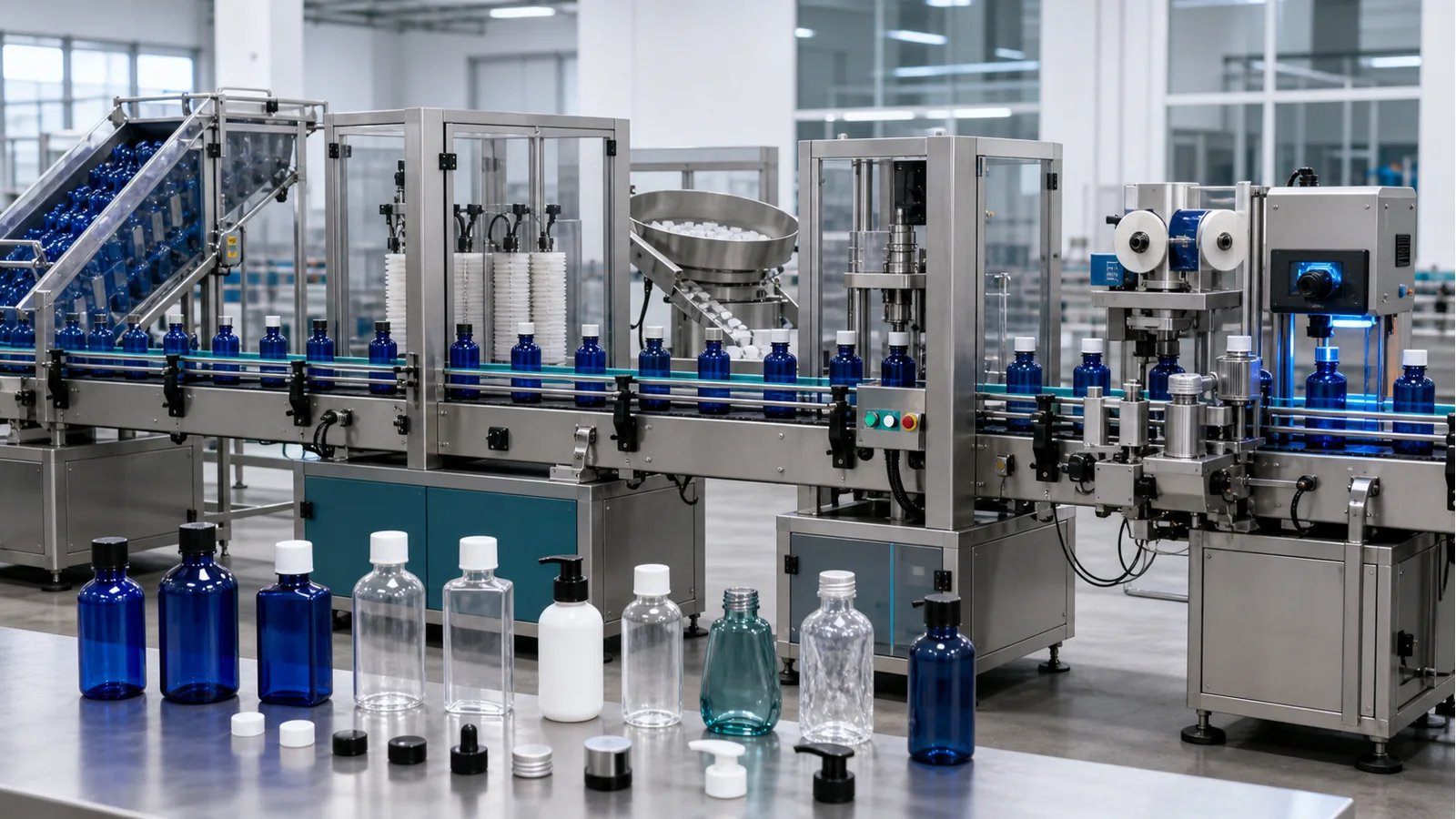
- Standing stability, neck cleanliness, cap type, and label position of round, square, and special-shaped bottles run through the entire line. Every front-end action should provide a consistent orientation for subsequent capping and labeling.
Solution summary prepared for you
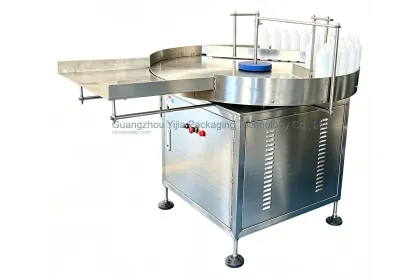
- The bottle line first uses an automatic unscrambler to organize empty bottles, then selects an automatic rinsing/washing machine or a bottle-neck cleaning and blowing module according to the process.
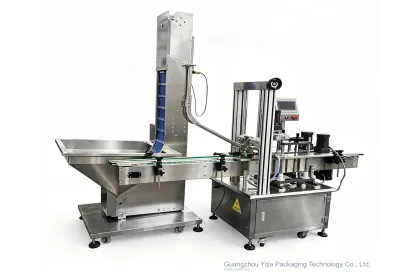
- Caps are fed through the cap feeding and capping system into the automatic screw capper. Cap type and bottle clamping must be verified with complete cap and bottle samples.
- Shrink sleeve, print-and-apply, and round/square bottle labeling are selected based on official artwork. At the end of the line, cap condition and liquid level are inspected separately.
Route comparison
- Suitable for bottle projects that need to sort loose empty bottles into a uniform direction and continuously feed them to subsequent stations.
- The automatic unscrambler can establish the infeed orientation around the main bottle type and connect with a food-grade conveyor line.
- The bottle base, center of gravity, rigidity, and orientation change the sorting method; square and special-shaped bottles cannot be inferred directly from round bottle experience.
- When bottle types change frequently or the main special-shaped bottle has not completed batch testing, a manual feeding path can be retained.
- The automatic unscrambler verifies sorting, output, and changeover with each main empty bottle, then connects to the conveyor according to the on-site direction.
- Suitable for empty bottle lines where the production process has already defined internal rinsing, neck blowing, or rim residue treatment requirements.
- The automatic rinsing and washing machine and the neck cleaning and blowing module can be configured separately according to the cleaning object, making it easier to define the medium and drainage.
- The cleaning medium, air source, residue standard, and on-site drainage conditions must be confirmed by the actual process.
- When the cleaning object and residue method are unclear, do not add rinsing or blowing stations merely because of the equipment name.
- The automatic rinsing and washing machine evaluates rinsing with the official sample bottles, while the neck cleaning and blowing module is configured according to the rim and blowing requirements.
- Suitable for bottled products with stable cap types that can be sorted in batches and require automatic cap placement and screw tightening.
- The cap sorting and placement system and the automatic screw capper can verify cap supply and cap closure separately, making it easier to trace abnormalities.
- Cap stacking, bottle clamping, threads, and changeover all affect continuous operation and should use complete cap sets.
- When special-shaped caps are difficult to sort automatically or the cap type is still changing, manual cap placement can be used first with an upgrade interface reserved.
- The cap sorting and placement system first passes a full batch of cap samples, and then the automatic screw capper rechecks the tightening condition with the matching bottles.
- Suitable for bottle lines that require sleeve labeling, print-and-apply labeling, or self-adhesive labels, and that set inspection rules for caps and liquid level.
- The labeling station and inspection station can be debugged separately with the official layout and defect samples, making finished product information and abnormal disposition clearer.
- The bottle body curve, label material, printing trigger, cap samples, and liquid level samples must be verified independently.
- When the packaging layout or defect definition is not yet complete, reserve space and signals first and do not fix the equipment combination.
- The sleeve labeling and shrinking machine, real-time print-and-apply labeler, and round/square bottle labeler are evaluated with real bottle layouts, while the tilted/missing cap inspection machine and online liquid level inspection and...
Associated Equipment / Consumables
Core process
Sample details
This information is used to determine automatic unscrambling, conveying support, cleaning posture, and label application. Dimensional drawings alone cannot replace it.
Please provide the main specifications of round, square, and special-shaped bottles, including bottom, neck, body rigidity, center of gravity, and infeed orientation.Internal rinsing and bottle-neck blowing have different boundaries. On-site utilities and residue judgment must be checked together.
Please specify the cleaning target, media or air source, residue standard, draining method, and where the process sits in the production flow.The cap feeding and capping system depends on batch cap performance. The automatic screw capper must also verify bottle clamping and closure results.
Please prepare a full batch of the main cap type, corresponding bottles, finished sample bottles after capping, and the planned cap changeover sequence.Different marking stations use different materials, triggers, and support methods. Official bottle samples and artwork must be tested together.
Please provide shrink sleeve material or label rolls, on-demand printing content, application position, batch number area, and reading requirements.Food-grade conveying, inspection, and exception handling are arranged around the finished bottle posture. Space and control interfaces need joint confirmation.
Please list cap defects, liquid level defects, abnormal samples, rejection methods, on-site dimensions, and upstream/downstream height signals.Common selection mistakes
Round, square, and special-shaped bottles have different centers of gravity and orientations. Fixing the unscrambling mechanism without actual bottle testing can lead to posture issues.
Internal rinsing, draining, and bottle-neck blowing face different residues. The production process must define the target and location.
Cap feeding is also affected by stacking, orientation, deformation, and batch differences. A representative full batch of caps must be used.
Shrink sleeve, print-and-apply, and self-adhesive labeling use different materials and actions. Equipment should be selected based on the official artwork.
Tilted/missing caps and liquid level abnormalities come from different processes. Each needs its own defect samples and rejection action verification.
View detailed technical notes
Front and rear sections share the same bottle orientation
Automatic unscrambling, rinsing and cleaning, cap placement and tightening, labeling, and end-of-line inspection all depend on the bottle base, body, and neck, so they must be verified continuously with real bottle samples.
Empty bottle handling and finished product inspection are defined separately
The front section focuses on empty bottle sorting, rinsing, and the rim, while the rear section focuses on cap type, label, liquid level, and rejection of abnormal products. Intermediate production processes are configured with interfaces separately according to the product.
The automatic bottle unscrambler arranges loose empty bottles into a uniform orientation. Round, square, and special-shaped bottles are observed in batches with real samples for output, jamming, and changeover. When the bottle shape is unstable, keep a manual feeding position and an abnormal rejection area.
The automatic bottle rinsing and washing machine handles the internal or external rinsing defined by the process, while the neck cleaning and blowing module handles rim blowing and residue. The cleaning medium, drainage, and inspection method must be confirmed under on-site conditions.
The cap sorting and placement system first verifies the sorting and placement of a full batch of caps, and the automatic screw capper then checks clamping, threads, and tightening with the matching bottles. Cap supply abnormalities and closure abnormalities are recorded separately.
The labeling route follows the official materials and layout
The sleeve labeling and shrinking machine, real-time print-and-apply labeler, and round/square bottle labeler correspond to different labeling methods. The bottle body labeling surface, label material, layout, and trigger requirements must be evaluated with real bottles.
Variable batch coding is an independent collaborative interface
If date or batch codes are needed in addition to labels, an integrated date/batch inkjet coder can be evaluated. The character area, reading direction, and collaborative supply boundary are listed separately.
Cap inspection and liquid level inspection each use a set of samples
The tilted/missing cap inspection machine evaluates cap defects, while the online liquid level inspection and rejection machine evaluates liquid level samples and product conditions; the two cannot replace each other.
Line interfaces are jointly reviewed after individual machine confirmation
Each station first passes the corresponding samples, then the height, direction, spacing, control signals, and abnormal handling are summarized into the whole-line interface table.
Common questions
Can round, square, and special-shaped bottles share an automatic bottle unscrambler?
Check the bottle bottom, center of gravity, rigidity, and orientation. Round bottles can first be evaluated with a general unscrambling approach, but square and special-shaped bottles must be verified with actual bottles.
Are rinsing and bottle-neck cleaning the same station?
Not necessarily. An automatic rinsing/washing machine handles internal or external bottle rinsing, while a bottle-neck cleaning and blowing module handles rim and air-blowing needs. Whether to combine them must be confirmed with actual bottles and cleaning requirements.
Can a cap feeding and capping system be added later?
Yes, an interface can be reserved, but batch cap sorting, cap placement orientation, and abnormal cap recovery require independent testing. After adding the system, the capping rhythm must be re-commissioned.
How do shrink sleeve labeling, print-and-apply labeling, and self-adhesive labeling differ?
Choose based on label material, whether the artwork is generated on demand, the bottle body application surface, and the shrink process. Each route must be tested with official bottle samples and artwork.
Can cap inspection and liquid level inspection share the same judgment?
No. Cap tilt, missing caps, and liquid level are different defects and should have separate samples, thresholds, and exception handling.
Does this bottle line include a specific filling machine?
This combination focuses on bottle unscrambling, rinsing/cleaning, cap feeding and screw capping, marking, and end-of-line inspection. Intermediate production processes are configured separately based on the product and project.