Solution topic
How to Configure a Chilli-Sauce Bottle Filling and Capping Line
Chili sauce is fed from a heated hopper into the piston machine; the presence of seeds and particles determines the valve route trial. After cap closure, if an aluminum foil liner
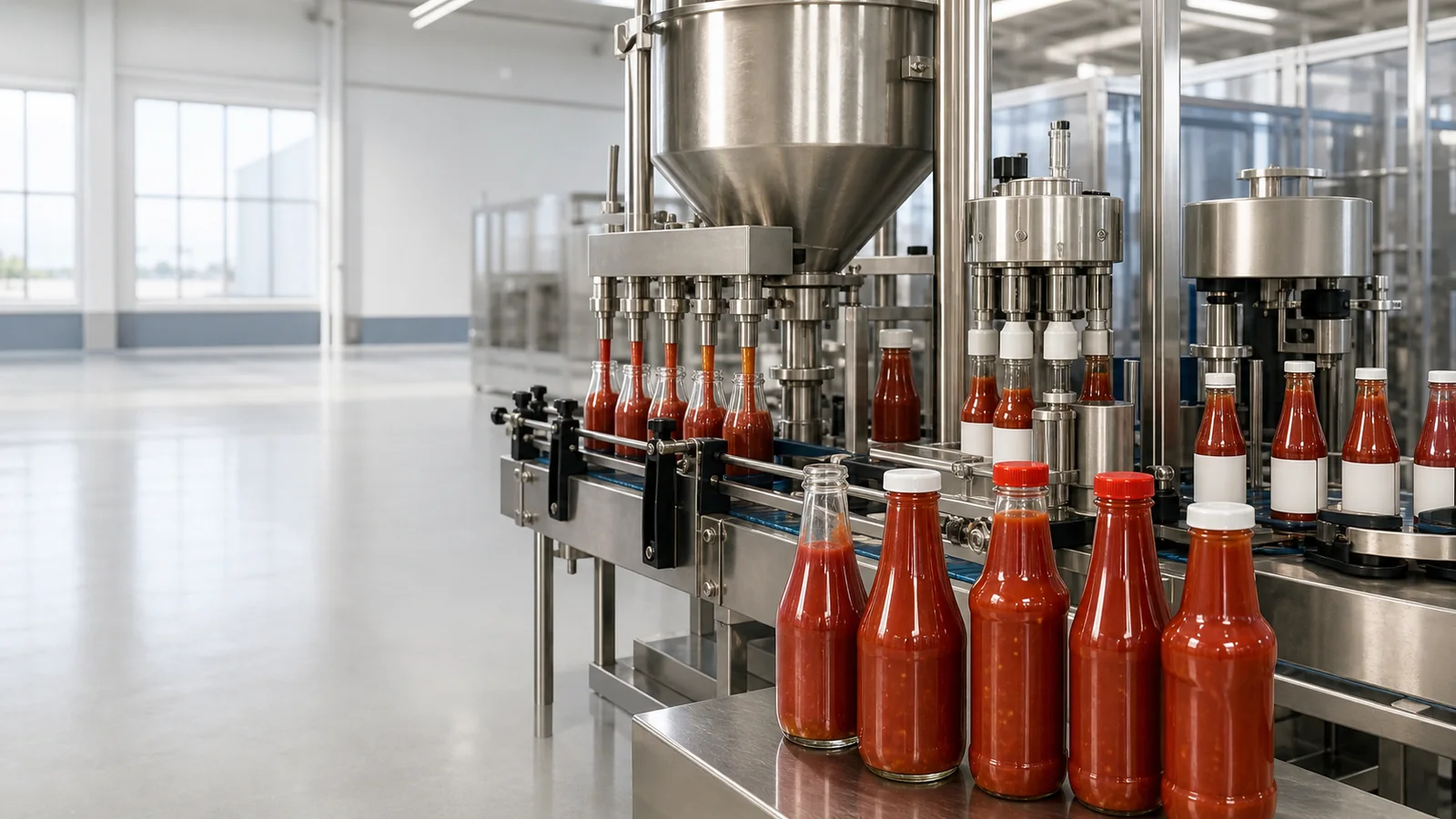
- Confirm particle size, viscosity, temperature and neck-contamination risk, then combine filling, drip control, capping, optional foil sealing, checkweighing and metal detection.
Solution summary prepared for you
- For a chili sauce bottle filling line, first check particles, oil phase, temperature, bottle mouth, and cap liner, then arrange piston filling, screw capping, and conditional inner sealing.
- The sauce piston filler handles filling into bottles, and the automatic screw capper closes caps. Insulated hoppers, induction foil sealing, and food metal detection are selected according to material and acceptance requirements.
- Submit actual product with particles, bottle caps, aluminum foil liners, and labels to verify passability, anti-drip, bottle mouth sealing, and downstream inspection simultaneously.
Route comparison
- Suitable for projects where chili sauce particles, temperature, bottle type or cap liner are still being sealed in samples and key processes need to be confirmed first.
- Separate trial filling and capping makes it easier to observe particle passage, dripping, bottle mouth residue and cap engagement.
- Manual bottle supply, cap placement and transfer are more frequent, and continuity is affected by operating pace and material replenishment.
- When bottle, material and cap are stable and continuous batch shipment is required, do not stay with scattered single machines for long.
- First verify the bottle-material-cap combination with a sauce piston filling machine and automatic screw capping machine; inner sealing and inspection are added later as conditions allow.
- Suitable for production where the formal chili sauce, bottle caps and filling range are confirmed and stable bottle closure is desired.
- Feeding, piston filling, screw capping, conditional induction inner sealing and label inspection can be arranged continuously along the bottle flow.
- Particle passage, sauce replenishment, bottle stability, cap supply and bottle mouth cleanliness must all be fixed before line integration.
- When material batch variation is large, bottle caps are not finalized, or cleaning methods are not confirmed, do not directly lock in a continuous line.
- Use the sauce piston filling machine and automatic screw capping machine as the main line; connect an inline induction foil sealing machine when cap liner is compatible, then arrange labeling and inspection.
- Suitable for projects where chili sauce needs to maintain working condition, or where particles, oil phase and stringing make standard configurations difficult to stabilize.
- Heated hopper, filling contact parts and anti-drip components can be adjusted for particles, temperature, separation and stringing.
- Material and cleaning documentation requirements are more detailed; any recipe or particle change may require re-confirmation.
- When standard piston filling can handle room-temperature actual product stably, there is no need to add heating or complex customization.
- When condition control is indeed required, add a heated hopper and jacketed tank, and use anti-drip anti-stringing filling nozzle assemblies with actual product trials.
Associated Equipment / Consumables
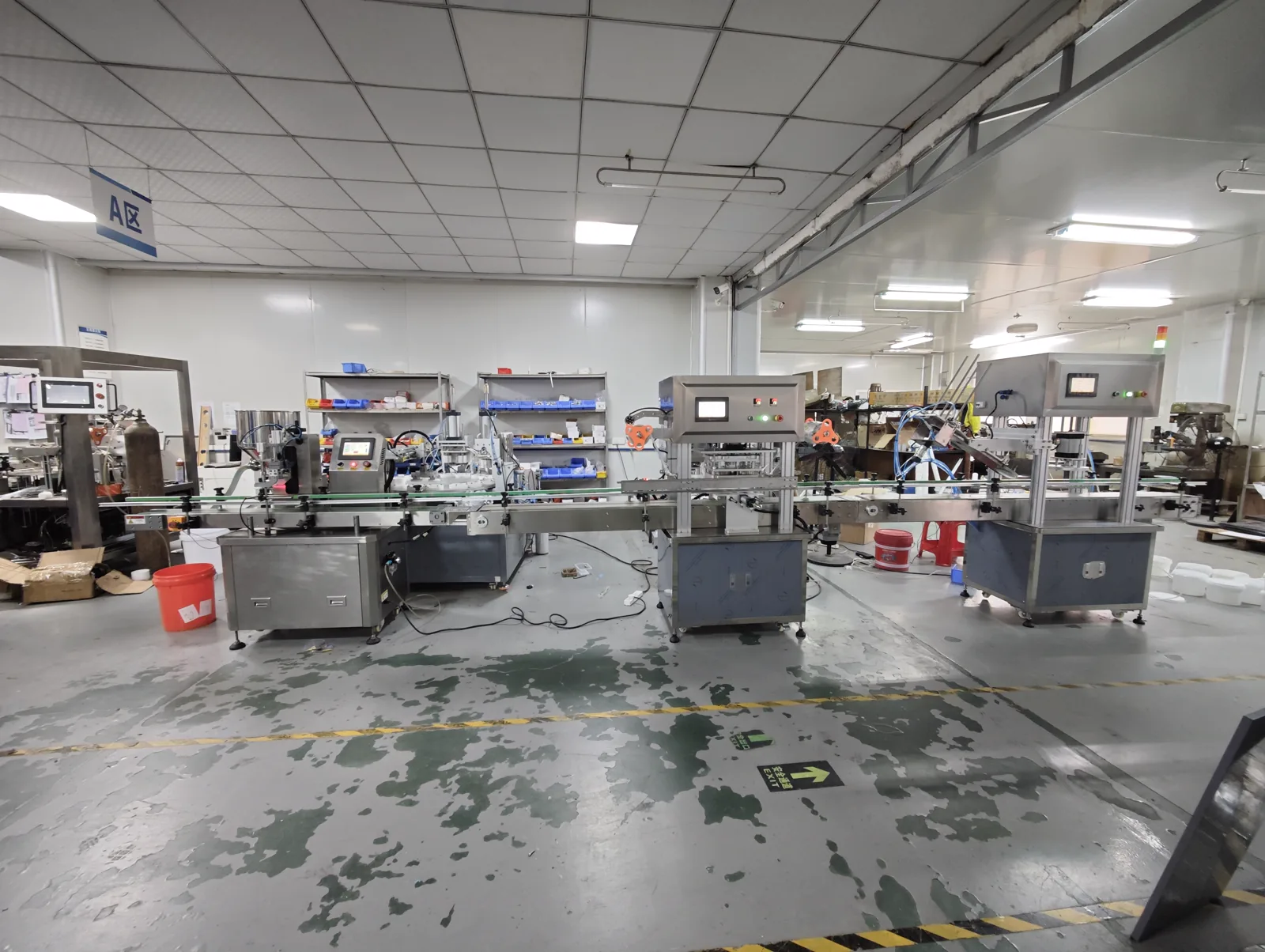 Bottle and Jar Filling, Capping and Sealing Line
This is a project-configured bottle and jar line, not one fixed standard machine. Select the filling path from flow, foam, particles, temperature and cleaning, then select cap feeding and closing from the neck, plug,...
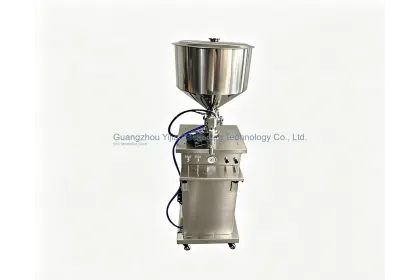 Piston Sauce Filling Machine
Actual product supply and piston filling; Insulated hoppers and jacketed tanks are selected only when the product state must be maintained; anti-drip components also need verification wit...
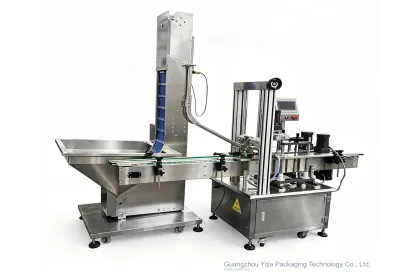 Automatic Screw Capping Machine
Bottle cap closure; Wide-mouth, glass, and plastic bottles have different clamping resistance; capping should be debugged separately with complete sample sets; Automatic screw capping...
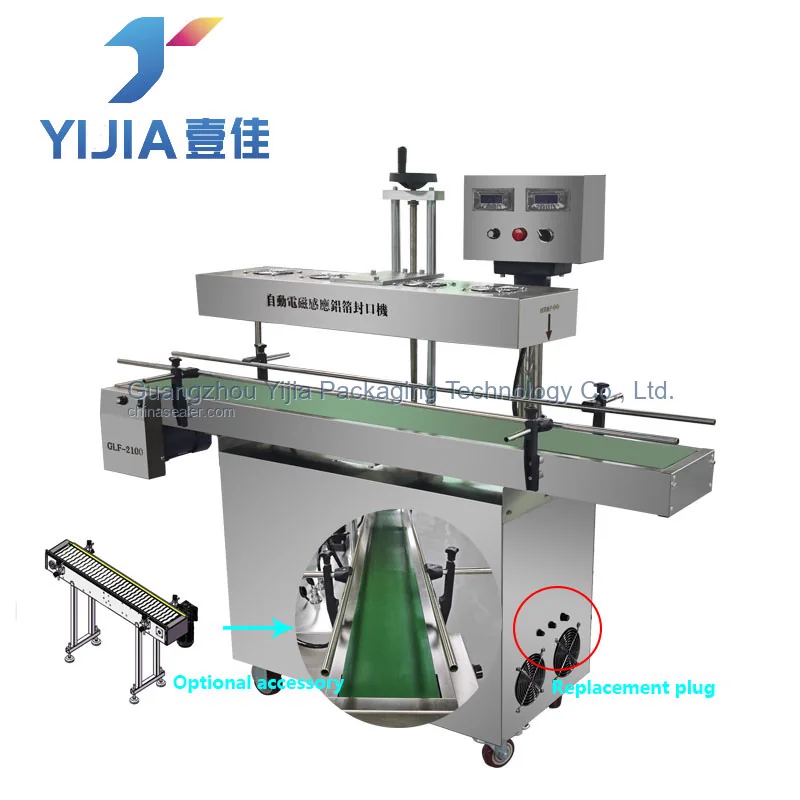 Inline Induction Foil Sealer
Bottle cap closure; Wide-mouth, glass, and plastic bottles have different clamping resistance; capping should be debugged separately with complete sample sets; Automatic screw capping mac...
Core process
First observe chili seeds, particles, oil phase, and sauce temperature, then trial fill with a sauce piston filler.
The automatic screw capper is configured for cap closure according to the threaded cap, bottle holding, and cap feeding method.
When the cap has a matching aluminum foil liner, the online induction foil sealer is used for bottle mouth inner sealing.
The round/square bottle labeling machine handles bottle labels, and the date/batch coder writes production traceability information.
The online checkweigher and food metal detector correspond to fill volume and metal foreign object inspection, selected by risk.
The food-grade conveying line can connect bottling stations. Finished product case packing is arranged separately based on orders and on-site labor.
Sample details
Describe the sales specifications, bottling state, transport method, and opening requirements of the chili sauce, and indicate whether hot or insulated filling is planned.
Finished product photos, sales channels, filling state, transport sealing requirements, project stage.Bottle material, mouth, wide-mouth structure, and cap type determine the filling nozzle, bottle holding, capping, and liner sealing conditions.
Each bottle type, cap, bottle mouth size, cap liner, finished bottled product, and label samples.Record chili seed and particle sizes, sauce flow, oil-water separation, and working temperature to evaluate the valve path and hopper.
Representative actual product, particle state, filling temperature, cleaning method, label and coding consumables.Confirm item by item: feeding, piston filling, screw capping, optional inner sealing, marking, checkweighing or metal detection, and finished product collection.
Process list, manual bottle and cap feeding method, inner sealing conditions, inspection items, and existing equipment interfaces.Production cycle time, bottle change frequency, cleaning downtime, site layout, and utilities together define the line layout.
Production plan, layout drawing, changeover list, cleaning conditions, power and air supply, procurement and delivery arrangements.Common selection mistakes
Tray equipment seals with flat molds and film, and cannot complete the feeding, bottle mouth positioning, and cap closure for chili sauce bottles.
Selecting a machine only by 'high viscosity' will miss the effects of chili seeds, oil phase, temperature, and stringing on the filling path.
Induction sealing cannot be added to all chili sauce bottles; the process is only feasible when the cap liner and bottle mouth match.
The manual labor positions differ between sampling and continuous production; a single speed number cannot determine the automation level.
If bottle caps, aluminum foil liners, and labels are not finalized during the trial stage, mass production batches may not be able to use the original adjustment results.
View detailed technical notes
First Solve Particle Passage and Bottle Mouth Cleanliness
For chili sauce bottling, first solve particle passage, oil-phase separation, product temperature and post-filling dripping, then discuss screw capping and inner sealing. The sauce piston filling machine handles filling into bottles, and the automatic screw capping machine completes cap closure. The inline induction foil sealing machine is only integrated when the cap contains a matching liner.
Sauce Piston Filling Must Be Verified with Actual Product
Whether the sauce piston filling machine is suitable must be verified with representative chili seeds, crushed pieces and sauce body, not just the name 'chili sauce'. Trial filling should record particle passage, fill volume consistency, filling nozzle residue and cleaning conditions, then decide whether to add a heated hopper, jacketed tank or anti-drip anti-stringing filling nozzle assembly.
Main Bottling Equipment and Downstream Sections
The main bottling line consists of a sauce piston filling machine, an automatic screw capping machine and, when conditions are met, an inline induction foil sealing machine. Round/square bottle labeling machine, date/batch coding machine, inline checkweigher, food metal detector and food-grade conveying line are added downstream according to finished product requirements.
Confirm Screw Capping and Liner Inner Sealing Separately
The automatic screw capping machine is responsible for closing threaded caps, while induction inner sealing requires a matching aluminum foil liner pre-placed inside the cap. These two processes cannot replace each other. If the bottle mouth is contaminated with oil or sauce, check cleanliness and uniform liner compression before trial sealing.
Labels and Batch Codes Avoid Chili Oil Contamination
The round/square bottle labeling machine must use actual bottles to confirm positioning and adhesion surface, while the date/batch coding machine is arranged according to the printable area. Chili oil may affect label or ink adhesion, so check readability after drying during sampling.
Checkweighing and Metal Detection Configured to Different Standards
The food-grade conveying line is used to connect bottling stations, and the inline checkweigher verifies finished products according to the agreed fill volume range. Whether to include a food metal detector is determined by the producer's risk analysis, and the test method and handling of non-conforming products must be clarified, not decided solely by sales channel.
Bottling, Tray and Pouch Routes Are Not Mixed
Tray sealing, pouch filling-sealing and bottle screw capping use different container positioning methods and are not interchangeable. If chili sauce is to be packaged in pouches, a separate flexible packaging solution should be established. The current bottling project remains focused on sauce filling, cap closure and bottle mouth sealing.
Caps, Liners and Coding Consumables Sealed in Samples Simultaneously
Before sampling, prepare bottle caps, matching aluminum foil liners, labels and coding consumables, and seal samples with the same batch of bottles and caps. Product-contact parts and change parts should also be confirmed according to cleaning methods, not left until after continuous production.
Finished Product Collection and Outer Case Packing Planned Separately
Finished product collection and case packing are arranged according to order volume and on-site labor. The food-grade conveying line can connect stations according to the layout; the listed equipment does not include a case sealer. If automated outer case packaging is needed later, provide carton and label information separately.
Common questions
How to handle stringing and dripping after chili sauce filling?
First check for stringing and product buildup on the bottle mouth at the end of filling, then evaluate the anti-drip, anti-stringing filling nozzle assembly. Do not rely only on the equipment name.
Will chili sauce with chili seeds clog the machine?
It may clog or pass through smoothly, depending on particle size, distribution, and valve path. Please provide representative actual product for continuous trial filling.
What problems do screw capping and induction inner sealing solve respectively?
The two serve different purposes. An automatic screw capper completes bottle cap closure. Induction inner sealing is added only when the cap has a matching aluminum foil liner.
Do we need a fully automatic line during the trial production stage?
You do not need to build a fully automatic line at the start. First verify filling, bottle mouth cleanliness, and capping, then decide on line integration based on stable orders and manual labor boundaries.
Can square bottles of chili sauce be labeled automatically?
A round/square bottle labeling machine can evaluate square bottles, but the adhesion surface, corners, bottle stability, and label size still need to be confirmed with actual bottles.
Is a food metal detector mandatory?
It is determined by food risk analysis and acceptance plan. If a food metal detector is configured, the test object, method, and abnormal handling must be clearly defined.