Solution topic
How to Configure a Premade-Pouch Flour Packing Line
Around the powder and granule filling machine, establish flour and starch metering, pre-made bags go through the filling and sealing machine series, filled bags go through the cont
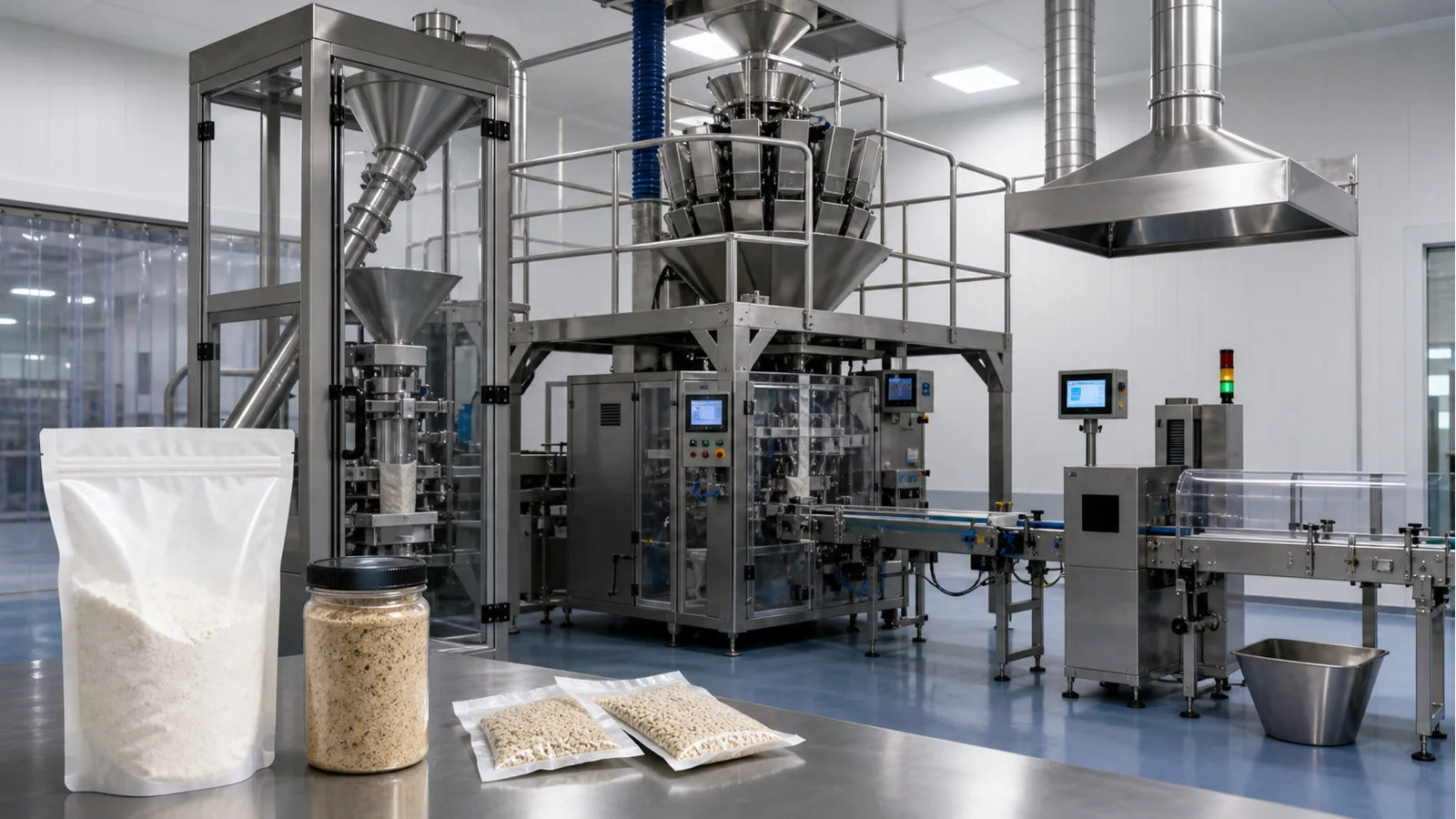
- Assess flour flow and dust, then combine dosing with single- or four-lane pouch opening, venting and sealing.
Solution summary prepared for you
- For flour and starch bagging, first test flow, dusting, and fill weight, then confirm metering and discharge configuration with powder granule filling machine.
- Pre-made bag automatic route covers bag picking, opening, filling, and heat sealing; pre-filled bags can independently use continuous sealing.
- Before sealing, isolate and clean bag mouth dust; after sealing, arrange collaborative checkweighing vision and date batch inkjet coding according to finished samples.
Route comparison
- Suitable for projects where powder, bag type, and main fill weight are finalized and continuous bag picking, opening, filling, and heat sealing are required.
- Metering host and bag handling station can be jointly debugged according to the same finished process, facilitating observation of dust and bag mouth state.
- Powder flow, dusting, bag mouth holding, and heat seal layer all need formal sample verification; recheck after material change.
- When bag type or powder is still changing frequently and automatic station scope is unclear, do not lock the whole machine configuration first.
- Powder granule filling machine is configured according to material bag samples; single-lane/three-station pre-made bag filling-sealing machine series must be confirmed by formal powder, empty bag, and finished bag project samples.
- Suitable for pre-made bags or similar flexible bags where metering filling is completed at other stations and bag mouth can be flattened and dust removed.
- Sealing equipment can be sampled independently or connected with previous process via conveying, retaining adjustment space for metering station.
- Manual bag feeding fluctuation, bag mouth wrinkles, dust interlayer, and heat seal layer changes all alter the sealing edge.
- When automatic bag picking and filling are required, do not treat ordinary continuous sealing as a complete pre-made bag automatic line.
- Continuous bag sealing machine trial seals according to filled bag samples, bag mouth cleaning, and sealing edge judgment; previous metering is confirmed separately.
- Suitable for projects where metering and sealing samples are stable and there are clear feeding, conveying, weight, appearance, and batch requirements.
- Station connection, post-seal cooling, marking, inspection, and non-conforming product handling can be included in the same on-site process.
- When dust cleaning, equipment elevation, finished product center of gravity, and judgment rules are unclear, the line still needs further convergence.
- When only wanting to increase equipment quantity without finished product standards and on-site logistics, do not fix the long line first.
- Automatic feeding conveying sealing line is configured according to powder bag samples; collaborative online checkweighing and vision inspection system and collaborative date batch inkjet coder are confirmed according to finished product...
Associated Equipment / Consumables
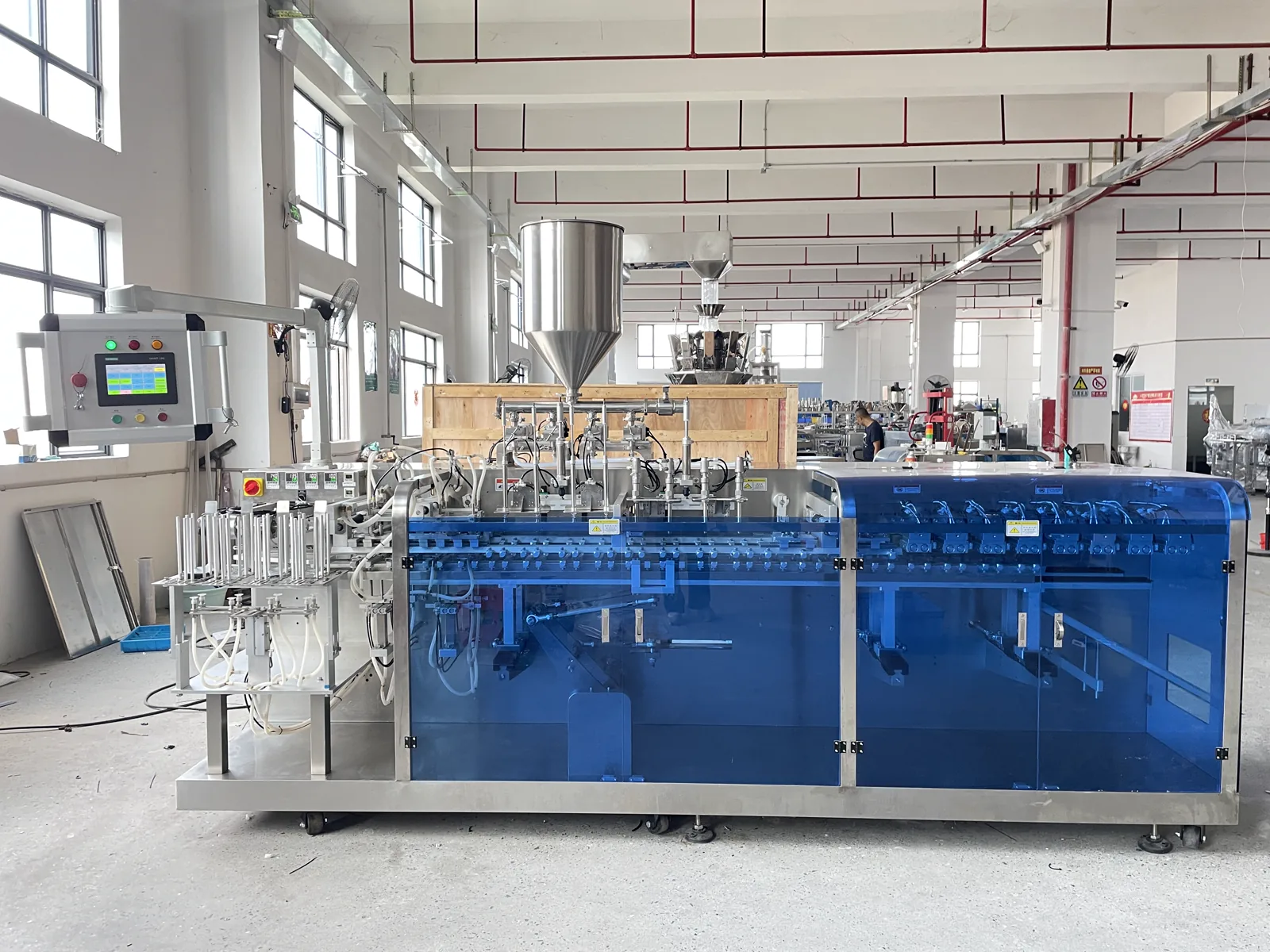 Four-Lane Premade Pouch Filling and Sealing Machine
Four lanes handle pouch picking, opening, filling, mouth preparation, heat sealing and merged discharge. Multiple lanes add value only when pouch supply, metering, clean sealing and downstream flow stay balanced. Tria...
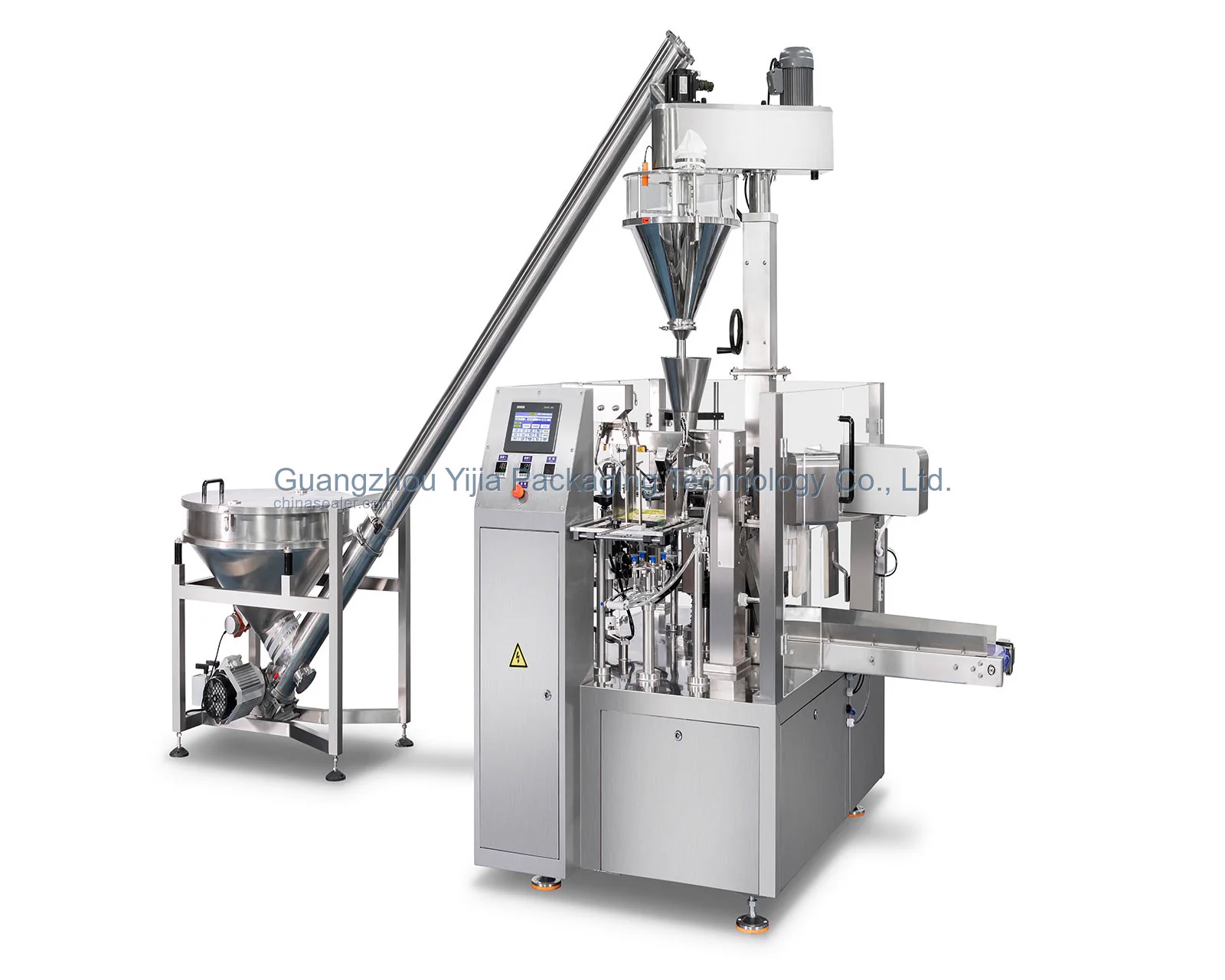 Single-Lane and Three-Station Premade Pouch Filling and Sealing Series
Powder metering filling; Flour and starch may also show different states due to batch or environment; settings cannot be determined only by mater...
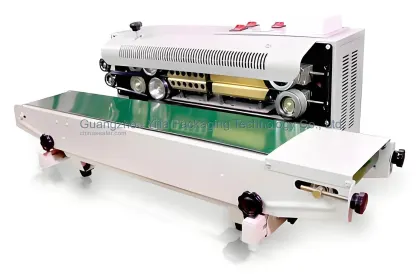 Continuous Bag Sealing Machine
Samples and project input; With only photos, direction can be judged first; formal metering and sealing configuration still need powder and bag sample verification; Main powder and less...
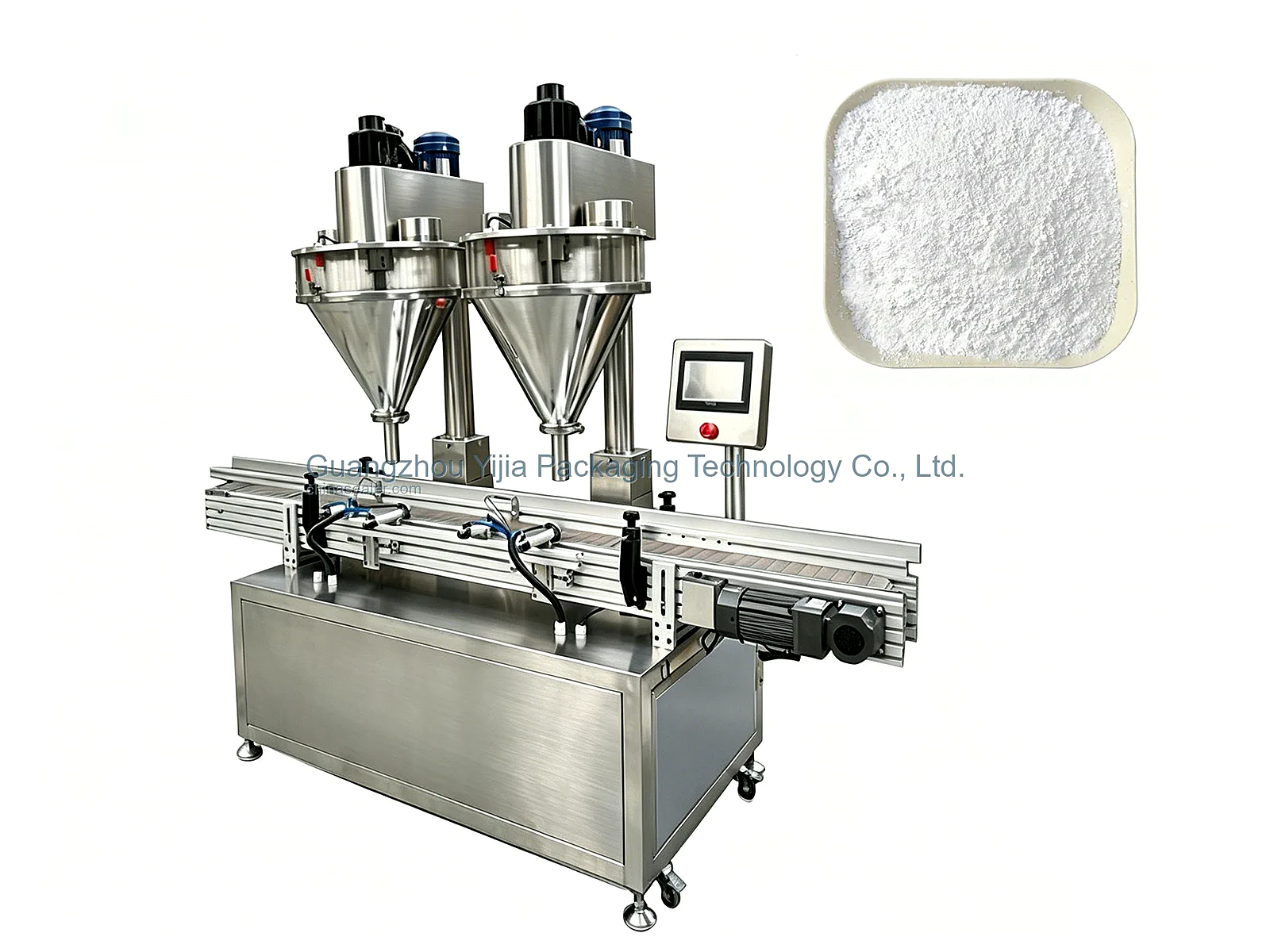 Powder and Granule Dosing Filling Machine
Powder & Granule Filling Machine: Samples and project input; With only photos, direction can be judged first; formal metering and sealing configuration still need powder and bag sample verification; Main powder and le...
Core process
Test flow, bridging, dusting, fill weight, and discharge finishing with real powder, then select metering and feeding configuration.
When automatic bag picking, opening, filling, and heat sealing are required, verify bag mouth holding, dust isolation, and station connection separately.
When previous metering filling is completed, verify manual or conveying bag feeding, bag mouth flattening, heat sealing, and cooling.
Incoming bag posture, powder dust, equipment height, buffering, and post-seal cooling together determine the line structure.
Establish finished weight combination, sealing edge appearance, and batch number printing samples, then arrange inspection, coding, and rejection.
Put material, bag material, fill weight, sealing edge, cleaning, and on-site actions in the same batch of test data.
Sample details
Actual samples are used to test flow, feeding, metering, discharge finishing, and sealing area contamination.
Submit main powder and representative samples prone to caking, oil, or dusting.Bag material conditions determine bag opening, clamping, flattening, heat sealing, and cooling methods.
Provide empty bags, filled bags, dimensions, thickness, inner layer material, and available bag mouth width.The metering configuration of the powder granule filling machine should be confirmed by actual material bag samples and project sampling.
List main fill weight, allowable range, sampling frequency, and material change order.This information is used to arrange filling finishing, sealing protection, and line structure; it cannot be replaced by a general solution.
Explain discharge dust, bag mouth isolation, pre-seal cleaning, equipment cleaning, and on-site dust removal conditions.Collaborative inspection, inkjet coding, automatic line, and food-grade conveying scope are evaluated according to the complete on-site process.
Provide weight, sealing edge, batch number judgment, non-conforming product destination, equipment layout, and available space.Common selection mistakes
Keep metering and discharge samples for each main powder, and recheck settings after material change.
Powder, bag body, and filling state should be tested as a set, not reported separately by dimensions.
First adjust discharge, bag mouth isolation, and pre-seal cleaning, then retest sealing edge according to bag material.
Use single-lane or three-station formal sample process to confirm automation scope item by item.
The line layout should reserve a non-conforming product outlet and recheck operation position, not just connect equipment signals.
View detailed technical notes
Powder state before metering method
Flow, caking, oil content, and dusting change feeding and discharge finishing. Flour or starch should use production-state actual samples, not just select metering host by name.
Powder and granule filling machine validated with material bag samples
Powder and granule filling machines need configuration confirmation based on the actual powder, fill weight, bag mouth and sampling method. Testing should also cover discharge and cleaning after shutdown.
Pre-made bag automatic route confirmed station by station
The single-lane / three-station pre-made bag filling and sealing machine series is evaluated using empty bags, powder and filled finished products. The sequence checks bag picking, bag opening, bag mouth holding, metering station connection, filling and heat sealing. Whether powder feeding, online inspection and conveying are included must be confirmed separately based on the on-site process and formal sample results.
Filled bags can be independently and continuously sealed
After upstream metering is completed, the continuous bag sealing machine can be validated with filled bag samples for manual or conveying bag feeding, bag mouth flattening, heat sealing and cooling. This equipment does not perform automatic bag picking or powder metering; the end of upstream discharge still needs independent inspection.
Isolate dust before sealing
Powder entering between heat seal layers will break seal continuity. First reduce discharge dust, isolate and protect the bag mouth, arrange pre-seal flattening and cleaning, then use easily dusty finished bags to adjust the heat sealing window for the bag material.
The line is determined by incoming material and cleaning conditions
The automatic feeding, conveying and sealing line is configured according to bag posture, dust boundaries, equipment height and on-site takt time. If a food-grade conveying line needs to be added, it must also be confirmed separately.
Weight recheck based on complete finished product
The collaborative online checkweighing and vision inspection system can be evaluated with finished samples composed of powder, bag material and included accessories, and corresponds to seal appearance and rejection action.
Batch number placed on stable bag surface
The collaborative date and batch inkjet coding machine should avoid sealing edges, wrinkles and dust accumulation areas. Use a real bag surface for test printing before determining trigger and reading direction.
Recheck both powder and bag changes
Changes in powder or bag material may simultaneously change metering, dust, bag mouth holding and heat sealing. The changeover checklist should record both types of changes and cleaning actions together.
Finished product standards drive downstream equipment
First clarify weight, seal, batch number and defective product recheck, then decide the scope of inspection, printing and conveying, to avoid stations having only signals but no on-site handling.
Common questions
Can flour and starch share one set of metering settings?
Flow, caking, dusting, and fill weight should be tested separately; the same machine may use different feeding and verification settings.
What samples are needed for a powder granule filling machine?
Prepare production-state powder, main fill weight, empty bags, and filled bags to verify feeding, metering, and discharge finishing.
When should the pre-made bag automatic filling-sealing route be adopted?
When the bag type and powder are finalized and continuous bag picking, opening, filling, and sealing are desired, use formal samples for project evaluation.
How to seal bags already filled with powder?
After the bag mouth can be flattened and dust removed, a continuous bag sealing machine can be used for trial sealing according to bag material and finished samples.
How to troubleshoot dust contamination on the sealing edge?
First check the discharge drop, bag mouth isolation, dust suction or cleaning action, then retest heat sealing with samples that are prone to dusting.
Why perform weight and batch number verification after sealing?
Weight is used to verify the agreed packaging combination, and batch number is used to match production records; both require a non-conforming product handling process.