Solution topic
Fresh meat tray MAP sealing: preservation goals, tray barrier, and film must be validated together
For fresh meat, cut meat, and meat slice trays, choose MAP sealing, ordinary heat sealing, or a continuous line based on preservation goals, tray and MAP film, tray type, and capac
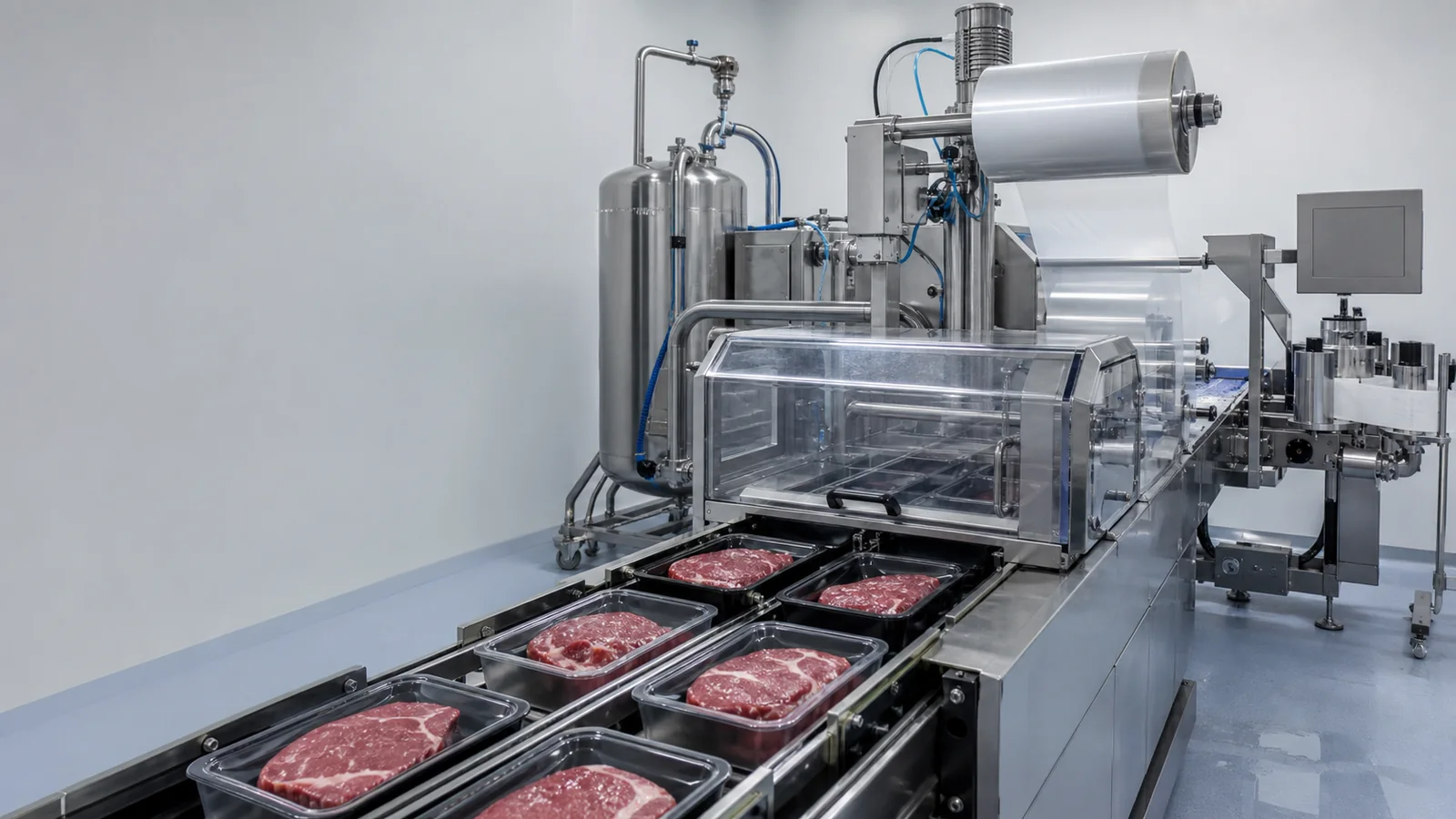
- Ordinary heat sealing only completes the film seal; MAP also depends on meat condition, tray and high-barrier film, and target gas conditions. Multi-compartment or irregular trays require custom positioning. Please provide product, tray and film samples, preservation and cold chain goals, label standards, and capacity.
Solution summary prepared for you
- If fresh meat trays have clear modified atmosphere goals, use a tray-type modified atmosphere sealing machine and validate together with fresh meat, trays, high-barrier film, target gas conditions, and cold chain methods. Ordinary heat s...
- When using pre-cut sheet film, evaluate an automatic pre-cut sheet film pick-and-place tray sealing machine. For multi-compartment trays without modified atmosphere, use a tabletop multi-compartment meal tray sealing machine for ordinary...
- Only after the tray and film sealing process is stable, evaluate the chain-type cup/tray continuous sealing line. Weighing, labeling, and visual inspection are configured according to the finished packaging and clear judgment standards.
Route comparison
- The project already has clear modified atmosphere and cold chain goals, and can provide fresh meat, trays, high-barrier film, and target gas conditions for joint trials.
- The tray-type modified atmosphere sealing machine can complete gas displacement and heat sealing at the tray station, making it easy to record the process around one set of samples.
- Fresh meat condition, packaging space, tray rim, film barrier, gas conditions, seal edge, and cold chain all need validation.
- When the project only needs ordinary film sealing, or modified atmosphere and acceptance goals are not yet clear, first check the ordinary heat sealing solution.
- The tray-type modified atmosphere sealing machine serves as the modified atmosphere main machine, with molds, film, and gas process determined by complete fresh meat tray samples.
- No modified atmosphere is used, the tray only needs heat-sealed lidding film, and pre-cut sheet film or multi-compartment meal tray structure is clearly specified.
- The automatic pre-cut sheet film pick-and-place tray sealing machine handles sheet film positioning, and the tabletop multi-compartment meal tray sealing machine is used for trial sealing of multi-compartment trays.
- Sheet film separation, static, printing direction, rim contour, compartment count, and heat-seal layer must be checked with actual samples.
- When fresh meat packaging has clear gas displacement requirements, ordinary heat sealing equipment cannot replace the tray-type modified atmosphere sealing machine.
- For pre-cut sheet film projects, choose an automatic pick-and-place tray sealing machine; for multi-compartment ordinary film sealing, evaluate a tabletop multi-compartment meal tray sealing machine based on tray samples.
- When tray, film, meat placement, and sealing process are stable, and you need to continuously complete tray feeding, film sealing, and discharge along the chain-plate carrier.
- The chain-type cup/tray continuous sealing line can connect confirmed ordinary or modified atmosphere processes according to carrier arrangement and station count.
- Number of lanes, tray feeding, sealing time, changeover range, maintenance space, and upstream/downstream rhythm all need on-site verification.
- When the sample process is still changing, tray specifications change frequently, or on-site length is insufficient, complete single-machine validation first.
- The chain-plate continuous line is planned after single-machine trials; weighing/labeling and vision inspection are integrated downstream based on finished product standards.
Associated Equipment / Consumables
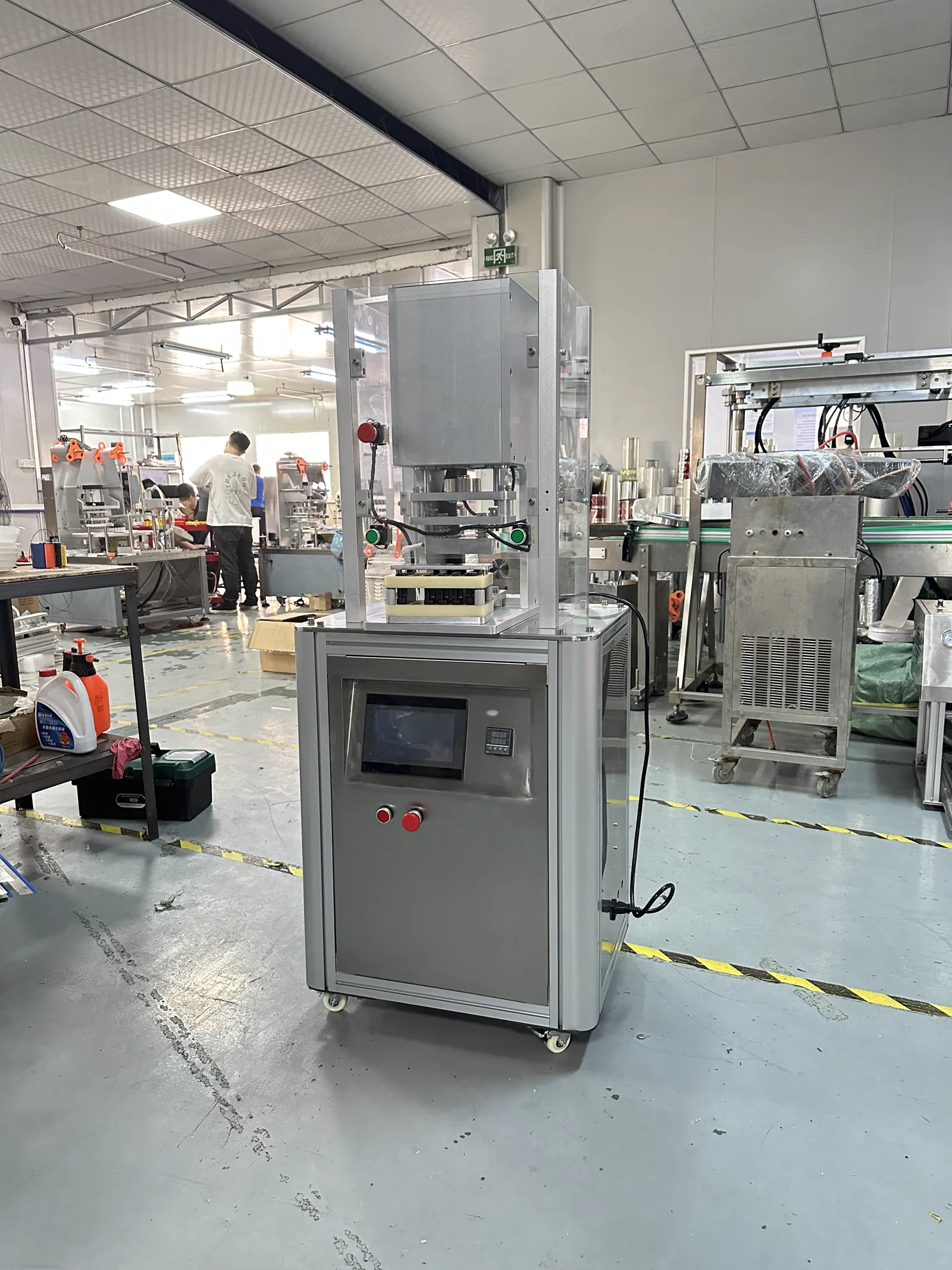 Servo Multi-Cavity Cup, Tray and Container Sealing Machine
Servo conveying coordinates loading, positioning, film handling, multi-cavity heat sealing and discharge. Cavity count alone is not a throughput promise; container layout, rim consistency, film registration, dwell, ha...
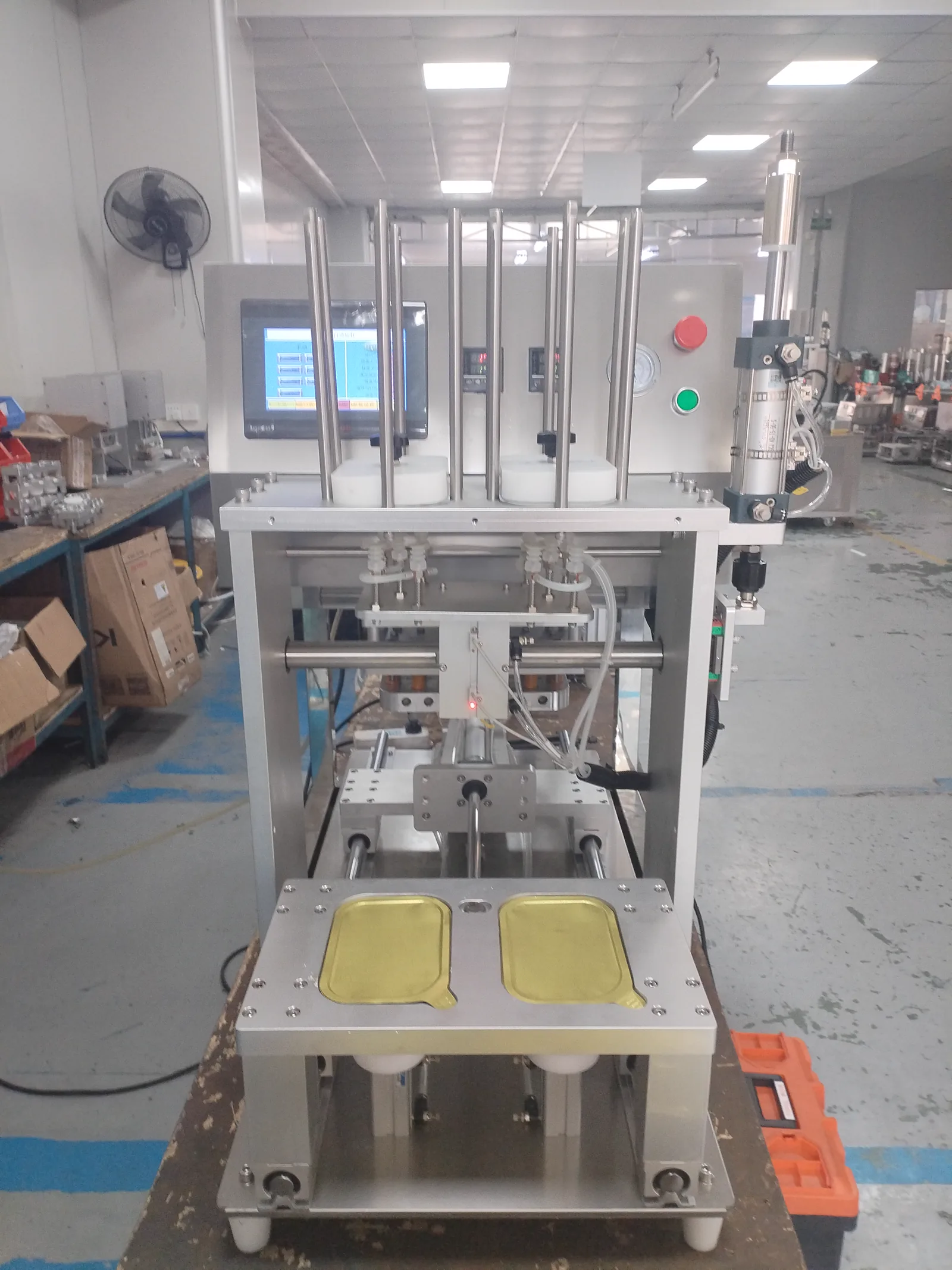 Automatic Pre-Cut Lid Pick-and-Place Tray Sealer
Complete validation of fresh meat, trays, and film; Ordinary heat sealing and modified atmosphere trials should use the same batch of tray film to distinguish process...
 Benchtop Roll-Film Tray Sealing Machine
Complete validation of fresh meat, trays, and film; Ordinary heat sealing and modified atmosphere trials should use the same batch of tray film to distinguish process differenc...
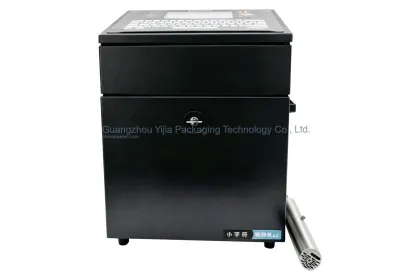 Date & Batch Inkjet Printer
Add weighing, marking, and post-sealing inspection according to standards; Stretch-wrap weighing and labeling does not replace the modified atmosphere or heat sealing main machine; decide...
Core process
Record fresh meat form, temperature, juice, and protrusion height, and measure tray rim, depth, compartment count, and film heat-seal layer.
The tray-type modified atmosphere sealing machine is used for tray film sealing that requires gas displacement; gas conditions, evacuation and gas flushing sequence, and heat sealing are all validated according to the project.
When weight labels are needed, check tray support, wrapping, weighing, and labeling, and establish clear criteria for seal edge appearance inspection.
Photos and dimensions are used to identify tray positioning and film area, and meat condition is used to assess rim contamination, protrusion, and cold chain conditions.
Chilled fresh meat, cut meat, sliced meat, or shredded meat should be tested separately according to tray compartment count and placement height; a single empty tray result cannot be shared.
When modified atmosphere goals are clear, validate tray-type modified atmosphere; for ordinary film sealing, choose machines based on roll film, sheet film, and tray type, and evaluate continuous lines after the process is stable.
Sample details
Meat condition is used to assess rim contamination, protrusion, juice, and cold chain, and it also changes tray positioning and film observation focus.
Provide actual fresh meat, and specify chilled, cut, bone-in, juicy, marinated, temperature, and placement height in the tray.Actual trays are used to make carriers and molds, and irregular or multi-compartment structures require separate checks of positioning and force.
Submit formal trays, and indicate length, width, height, rim width, compartment count, material, rigidity, and allowable deformation.The film must both heat-seal to the tray rim and meet the project's barrier requirements, and gas conditions need to be validated with fresh meat and cold chain.
Provide roll film or pre-cut sheet film, and specify heat-seal layer, easy-peel, barrier, printing, and target gas conditions.This information is used to compare single machines and continuous lines, and to arrange modified atmosphere cycles, ordinary film sealing, mold changes, and buffering.
List common trays, quantity per batch, target production pace, changeover sequence, and manual tray feeding conditions.Site information is used to arrange the main machine and downstream, and trigger and data integration are determined after label content and inspection standards are clear.
Provide equipment area, air supply, and cold chain conditions, and specify weighing labels, printing, visual inspection, and conveying interfaces.Common selection mistakes
Use fresh meat, formal trays, and film for complete trials, and record both ordinary heat sealing and modified atmosphere results.
First establish preservation and acceptance goals, then include gas, packaging materials, sealing, and cold chain in the same validation plan.
Test gas displacement and sealing with actual products and packaging materials, and do not replace project validation with fixed ratios that are detached from samples.
Check molds, sheet or roll film positions, placement, and changeover steps for each tray specification.
First confirm whether the finished product uses heat-sealed trays or stretch-wrapped trays, then arrange weighing, labeling, and inspection positions.
View detailed technical notes
First distinguish between ordinary film sealing and MAP goals
Ordinary heat sealing of fresh meat trays only handles the seal between the film and the tray rim. MAP also requires checking the meat condition, gas conditions, packaging barrier, and cold chain. These two types of projects cannot be selected by tray shape alone.
MAP validation must combine the product and packaging materials
A tray MAP sealing machine is used for fresh meat trays with clear MAP goals. Fresh meat, trays, high-barrier film, packaging space, target gas conditions, and acceptance methods must be recorded in the same test.
Pre-cut film and multi-compartment trays belong to the ordinary heat sealing branch
When using pre-cut film, an automatic pre-cut film pick-and-place tray sealing machine can be used to verify film positioning. For multi-compartment trays without MAP, evaluate a tabletop multi-compartment meal tray sealer based on tray samples.
The continuous line is developed after the single machine process is stable
The chain-plate cup/tray continuous sealing line handles carrier conveying and station integration. After confirming the tray, film, meat placement, and MAP or ordinary heat sealing conditions, design the number of lanes and length.
Weighing/labeling and heat sealing equipment have different roles
The fresh tray wrapping, weighing, and labeling line handles tray wrapping, weight, and labels; it is not equivalent to tray MAP or ordinary heat sealing. Confirm the final packaging format before setting up the downstream section.
Complete samples determine tooling and film handling
Tray rim, depth, compartment count, and rigidity are used to design positioning; the heat seal layer, barrier, printing, and easy-peel requirements of roll film or pre-cut film are verified through trial sealing.
The MAP main unit is configured according to acceptance goals
The evacuation, gas flushing, and heat sealing sequence of the tray MAP sealer must be validated around the project gas conditions and fresh meat samples. Gas ratios, post-seal condition, and cold chain results are all recorded in the project test.
Downstream inspection is based on clear standards
After clarifying weight labels, seal appearance, and traceability content, configure weighing/labeling, inline checkweighing, or vision stations, and arrange triggering, data, and reject handling.
Common questions
With only tray photos, can you first distinguish between ordinary heat sealing and modified atmosphere?
You can first look at the tray rim, compartment count, and film type, but the modified atmosphere process also requires information on the fresh meat condition, preservation goals, gas conditions, packaging barrier properties, and cold chain.
What samples should be prepared to confirm the fresh meat tray solution?
Please provide fresh meat, trays, and formal film, and specify placement, temperature, juice, preservation and cold chain goals, production pace, changeover, labeling standards, and site conditions.
What equipment structures are involved in the production pace?
It will involve tray feeding, carrier row count, sealing waiting time, mold change, buffering, and downstream weighing and labeling. The process times for modified atmosphere cycles and ordinary heat sealing also need to be checked separately.
Why must the modified atmosphere film be tested together with the tray?
The barrier and heat-seal layers of the film must simultaneously meet project requirements, while the tray rim, contamination, and deformation can affect the seal. Empty film data cannot replace complete trials.
How to establish acceptance methods for fresh meat modified atmosphere packaging?
The fresh meat condition, gas conditions, tray film, seal edge, leak inspection, and cold chain conditions should be written into the same validation plan, and records should be made according to the agreed method.
Under what conditions should a continuous tray line be adopted?
When the tray, film, fresh meat placement, and modified atmosphere or ordinary heat sealing process are stable, and the upstream and downstream stations need continuous connection, then check the chain carrier and site length.