Solution topic
Fresh Meat MAP Tray Line: Sample Validation, Continuous Sealing and Label Inspection
Introduces the configuration sequence for fresh meat trays from ordinary heat seal sample testing, tray MAP sealing to chain conveyor continuous production, as well as date coding,
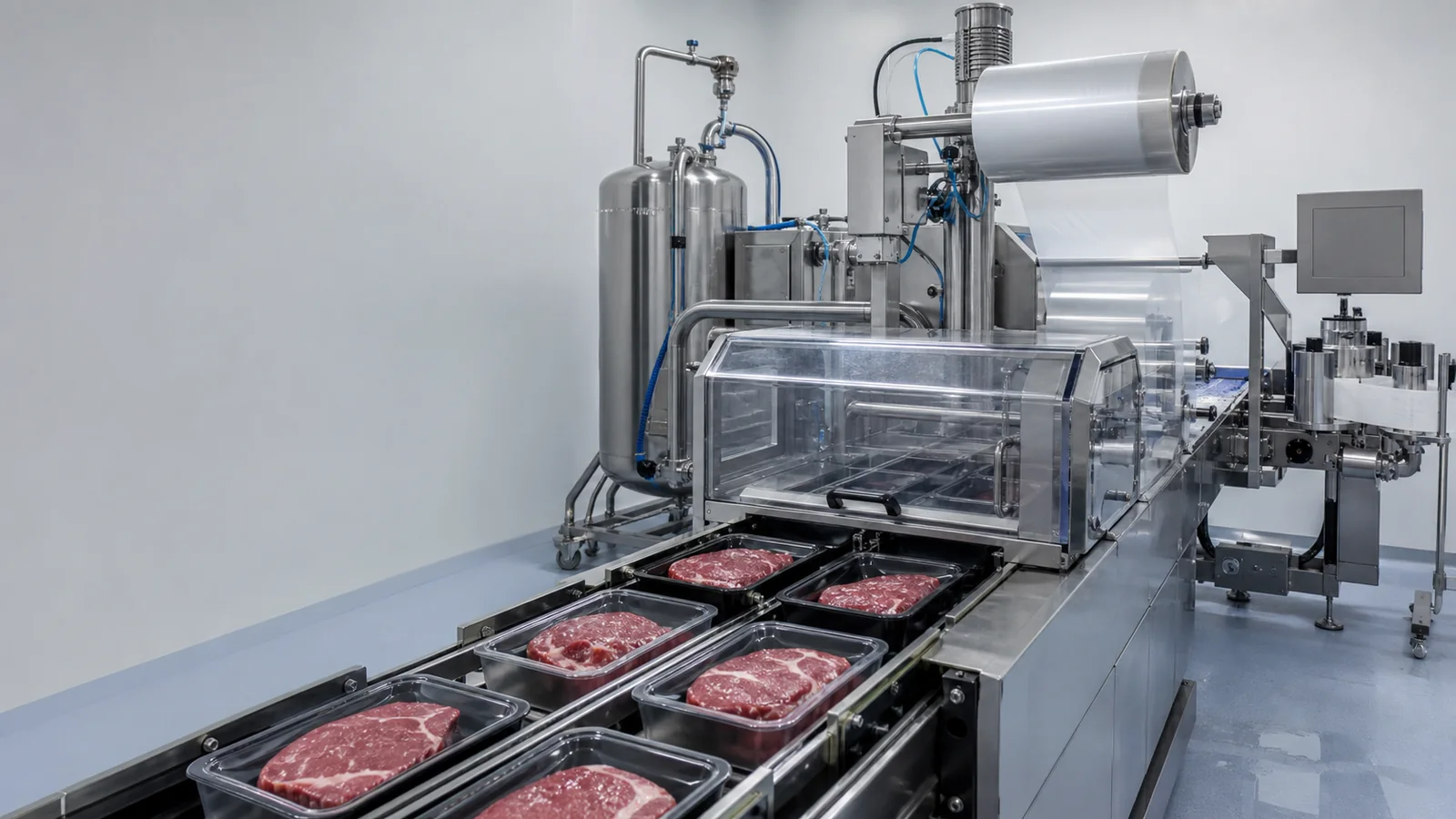
- For ordinary sealing, first confirm meat, trays and film; for MAP, also verify gas process, barrier properties and storage conditions. Continuous lines suit projects with stable tray orientation and orders; labeling and inspection standards must be defined separately.
Solution summary prepared for you
- Fresh meat MAP tray lines first perform normal heat sealing tests on meat-filled trays. After gas process, barrier film, and storage conditions are clear, evaluate the tray MAP sealing machine.
- After tray orientation and orders are stable, upgrade to chain conveyor continuous sealing. This main line receives already-filled trays and does not default to including a fresh meat filling station.
- Labels, inkjet coding, metal detection, checkweighing, and vision are each configured according to packaging surface and abnormal samples. They cannot replace sealing edge and MAP process inspection.
Route comparison
- Projects that need to confirm basic heat sealing, film material, and meat-filled tray state, or that use normal sealing.
- First verify tray rim, meat state, and lidding film sealing separately to establish a sample baseline for normal packaging.
- Trays, fresh meat, rim cleanliness, and lidding film must be tested as a complete set. Film feeding equipment is selected according to the actual state of pre-cut film or roll film.
- When the food process clearly requires gas flushing, add special verification for tray MAP equipment.
- For pre-cut film, use an automatic pre-cut film pick-and-place tray sealing machine; for roll film, use a tabletop roll film tray sealing machine.
- Production where fresh meat packaging has already proposed gas flushing requirements and can provide barrier film, cold chain, and acceptance conditions.
- The tray MAP sealing machine can complete flushing and film sealing according to the established gas process and form corresponding finished product samples.
- Gas flushing, barrier, hygiene, storage, and packaging acceptance are jointly defined by the project process. Equipment testing only covers the agreed scope.
- When gas process and storage verification methods are not clear, completing the normal sealing baseline first is more conducive to progress.
- Use a tray MAP sealing machine and conduct complete set testing with fresh meat, trays, barrier film, and process conditions.
- Projects where meat-filled trays, film material, and production schedule are stable, and continuous sealing with coding and inspection integration is needed.
- Chain conveyor carriers continuously connect tray positioning, sealing, and discharge, and can reserve handover for coding and inspection stations.
- Fresh meat filling requires separate confirmation, labeling requires tray adaptation verification, and inspection equipment only handles defined abnormalities.
- When tray specifications, incoming direction, and production batches still change frequently, retaining independent sealing first is more conducive to verification.
- After tray orientation is stable, use a chain conveyor cup/tray continuous sealing line. Downstream stations are configured with inkjet coding, labeling, metal detection, and checkweighing/vision according to samples.
Associated Equipment / Consumables
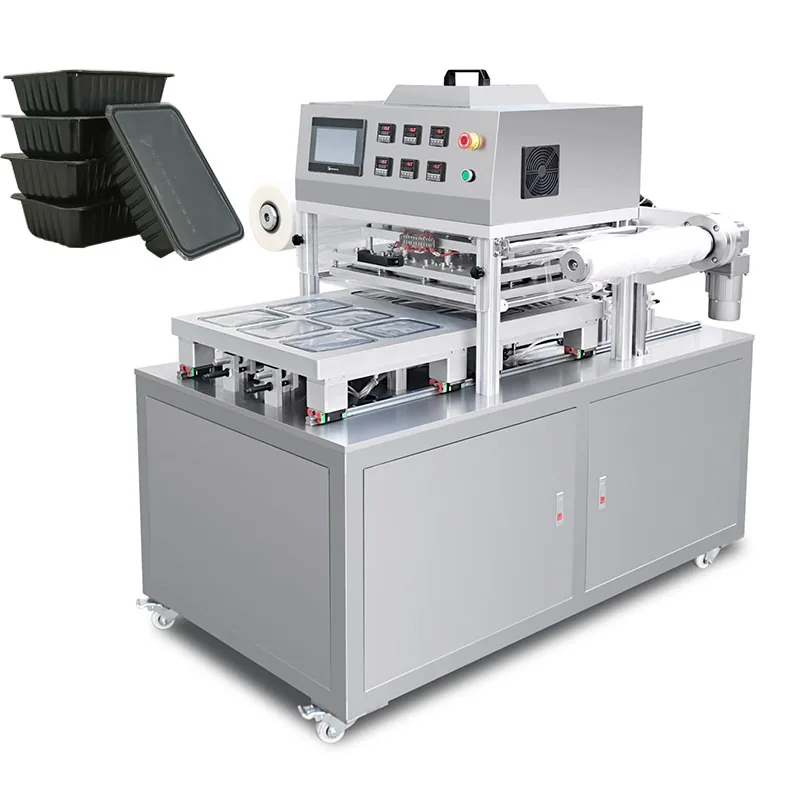 MAP Tray Sealing Machine
For ready-meal and multi-compartment preformed trays, this MAP tray sealer combines vacuum, gas flushing, and lidding-film heat sealing. Gas composition, shelf-life goals, residual-oxygen limits, and leak criteria mus...
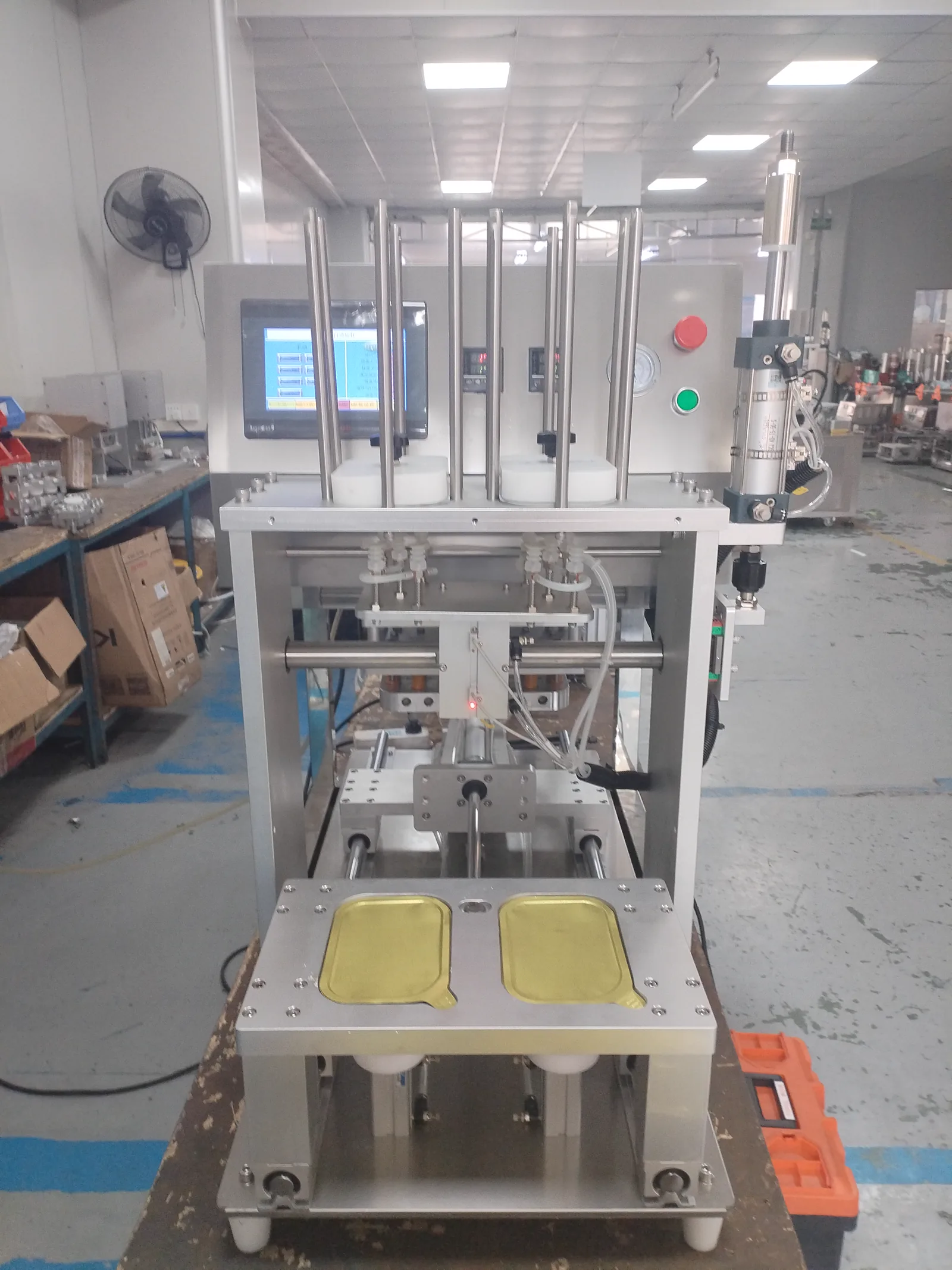 Automatic Pre-Cut Lid Pick-and-Place Tray Sealer
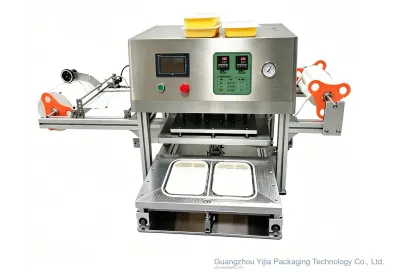 Tabletop Multi-Compartment Meal Tray Sealer
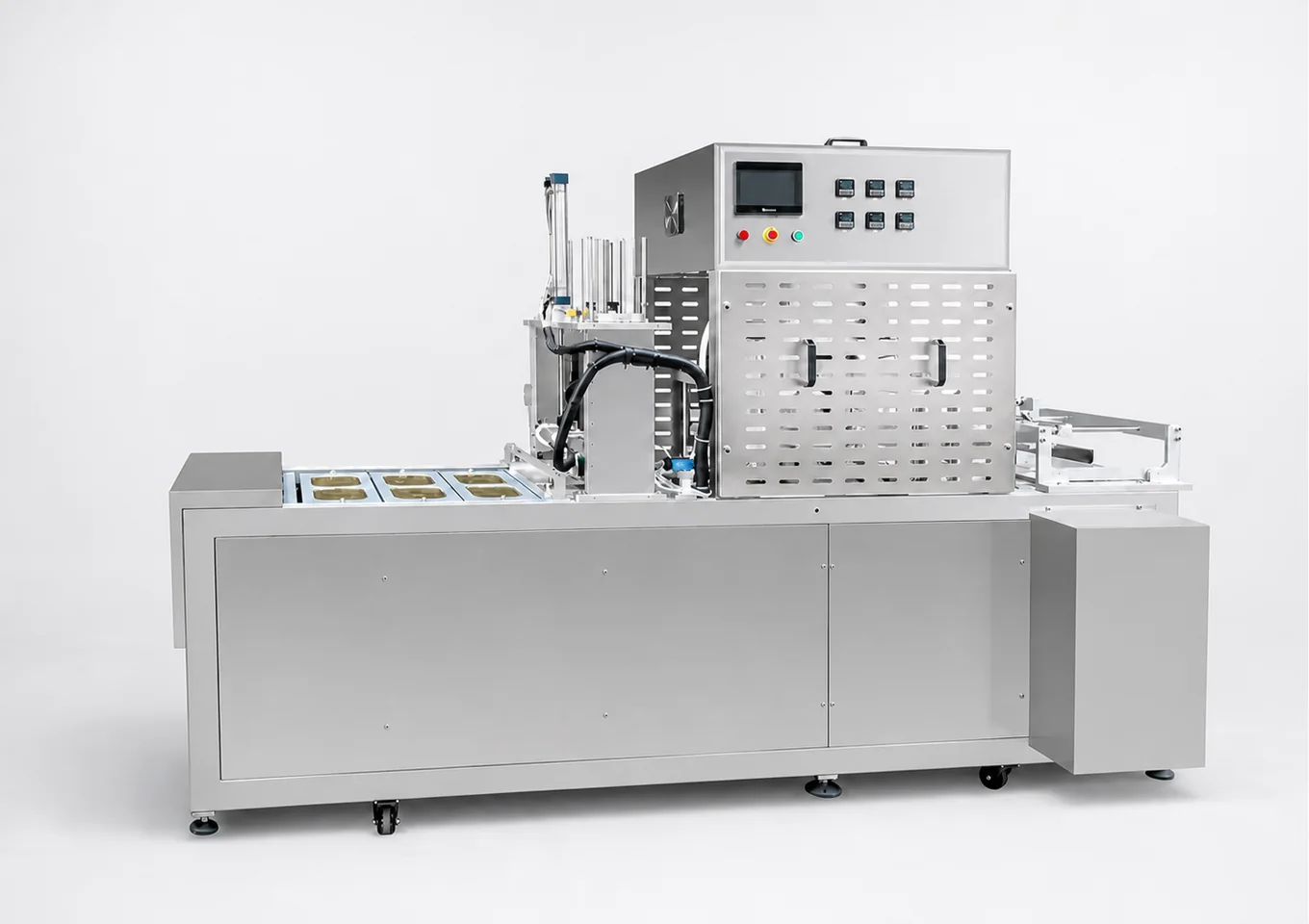 Chain Conveyor Cup and Tray Filling Sealing Line
Normal heat sealing process baseline; Film separation, roll film conveying, tray support, and sealing tooling each depend on their own samples. Do not only compare fil...
Core process
First reproduce the height, liquid leakage, rim contamination, and refrigerated state after filling using fresh meat, production trays, and lidding film to establish normal heat sealing samples.
For the pre-cut film route, an automatic pre-cut film pick-and-place tray sealing machine can be used; for the roll film route, a tabletop roll film tray sealing machine can be used. Confirm basic heat sealing separately first.
After the food process clearly requires gas flushing, use a tray MAP sealing machine to test trays, barrier film, gas conditions, and packaging acceptance methods.
After tray incoming direction and production schedule are stable, the chain conveyor cup/tray continuous sealing line receives already-filled fresh meat trays and continuously positions and seals them.
After the primary packaging passes testing, the food metal detection machine and online checkweighing and vision inspection system are set according to defined metal, weight, or appearance abnormality settings.
The date and batch inkjet coder is set according to tray or film surface. Round bottle and square bottle labeling machines only enter sample evaluation when the label surface, tray posture, and passing dimensions are adapted.
Sample details
Fresh meat temperature, form, liquid leakage, and filling height are used to reproduce the real state when trays enter the sealing equipment.
Submit fresh meat samples or equivalent test materials, filling method, product height, and refrigerated stateTray rim, depth, rigidity, and lidding film feeding method determine carriers, tooling, and sealing window.
Provide production trays, pre-cut film or roll film, easy-peel direction, and key dimensionsMAP projects require the food process party to explain gas flushing, barrier packaging, storage conditions, and corresponding acceptance methods.
Indicate whether MAP is used, and submit gas process, cold chain, and packaging test requirementsTray incoming direction, production batch, manual tray filling, and upstream/downstream heights are used to design chain conveyor carriers and handover.
Provide production schedule, tray incoming direction, site layout, loading and unloading, and changeover planLabel batch numbers and inspection both require clear surfaces, samples, alarm rejection, and manual review. Do not use one rule to replace multiple stations.
Submit label layout, batch number content, metal detection requirements, weight rules, and vision abnormal samplesCommon selection mistakes
Empty trays do not have meat height, liquid leakage, or refrigerated state, so they cannot cover rim contamination and tray stress during production sealing.
Normal heat sealing and MAP rely on different process inputs. Having a gas interface on the equipment does not mean the food packaging requirements are established.
Pre-cut film static curling and roll film feeding positioning are different. Film feeding methods must be verified separately under production film conditions.
The carriers and rhythm of the chain conveyor continuous line depend on tray orientation and filling state. Automatic filling is a separately confirmed module.
Vision, checkweighing, and metal detection can only handle their defined abnormalities. Sealing and MAP still require packaging process samples.
View detailed technical notes
Loading Meat Samples Is the Starting Point of the Line
For fresh meat tray lines, first establish a normal heat sealing baseline from the real state after meat filling, then evaluate MAP and continuous stations. Coding and inspection are only connected after packaging is stable.
Sealing Tests Reproduce Refrigerated Conditions
Fresh meat temperature, product height, exudate and rim contamination can change tray positioning and seal edges. Tests should use production trays, lidding film and meat close to production conditions.
Validate Pre-cut Film and Roll Film Separately
For pre-cut film, observe sheet separation, pick-up and film placement direction; for roll film, check film feeding, positioning and cutting. Establish tray and film records for both routes, and use continuous cycles to recheck film batch performance.
MAP Validation Requires Complete Process Input
The tray MAP sealing machine is involved after the food process is defined. Gas displacement, barrier film, hygiene, storage and packaging acceptance jointly constrain equipment testing. Finished products are retained by the agreed method, and storage validation is performed by the food process party.
Continuous Line Starts from Packed Trays
The chain conveyor continuous line receives fresh meat trays that are already packed and directionally stable. Carriers, feeding, sealing, discharge and changeover are jointly commissioned in continuous operation, and tray offset, film surface and rim contamination are checked.
Validate Tray Labeling Adaptation Range First
The round/square bottle labeling machine is evaluated only when the tray display surface, passing orientation and dimensions are suitable. The date/batch inkjet coder is set according to a readable surface under refrigeration.
Establish Samples for Each Post-stage Inspection
Food metal detectors, online checkweighers and vision inspection systems use corresponding test conditions and abnormal samples respectively, and rejection and manual review processes are confirmed together with the equipment.
Keep Packaging and Inspection Records Separately
Seal edges, gas conditions, labels, batch numbers and inspection results use separate acceptance records. None of the post-stage inspections replaces the main packaging process.
Keep Samples Comparable During Upgrades
When upgrading from ordinary sealing to MAP or a continuous line, use the same batch of trays, lidding film and meat samples for comparison, and reconfirm the handover boundaries of new stations.
Common questions
Why perform normal sealing first when selecting a fresh meat tray machine?
First establish a normal heat sealing baseline using fresh meat, trays, and lidding film. Check the filled tray height, liquid leakage, and rim cleanliness, then decide whether modified atmosphere packaging is needed.
When is modified atmosphere tray equipment needed?
Only configure a tray MAP sealing machine when the food process explicitly requires gas flushing. Also confirm barrier film, gas conditions, storage method, and packaging acceptance.
How to choose between pre-cut film and roll film?
For pre-cut film, verify separation and pick-up; for roll film, verify conveying, positioning, and cutting. Both types of equipment require trial sealing with trays and film as a complete set.
When should a continuous sealing line be introduced?
After tray orientation, filling state, film material, and production schedule are stable, connect the chain conveyor continuous line and verify feeding, carriers, sealing, and discharge.
Can downstream inspection replace sealing acceptance?
Metal detection, weight, and vision systems each work based on defined samples. Sealing edge and MAP results are still checked according to packaging process methods.
Can a labeling machine be directly connected to fresh meat trays?
Inkjet coding can be set up on a stable, readable surface. For labeling machines, also confirm that the tray display surface, orientation, and dimensions fall within the equipment's adaptation range.