Solution topic
Honey Bottling Line: Temperature, Viscosity, Anti-Drip Filling, Capping and Two Foil-Seal Routes
Configure heated feeding, honey filling and drip control by temperature and viscosity, choose direct foil lidding or capping then induction sealing from the closure, and add labell
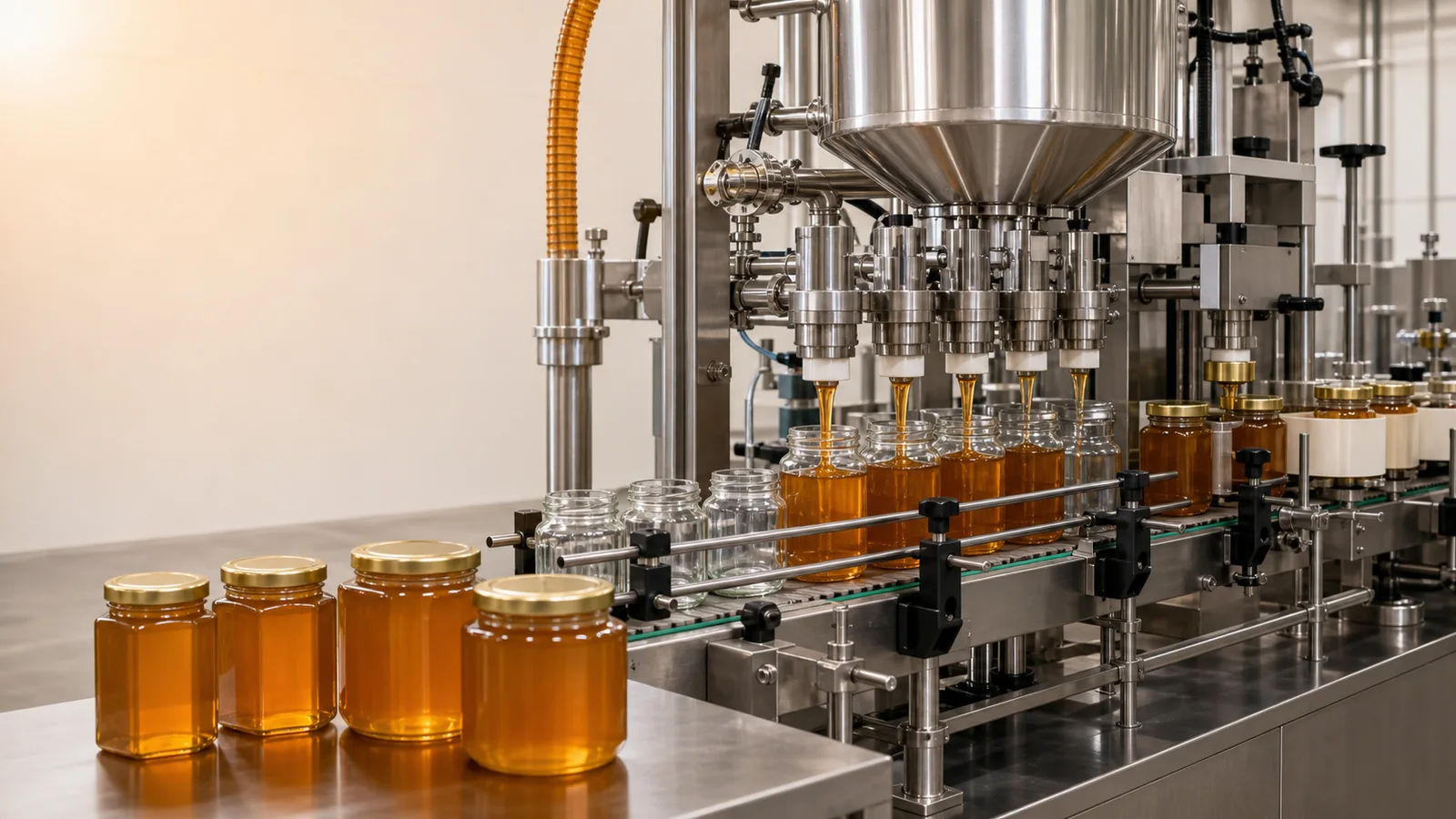
- Honey temperature affects feeding and cut-off. Choose either direct heat-press lidding on the rim or cap first and induction-seal a liner; the two routes are not interchangeable.
Solution summary prepared for you
- For honey bottle mouth inner sealing, first distinguish direct heat-seal film and cap inner aluminum foil liner; the former is heat-sealed then capped, the latter is screw-capped then induction sealed.
- Honey filling requires production-state actual material to verify feeding, metering, and cut-off; heated hopper and filling nozzle assembly are confirmed per project.
- Screw capping, labeling, collaborative batch printing, and online checkweighing are configured in sequence according to cap-bottle, label, and finished product weight samples.
Route comparison
- Suitable for honey packaging where aluminum foil or composite film is directly heat-sealed to the bottle mouth, and the cap is installed after inner sealing.
- Inner sealing film and bottle mouth can be sampled independently, the process sequence is clear, and it is easy to check the film surface and cap components separately.
- Film heat-seal layer, bottle mouth flatness, honey residue, and capping action must be checked in finished product samples.
- When the packaging material is actually inside the cap, or there is no film directly sealed to the bottle mouth, this sequence is not used.
- Servo piston liquid filling machine is configured according to honey bottle samples, bottle online heat sealing machine according to direct heat-seal film samples, followed by automatic screw capper to complete cap closing.
- Suitable for packaging where the aluminum foil liner is pre-installed inside the cap and pressed to the bottle mouth by the cap for induction inner sealing.
- The cap also positions the liner; after the screw capping sample is completed, it can continuously enter the non-contact induction station.
- Cap pressing, liner heat-seal layer, bottle mouth, and container material must be verified as a set; a single aluminum foil piece is not enough to finalize.
- When there is no matching liner inside the cap, or the cap cannot stably press the liner onto the bottle mouth, this inner sealing is not configured.
- Automatic screw capper is confirmed by cap-bottle combination, then online induction aluminum foil sealing machine trial-seals according to cap-liner-bottle mouth sample.
- Suitable for bottled products where inner sealing and screw capping samples are stable, and labels, batch numbers, weight, and reject handling are already defined.
- After the bottle body maintains a stable posture, labeling, collaborative printing, weight inspection, and downstream conveying can be completed in sequence.
- Label curvature, printing material, finished product weight combination, and bottle bottom stability all need to be confirmed with complete samples.
- When the inner sealing process is not finalized or the reject recheck rule is missing, do not fix the entire downstream section first.
- Round/square bottle labeling machine and online checkweigher are configured according to finished product samples, collaborative date batch inkjet coder is trial-printed, and food-grade conveying line is confirmed on site.
Associated Equipment / Consumables
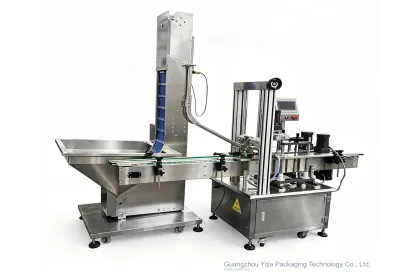 Automatic Screw Capping Machine
The machine feeds, picks or places, pre-engages and tightens screw caps. Screw capping, press-on capping, crimping and metal-can seaming are different closing processes. Bottle stability, cap orientation, thread engag...
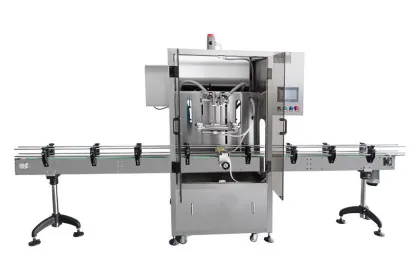 Servo Piston Liquid and Paste Filling Machine
Servo Piston Liquid Filling Machine: Feeding and quantitative filling; Temperature control and heating are not fixed components; they should be confirmed by actual process, honey state, and cleaning requirements; Heat...
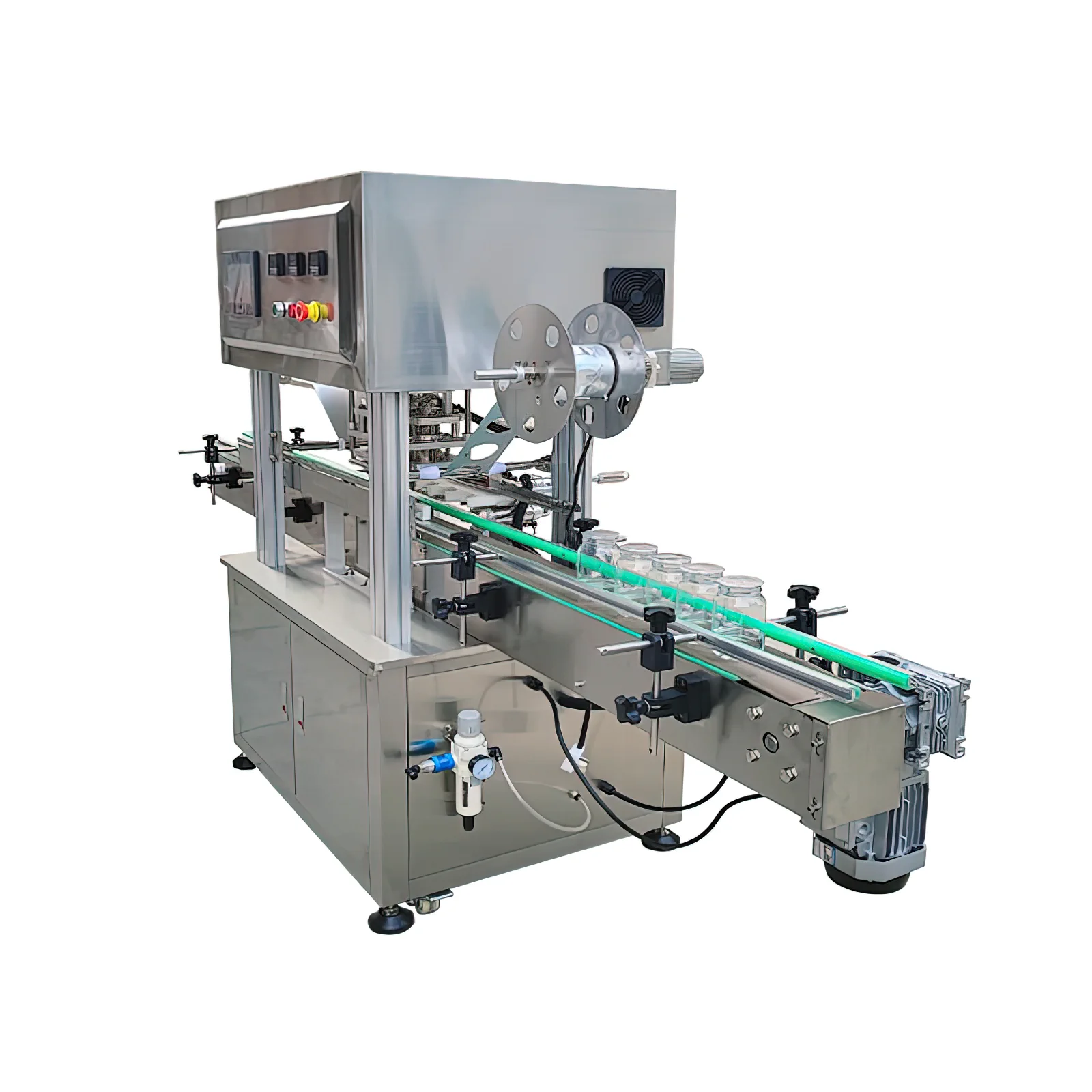 Inline Heat-Press Bottle Sealing Machine
Use for the route that heat-seals pre-cut film directly to the mouth after filling and fits the outer cap afterward. If the foil liner is inside the cap, use capping followed by induction sealing instead.
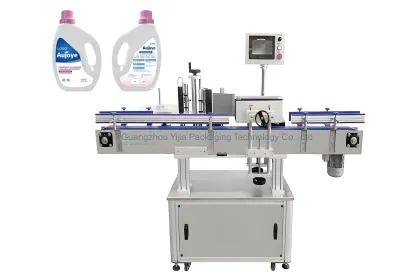 Round-Bottle and Front/Back Labelling Machine
Round & Square Bottle Labeling Machine: Labeling and batch marking; After confirming label layout, batch content, and reading direction, arrange station spacing; Round/square bottle labeling machine confirmed by honey...
Core process
First distinguish direct heat-seal film and cap inner liner, then record honey state, bottle mouth flatness, and cap closing method.
Use production-state honey to check feeding, metering, stringing, and cut-off, then decide the scope of heating and nozzle components.
Direct heat-seal film is heat-sealed to the bottle mouth before capping; cap inner liner is first pressed by the cap, then inner sealing is completed by online induction.
The direct heat-seal film route caps after heat sealing; the cap inner liner route must screw-cap first before entering the induction station.
Labeling position avoids obvious curved or honey-contaminated areas on the bottle body; batch number is trial-printed on the bottle body or label sample.
Establish weight combination and reject handling for complete bottled finished products, then plan conveying guidance, buffering, and rejection.
Sample details
Material behavior is used to confirm feeding heating, servo piston filling, and nozzle cut-off configuration.
Submit actual samples and explain temperature, crystallization, flow, stringing, and downtime cleaning.Bottle mouth flatness and container material will affect trial sealing of heat-seal film or induction liner.
Prepare glass or plastic bottle samples, indicating bottle mouth, bottle height, bottom, and main specifications.The complete combination is used to confirm screw capping sequence, pressing state, and inner sealing equipment direction.
Distinguish direct heat-seal film and cap inner aluminum foil liner, and submit cap and all material samples.Bottle body curvature, honey-contaminated areas, and reading direction will change labeling and coding stations.
Provide label proofs, attachment position, batch content, and planned printing surface.The online checkweigher should be confirmed with complete packaging samples and on-site recheck process.
List the finished product weight range composed of bottle, cap, label, and honey, and reject handling.Food-grade conveying line and station spacing are configured according to finished bottle samples and on-site layout.
Provide equipment direction, inlet/outlet, cleaning method, operation aisle, and available space.Common selection mistakes
Use actual honey to verify flow and cut-off, then decide whether heated hopper and jacketed tank are needed.
First look at the position of the packaging material on the bottle mouth and cap, then arrange the online bottle heat sealing machine or induction equipment.
The automatic screw capper first forms a cap-bottle sample, then the online induction foil sealing machine trial-seals according to the combination.
Handle from the filling nozzle cut-off, liquid catching, and bottle positioning, and check the bottle mouth with the worst-case sample.
Establish judgment with the complete packaging combination and write down the manual recheck action after rejection.
View detailed technical notes
First Check Where the Aluminum Foil Is
The aluminum foil used for honey bottles may be a film heat-sealed directly onto the bottle mouth, or a liner pre-installed inside the cap. Depending on the position, the sequence of screw capping and inner sealing differs.
Actual Honey Determines Feeding and Cutoff
Crystallization, temperature, flow, and stringing can change the metering and the finish of the filling nozzle. A servo piston liquid filling machine should be confirmed using production-state honey and the main bottle sample.
Direct-Seal Film: Heat Seal First, Then Cap
For an inline heat sealing machine for bottles, trial sealing is done according to the film material and bottle mouth sample, checking film adhesion, residual liquid on the mouth, and the appearance after sealing. After the film surface forms an acceptance sample, the automatic screw capper completes the cap closure, and the capping action is observed to see whether it disturbs the inner seal.
Liner in Cap: Screw Cap First, Then Induction Seal
The cap first presses the aluminum foil liner onto the bottle mouth, and the automatic screw capper forms a stable cap-liner-mouth assembly. The inline induction foil sealing machine then trial-seals the complete sample and rechecks it according to the agreed method. This is the process boundary for a conventional capped bottle line.
Insulation Configuration Depends on Process Conditions
Whether to use an insulated hopper and jacketed tank should be evaluated based on honey production temperature, crystallization, residence, feeding, and cleaning. First record the flow and cutoff performance at different times, then determine whether insulation is needed. Do not write a fixed temperature as a general setting.
Filling Nozzle: Handle Dripping and Stringing First
The anti-drip, anti-stringing filling nozzle assembly is configured according to the actual honey and bottle mouth. Before sealing, check for residual liquid on the bottle mouth and correct it through the cutoff and drip-catching action.
Cap Feeding Automation Depends on Cap Samples
When there is a continuous cap feeding requirement, the cap unscrambling and feeding system can be evaluated with official caps. If cap types or orders vary greatly, other cap feeding methods can also be retained.
Labels and Batch Codes Avoid Honey-Contact Areas
The labeling machine for round and square bottles is configured according to bottle and label samples. The collaborative date/batch inkjet coder is trial-printed on the bottle body or label sample, and the reading direction is checked.
Checkweighing Based on Complete Packaging Combination
The inline checkweigher needs to be confirmed with a finished product sample composed of honey, bottle, cap, film, and label. Abnormal products must also go through isolation and manual re-inspection procedures.
Conveying Balances Cleaning and Bottle Bottom Stability
The food-grade conveying line is configured according to bottle bottom, finished product weight, honey contamination risk, and cleaning method. Buffers between stations should also avoid bottles squeezing each other.
Common questions
Does honey filling always require heated feeding?
Evaluate based on production temperature, crystallization, flow, and downtime conditions; the heating module is not required for every project.
What is the process difference between direct heat-seal film and cap inner liner?
For direct heat-seal film, first heat-seal it to the bottle mouth, then cap; for cap inner liner, first screw-cap to press it, then proceed to induction inner sealing.
Can the cap inner liner be induction sealed before screw capping?
The conventional cap inner liner route requires the cap to press the liner onto the bottle mouth first, then online induction trial sealing can be performed.
How to handle honey strings dripping onto the bottle mouth?
First use actual product to adjust the filling nozzle cut-off, liquid catching, and bottle positioning, then check whether the bottle mouth is suitable for subsequent inner sealing.
Can glass and PET bottles share the inner sealing configuration?
Need to compare bottle mouth, container material, cap components, direct heat-seal film or liner combinations, and make sealed samples separately.
How to arrange label batch number and weight inspection after sealing?
Determine the label and printing surface based on the finished product orientation, then establish weight judgment and reject recheck process with the complete package.