Solution topic
Honey Bottling Standalone Machine Combination: Lock Down Supply Temperature and Cap Type First
Configure servo filling, screw capping, labeling, and optional inner sealing according to honey flowability, supply temperature, cap and label specifications. The listed configurat
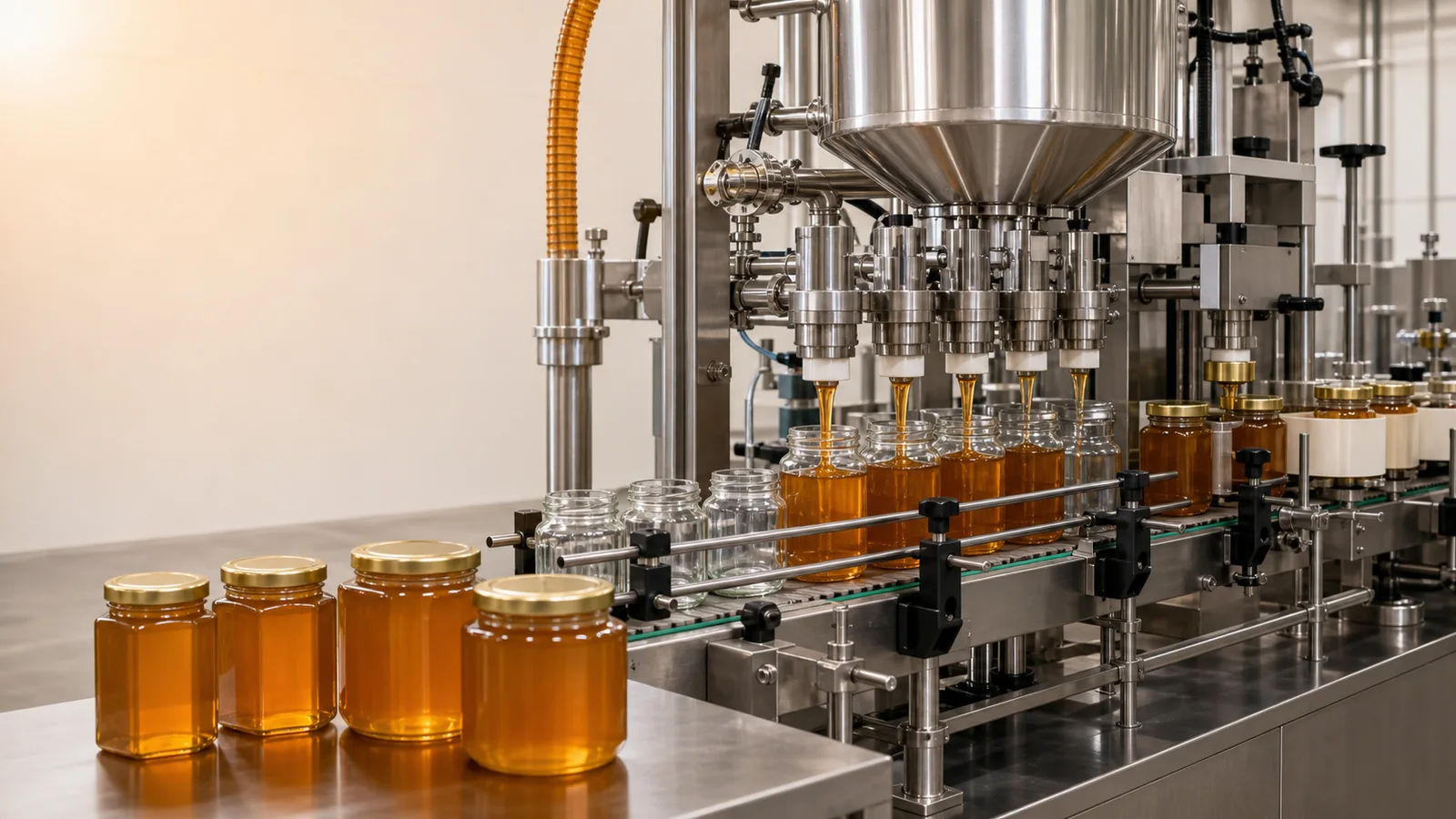
- Honey flowability affects filling and anti-stringing configuration; threaded caps, wide-mouth inner sealing, and bottle labels respectively define screw capping, sealing, and labeling. Honey, cap, and label samples, filling temperature, fill volume, changeover, capacity, and layout are required.
Solution summary prepared for you
- For honey bottling, first use a servo piston liquid filling machine to verify flow, fill volume, and stringing at production temperature.
- Threaded caps are tested with an automatic screw capping machine based on cap type and bottle stability; the round and square bottle labeling machine then positions according to label layout.
- For direct film on the bottle mouth, use in-line heat sealing. Only when the cap has a matching aluminum foil liner and closes stably, add in-line induction inner sealing.
Route comparison
- Suitable for projects that verify material flow, fill volume, and stringing with real honey, then combine with downstream bottling.
- The servo piston liquid filling machine can establish sample records of suction/discharge and cutoff at production temperature.
- Material temperature, fill volume, cleaning, and bottle mouth cleanliness all need confirmation; re-test filling if honey state changes.
- When representative honey is not available or planned temperature is not yet defined, it is not advisable to fix supply and filling nozzle configuration.
- First test the servo piston liquid filling machine, and add heated hopper and anti-drip anti-stringing filling nozzle as needed.
- Suitable for projects where threaded caps, bottle types, and label layout are defined, and capping and labeling are combined as independent standalone machines.
- The automatic screw capping machine and round/square bottle labeling machine can each perform changeover verification for cap type and bottle positioning.
- Actual caps, filled bottles, label size, and application direction must be provided as a complete set.
- If cap type or label is still being modified frequently, fix the packaging materials first; do not directly manufacture all positioning parts.
- Use the automatic screw capping machine for threaded caps, and the round/square bottle labeling machine for bottle labeling with official labels.
- Suitable for honey bottles that additionally require direct film sealing or cap aluminum foil liner, where inner sealing is added before or after capping.
- Splitting heat sealing and induction by aluminum foil position allows each inner seal structure to use corresponding sample verification methods.
- Bottle mouth, film or liner, cap, and closure state all need inspection; inner sealing is not a fixed process for all honey bottles.
- If packaging has no inner seal requirement or packaging material structure is not yet determined, do not configure heat sealing or induction equipment in advance.
- Use the in-line heat sealing machine for direct film, and the in-line induction aluminum foil sealing machine for matching cap liner.
Associated Equipment / Consumables
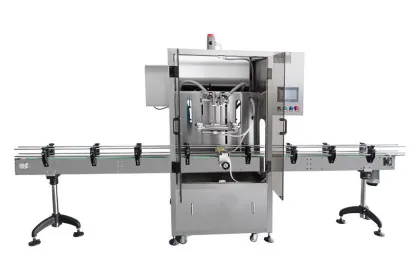 Servo Piston Liquid and Paste Filling Machine
The machine meters flowable liquids or viscous products within a trial-proven range; it is not universal for every liquid. Use the actual product and minimum/maximum container and dose to validate foam, stringing, par...
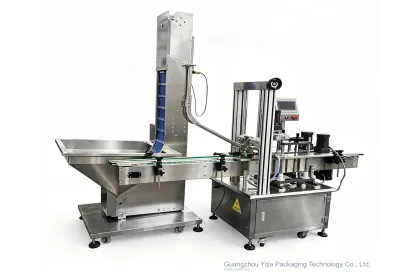 Automatic Screw Capping Machine
Prepare honey, caps, labels as a complete set; Standalone machine combinations should also start from the same batch of samples to avoid using different specifications for filling, cap...
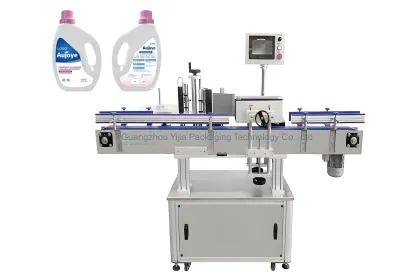 Round-Bottle and Front/Back Labelling Machine
Prepare honey, caps, labels as a complete set; Standalone machine combinations should also start from the same batch of samples to avoid using different specifications fo...
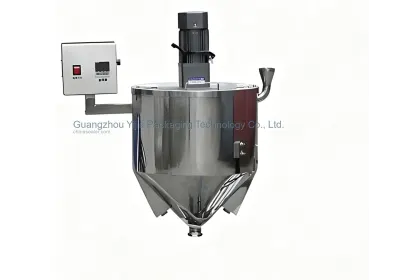 Heated Hopper and Jacketed Feed Tank
Prepare honey, caps, labels as a complete set; Standalone machine combinations should also start from the same batch of samples to avoid using different specifications for filling...
Core process
Provide honey at actual temperature, all caps, labels, and inner seal materials, and specify fill volume, changeover, capacity, and site.
The servo piston liquid filling machine uses real honey to confirm suction/discharge, fill volume, and stringing after stopping.
The automatic screw capping machine confirms capping and tightening action based on threaded cap, bottle positioning, and stability after filling.
The round and square bottle labeling machine verifies bottle support, positioning, and application direction based on bottle shape, label size, and layout position.
Configure heated hopper and jacketed tank only when honey needs temperature control; test anti-drip anti-stringing filling nozzle when tailing is obvious.
For direct film, use the in-line heat sealing machine for bottles. When the cap has a matching aluminum foil liner and closes stably, use the in-line induction sealing machine.
Sample details
Material conditions are used to verify servo piston filling and determine whether heated supply or anti-stringing filling nozzle is needed.
Submit honey samples, and specify filling temperature, flow state, crystallization or particles, fill volume, and cleaning method.Complete cap sets are used to confirm screw capping positioning and clarify the structure for direct film or cap liner inner seal.
Provide actual bottles and caps of each specification, indicating mouth diameter, height, cap type, bottle material, and changeover frequency.Label information affects round/square bottle support and positioning; the bottle state after filling should also be included in labeling trials.
Send official labels, and specify bottle application surface, start/end direction, layout requirements, and correspondence for different specifications.Aluminum foil position determines heat sealing or induction and affects the sequence of screw capping in the inner seal process.
Indicate whether inner sealing is required. For direct film, send film samples; for cap liner, provide together with the cap.These conditions help check daily flow between standalone machines without assuming separate conveying equipment that is not provided.
List target capacity, shifts, specification changeover, manual handling, and available floor space for each standalone machine.Common selection mistakes
Test filling with actual material at the planned temperature, and record bottle mouth cleanliness and fill volume.
Select based on material flow and tailing tests separately to avoid unnecessary component combinations.
Each cap type should be sent as a complete set, and the capping and tightening action should be checked on the corresponding bottle.
Provide label samples and layout positions together with the bottle list, then conduct labeling changeover verification.
Separate the cap film structure and determine the correct order of heat sealing, screw capping, and induction.
View detailed technical notes
Standalone Combination Shares One Set of Product Data
Honey filling, screw capping, and labeling can be verified separately, but the material, cap, label, fill volume, and changeover data must remain consistent to judge daily line integration.
Determine Supply Temperature and Cap Type First
Honey flowability changes filling and anti-stringing configuration, threaded caps determine screw capping action, and round or square bottles affect label positioning.
Verify Servo Piston Filling with Real Honey Samples
Test the servo piston liquid filling machine at the planned temperature, observe suction, fill volume, cutoff tailing, and bottle mouth cleanliness, then select additional components.
Run Screw Capping Trials with Bottle and Cap Sets
The automatic screw capping machine requires real threaded caps and filled bottles; cap type, positioning, and tightening action are recorded separately by specification. After changing caps, recheck that the bottle body remains stable.
Verify Positioning Separately for Round and Square Bottle Labeling
Use official labels to check adhesion surface, orientation, and changeover on the round/square bottle labeling machine; do not just demonstrate bottle conveying with empty bottles. Label layout and bottle body support should be confirmed together.
Add Insulated Supply Only When the Material Requires It
When honey samples show that supply temperature needs control, then use insulated hoppers and jacketed tanks, and consider cleaning conditions as well.
Test Anti-Drip Filling Nozzle Only When Stringing Is Obvious
If honey drags to the bottle mouth after stopping, test the anti-drip anti-stringing filling nozzle assembly and observe the closing performance after adjustment.
Direct Film Sealing Uses a Separate Heat Sealing Process
When the membrane is placed directly on the bottle mouth, use an inline heat sealing machine to verify the rim and film material; screw capping results cannot substitute.
Induction Sealing Only When the Cap Liner Meets Conditions
When the aluminum foil liner is placed inside a matching threaded cap and properly closed, then trial with an inline induction foil sealing machine.
Verify the Site Layout Based on Independent Machine Flow
The proposal should state the layout, manual transfer, and changeover space for the three standalone machines, without adding conveying line integration not given in the product data.
Common questions
Can honey bottling start with a combination of three standalone machines?
Filling, screw capping, and labeling can be verified separately, but all three machines must use the same set of honey, caps, and labels to check the interface.
Do all honey products need a heated hopper?
Not necessarily. First test the flow state at the planned filling temperature; only add a heated hopper and jacketed tank if the supply temperature needs to be controlled.
How to handle obvious stringing?
Use the actual honey to observe the cutoff at the nozzle; if tailing affects the bottle mouth, test the anti-drip anti-stringing filling nozzle assembly.
Can round and square bottles share one labeling machine?
You can first verify with a round/square bottle labeling machine on sample bottles, but bottle support, positioning, and label placement still need adjustment for each shape.
For honey bottle inner seal, choose heat sealing or induction?
Evaluate heat sealing when the film is placed directly on the bottle mouth; evaluate induction only when the aluminum foil liner is inside a matching cap and can be closed stably.
What information should be provided first for the preparation plan?
Please provide actual samples of honey, caps, labels, and inner seal materials, and specify temperature, fill volume, changeover, capacity, and equipment floor space.