Solution topic
How to Configure a Single-Serve Honey-Spoon Filling and Sealing Line
FS310 uses a rotary multi-station design to organize spoon body feeding, metered filling, film feeding, heat sealing, and finished product output. The real determinants are spoon b
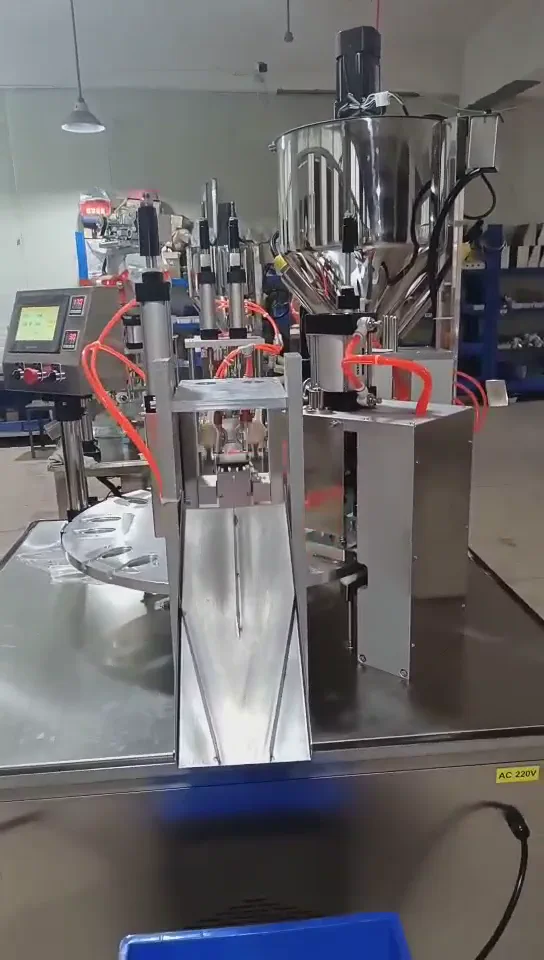
- Use the spoon, honey and pre-cut lid samples to define feeding, dosing, drip control, rim cleanliness, sealing and discharge.
Solution summary prepared for you
- What actual samples are needed for the honey spoon filling and sealing machine?
- Does honey viscosity affect small-dose filling?
- Can the FS310 automatically complete film feeding and heat sealing?
Route comparison
- Suitable for projects where automatic spoon dropping is not yet stable and the priority is to confirm filling, film placement, and heat sealing core processes.
- Can reduce spoon feeding variables first, focusing sample tests on turntable tooling, filling cut-off, and film heat sealing.
- Manual spoon placement affects full cycle time and staffing and cannot represent automatic spoon dropping capacity.
- When the project explicitly requires unmanned continuous spoon feeding and a stable verifiable spoon batch exists, do not estimate based only on the manual route.
- Use YJ-FS310 as the main machine, first confirm process boundaries under manual spoon placement.
- Suitable for projects with stable spoon dimensions and materials, wanting continuous feeding, filling, film, heat sealing, and output.
- FS310 uses a rotary multi-station process; automatic spoon dropping is further confirmed as a project configuration.
- Overlapping, deformation, static, and batch variation of thin-walled spoons may affect separation and positioning.
- Automatic spoon dropping cycle time should be based on stability tests with sufficient same-batch spoons.
- Use YJ-FS310 as the main machine, customize feeding, turntable tooling, and film tooling according to spoon samples.
- Suitable for projects where containers are not spoon-shaped and can be stably positioned by regular cup/box stations.
- Regular cups/boxes can be compared with rotary cup/box filling and sealing machines or small cup filling and sealing machines.
- General cup/box stations cannot naturally equate to spoon handle positioning, spoon feeding, or spoon rim film heat sealing.
- When containers have obvious spoon handles, thin walls, or irregular positioning requirements, do not treat general cup machines as direct substitutes.
- Only when the packaging object changes to regular cups/boxes, compare cup/box type equipment.
Associated Equipment / Consumables
Rotary Honey-Spoon Filling and Sealing MachineThe machine packs honey or syrup in single-serve spoon containers. Confirm spoon dimensions and nesting, product temperature and viscosity, dose tolerance, drip/string control, clean rims, lid orientation and sealant...
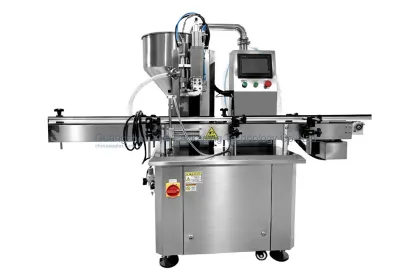 Paste Filling Machine
Step 1: Spoon and honey samples; First use actual samples to confirm spoon strength, honey condition, and whether filling cut-off has stable test conditions; YJ-FS310 spoon positioning and mater...
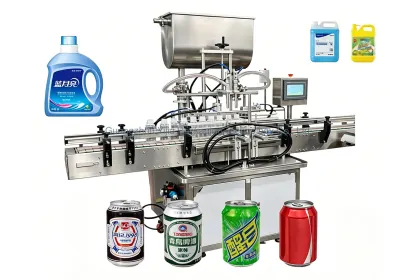 Liquid Filling Machine
Step 1: Spoon and honey samples; First use actual samples to confirm spoon strength, honey condition, and whether filling cut-off has stable test conditions; YJ-FS310 spoon positioning and mate...
Core process
Sample details
Same-batch spoons and complete dimensions are used to verify turntable positioning, rim support, and film coverage; the final solution still requires trial assembly with actual samples.
Provide actual spoons, complete dimension drawings, and sufficient same-batch samplesThe viscosity, stringing, and crystallization of honey at the planned production temperature affect feeding, metering, and filling nozzle cut-off.
Describe honey temperature, viscosity, crystallization tendency, and whether it contains particulatesTarget fill volume and tolerance judgment should be explained with actual honey and spoons to establish metering verification methods and sampling rules.
Specify the target fill volume per spoon and the acceptance method for allowable toleranceFilm shape, heat seal layer, and stacking direction determine separation and film placement testing; usability cannot be judged by film name alone.
Provide film material, thickness, heat seal layer, shape, and feeding directionManual spoon placement and automatic spoon dropping are different feeding scopes; clarify incoming material orientation, replenishment method, and operator responsibility first.
Specify the expected boundary of manual spoon placement or automatic spoon droppingSubmit qualified seal samples, peel or leak criteria, and on-site power and air supply together to verify acceptance and installation conditions.
Provide seal appearance, peel or leak requirements, and on-site power and air supplyCommon selection mistakes
View detailed technical notes
Real customer question
We need to fill honey into disposable spoon-shaped containers, then cover with film and heat seal. Honey is affected by temperature, and the spoons are thin. How should samples be prepared to turn feeding, filling, film placement, and sealing into an acceptable equipment solution?
First determine the packaging route
The FS310 uses a rotary multi-station design to organize spoon feeding, metered filling, film feeding, heat sealing, and finished product output. The real determinants are spoon consistency, honey condition, target fill volume, film heat seal layer, and acceptance method.
Custom turntable route with manual spoon placement
Suitable for: projects where automatic spoon dropping is not yet stable and the priority is to confirm filling, film placement, and heat sealing core processes. Advantages: reduces spoon feeding variables first, focusing sample tests on turntable tooling, filling cut-off, and film heat sealing. Limitations: manual spoon placement affects full cycle time and staffing and cannot represent automatic spoon dropping capacity. Not recommended: when the project explicitly requires unmanned continuous spoon feeding and a stable verifiable spoon batch exists, do not estimate based only on the manual route. Equipment direction: use YJ-FS310 as the main machine, first confirm process boundaries under manual spoon placement.
Rotary multi-station route with automatic spoon dropping
Suitable for: projects with stable spoon dimensions and materials, wanting continuous feeding, filling, film, heat sealing, and output. Advantages: FS310 uses a rotary multi-station process; automatic spoon dropping is further confirmed as a project configuration. Limitations: overlapping, deformation, static, and batch variation of thin-walled spoons may affect separation and positioning. Not recommended: automatic spoon dropping cycle time should be based on stability tests with sufficient same-batch spoons. Equipment direction: use YJ-FS310 as the main machine, customize feeding, turntable tooling, and film tooling according to spoon samples.
General cup/box filling and sealing route
Suitable for: projects where containers are not spoon-shaped and can be stably positioned by regular cup/box stations. Advantages: regular cups/boxes can be compared with rotary cup/box filling and sealing machines or small cup filling and sealing machines. Limitations: general cup/box stations cannot naturally equate to spoon handle positioning, spoon feeding, or spoon rim film heat sealing. Not recommended: when containers have obvious spoon handles, thin walls, or irregular positioning requirements, do not treat general cup machines as direct substitutes. Equipment direction: only when the packaging object changes to regular cups/boxes, compare cup/box type equipment.
Recommended equipment route: Step 1: Spoon body and honey samples
First, confirm with actual samples that the spoon body strength, honey condition, and filling cutoff can provide stable test conditions.
Recommended equipment route: Step 2: Rotary multi-station main machine
The main machine organizes spoon body feeding, metered filling, film feeding, heat sealing, and finished product output in sequence.
Recommended equipment route: Step 3: Film feeding confirmation
Film separation, orientation, and heat seal layer must be confirmed with actual samples; independent film feeding equipment is only evaluated when the project requires it.
Recommended equipment route: Step 4: Finished product sealing acceptance
First, accept the filling and sealing according to the agreed method; appearance screening is only a project option and cannot replace leak or peel tests.
Recommended equipment route: Step 5: Compare alternative routes only for regular cups/boxes
Only when the packaging object changes to regular cups or boxes should cup/box main machines be compared; spoon handle positioning and spoon body feeding still follow the FS310 custom route.
Common questions
Can the FS310 only handle honey?
It can be evaluated for honey or similar flowable materials, but viscosity, temperature, particulates, and cleaning requirements must be re-tested with samples.
Can the spoons be fed automatically?
Manual spoon placement or automatic spoon dropping is confirmed per project; the automatic option requires sufficient same-batch spoons for stability testing.
Is the film fed automatically by the machine?
The FS310 includes a film feeding process; specific separation, orientation, and tooling are confirmed based on actual film samples.
When can filling accuracy be confirmed?
No, the allowable tolerance must be confirmed together using actual honey, target quantity, and continuous sample runs.
How can honey contamination of the spoon rim be avoided?
During sample runs, feeding, metering, cut-off, and spoon positioning must be adjusted together and checked according to the agreed method.
What is the relationship between this machine and a tube tail sealing machine?
There is no direct process substitution relationship; the FS310 handles spoon-shaped container filling, film feeding, and heat sealing.